Combat Profile
Hula Incantation
channels the sacred dances of creation to restore vitality and bind supernatural forces to her will through rhythmic sorcery
Sister of Fire
maintains an unbreakable bond with Pele that grants her dominion over Hawaiʻi's living lands and protection from volcanic destruction
Her loyalty to Pele is both her greatest strength and her greatest wound -- she endures Pele's jealousy, the destruction of her beloved lehua groves, and the death of her dearest friend Hōpoe, all while completing her mission
“She walked the length of the islands carrying her pa’u skirt and her lightning pa’u, defeating every monster on the road, and when she finally brought him home, the fire that greeted her was her sister’s jealousy.”
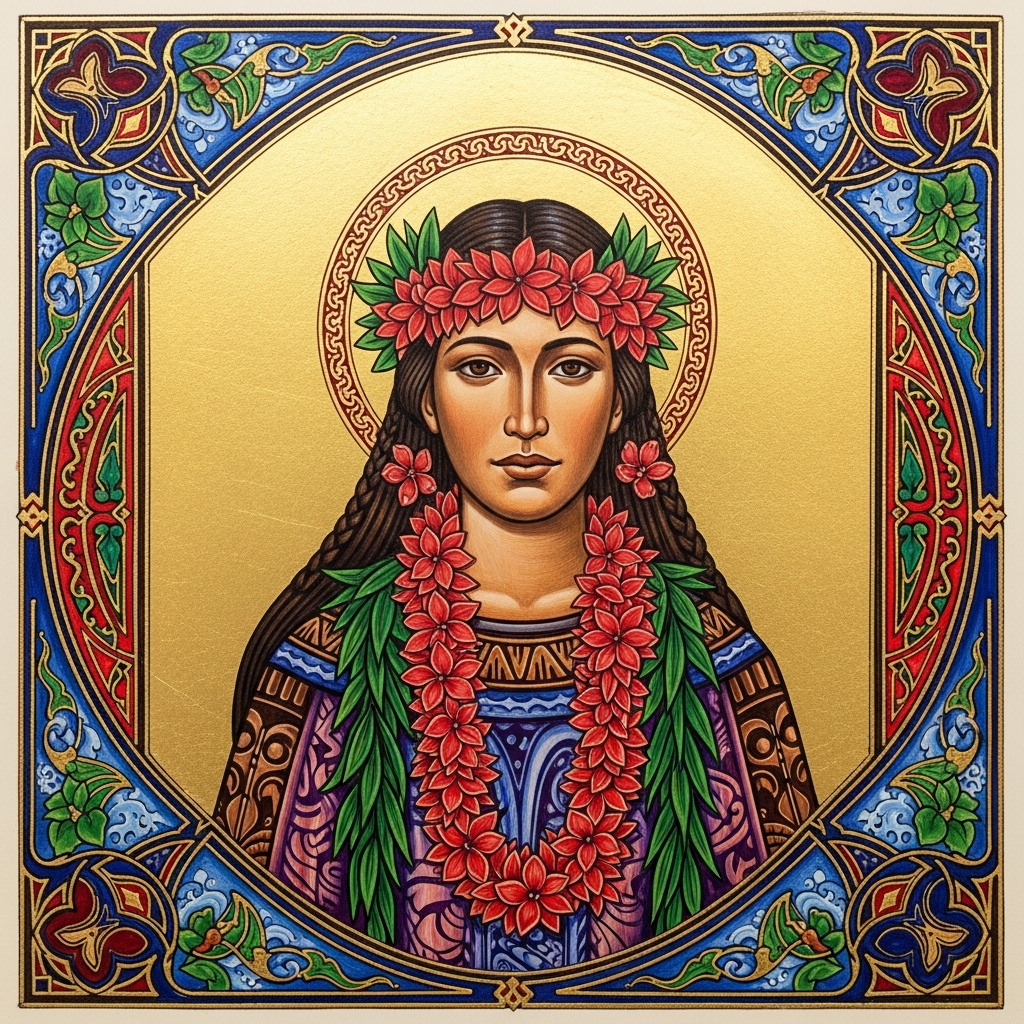
Lore: Hiʻiaka-i-ka-poli-o-Pele (Hiʻiaka-in-the-bosom-of-Pele) is Pele’s youngest and most beloved sister — born as an egg sheltered in Pele’s armpit during the great migration from Kahiki, carried across the ocean, and hatched into a goddess of extraordinary spiritual power and compassionate heart. She is the patroness of hula, the sacred dance that encodes Hawaiian knowledge, genealogy, and prayer in movement; of healing, tending the sick and reviving the dead; and of the natural world of the islands — the lehua flowers, the ferns, the rainforest that clothes Pele’s volcanic bones.
The Pele-Hiʻiaka epic is the great narrative poem of Hawaiian literature. Pele falls in love with the chief Lohi’au of Kauaʻi, whom she has encountered in a dream-trance. She sends Hiʻiaka on the long journey to find him and bring him back, extracting a solemn promise: Hiʻiaka must not touch Lohi’au in love. In exchange, Pele promises to protect Hiʻiaka’s beloved friend Hōpoe and her sacred lehua groves while she is away. The journey is an epic of forty days across the length of the islands — Hiʻiaka battles mo’o (supernatural lizard-monsters), revives dead warriors, performs hula for gods and chiefs, and heals the afflicted, always moving toward Kauaʻi with the steadiness of someone who keeps their word.
But when Hiʻiaka reaches Kauaʻi she finds Lohi’au dead — killed by supernatural forces. She brings him back to life with her healing arts. Still she does not touch him in love. She begins the return journey. Meanwhile, Pele grows jealous of the time, suspecting betrayal, and destroys Hōpoe — encasing her beloved friend in lava — and burns the lehua groves to ash. When Hiʻiaka arrives home and sees the destruction, she breaks. She embraces Lohi’au in full view of Kilauea’s crater. Pele kills him with lava. He is later resurrected by other gods. The cycle continues through death and return, vengeance and reconciliation, until the two sisters find an uneasy peace — but nothing that was destroyed comes back whole.
Parallel: Hiʻiaka’s journey maps onto the great odyssey-quest pattern that appears across world mythology: the hero commissioned on a difficult mission, forced to honor impossible conditions, betrayed by the very power that sent them. The closest structural parallel is Psyche in Apuleius’s The Golden Ass — another mortal-divine figure given a series of impossible tasks by a jealous divine woman, performing them with courage and ingenuity, and achieving a kind of apotheosis through suffering. But where Psyche is passive and obedient, Hiʻiaka is active, powerful, and ultimately defiant. Her final act of embracing Lohi’au is not weakness — it is a declaration that no divine command justifies the destruction of innocent love. In Hawaiian theology, the hula she performs throughout her journey is itself a form of prayer and power, each chant a petition to the natural world she passes through. To know hula is to know how Hiʻiaka walked: with power, with precision, with grief.
2 min read
Pele (whose jealousy and possessiveness destroy everything Hiʻiaka loves, forcing the final confrontation that costs both sisters everything)
Emerson, *Pele and Hiiaka: A Myth from Hawaii* (1915); Beckwith, *Hawaiian Mythology*; Nimmo, *Pele, Volcano Goddess of Hawai'i*