Combat Profile
Tidal Weaving
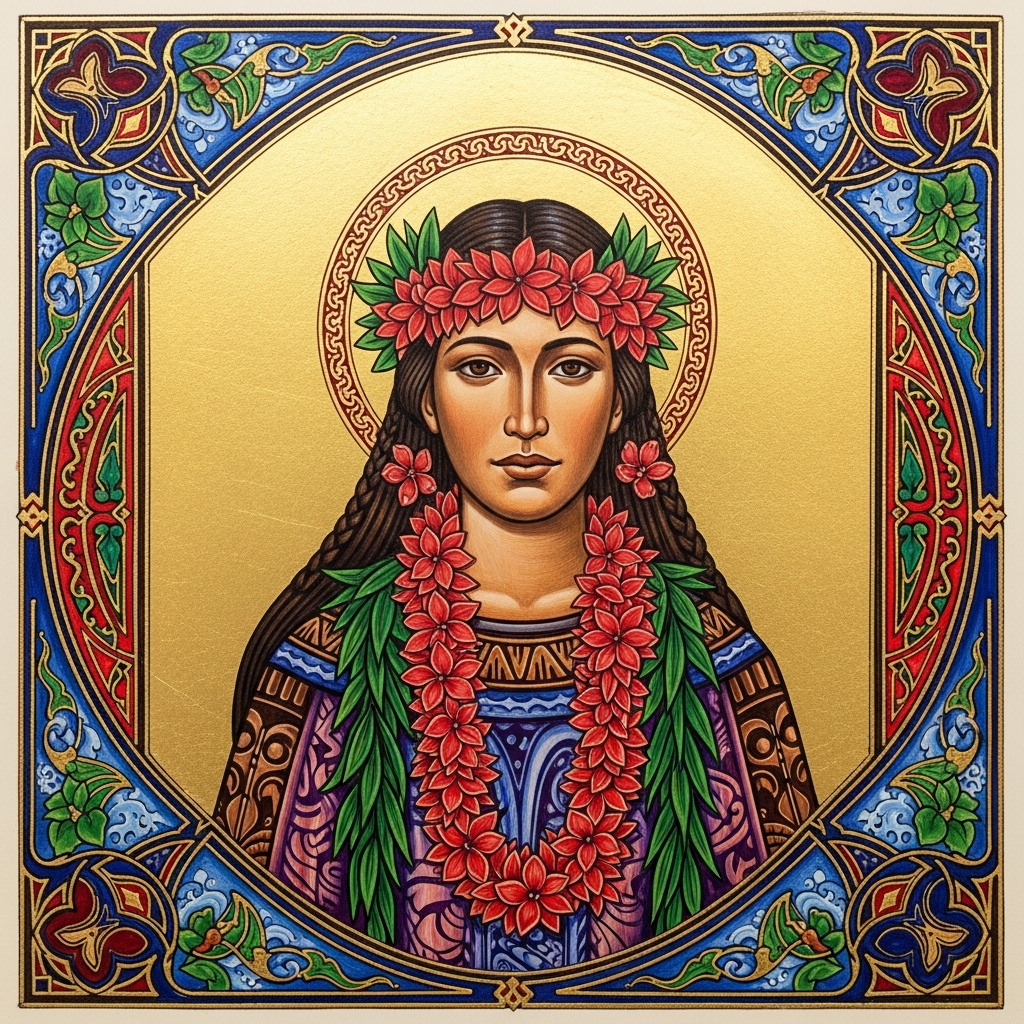
Hina commands the moon's pull over ocean tides and mortal fate, reshaping destinies with lunar cycles and prophetic insight.
Nocturnal Sovereignty
All actions gain power during night; Hina's presence stabilizes tides, guides women through transitions, and blesses cloth-workers with divine precision.
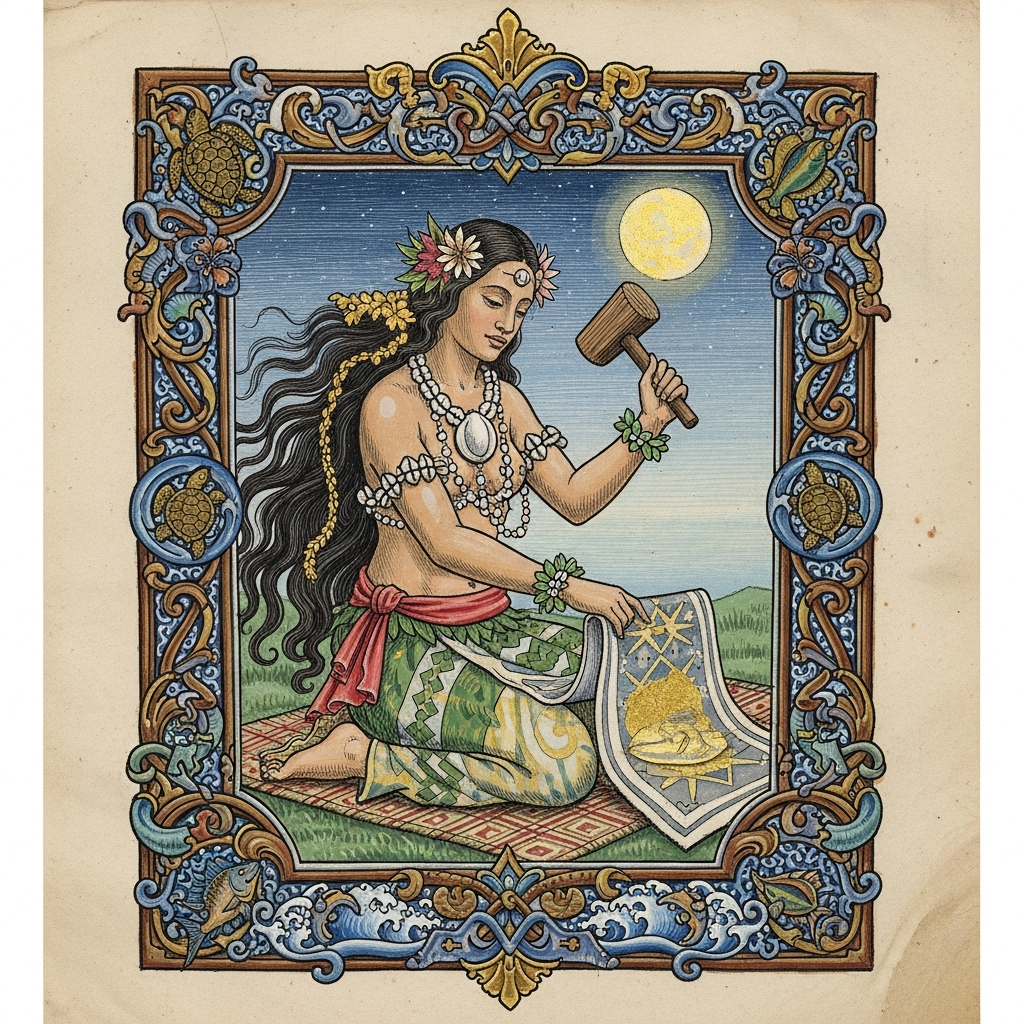
Wearied by the endless labor of beating tapa cloth; in some traditions, she fled to the moon to escape the monotony of mortal work
“Hina grew tired of beating bark in the world below. She climbed toward the sun but it was too hot, so she climbed to the moon, and there she sits, beating her cloth in the cool light, forever.”
Lore: Hina (Hine, Sina, depending on the island group) is the great feminine presence of Polynesian mythology — not a single figure but a constellation of related goddesses who share the name, the lunar association, and the connection to women’s arts. In Hawaiian tradition, Hina is associated with the moon, tapa cloth production (the rhythmic kapa beating that was one of the defining sounds of Hawaiian villages), and the tides. In Maori tradition, the name appears in multiple figures: Hine-ahu-one (the first woman), Hine-titama (the dawn maiden), Hine-nui-te-Po (the goddess of death) — all aspects of the same feminine divine principle moving through stages of creation, consciousness, and death.
The Hawaiian Hina grew weary of her labor in the world and attempted to climb to the sun along a rainbow path. The sun was too hot, so she changed course and climbed to the moon instead. There she remains, visible in the patterns of the lunar surface, beating her tapa cloth in the cool silver light. It is a remarkably poignant image: a goddess who chose exile in the sky over endless toil on earth.
Parallel: The motif of a woman in the moon appears across world mythology — the Chinese Chang’e (who drank the elixir of immortality and floated to the moon), the Japanese Kaguya-hime (the bamboo cutter’s moon princess), and various African and Native American traditions. Hina’s flight from labor resonates with the broader theological question of divine weariness — a theme rarely explored in Abrahamic traditions (though Isaiah 40:28 explicitly denies it: “The LORD does not grow tired or weary”), but central to Polynesian theology, where even the gods can be exhausted by the weight of existence.
1 min read
None specific; she endures rather than fights
Beckwith, *Hawaiian Mythology*; Grey, *Polynesian Mythology*; Orbell, *Illustrated Encyclopedia*