Combat Profile
Imperial Aegis
Grants divine protection to the Japanese nation and ruling house, nullifying foreign threats and curses
Warrior's Ascendant
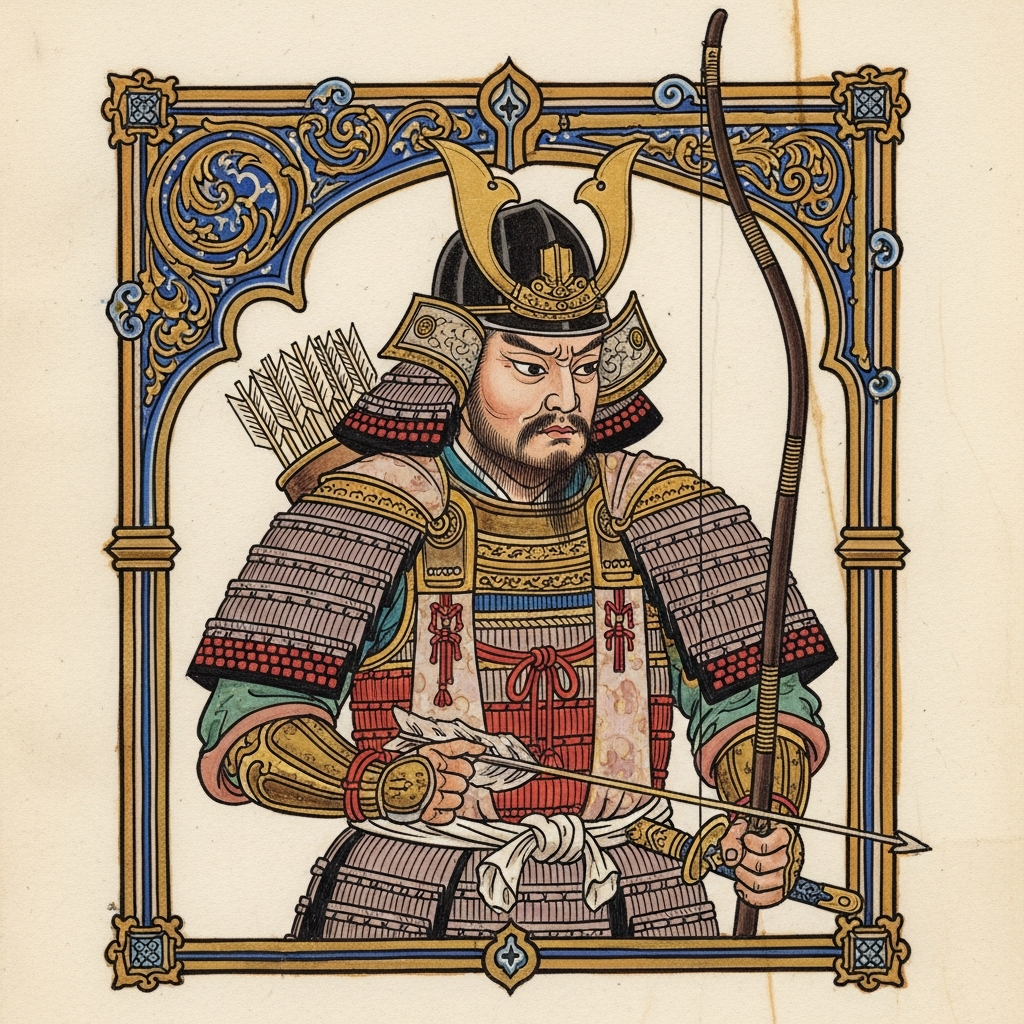
All combat prowess of the warrior class is magnified; archery strikes are guided by divine favor and never miss their righteous mark
His cult was inseparable from the warrior class -- the association with militarism was exploited during Japan's imperial expansion
“He is the protector of the warrior’s way and the guardian of the nation. In times of crisis, the divine wind answers.” — Hachiman shrine tradition
Lore: Hachiman is the second most widely worshipped kami in Japan (after Inari), with approximately 25,000 shrines. He is unique in the Shinto pantheon for being both a historical figure (the deified Emperor Ojin, 4th-5th century AD) and a cosmic protector, and for being the first kami to be explicitly integrated into the Buddhist system. In 781 AD, the imperial court granted Hachiman the Buddhist title Hachiman Daibosatsu (Great Bodhisattva Hachiman), making him the living proof of shinbutsu-shugo (the Shinto-Buddhist synthesis). He became the patron deity of the Minamoto clan and, by extension, the entire samurai class.
The kamikaze — the typhoons that destroyed Kublai Khan’s Mongol invasion fleets in 1274 and 1281 — were attributed to Hachiman’s divine protection of Japan. This belief that Japan was supernaturally protected became a powerful national myth, with profound and tragic consequences when the term was revived in World War II.
1 min read
None specific in mythology; historically, the decline of the samurai class diminished his centrality
*Nihon Shoki*; *Hachiman Gudokun* (1313); Usa Hachiman shrine traditions; samurai devotional literature