Combat Profile
Izanami's Descent
Izanagi can temporarily banish a critical threat to the underworld, sealing it away but risking spiritual contamination to himself.
Creator's Mandate
All allies gain enhanced vitality and purification; undead and corrupted entities take continuous damage from his divine presence.
His love for Izanami drove him to break sacred taboo by entering Yomi to retrieve her; his horror at her decayed form led him to flee, severing the primordial marriage
“He thrust the Jeweled Spear into the ocean below and stirred. When he drew it back, the brine that dripped from its tip piled up and became the island of Onogoro.” — Kojiki
Lore: Izanagi and Izanami are the divine couple who literally churned the primordial ocean with the jeweled spear Ame-no-Nuboko, and the brine that dripped from the spear’s tip coagulated into the first island, Onogoro-shima. Standing upon it, they performed the first marriage ritual by walking around a heavenly pillar in opposite directions, meeting, and greeting each other. The first attempt failed because Izanami spoke first (a detail that reflects and reinforces the patriarchal structures of the society that recorded the myth). They repeated the ritual with Izanagi speaking first, and it succeeded. Together they created the eight great islands of Japan and numerous kami of wind, sea, mountains, and rivers.
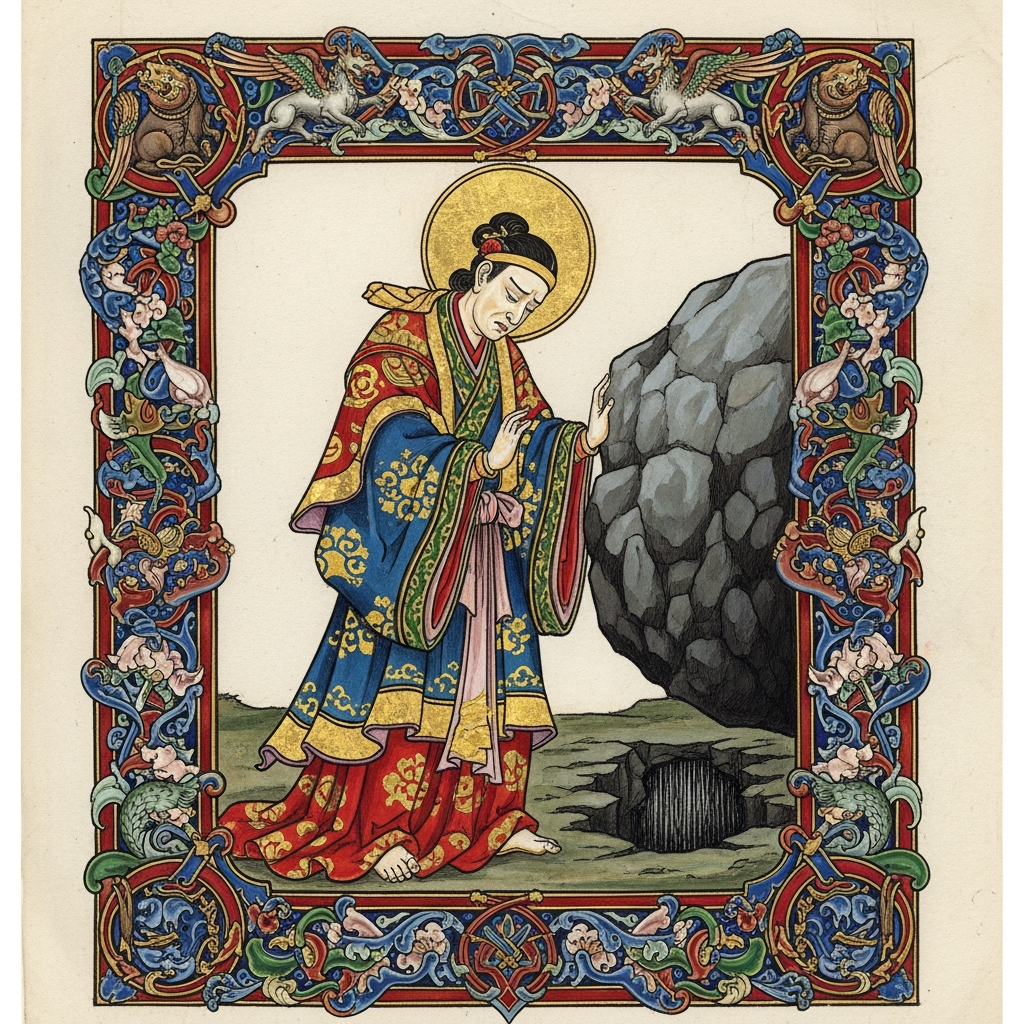
When Izanami died giving birth to the fire god Kagutsuchi, Izanagi was consumed with grief and rage — he slew Kagutsuchi with his sword (the blood and body spawning yet more kami — violence begetting creation, a motif found across world mythology). Then he descended into Yomi no Kuni (the land of the dead) to bring his wife back. She told him not to look at her. He looked. He saw her rotting, maggot-ridden corpse, the flesh crawling with thunder-spirits. He fled in horror. She sent the hags of Yomi and an army of thunder-warriors after him. He escaped by hurling objects behind him that transformed into obstacles (peaches, a comb that became bamboo — a magical flight motif found in fairy tales worldwide). He reached the border between Yomi and the living world, Yomotsu-Hirasaka, and sealed it with a massive boulder. Through the stone, Izanami screamed that she would kill 1,000 of his people every day. Izanagi replied that he would cause 1,500 to be born. This exchange is the Shinto origin of death and the enduring surplus of life over death.
After escaping Yomi, Izanagi performed the first misogi — ritual purification by washing in a river. When he washed his left eye, Amaterasu (the sun goddess) was born. When he washed his right eye, Tsukuyomi (the moon god) was born. When he washed his nose, Susanoo (the storm god) was born. The three most important kami in the Shinto pantheon emerged from an act of cleansing after contact with death — establishing the foundational Shinto principle that purity generates the sacred.
Parallel: The descent to the underworld for a dead spouse is one of the most universal mythological patterns: Orpheus and Eurydice (Greek), Inanna’s descent (Sumerian), Persephone’s abduction (Greek). The “do not look” taboo is shared precisely with Orpheus. The creation of life from purification parallels rebirth-through-water symbolism found in Christian baptism, Hindu ritual bathing, and Egyptian Nile mythology. The exchange between Izanagi and Izanami — “I will kill a thousand / I will create fifteen hundred” — is one of the most elegant mythological explanations of mortality and population growth in any tradition.
2 min read
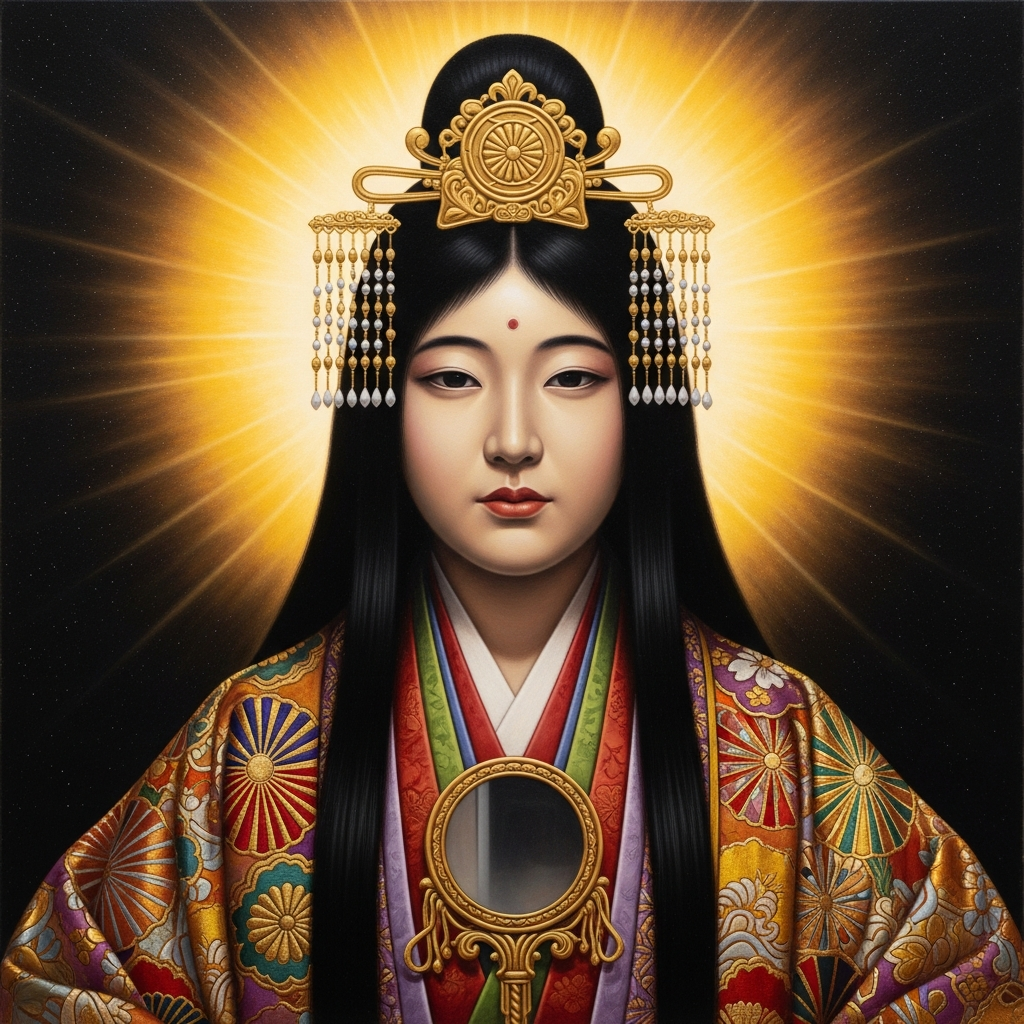
Izanami (she swore to kill 1,000 of his people daily; he swore to give birth to 1,500 -- the origin of human mortality and population growth)
*Kojiki* I.1-7; *Nihon Shoki* I; Ashkenazi, *Handbook of Japanese Mythology*