Combat Profile
Eternal Decay
All living things within Yomi no Kuni gradually wither and transform into undead forms bound to the realm's darkness.
Kegare Miasma
The realm emanates spiritual pollution that corrupts purification rituals and spreads death-stain to any who linger without divine protection.
Not a place of punishment like Christian hell; simply the place where the dead go. Its power is contamination, not torment
“The land of Yomi is not a place of punishment. It is a place of pollution. The dead do not suffer there. They simply are there, and they are unclean, and they do not return.” — Sokyo Ono, Shinto: The Kami Way
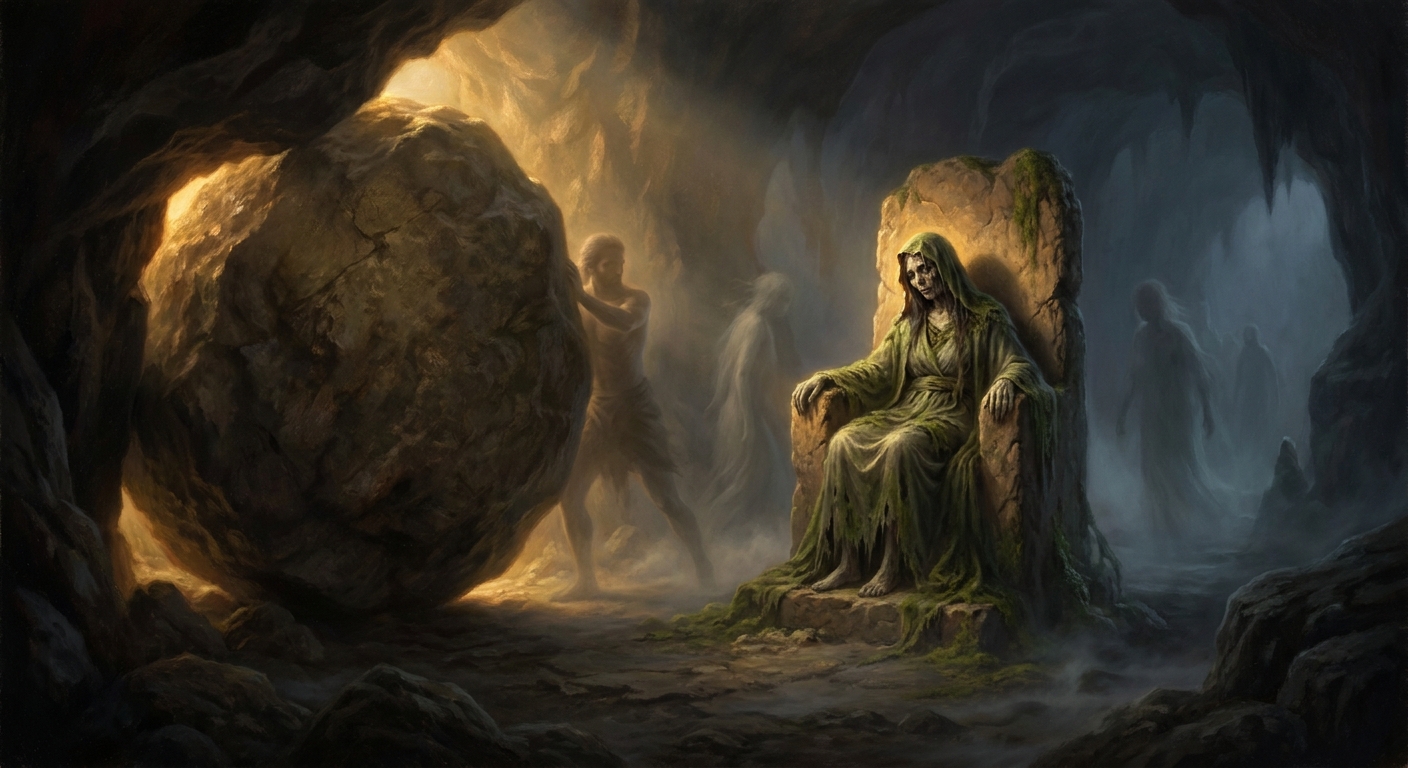
Lore: Yomi no Kuni is the Shinto underworld, but it is radically different from the Christian hell, the Buddhist naraka, or even the Greek Hades. It is not a place of judgment or punishment. There is no weighing of souls, no sorting of the righteous and the wicked. It is simply where the dead go — a dark, polluted realm beneath the earth where the dead exist in a state of decay. The defining characteristic of Yomi is not suffering but kegare (pollution, impurity). Contact with Yomi contaminates: this is why Izanagi needed to perform the first misogi (ritual purification) after his visit. The entire Shinto ritual system of purification — from the temizu hand-washing at shrine entrances to the elaborate harae ceremonies conducted by priests — traces its origin to the need to cleanse the contamination of death.
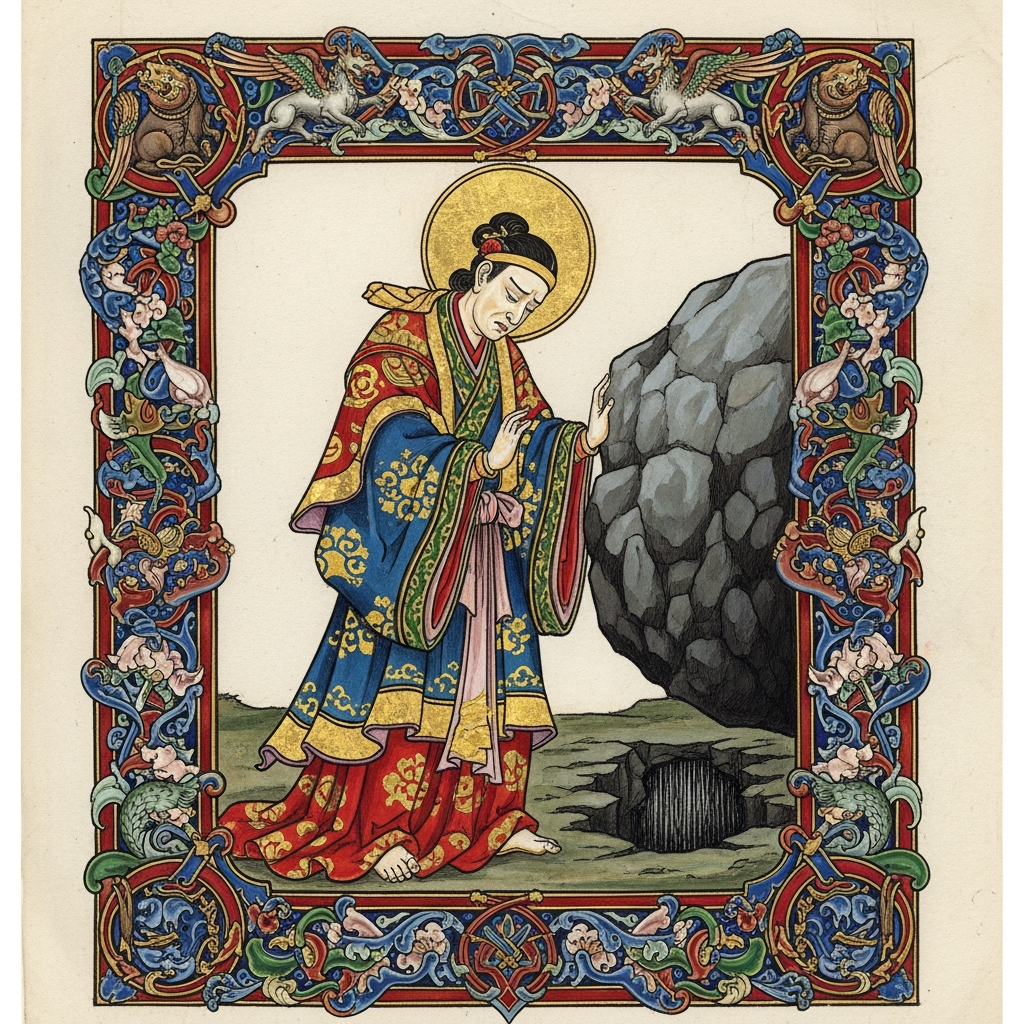
The entrance to Yomi, Yomotsu Hirasaka, is mythologically located in Izumo Province (modern Shimane Prefecture), and the boulder Izanagi used to seal it (Chibiki no Iwa) is identified with a specific stone at the Iya Shrine. On one side: life, light, purity. On the other: death, darkness, pollution. From that washing after Yomi came the three most important kami (Amaterasu, Tsukuyomi, Susanoo), demonstrating the Shinto principle that purity generates the sacred.
Parallel: Yomi most closely resembles the Hebrew Sheol — not a place of punishment but simply the place of the dead, a shadowy, quiet realm where all go regardless of moral standing. The Greek Hades (before the addition of Tartarus and Elysium) functioned similarly, as did the Mesopotamian Kur/Irkalla (a dark house of dust). The sealing of the underworld entrance with a boulder parallels Christ’s tomb being sealed with a stone (Matthew 27:60) — though the symbolic direction is inverted: in Shinto, the stone keeps death in; in Christianity, the stone is rolled away to let life out. The exchange between Izanagi and Izanami — 1,000 deaths per day answered by 1,500 births — has no direct parallel in any other tradition.
2 min read
*Misogi* purification cleanses those who return from contact with death; the boulder at Yomotsu Hirasaka seals the boundary
*Kojiki* I.5-9; *Nihon Shoki* I; Sokyo Ono, *Shinto: The Kami Way*