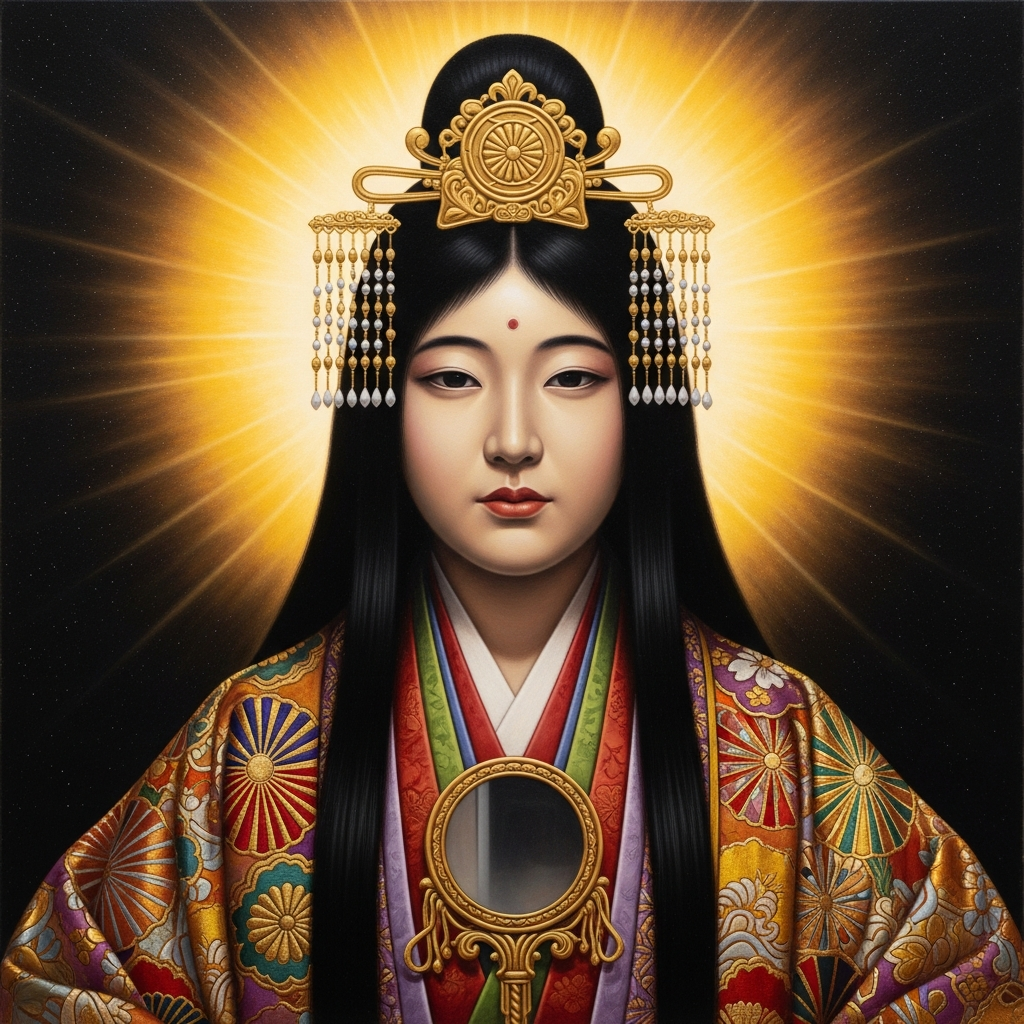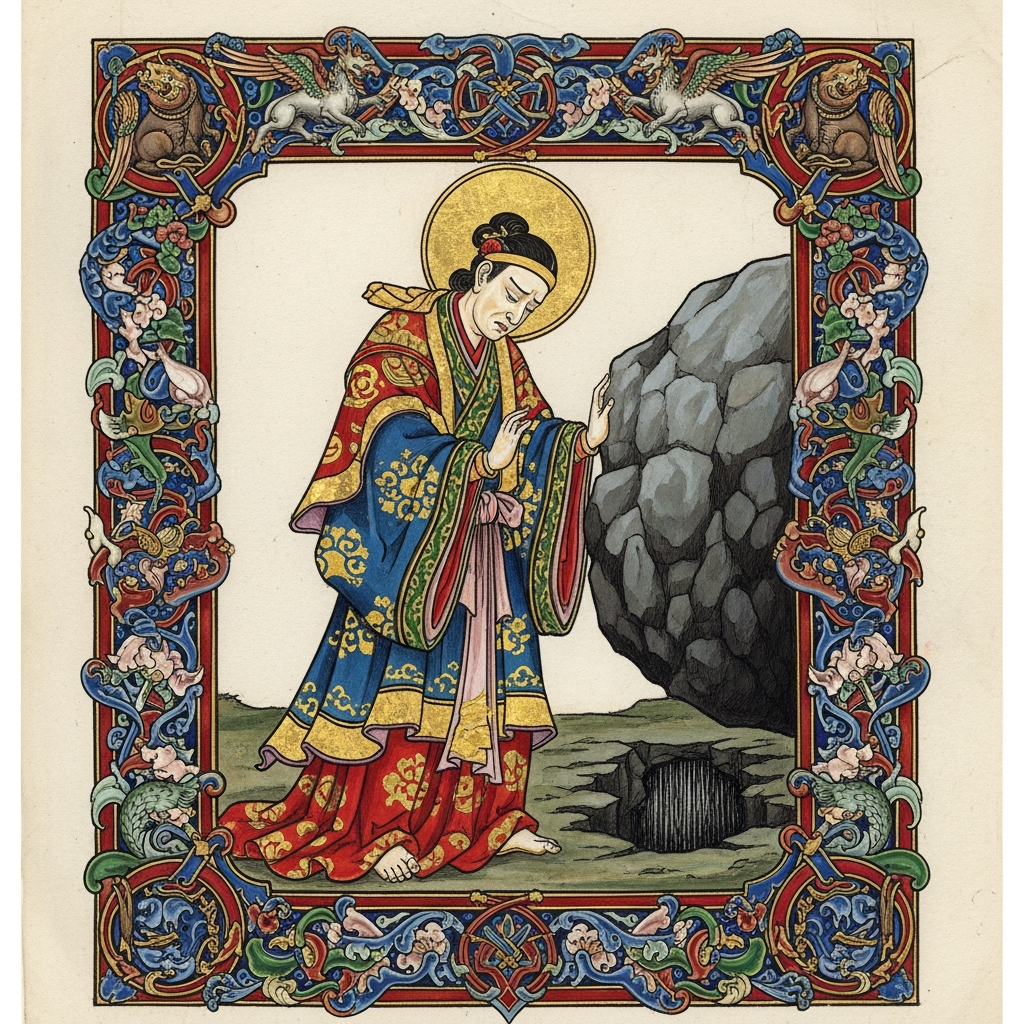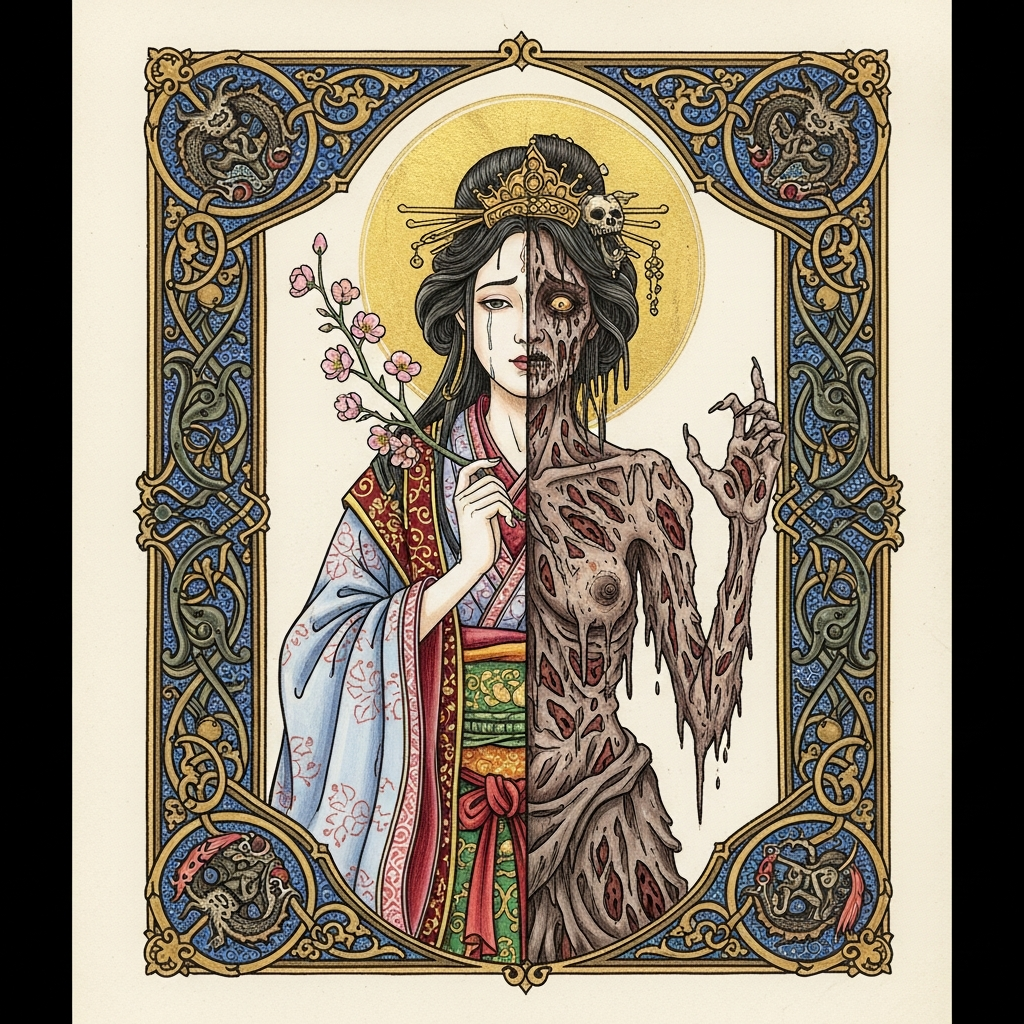
Combat Profile
Yomi's Embrace
Izanami drags a target into the underworld, dealing massive death damage and trapping them in spiritual decay for multiple turns.
Primordial Corruption
All enemies gradually lose health each turn as Izanami's decaying presence spreads; she gains power from death and decay around her.
Trapped in Yomi after eating the food of the dead; her wrath at Izanagi's betrayal transformed her from creator to destroyer
“My lovely elder brother, thine Augustness! If thou do like this, I will in one day strangle to death a thousand of the folk of thy land.” — Izanami, Kojiki
Lore: Izanami begins as the feminine half of the primordial creative pair, equal in power and essential to the act of world-creation. But the Kojiki introduces asymmetry early: during the first attempt at the marriage ritual, Izanami spoke first (a breach of protocol), and the resulting offspring were deformed — the leech-child Hiruko and the island of foam, both set adrift. Only when Izanagi spoke first did the creation proceed properly. Scholars debate whether this reflects genuine archaic myth or Nara-period political patriarchy being projected onto the divine order.
Izanami’s death in childbirth — specifically, the birth of fire itself — transforms her from creator to chthonic sovereign. In Yomi, she is no longer the beautiful goddess but a rotting corpse attended by thunder-kami, a figure of pollution (kegare) so potent that even looking upon her contaminates the viewer. She told Izanagi she had already eaten the food of Yomi and could not return — but she would ask the gods of the underworld. She asked only that he not look at her while she negotiated. He could not wait. He lit a flame and saw the horror of what she had become. Her humiliation curdled into rage.
Izanami embodies the Shinto understanding that death is not evil but is profoundly polluting — a contamination that must be ritually cleansed. Her daily promise to kill a thousand people is not villainy — it is grief transmuted into cosmic law. She did not choose to become the queen of death. She was placed there by the fire that killed her, the husband who abandoned her, and the boulder that sealed her fate.
Parallel: Izanami as Queen of the Dead parallels Ereshkigal (Sumerian), Hel (Norse), and Persephone (Greek) — sovereign goddesses of the underworld who were once figures of life. The motif of eating underworld food and becoming trapped appears identically in the Persephone myth (the pomegranate seeds). The transformation from beautiful creator to rotting death-queen mirrors the Hindu goddess Kali’s relationship to Parvati — the same divine feminine expressed through creation and destruction.
2 min read
Izanagi (sealed her in Yomi; their eternal opposition defines the boundary between life and death)
*Kojiki* I.5-9; *Nihon Shoki* I; Ashkenazi, *Handbook of Japanese Mythology*