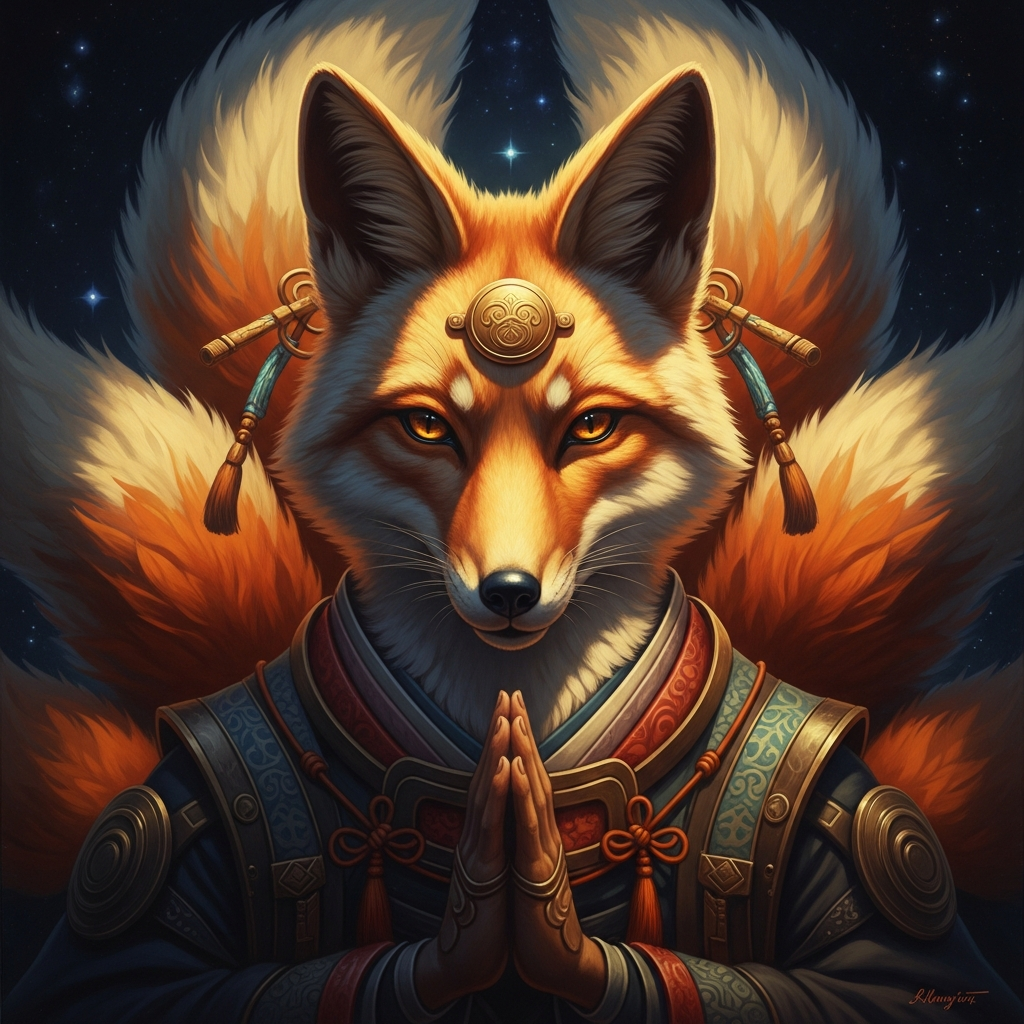
Combat Profile
Tail Manifestation
channels accumulated spiritual power through multiple tails to cast devastating illusions or grants protective blessings when aligned with Inari.
Illusory Nature
seamlessly shifts between forms and perceives through deception, making it nearly impossible to discern truth from fabrication in their presence.
Dogs can see through their disguises and will bark to expose them. Their fox nature may be revealed by shadows, reflections, or drunkenness. Fear of dogs is a persistent tell
“On a certain evening, a man returning home along the Tokaido road encountered a beautiful woman who asked to walk with him. They married. She bore him a son. But one day, the family dog barked at her, and she leapt over the garden wall, revealing her tail.” — Traditional kitsune tale
Lore: Kitsune are among the most complex and beloved yokai in Japanese folklore. They exist on a spectrum from divine messengers to malicious tricksters. The zenko (good foxes) serve the kami Inari and are associated with rice, prosperity, and protection — the stone foxes at every Inari shrine are zenko. The yako (field foxes) or nogitsune (wild foxes) range from mischievous to dangerous, capable of possessing humans (kitsunetsuki), creating elaborate illusions, and driving people mad.
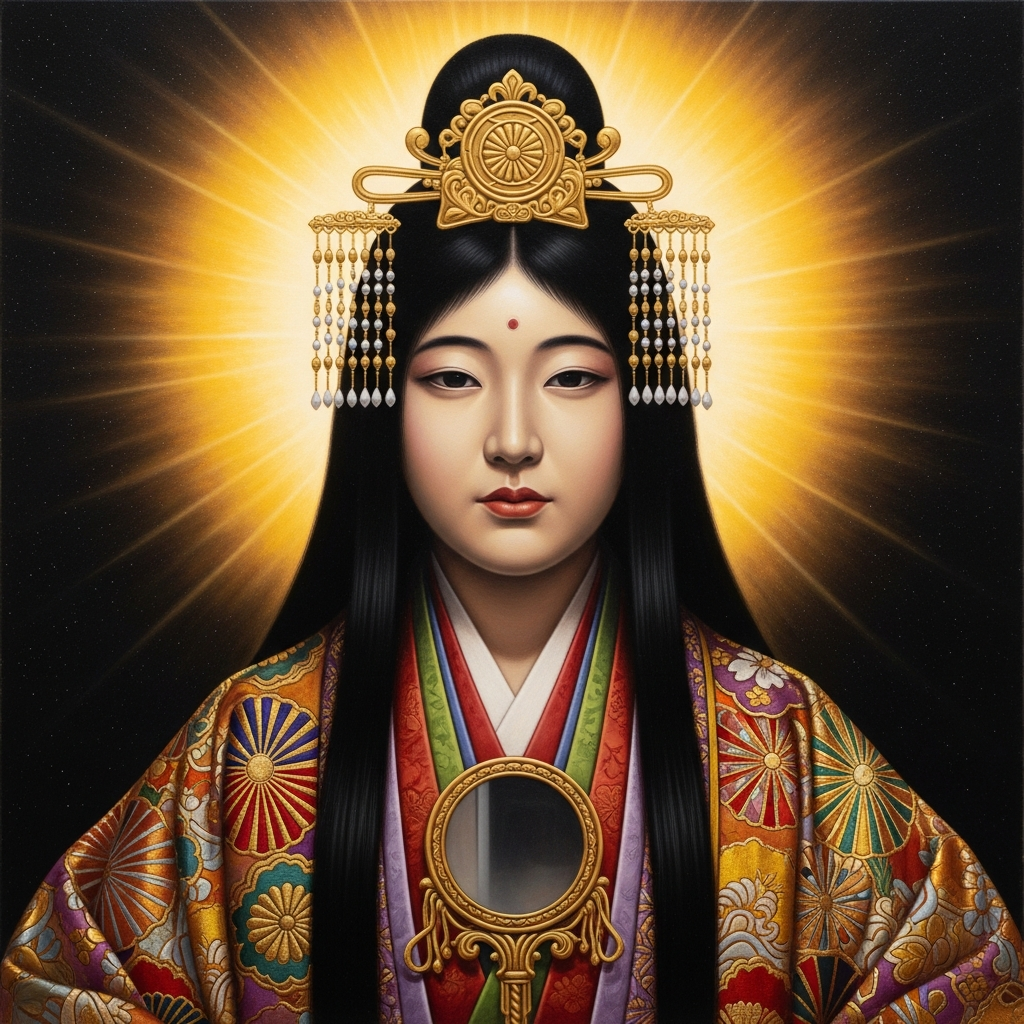
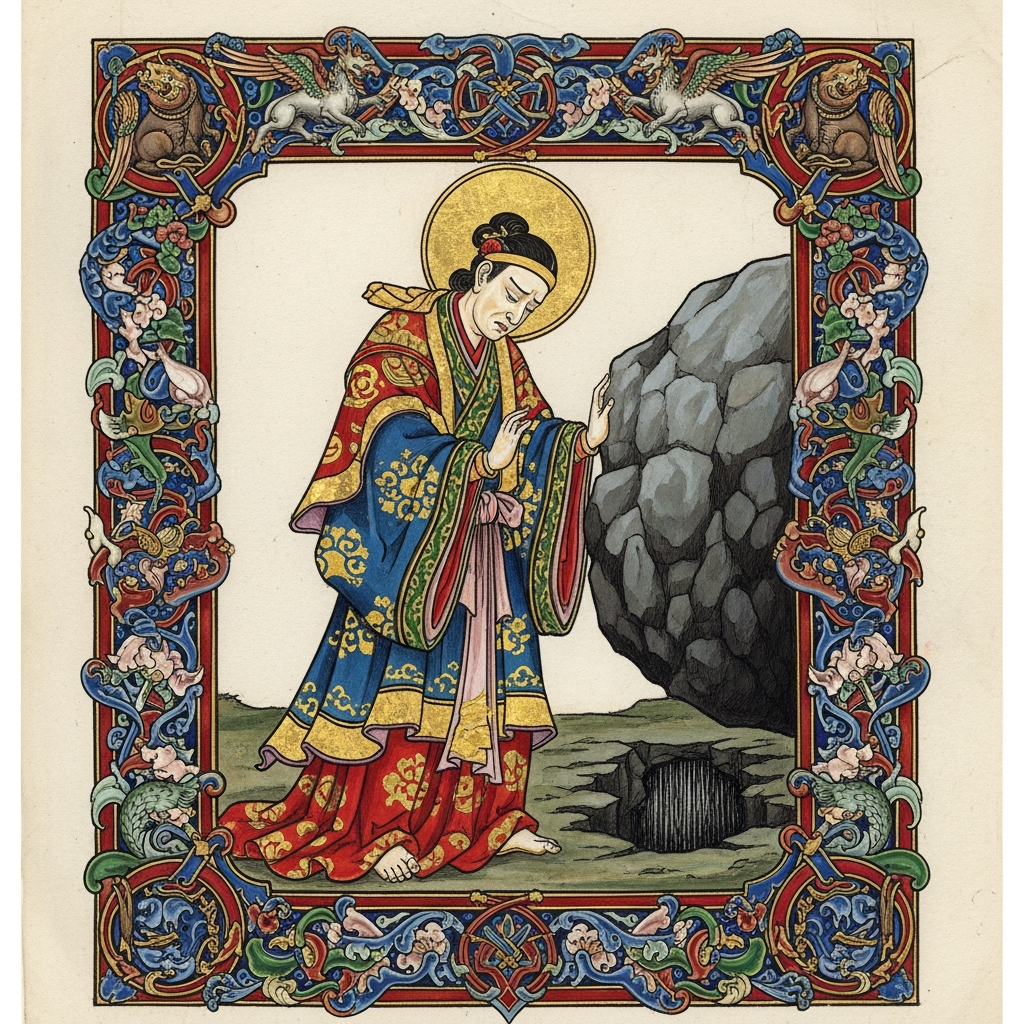
A kitsune grows an additional tail every 100 years; at 1,000 years old, it achieves nine tails and its fur turns gold or white, at which point it attains near-divine status and celestial wisdom. Kitsune can shape-shift into human form (usually a beautiful woman), create fox-fire (kitsunebi — mysterious lights seen at night), and generate illusions indistinguishable from reality. The tale of Kuzunoha is the most famous human-fox marriage: a white fox, saved by a man named Yasuna, took human form, married him, and bore the child Abe no Seimei, who became the most powerful onmyoji (yin-yang diviner) in Japanese history. The most notorious nine-tailed fox in East Asian mythology is Tamamo-no-Mae, who appeared at the court of Emperor Toba as an impossibly beautiful and learned courtesan, but was exposed by the court diviner, fled, and upon death transformed into the Sessho-seki (the Killing Stone), a boulder that released poisonous gas.
The “fox wife” stories are not simple warnings; they are tragedies. The kitsune loves genuinely. The exposure is devastating. She flees, heartbroken, leaving behind a family who loved her and whom she loved.
Parallel: Shape-shifting fox spirits appear across East Asian mythology — the Chinese huli jing and the Korean kumiho are close relatives, though the Korean version is consistently malevolent. The kitsune-wife motif parallels the selkie legends of Scotland and Ireland (a supernatural creature takes human form, marries a mortal, but is eventually revealed and must return to its nature). The nine-tailed fox as a figure of accumulated wisdom parallels the idea of spiritual evolution through successive lifetimes in Hindu and Buddhist thought.
2 min read
Onmyoji (yin-yang masters); dogs; Inari kami (for rogue foxes)
*Kojiki*; *Nihon Shoki*; *Nihon Ryoiki* (9th century); Lafcadio Hearn, *Kwaidan*; Toriyama Sekien, *Gazu Hyakki Yagyo*; the Abe no Seimei legends