Combat Profile
Oni's Wrath
unleash a devastating rampage that strikes all foes with overwhelming force, ignoring defense and inflicting chaos corruption
Infernal Nature
immune to mortal weapons and disease; presence alone causes fear and suffering in the living world
Roasted soybeans (*fuku mame*) thrown during the Setsubun festival drive oni away. Holly leaves and sardine heads hung at doorways repel them. They can be outwitted despite their strength
“Oni wa soto! Fuku wa uchi!” (“Demons out! Fortune in!”) — The Setsubun chant, shouted by millions of Japanese families every February
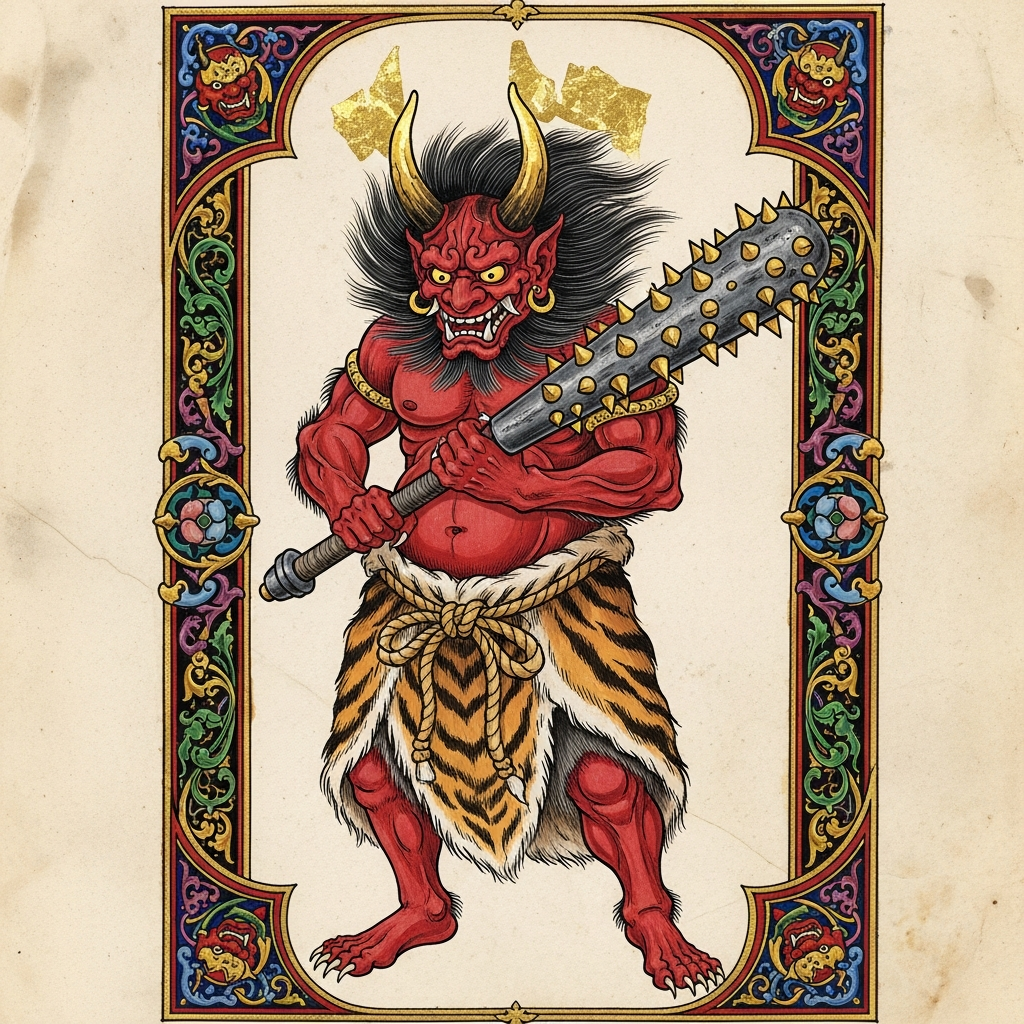
Lore: Oni are the quintessential Japanese demons — massive, horned humanoids with red or blue skin, wild hair, fangs, and loincloths made of tiger skin, wielding iron clubs (kanabo). The Japanese saying “oni with an iron club” (oni ni kanabo) means “an already powerful force made even more formidable.” Red oni (aka-oni) are associated with greed and desire; blue oni (ao-oni) with anger and hatred. In Buddhist-influenced cosmology, oni serve as wardens of the various Buddhist hells (jigoku), punishing sinners under the direction of Enma Daiou (King Yama, the judge of the dead). In folklore, oni inhabit remote mountains and islands, raiding villages, kidnapping maidens, and hoarding treasure.
Yet the oni tradition is not purely adversarial. The famous story “Naita Aka-Oni” (“The Red Oni Who Cried”) tells of a red oni who wanted to befriend humans and a blue oni who sacrificed his own reputation to make it possible — a tale that reveals surprising pathos beneath the monstrous exterior. The Momotaro tale, Japan’s most beloved folk story, has the young hero defeating the oni of Onigashima with the help of animal companions recruited along the way with millet dumplings (kibi dango). The annual Setsubun festival involves throwing roasted soybeans to drive out oni — a ritual that is simultaneously deeply traditional and cheerfully playful.
Parallel: Oni parallel the Hebrew shedim (demons), the Greek Titans (massive, powerful, associated with primal chaos), and the Norse jotnar (giants who oppose the divine order but are not purely evil). The red/blue color distinction may parallel the Hindu Asura/Deva color coding. Their role as hell-wardens appears identically in Christian tradition (demons as tormentors in hell) and Buddhist tradition (oni as gokusotsu, hell-guards). The Setsubun bean-throwing parallels apotropaic practices worldwide — throwing salt over the shoulder, hanging garlic against vampires.
1 min read
Momotaro (the Peach Boy, legendary oni-slayer); Shoki the Demon Queller; Buddhist hell-wardens who command them
*Momotaro* (folk tale); *Konjaku Monogatarishu*; Toriyama Sekien; *Otogi-zoshi*; Setsubun festival traditions