Combat Profile
Tenma's Pride
Tengu enters a ferocious combat state, doubling martial damage and gaining immunity to humiliation-based effects for the duration.
Mountain Ascetic
Tengu's power increases in high altitudes and forests; gains enhanced evasion and movement speed in mountainous terrain.
Pride is their defining flaw. Arrogant monks and warriors who die with inflated egos are said to be reborn as tengu
“They are neither demons nor gods. They are neither men nor birds. They inhabit the mountains, and they despise vanity above all things — except their own.” — Popular saying about tengu
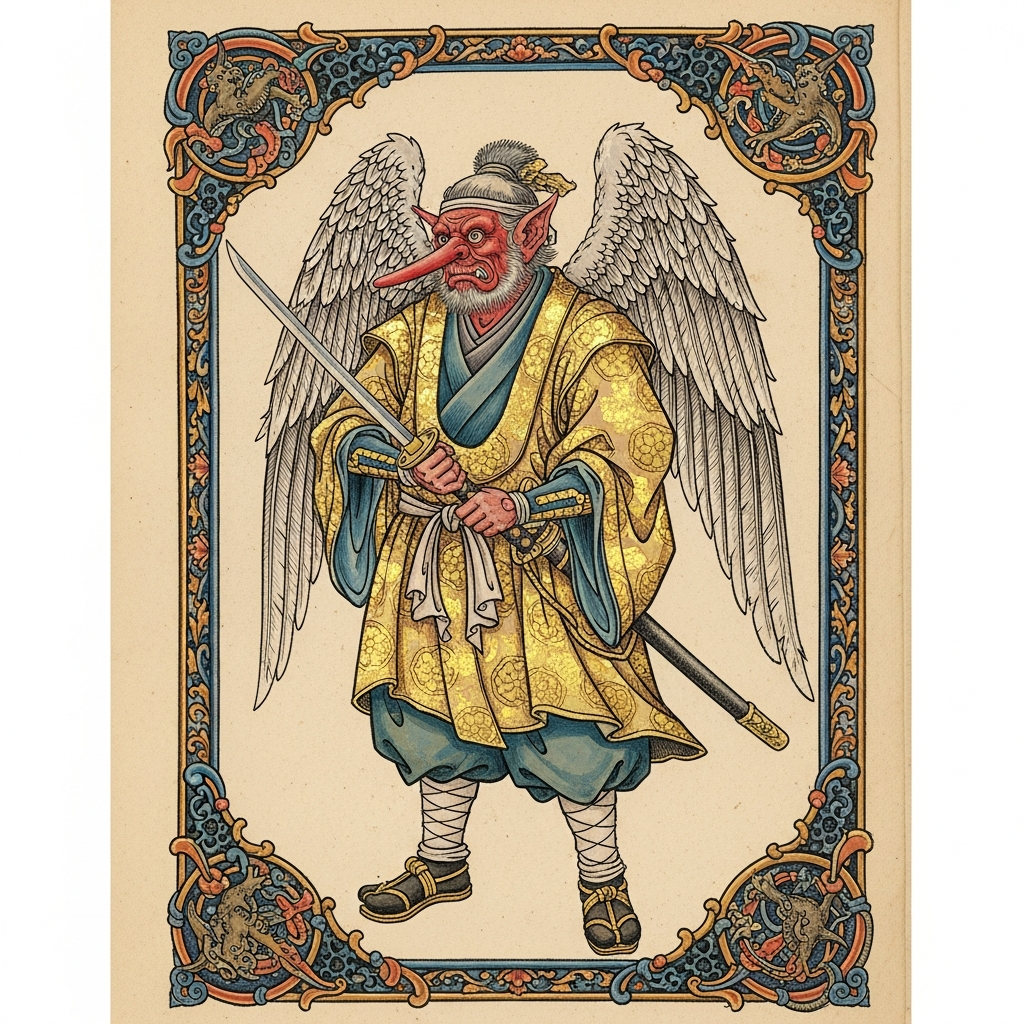
Lore: Tengu come in two forms. The older karasu tengu (crow tengu) have birdlike features — beaks, wings, and clawed feet, essentially crow-demons originally imported from Chinese mythology as tiangou (celestial dogs). The later daitengu (great tengu) are more humanoid, characterized by extremely long noses and red faces, wearing the distinctive small cap (tokin) and robes of the yamabushi mountain ascetics. This evolution reflects the tengu’s complex theological history: they were reinterpreted in Japan as the reincarnated spirits of arrogant monks — priests so proud that they could not enter Buddhist paradise and instead became supernatural mountain dwellers, eternally caught between the human and spirit worlds.
Despite this origin, tengu are not simply demons. They are formidable martial artists and swordsmen, and the tradition of Sojobo teaching Yoshitsune is central to Japanese martial arts mythology. The young Yoshitsune, hidden in Kurama Temple as a child to protect him from his family’s enemies, slipped into the mountains at night, where the king of the tengu trained him in the art of the sword. This training is credited with making Yoshitsune the greatest military genius in Japanese history. The tengu’s evolution from demon to protector mirrors the broader Japanese tendency toward synthesis rather than exclusion — even enemies of the Dharma can be transformed into its guardians.
Parallel: Tengu as proud, fallen spiritual beings who become supernatural mountain-dwellers parallel the Watchers (fallen angels) of 1 Enoch, who descended to Mount Hermon and taught forbidden arts to humanity. The tengu’s ambiguous status — neither fully good nor evil, neither human nor divine — resembles the fae of Celtic mythology and the djinn of Islamic tradition. Sojobo’s mentorship of Yoshitsune parallels Chiron the centaur training Achilles in Greek mythology. The shift from antagonist to guardian is also seen in the Egyptian god Set.
2 min read
Humble monks; true Buddhist masters (who represent the selflessness tengu lack)
*Konjaku Monogatarishu* (12th century); *Gikeiki*; Toriyama Sekien; *Heike Monogatari*; Zeami's *Kurama Tengu* (Noh drama)