Hitchhiker's Guide to Religion
Sufi

The Abdal — The Forty Substitutes

Sufi Doctrine formalized ~9th-10th c. CE; the forty Abdal are mentioned in hadith literature (though authenticity is disputed); elaborated by Ibn Arabi and the major Sufi theorists Traditional dwelling: Syria (the Levant); but scattered across the entire earth with special concentration where Islam first flourished — Iraq, Egypt, Khorasan
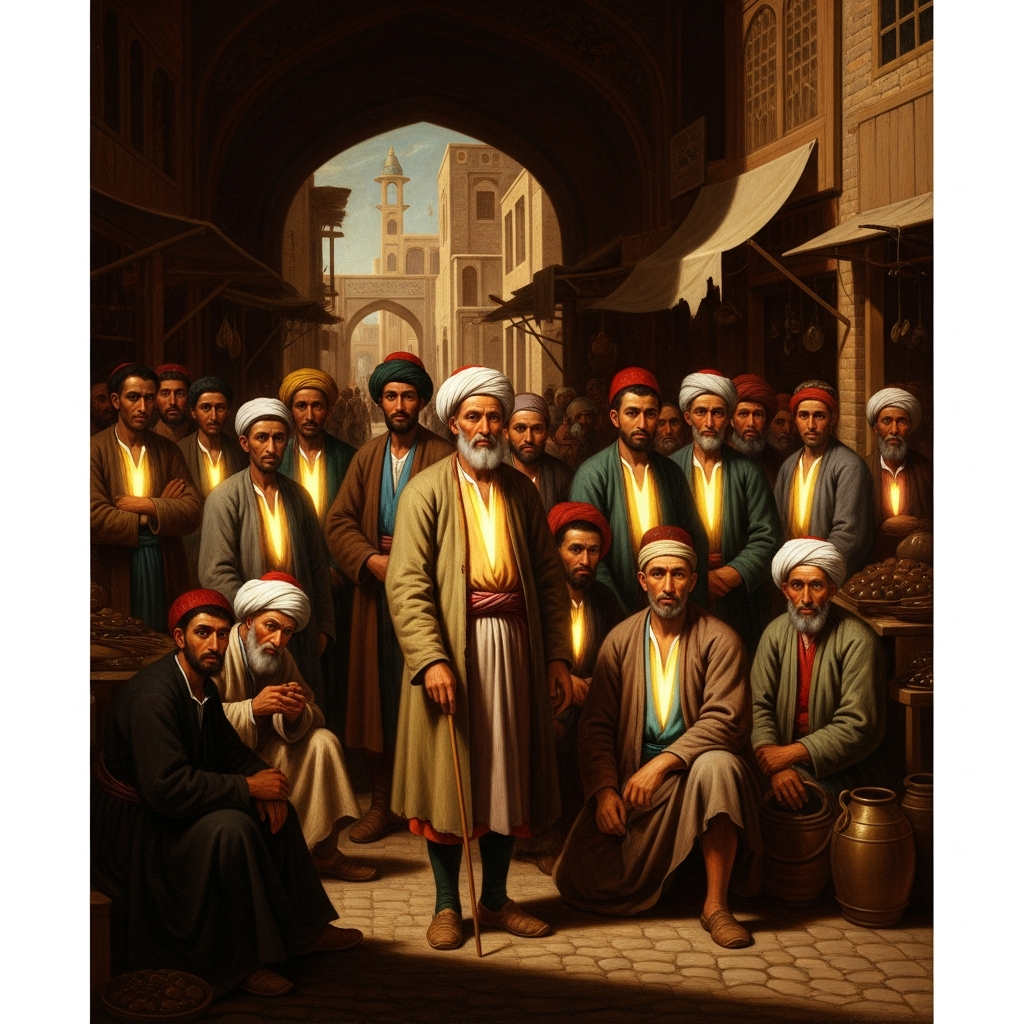
Portrait of The Abdal — The Forty Substitutes
Combat
ATK 4
DEF 9
SPR 10
SPD 8
INT 9
Element Light
Role Guardian
Rarity Legendary
Threat Low
LCK 10
ARC 9
Epithets "The Substitutes" (Arabic: *Abdal*, singular *Badal*); "the Forty Pegs of the World"; "the Hidden Righteous"; "the Invisible Army of God"
Sacred Animals None — they are human beings living ordinary lives; their extraordinary nature is entirely hidden
Sacred Objects None visible — their instruments are hidden prayer (*dhikr*) and miraculous works (*karamat*) which they conceal
Sacred Colors None fixed — they are indistinguishable from ordinary people by appearance
Sacred Number 40 (the number of Abdal — always exactly forty, never more or less); 7 (in some traditions, there are 7 Abrorar above the Abdal and below the Qutb)
Tariqa No specific order — the Abdal are above all organizational structures; traditionally Syria is their primary region, but they are found worldwide
Key Teaching The world is maintained by hidden righteousness, not visible piety; 40 unknown saints hold creation together; when one dies, another is appointed instantly — the world cannot exist without them
Dargah / Sacred Sites No shrines — they are specifically hidden; many great historical Sufis are claimed by followers to have been among the Abdal (Hasan al-Basri, al-Khidr, certain early Companions)
Festivals No specific festival — invoked in Sufi supplications during times of crisis, drought, and catastrophe as the hidden source of divine protection
Iconography None fixed — deliberately invisible; depicted in Sufi literature as ordinary people — bakers, merchants, goatherds — who perform miraculous acts and then disappear
Period Doctrine formalized ~9th-10th c. CE; the forty Abdal are mentioned in hadith literature (though authenticity is disputed); elaborated by Ibn Arabi and the major Sufi theorists
Region Traditional dwelling: Syria (the Levant); but scattered across the entire earth with special concentration where Islam first flourished — Iraq, Egypt, Khorasan
Special Substitution — When the Abdal pray, catastrophes pass over the cities; when they weep, the rains come; when one dies, another appears in the same instant, and the count never falters.
Passive Invisible Pillars — The Abdal are forty in number, scattered across the earth, holding the world's beams against collapse; remove them and the cosmos crumbles within a breath.

The Abdal (“substitutes,” singular Badal) are forty hidden saints who, by Sufi tradition, hold the world in being. They are scattered across the earth — most in Syria (the Levant being their traditional dwelling place), but found everywhere. When one dies, another is immediately appointed by divine designation; the number remains constant. They are called “substitutes” because they substitute for ordinary humanity in the work of bearing witness, in the prayer that holds back catastrophe, and in the unceasing remembrance (dhikr) that keeps the divine name present in the world.

The Abdal travel widely; they appear and disappear; some can be in two places at once. Many great Sufis (Hasan al-Basri, al-Khidr, the early Companions) are claimed for the rank. They are recognizable, if recognizable at all, by miraculous karamat — but they hide these. They are the hands and feet of the Qutb, the army of light that operates the world’s inner machinery.

Biblical Parallels: The Abdal correspond exactly to the Jewish tradition of the Lamed-Vavnik — the 36 hidden righteous (tzadikim nistarim) for whose sake God preserves the world. The number is different (40 vs. 36) but the function is identical. They also parallel the 7,000 in Israel “who have not bowed the knee to Baal” of 1 Kings 19:18 — the unseen remnant by whom God preserves a faithless nation. Christian tradition has the anonymi — the unknown saints — and Paul’s “great cloud of witnesses” (Hebrews 12:1).

Cross-Tradition: The Abdal parallel the Chinese Eight Immortals (the Baxian) who travel in disguise and appear at moments of crisis. They parallel the Tibetan mahasiddhas (the eighty-four accomplished ones) who lived hidden lives and worked subtle miracles. In Native American traditions, the hidden medicine people — and the Heyoka or sacred clowns — perform analogous work of cosmic balance.


1 min read
Combat Radar

ATK DEF SPR SPD INT
← Back to Sufi