Hitchhiker's Guide to Religion
Sufi

Azrael — The Compassionate Reaper

Sufi Active from the first death in creation (Adam's eventual death); doctrine of the compassionate Azrael fully developed in Sufi literature from ~9th century CE Universal — his jurisdiction is all death; especially embraced in the Persian and Ottoman Sufi traditions where death-mysticism is a devotional path
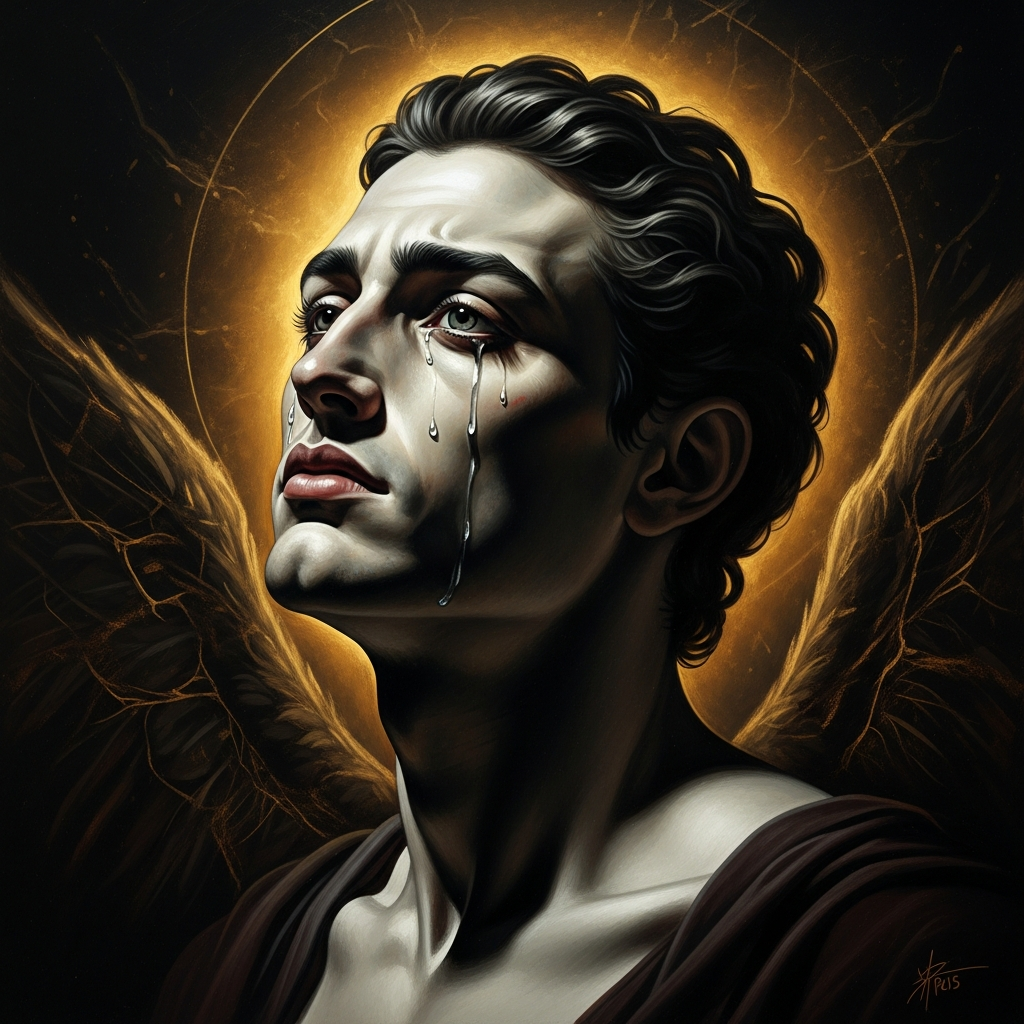
Portrait of Azrael — The Compassionate Reaper
Combat
ATK 9
DEF 10
SPR 10
SPD 10
INT 10
Element Death
Role Guardian
Rarity Legendary
Threat High
LCK 10
ARC 10
Epithets "Azrael" (Arabic: *Azrā'īl* — servant of God or whom God helps); "the Angel of Death" (*Malak al-Mawt*); "the Midwife of the Soul"; "the Gentle One" (Sufi reading)
Sacred Animals None — he is a being of pure function; associated with the crow (as omen of death) in popular Islamic culture, though not theologically
Sacred Objects The Tree of Life on which a leaf falls for each soul he must collect; the scroll of the person's deeds which he reads at the moment of death
Sacred Colors Black and white (the two faces of death — terror for the unbeliever, beauty for the saint); white alone for the lovers of God
Sacred Number 4 (his four faces — one for believers, one for unbelievers, one for saints, one for prophets); the three days between death and the soul's journey to judgment
Tariqa No specific order — but the Mevleviyya (Rumi's tradition) cultivates a relationship with Azrael: Rumi called his death-day his *'urs* (wedding) with God
Key Teaching Death is the doorway to union, not a punishment — Rumi: "I have been dying since before you were born, and I have not yet tasted death's sweetness"; cultivate death-awareness (*tafakkur al-mawt*) as a Sufi practice; befriend Azrael while alive
Dargah / Sacred Sites No personal shrine — he is an angel; but Rumi's tomb in Konya is the supreme shrine to the Sufi embrace of death; the cemeteries (*maqbara*) near all Sufi dargahs are sites of Azrael's reflection
Festivals Sheb-i Arus (Rumi's "Wedding Night" death anniversary, December 17) — the Mevlevi ceremony celebrating death as the union of the soul with God
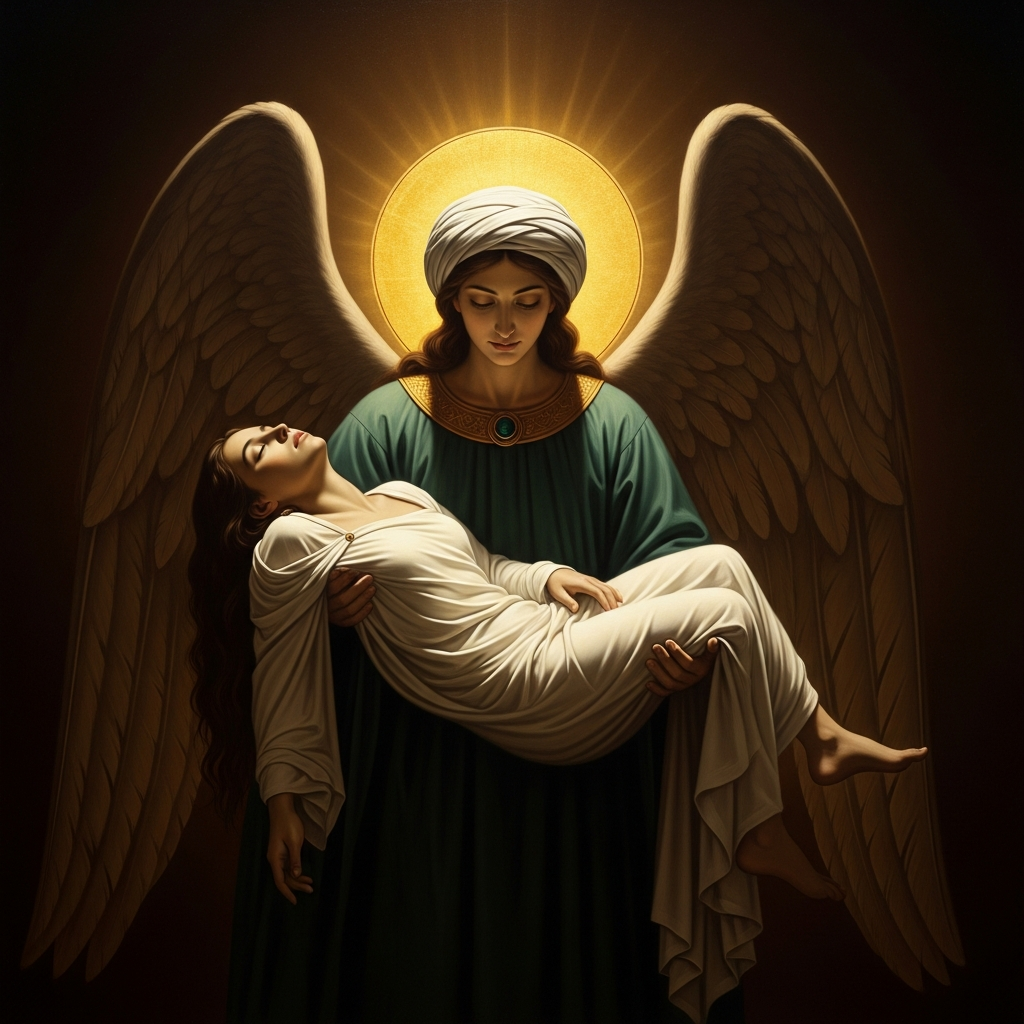
Iconography In Persian manuscript art: sometimes depicted as a beautiful angel in white; sometimes as a vast figure whose body spans heaven and earth with four faces; always shown in the act of gently lifting the soul from the body
Period Active from the first death in creation (Adam's eventual death); doctrine of the compassionate Azrael fully developed in Sufi literature from ~9th century CE
Region Universal — his jurisdiction is all death; especially embraced in the Persian and Ottoman Sufi traditions where death-mysticism is a devotional path
Special The Four Faces — Azrael shows the dying the face their life has earned; for the lover of God, his face is the most beautiful sight in all of creation.
Passive Doorman of Union — Azrael cannot be evaded, bargained with, or postponed; his arrival is the secret promise behind every breath, and the wise spend their lives befriending him.

Azrael (Arabic Azra’il) is the Angel of Death in Islamic tradition — but in Sufi reading, he is not the grim figure of European folklore. He is the compassionate one, the angel whose work is to lift the soul out of the body the way a midwife lifts a child out of the womb: with care, with patience, with the firm gentleness of a being who has done this work since before the first death. He has, by some traditions, four faces — one for the believer, drawn by light; one for the unbeliever, drawn by force; one for the saint, drawn by joyous summons; one for the prophet, drawn by direct invitation.

Sufis cultivate a relationship with Azrael while still alive. Rumi calls death “our wedding day” — the moment when the lover finally meets the Beloved without the veil of the body. To be afraid of Azrael is to misread him; he is the doorman of union, the one who finally opens what life has only knocked upon. The wise prepare for his visit the way one prepares for the most important guest; the foolish flee from him only to find that fleeing is the only thing that makes him terrible.

Biblical Parallels: Azrael corresponds to the Angel of Death of the Passover (Exodus 12) and to the destroying angel of 2 Samuel 24:16. He parallels the Jewish Malach ha-Mavet — the angel of death who is also, in Hasidic readings, the angel of mercy. In Christian tradition he corresponds in part to the Archangel Michael in his psychopomp role (escorting souls to judgment) and to the merciful death of the saints — Francis welcoming “Sister Death” in the Canticle of the Sun.

Cross-Tradition: Azrael parallels the Greek Thanatos (more often gentle than terrifying in archaic depictions) and his brother Hypnos (sleep). In Hindu tradition he corresponds to Yama — the first who died, the lord of death, who in some Upanishadic readings is the great teacher (the Katha Upanishad opens with Yama instructing the boy Nachiketa). In Buddhist iconography he is Yamantaka, the destroyer of death, paradoxically depicted as terrifying precisely because his terror is benevolent.


2 min read

Combat Radar

ATK DEF SPR SPD INT
← Back to Sufi