Hitchhiker's Guide to Religion
Sufi

The Huma — Bird of Fortune

Sufi Pre-Islamic Persian mythology; in Sufi appropriation especially from ~10th-13th c. CE; referenced in Hafiz, Rumi, and Sa'di Persian-speaking world — Iran, Central Asia, India (Mughal poetry); the *Huma* bird is a common emblem of royal grace and good fortune across the entire Persianate world
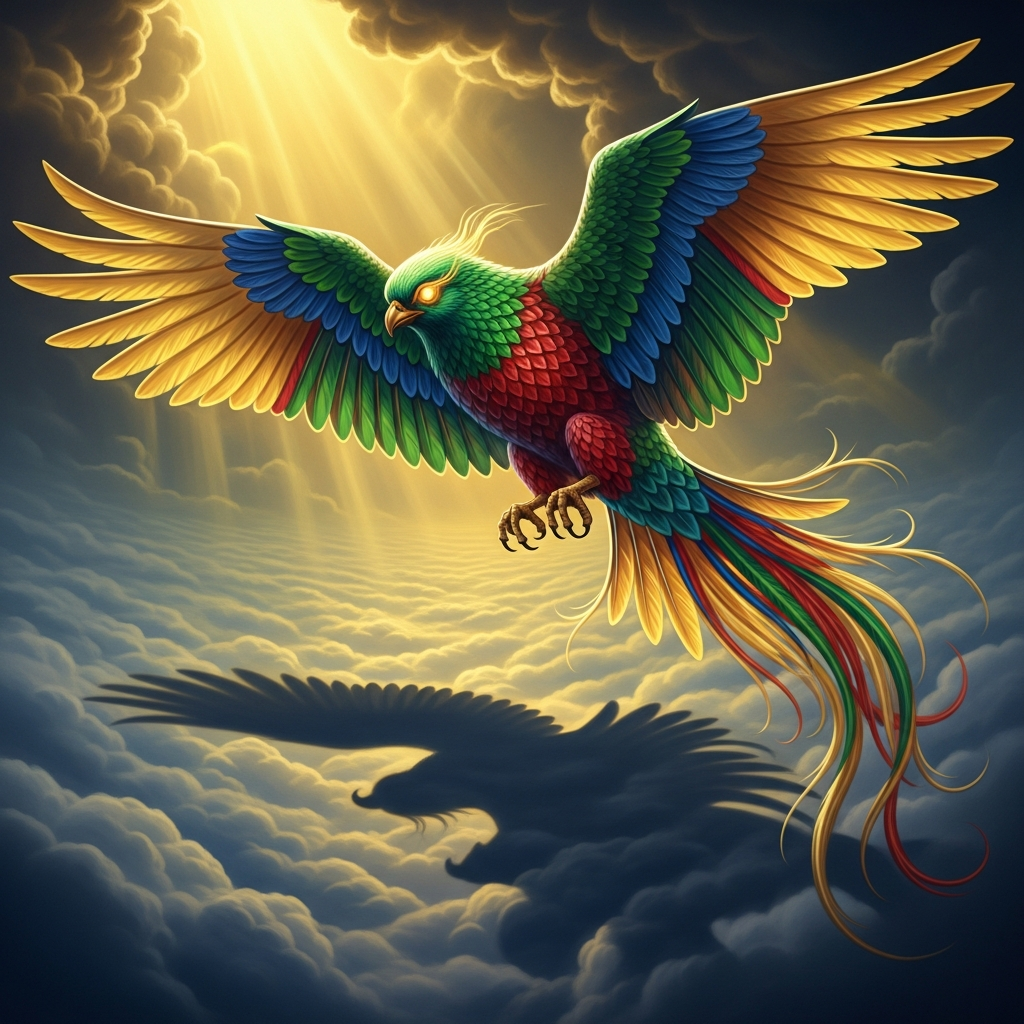
Portrait of The Huma — Bird of Fortune
Combat
ATK 2
DEF 7
SPR 9
SPD 10
INT 8
Element Air
Role Messenger
Rarity Epic
Threat Low
LCK 10
ARC 9
Epithets "Huma" (Persian: *Humā*); "the Fortune Bird"; "the Bird of Paradise"; "the Shadow of *Farr*"; "the Never-Landing One"
Sacred Animals She IS the sacred bird — an exclusively aerial being who never touches the earth; sometimes depicted as a self-immolating phoenix
Sacred Objects Her shadow (*sāye*) — the only part of her that touches the earth and the only part that can be received; the crown (conferred by her shadow on the future king)
Sacred Colors Gold, white, iridescent — the colors of royally pure birds; light itself
Sacred Number None — she is the exception to all number; her grace descends on no schedule
Tariqa No specific order — she is a Persian mythological figure appropriated by Sufi poets; most used in the Persian mystical tradition broadly
Key Teaching *Baraka* (divine grace) cannot be earned, only received; preparation (polishing the heart) opens one to grace, but grace itself is sovereign and descends where it wills; kingship of the spirit is not achieved but bestowed
Dargah / Sacred Sites No physical shrine — she is invisible and never lands; her presence is felt only in the moment of royal or spiritual anointing
Festivals Nowruz — her image of regal grace and the coming of the auspicious season overlaps with New Year celebrations in Iran
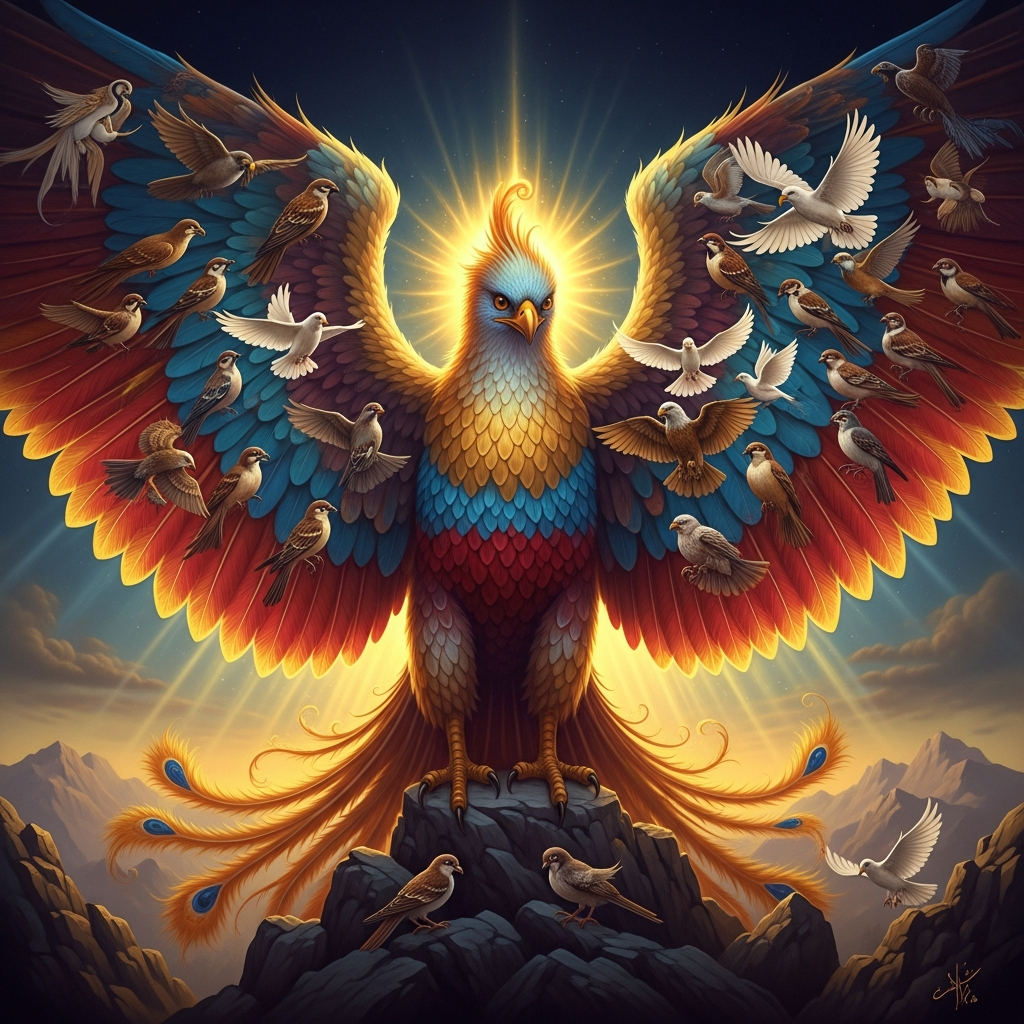
Iconography A bird of paradise in perpetual flight, never touching the earth; her shadow shown falling on a fortunate figure below; in Persian manuscript art she is depicted as an exotic plumed bird always in motion
Period Pre-Islamic Persian mythology; in Sufi appropriation especially from ~10th-13th c. CE; referenced in Hafiz, Rumi, and Sa'di
Region Persian-speaking world — Iran, Central Asia, India (Mughal poetry); the *Huma* bird is a common emblem of royal grace and good fortune across the entire Persianate world
Special Shadow of Sovereignty — The Huma's passing shadow lifts the one beneath it into kingship of the spirit; the touched one rules whether or not he ever sits on a throne.
Passive Never Lands — The Huma cannot be captured, caged, or commanded; her grace is sovereign, descending where it wills, leaving where it wills, and her absence is felt only after her passage.

The Huma is the bird of paradise in Persian mythology — a mystical creature that flies forever and never lands. It lives in the upper atmosphere, never touching earth, said by some traditions to be invisible. Its shadow, however, falls on the earth at intervals, and whoever is touched by the Huma’s shadow is destined for kingship and supreme felicity. It is the bird of farr — the divine glory that legitimized Persian kings, the radiant aura that distinguishes the shahanshah from ordinary men.

In Sufi appropriation, the Huma becomes the figure of baraka — divine grace that descends without earning. One does not catch the Huma; one is caught beneath its passing shadow. The seeker prepares himself, polishes his heart, walks the path — but the moment of grace is not a transaction. It is a sovereign descent. The bird is sometimes said to live by phoenix-like self-immolation: she flies into her own ashes and is renewed, never resting. Some Sufi poets identified the Huma with the Holy Spirit; others made her the herald of Mahdi (the rightly guided one). Always she is what cannot be grasped, only graced by.

Biblical Parallels: The Huma parallels the Holy Spirit descending as a dove (Matthew 3:16) — sovereign grace that “blows where it wills” (John 3:8). It corresponds to the Shekhinah in Jewish mysticism — the divine presence that rests upon the tabernacle, the Temple, the Sabbath, and the righteous. The crown of the Huma’s shadow parallels the anointing oil that made David king (1 Samuel 16:13) — a charisma that comes from above and that no human can confer.

Cross-Tradition: The Huma parallels the Chinese Fenghuang and the Japanese Hou-ou (phoenix) as auspicious birds of imperial legitimacy. In Vedic tradition, the Garuda who carries Vishnu plays a similar role of divine vehicle. The Native American Thunderbird, whose passing brings rain and fortune, occupies parallel mythic ground.


1 min read
Combat Radar

ATK DEF SPR SPD INT
← Back to Sufi