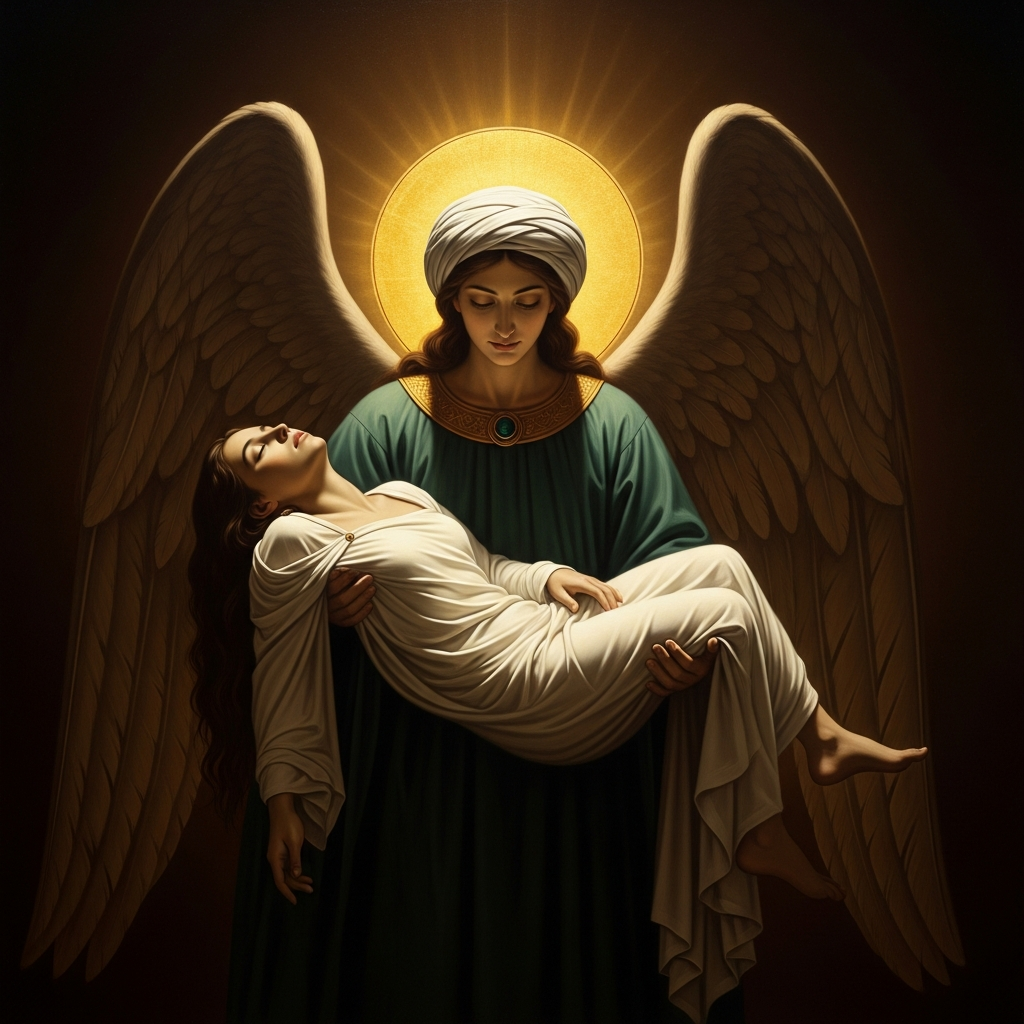
Combat Profile
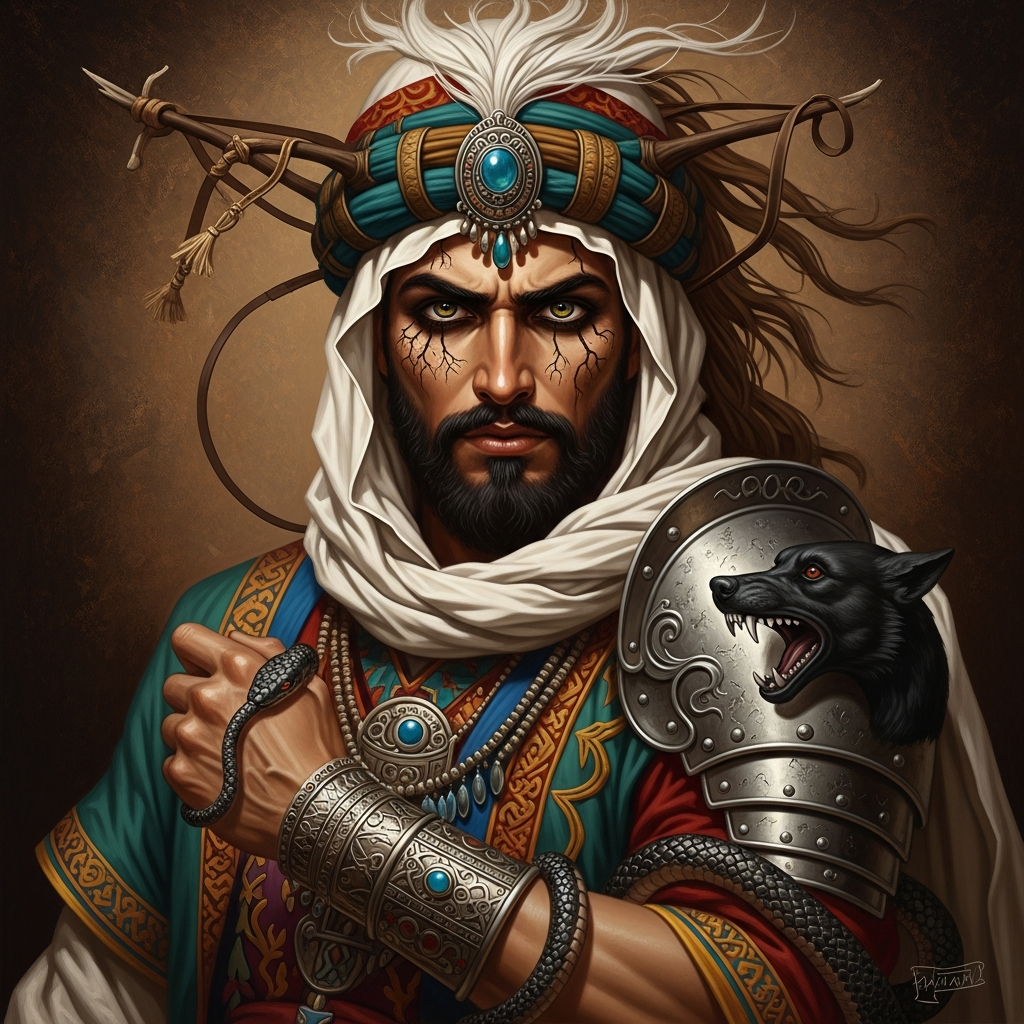
Mask of the Self
The Nafs al-Ammara wears the face of the seeker, speaks in his voice, and convinces him that its desires are his own; only the shaykh and the long-disciplined practice can pry the mask loose.
Greater Jihad
The Nafs al-Ammara is the inner enemy of every soul; it cannot be killed in a single blow, only dismantled across years of patient war, and its defeat is the actual purpose of the path.
The Nafs al-Ammara bi’l-Su — “the soul that commands evil” (Quran 12:53) — is the lowest stage of the nafs (ego-soul), the self in its raw, unredeemed state: appetite-driven, vain, fearful, dishonest, endlessly self-justifying. It is not a separate being; it is the user himself in his unexamined operations. But Sufism personifies it as a kind of internal monster — sometimes a black dog, sometimes a serpent, sometimes a wild horse whose reins have been thrown by an inexperienced rider. The whole spiritual path is the gradual taming, refinement, and ultimately transmutation of the Nafs al-Ammara into its higher stages: Lawwama (the self-blaming), Mulhama (the inspired), and finally Mutmainna (the peaceful).
The Nafs al-Ammara is the principal antagonist of every Sufi narrative. The shaykh’s hardest work is helping the disciple recognize that what the disciple thinks is himself is actually his Nafs al-Ammara wearing a mask. Every spiritual practice — fasting, vigil, dhikr, muhasaba (self-examination), muraqaba (watchfulness) — is a tool against it. It dies hard. It dies many deaths. The greatest jihad, the Prophet is reported to have said, is the jihad against the nafs — and this is the nafs he meant.
Biblical Parallels: The Nafs al-Ammara corresponds exactly to the Pauline sarx — the “flesh” that wars against the spirit (Romans 7-8, Galatians 5:17). It is the yetzer ha-ra of Jewish tradition — the evil inclination that every human carries from birth, and that must be wrestled with through Torah study and mitzvot. It parallels Augustine’s concupiscentia — the disordered desire that remains even after baptism. The Christian monastic literature on the eight thoughts (later the seven deadly sins) is in essence a taxonomy of the Nafs al-Ammara’s disguises.
Cross-Tradition: The Nafs al-Ammara parallels the Hindu ahamkara (ego-maker) — the false sense of “I” that obscures the true Self (Atman). In Buddhism it corresponds to the kleshas — the afflictive emotions (greed, hatred, ignorance) that fuel rebirth — and to Mara, the personification of these forces. In Jungian terms it is the Shadow — the disowned, projected, denied parts of the personality that nonetheless drive most action.
2 min read