Combat Profile
Axis of the Age
The Qutb is the still point around which the cosmos turns; his death would unmake the era, and his successor is appointed by God in the same instant.
Hidden Pole
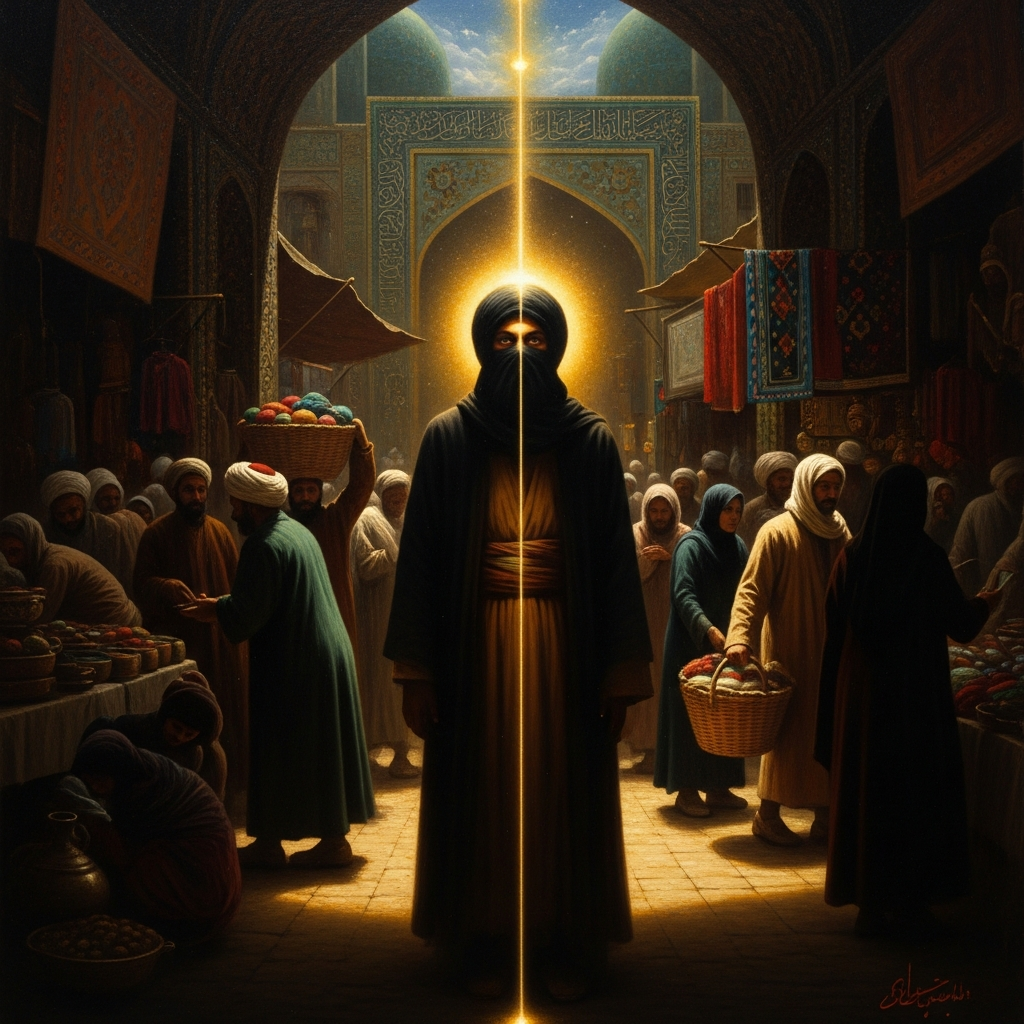
The Qutb is unknown even to himself; the world's continued existence is the effect of his presence, but his identity is the most jealously guarded secret in creation.
The Qutb (Pole, Axis) is the most secret of the hidden saints — the spiritual axis around which each age turns. There is exactly one Qutb in any generation. He (or she — some traditions hold the Qutb may be a woman) is the axis mundi incarnate: the still point that the entire human cosmos pivots around. Most Qutbs do not know they are the Qutb. Many great saints have suspected they were the Qutb but were forbidden by adab (spiritual courtesy) from saying so. Ibn Arabi believed that the Seal of the Saints — the final and greatest Qutb — would appear at the end of time, paralleling the Seal of the Prophets.
Beneath the Qutb sit the Awtad (four pegs, stationed at the cardinal directions of the world), the Abdal (forty substitutes), the Nujaba (the noble three hundred), and so on down to the Saliheen (the merely virtuous). The whole hierarchy is invisible. The world is held together by them. When one dies, another is appointed by direct divine designation — no one applies for these positions. The Qutb may be a baker in Damascus or a goatherd on the slopes of the Atlas. The world unknowingly prays through them.
Biblical Parallels: The Qutb corresponds to the Jewish concept of the Tzadik ha-Dor — the righteous one of the generation, the one who, in some Hasidic readings, holds the world in being. He parallels the Lamed-Vavnik tradition (the 36 hidden righteous, parallel to the Sufi Abdal). In Christian tradition he resembles the unknown saints whom Paul gestures toward when he says we are surrounded by “a great cloud of witnesses” (Hebrews 12:1) and the Chrysostom tradition of the hidden monks whose prayer holds back the wrath of God.
Cross-Tradition: The Qutb parallels the Hindu Avadhuta (the perfectly liberated being whose presence sustains a region’s spiritual integrity) and the Chakravartin (universal sovereign, often understood as the spiritual axis of an age). In Tibetan Buddhism, the Bodhisattva who refuses final nirvana to teach occupies parallel ground; in Mahayana cosmology, the Buddhas of the ten directions are similarly axial figures.
2 min read