Combat Profile
Name Without Body
The Anqa exists by reputation; her actual encounter is reserved for the perfected human, who recognizes in her the form of his own polished essence.
Mountain of Qaf
The Anqa rings the cosmos with her flight and sees every realm at once; her presence is the principle of intelligibility itself, the order beneath all orders.
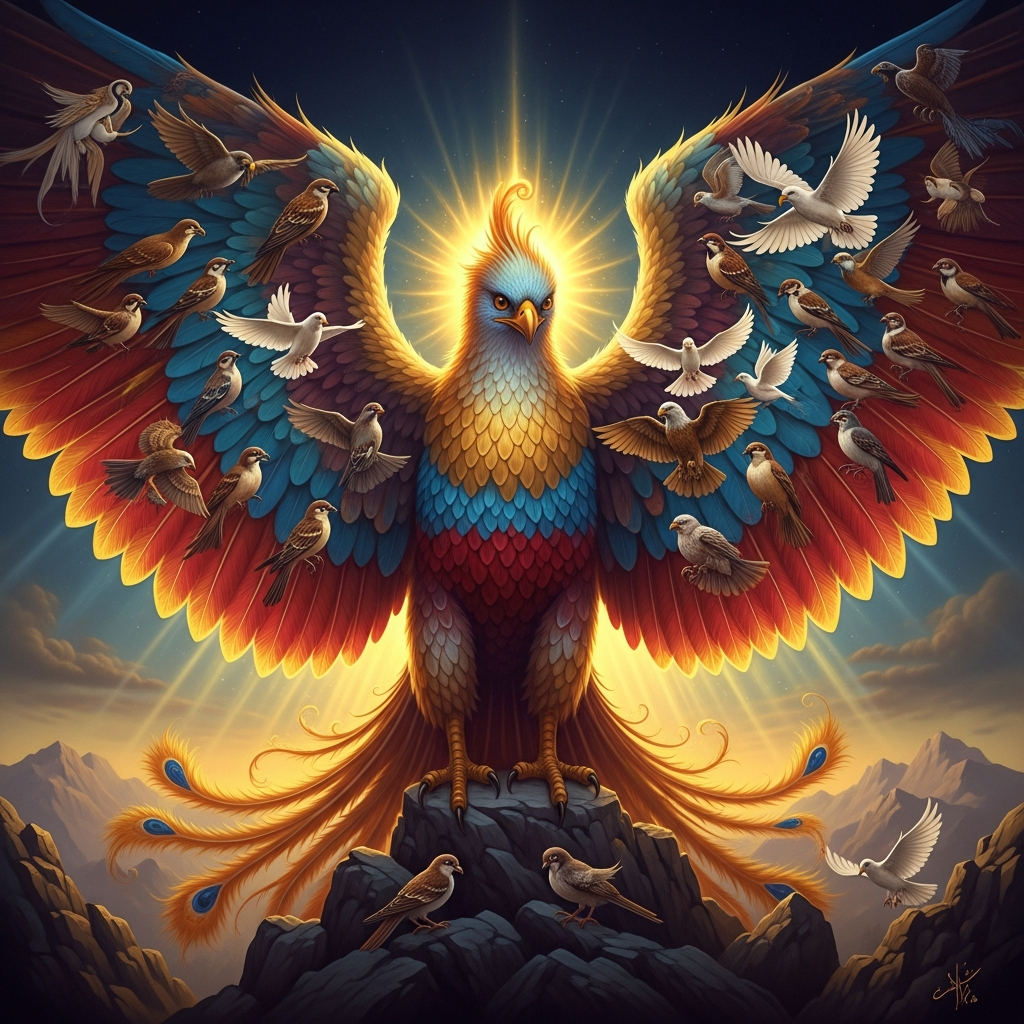
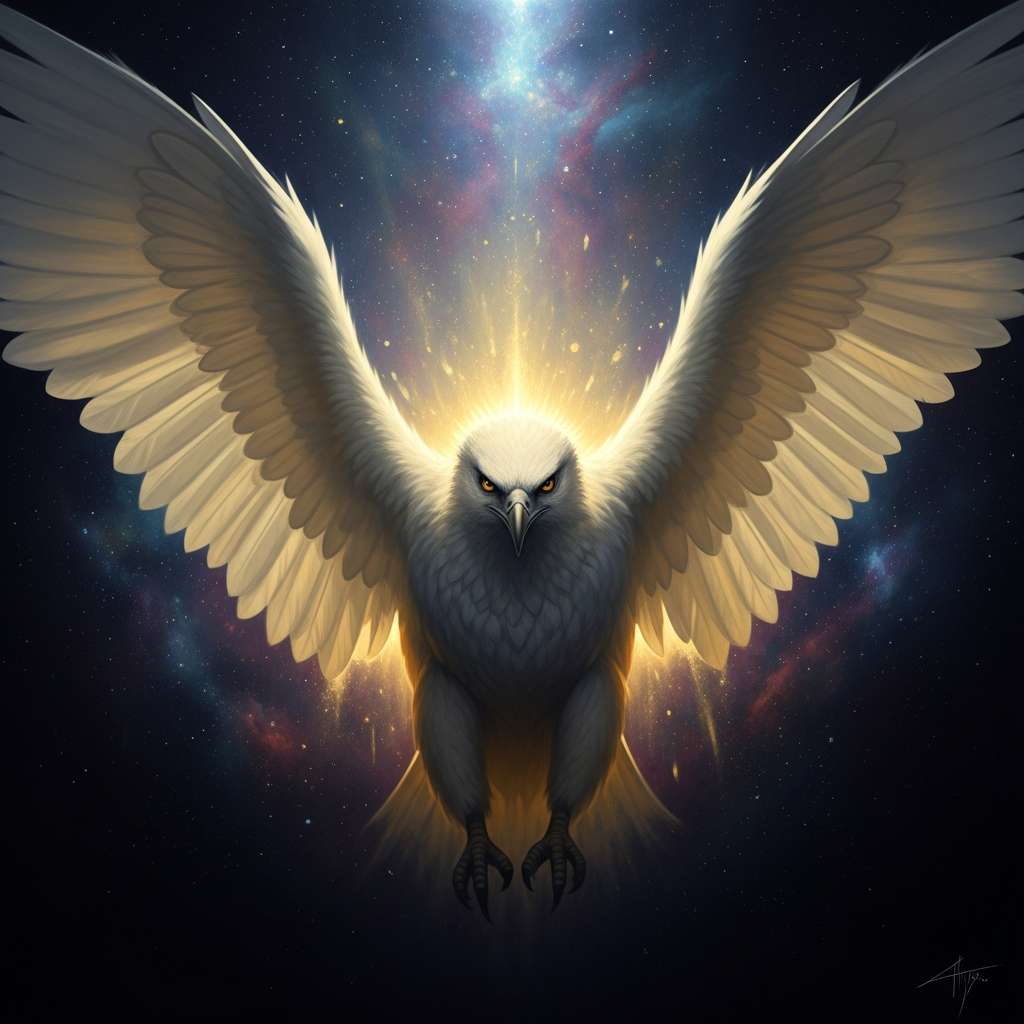
The Anqa (or Anqa Mughrib, “the Anqa of the West”) is a mythical bird closely related to the Simurgh but distinguished in some Sufi readings — particularly in the writings of Ibn Arabi (1165-1240). For Ibn Arabi, the Anqa is the Anqa Mughrib, the “Wonderful Phoenix of the Strange Land” — a name for the insan al-kamil (the perfect human), the one who has actualized all the divine names within himself and become a complete mirror of God. The Anqa lives on Mount Qaf, the cosmic mountain that rings the world; she is so vast that she contains the cosmos in her flight; she is so rare that she is essentially nonexistent in any particular place, and yet she is the archetype of all flying things.
The Anqa is often called the “bird that has a name but no body” — pure essence, pure possibility, pure intelligibility. To meet the Anqa is to meet the divine intelligence that orders the worlds, the Aql al-Awwal (First Intellect) of Islamic Neoplatonism. She is also the heraldic bird of the highest stations of the Sufi path — the saint who has so emptied himself that all 99 names of God can speak through him without distortion.
Biblical Parallels: The Anqa corresponds to the Logos of John 1 — the divine reason through whom all things are made. She parallels the cherubim and seraphim of Isaiah 6 and Ezekiel 1 — vast, multi-formed beings whose flight signals the presence of the throne. In Christian mysticism, she resembles Hildegard’s Sapientia and the Wisdom of Sirach 24 who “encompasses the vault of heaven.”
Cross-Tradition: The Anqa parallels the Egyptian Bennu (heron of resurrection), the Greek Phoenix, the Chinese Fenghuang, the Russian Zhar-ptitsa (firebird). In Hindu cosmology she corresponds to Garuda and to the cosmic Hamsa (swan) who flies between worlds. Jung’s philosophical phoenix — the alchemical bird of integration — captures the same archetype.
1 min read