Hitchhiker's Guide to Religion
Vedic

Yama

Vedic Vedic Yama as hospitable king of the dead c. 1500 BCE; transformation into judicial Yama-Dharmaraja c. 600 BCE – 300 CE; Katha Upanishad (c. 600-400 BCE) — the pivotal text where Yama reveals the nature of the atman Pan-Indian; the south (Dakshinadisha) is Yama's cardinal direction; ancestor shrines and pitru rites oriented southward throughout India
Combat
ATK 7
DEF 9
SPR 10
SPD 6
INT 9
Element Death
Role Sovereign
Rarity Legendary
Threat Extreme
LCK 5
ARC 9
Special Ancestral Welcome — Receives the worthy dead into a paradisal afterlife; can grant a slain ally one additional life if the proper rites are performed
Passive Pathfinder of the Dead — Yama is the first to walk every road; he cannot become lost in any realm and his four-eyed hounds detect any soul attempting to flee judgment
Epithets "The Restrainer" (*Yama*), "Twin" (*Yama/Yamī* — he and his sister Yami are the first human pair), "Pathfinder" (*Mārgaduta*), "King of the Ancestors" (*Pitṛpati*)
Sacred Animals Two four-eyed brindle dogs (*Shyama* and *Sabala*) escort the dead to Yama's realm; they range the world collecting souls
Sacred Objects The path to the afterlife (which Yama discovered by dying first); soma (which the ancestors drink in his bright realm in the Rigveda); later: the danda (staff) and pasha (noose) in Puranic depictions
Sacred Colors Green (Vedic Yama is not dark — his realm is bright), White (ancestral realm beneath the great tree), later Black (Puranic association with death)
Sacred Number 2 (the twin — Yama/Yami; duality of life and death)
Consort(s) Yami (twin sister; she proposes incest in RV 10.10 to repopulate the world — Yama refuses; Yami becomes the river Yamuna)
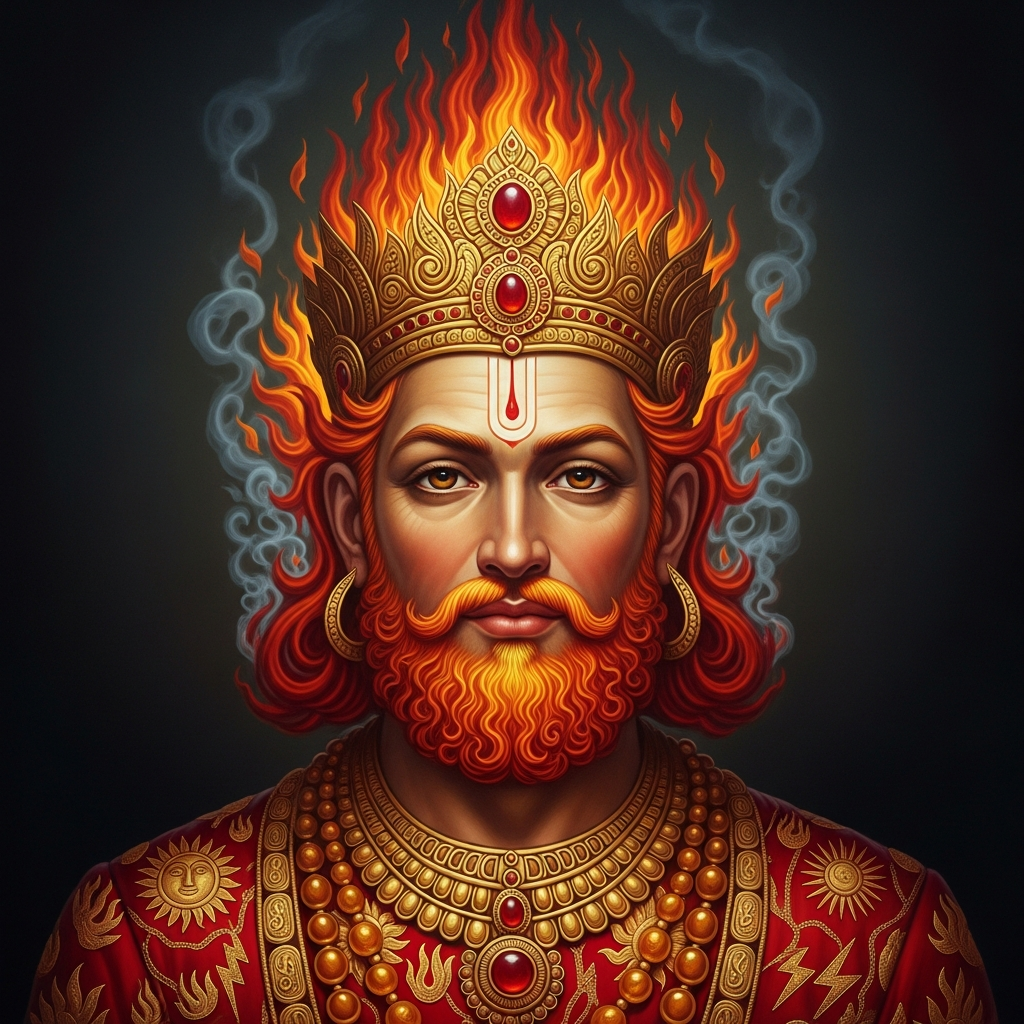
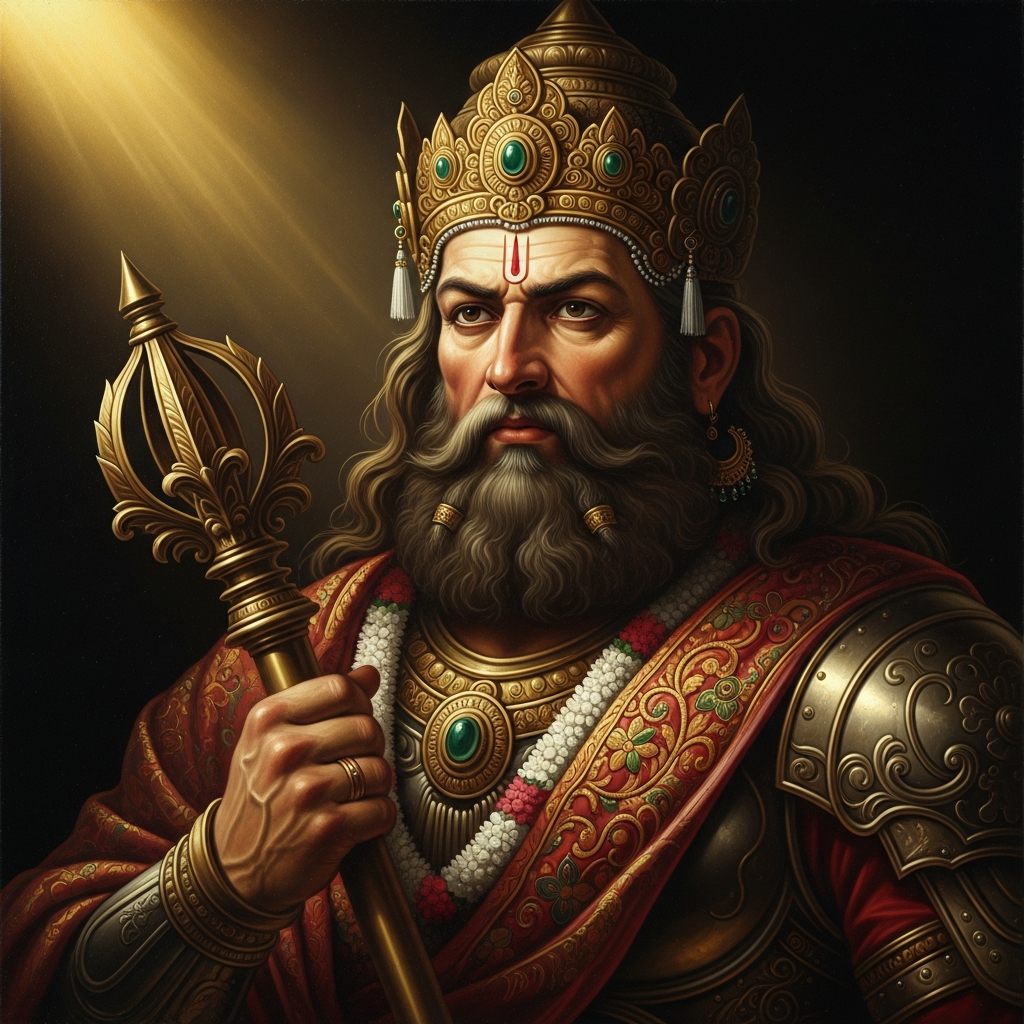
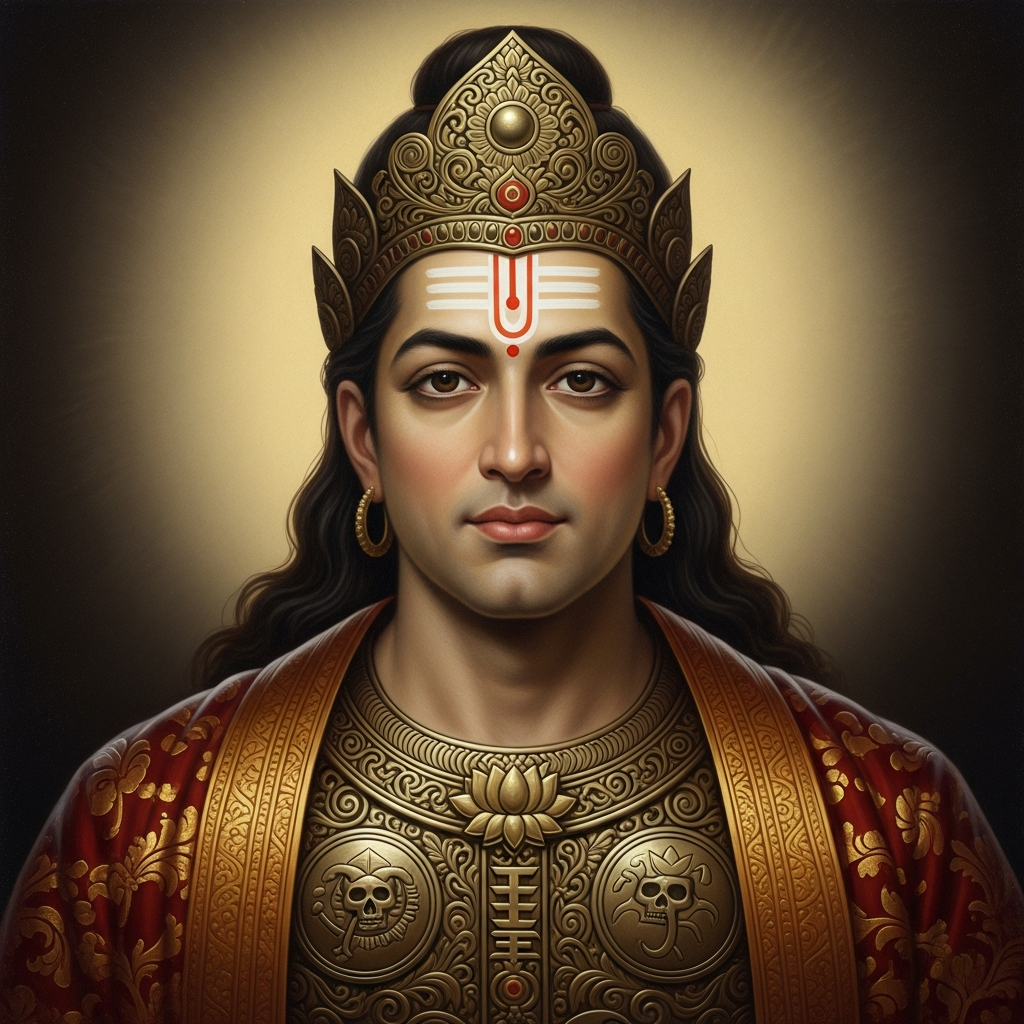
Iconography In the Vedic texts: a king seated beneath the vast tree in a paradise of light, with the ancestors feasting and drinking soma around him, two brindle dogs at his feet — a welcoming host; in later Puranic iconography: a dark-green deity of stern judgment astride a black buffalo, wielding a staff and noose, surrounded by the records of karma
Period Vedic Yama as hospitable king of the dead c. 1500 BCE; transformation into judicial Yama-Dharmaraja c. 600 BCE – 300 CE; Katha Upanishad (c. 600-400 BCE) — the pivotal text where Yama reveals the nature of the atman
Region Pan-Indian; the south (Dakshinadisha) is Yama's cardinal direction; ancestor shrines and pitru rites oriented southward throughout India

Yama is the first mortal — the first being who died — and by virtue of having pioneered death, he becomes the lord of the dead. He is twin to Yami, his sister, who in one disturbing Rigveda hymn (10.10) attempts to seduce him into incest to repopulate the world; Yama refuses on the grounds of cosmic propriety. He then dies, and crosses to a heavenly realm where the ancestors feast under a great tree, drinking soma with the gods. He is the first king of the dead — not a god of judgment yet (that comes in the Puranic period), but a presider over a paradisal afterlife that receives the worthy.

The Vedic Yama is benign. He is a host, not a punisher. His messengers are two four-eyed dogs (RV 10.14.10-12) who escort the dead along the path. His realm is bright, with cool waters and singing. The transformation of Yama into the dread judicial Yama-Dharmaraja of later Hinduism — wielding the noose, riding the buffalo, presiding over hells — is a slow medieval development. In the Rigveda he is closer to the Greek Hades-as-host than to Satan-as-tormentor.

Biblical Parallels: Yama parallels Adam in being the first mortal (and therefore the first to die), but inverts the role: Adam’s death is humanity’s curse, while Yama’s death pioneers humanity’s path to the afterlife. The Vedic vision of a paradisal land of the ancestors echoes the Hebrew “gathered to his people” formula (Genesis 25:8) and the bosom of Abraham (Luke 16:22) more than it does Sheol or Gehenna.

Cross-Tradition: Direct cognate with the Iranian Yima — same name, same role as primordial king and lord of paradise (Yima Khshaeta, “Yima the Radiant,” from whom Persian Jamshid derives). Parallels Greek Hades (lord of the dead, but not evil), Norse Hel (queen of the non-heroic dead), and Egyptian Osiris (first to die, becomes lord of the underworld).


1 min read
Combat Radar

ATK DEF SPR SPD INT
← Back to Vedic