The Story
The Vedic religion is the oldest stratum of what would later become Hinduism — a tradition older than the Buddha, older than Zoroaster, older than the Hebrew prophets. Its sacred poems, the four Vedas (Rigveda, Samaveda, Yajurveda, Atharvaveda), were composed in archaic Sanskrit between roughly 1500 and 1000 BCE by a society of pastoralist clans who spoke an Indo-European language and worshipped the bright powers of sky, fire, and storm. The Rigveda — 1,028 hymns in ten books (mandalas), preserved by oral memorization with a precision that astonishes modern philologists — is the closest thing humanity has to a transcript of Bronze Age religion.
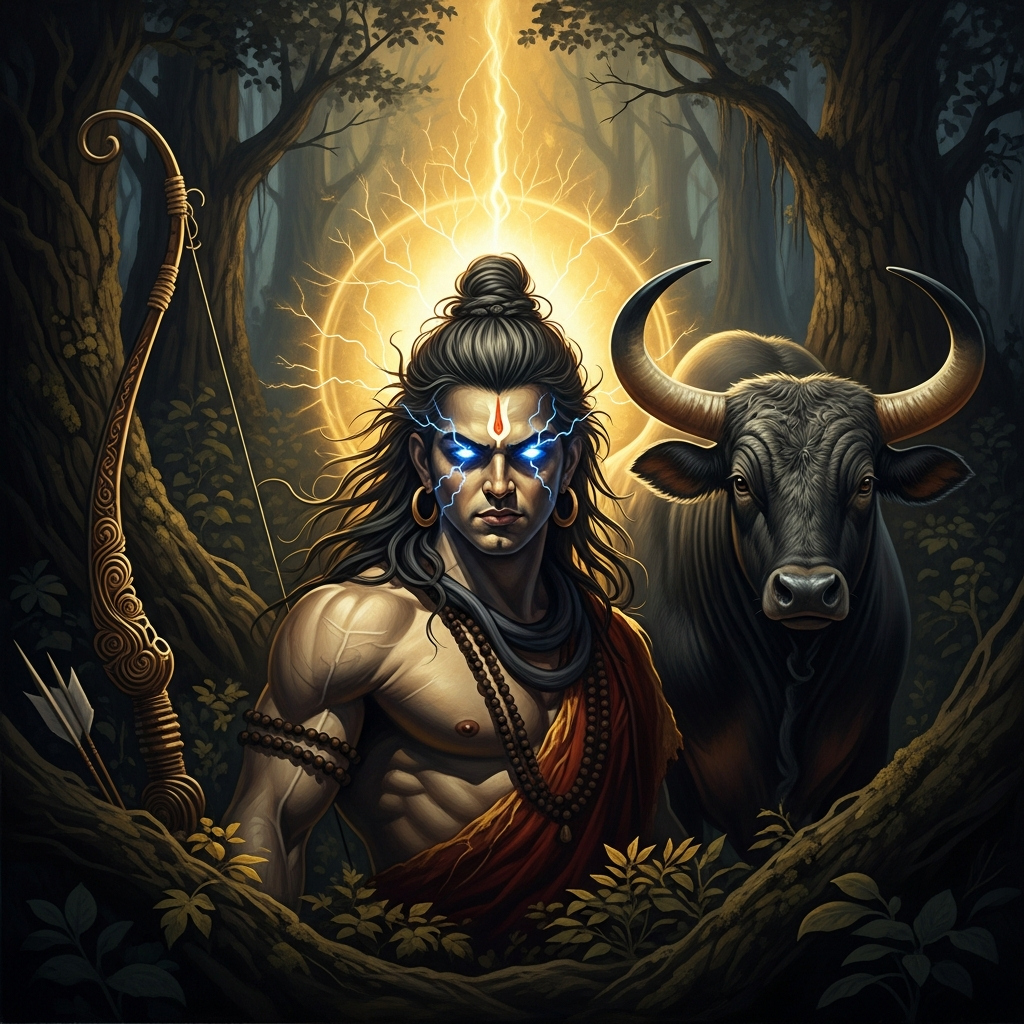
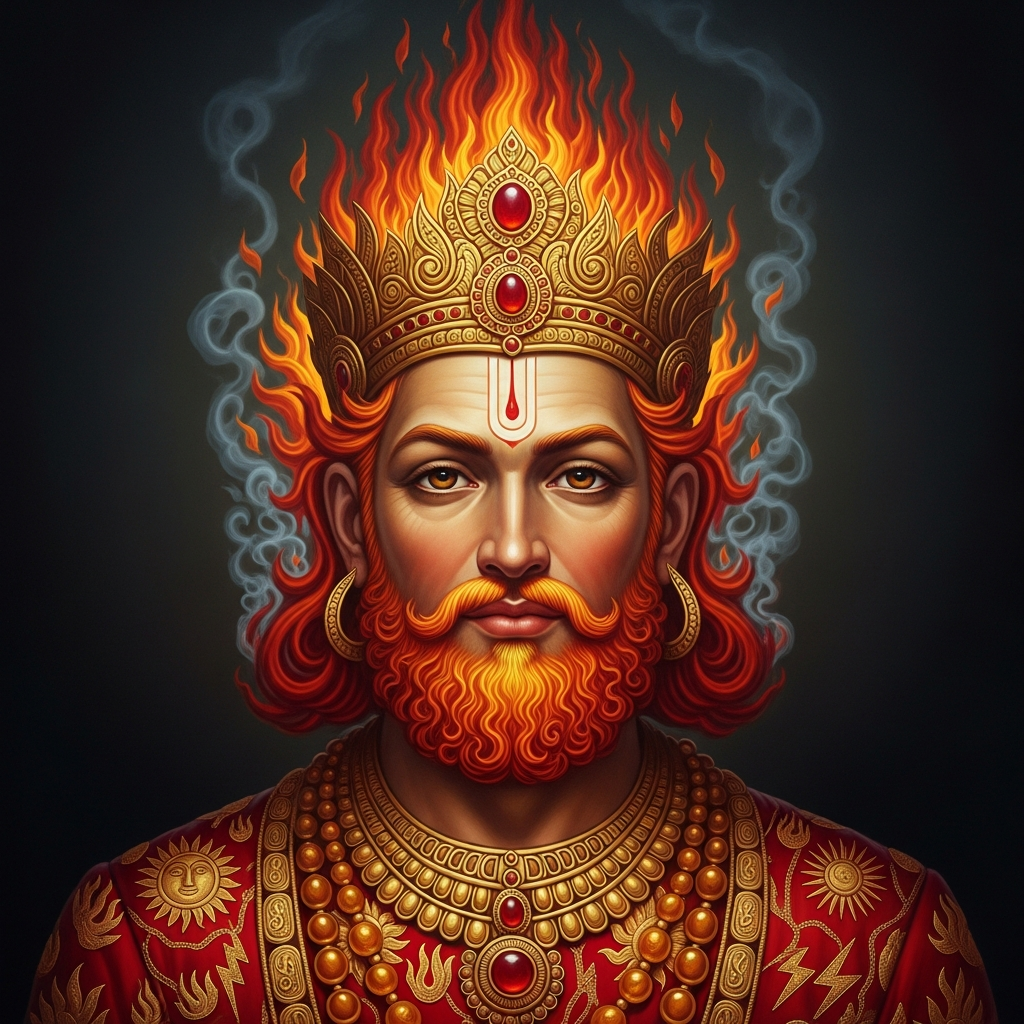
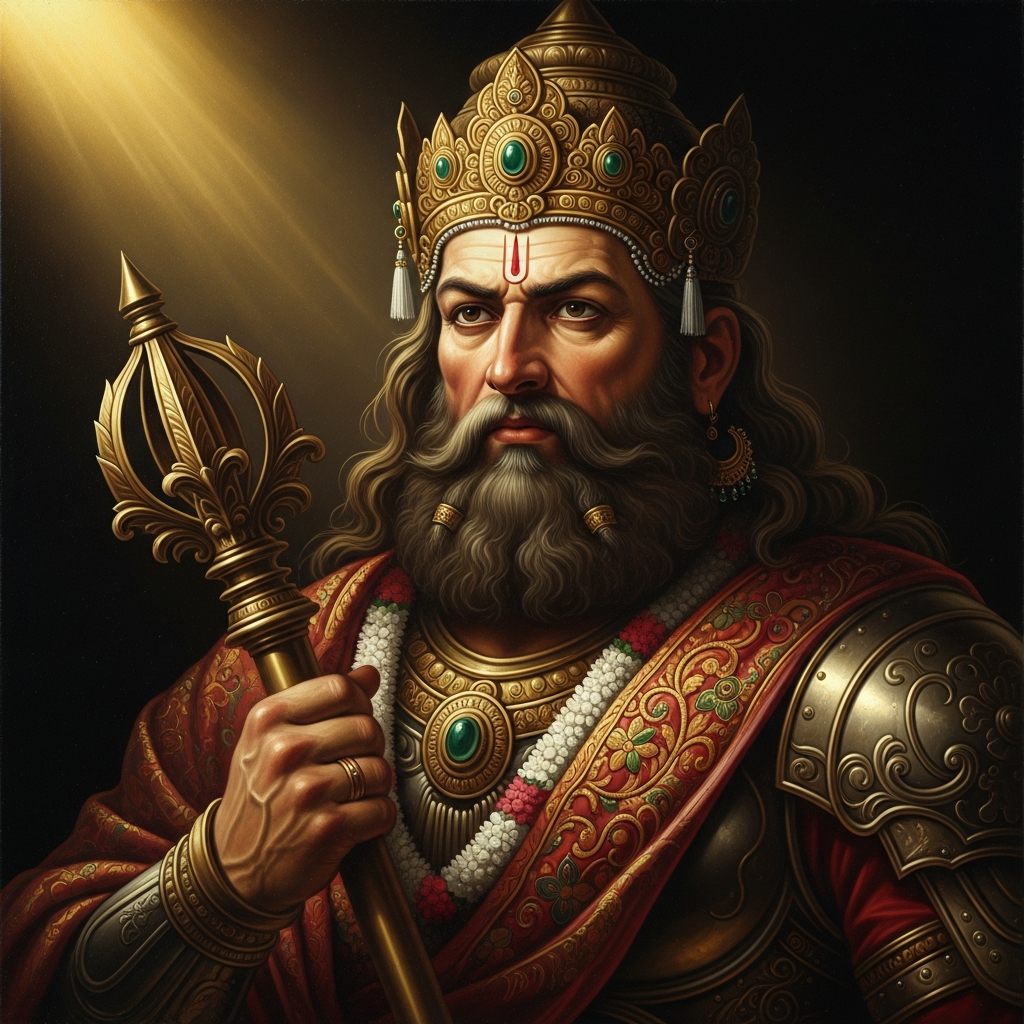
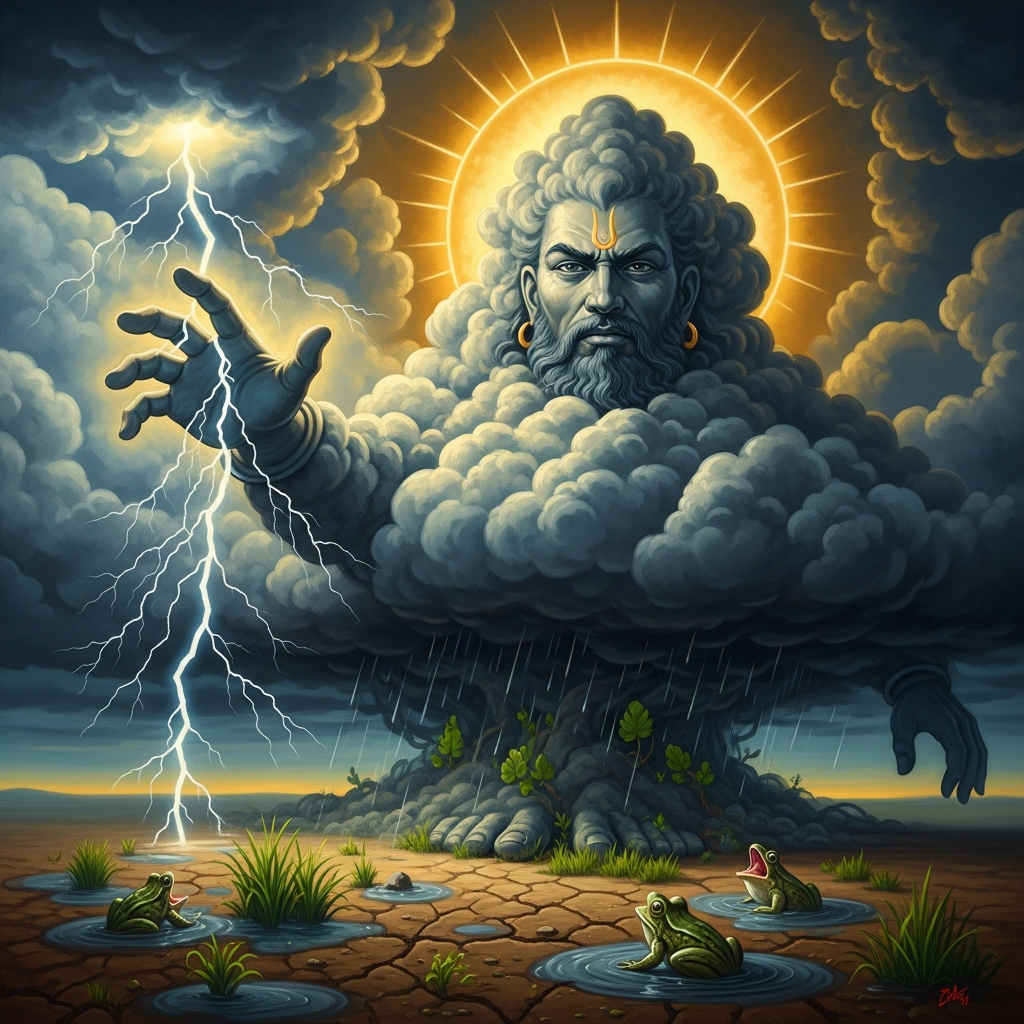
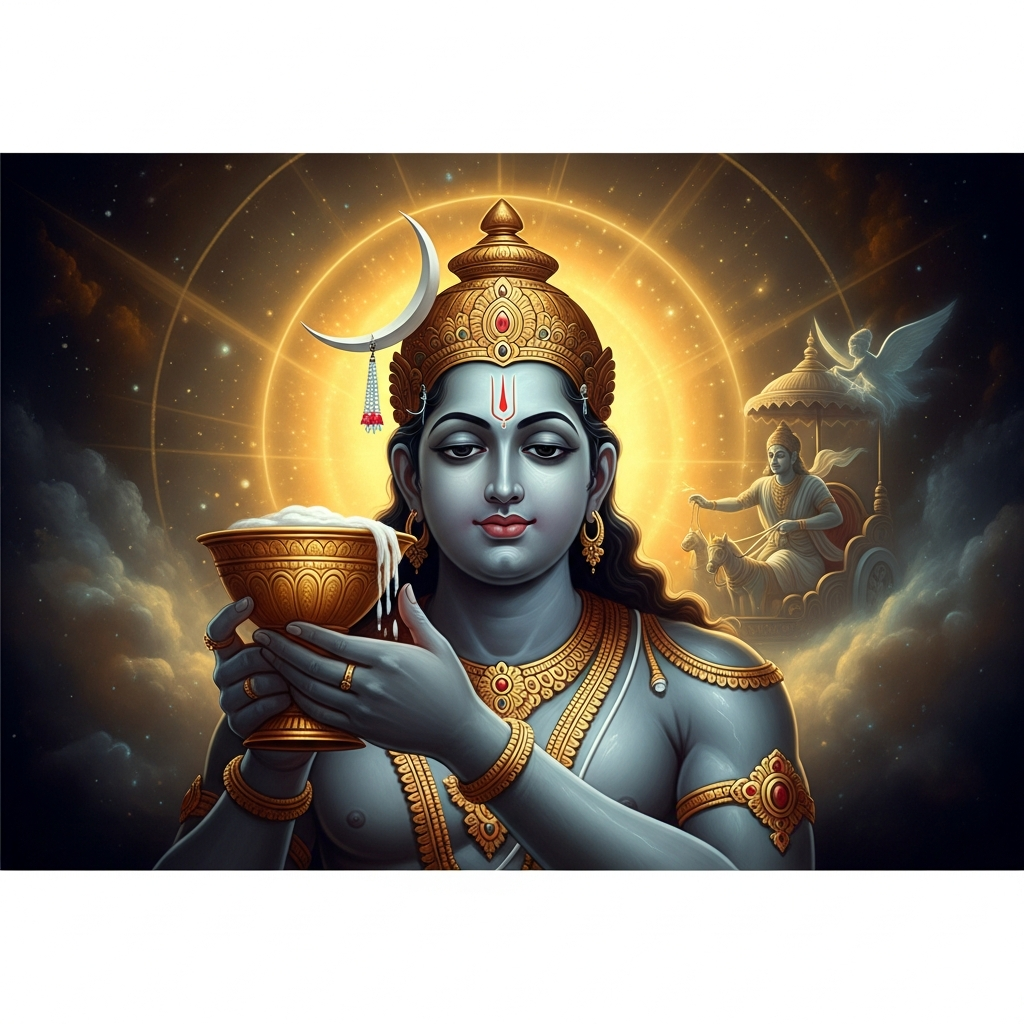
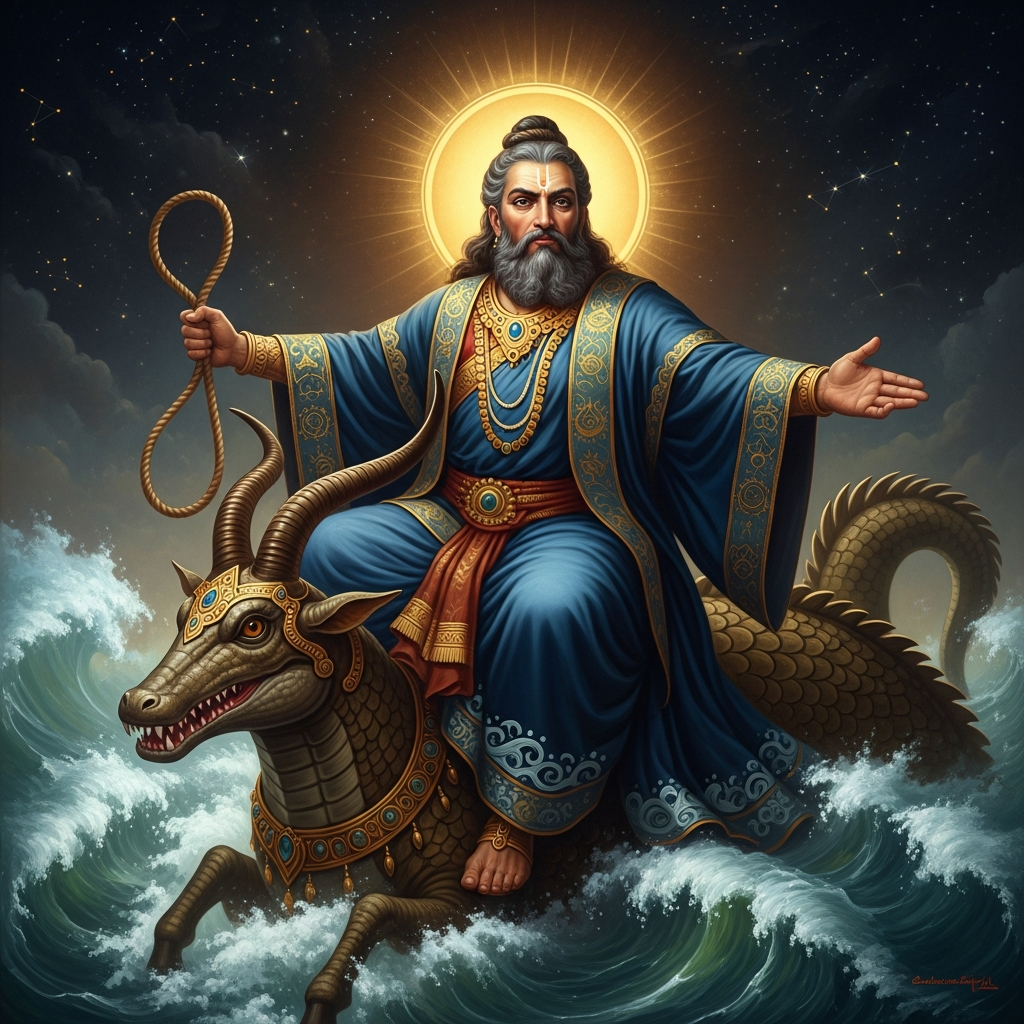
The Vedic gods are not the later Puranic gods. Indra, not Vishnu, is king. Agni, not Shiva, is the supreme ritual presence. Varuna upholds rita (cosmic order) like an older Germanic Tiwaz or Iranian Ahura Mazda. The cosmos has three tiers — earth (bhumi), atmosphere (antariksha), and heaven (svarga) — each populated by its own class of deities. The central act of religion is the yajna, the fire sacrifice, in which Agni carries offerings of ghee, soma, grain, and animal flesh upward through the smoke to feed the gods, who reciprocate by sending rain, cattle, sons, and victory.
Then everything changes. The Brahmana texts (~900-700 BCE) shift the focus from the gods themselves to the ritual mechanics that compel them. The Upanishads (~700-300 BCE) interiorize the sacrifice entirely: the atman (self) within is identical with Brahman (the absolute), and ritual becomes meditation. By the Mauryan era, Indra has been demoted, Varuna has shrunk to a sea god, the Maruts have nearly vanished, and a new pantheon — Vishnu, Shiva, Devi — rises in their place. The Vedic gods do not die; they are absorbed, reframed, surrounded by newer deities. To read the Rigveda now is to overhear an older world still speaking Sanskrit beneath the floor of the present one.
Cosmology & Structure
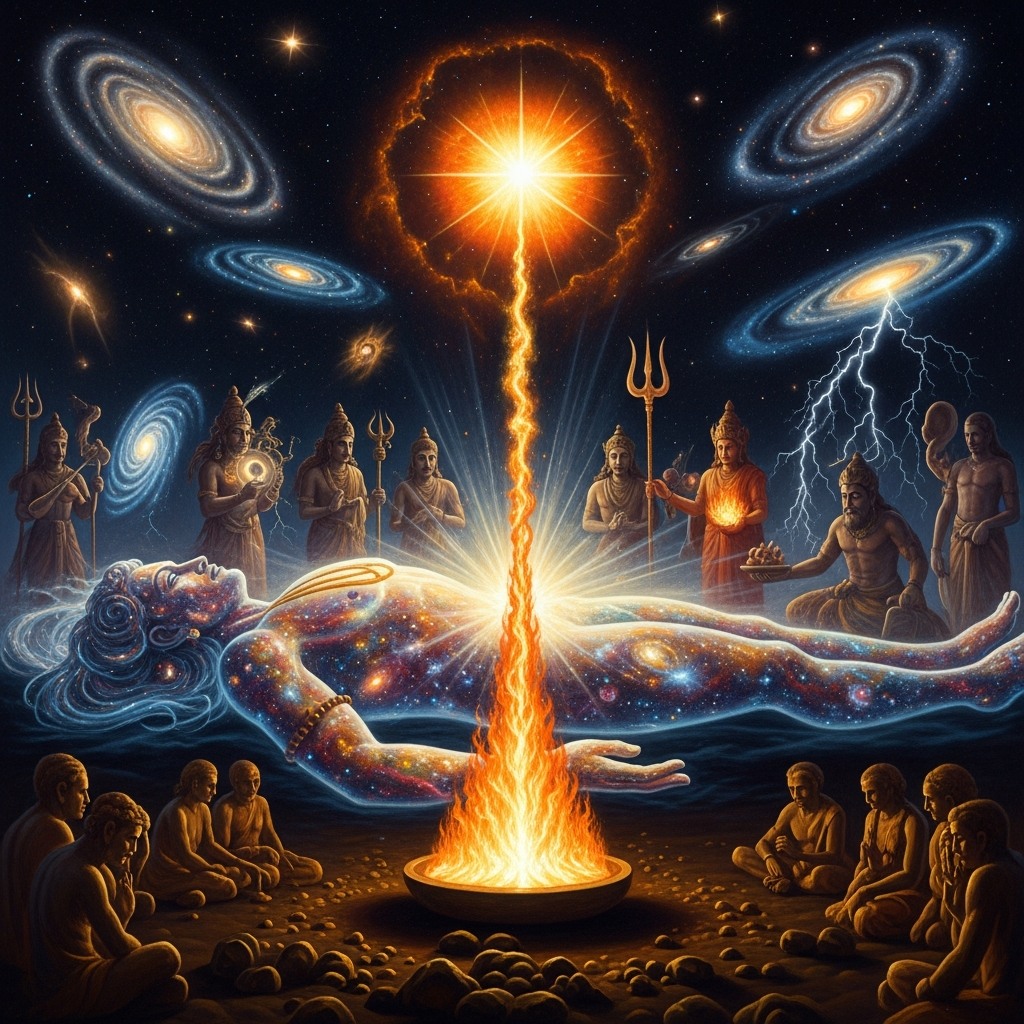
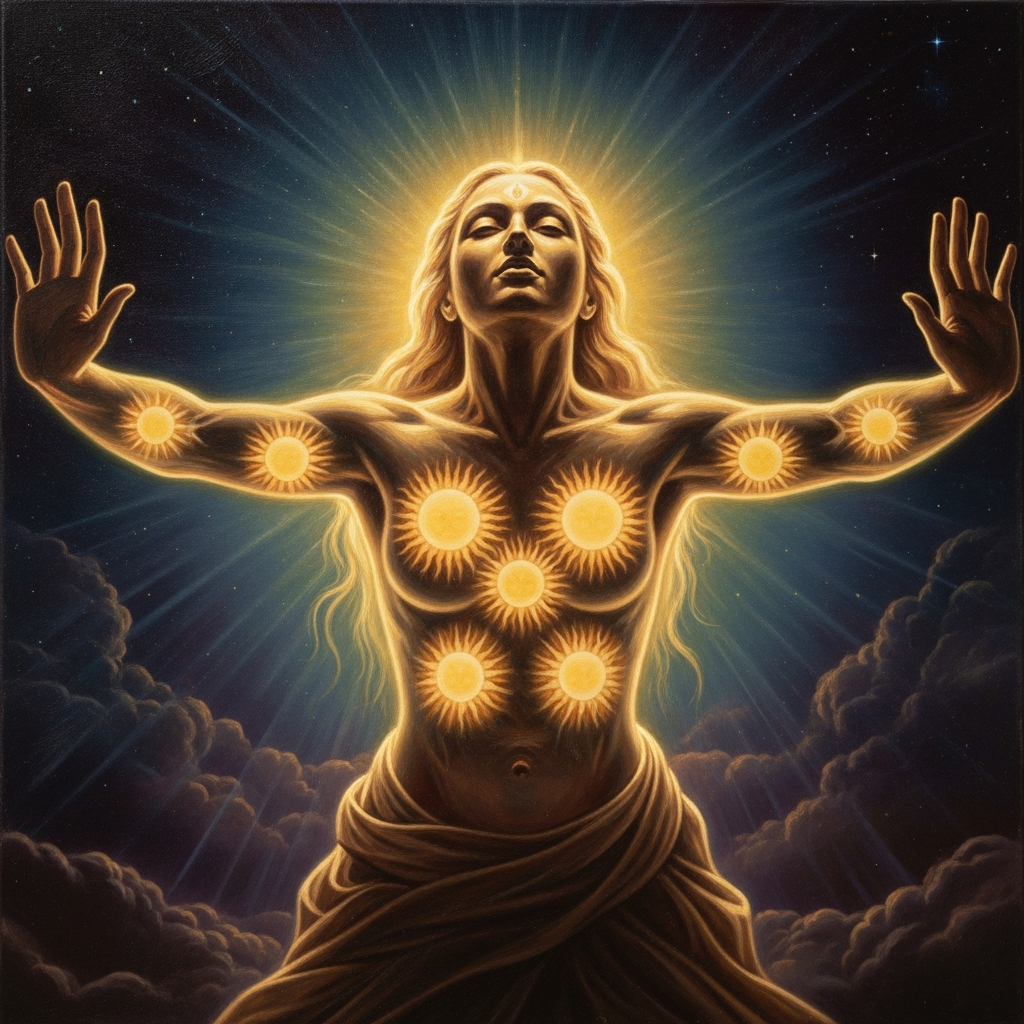
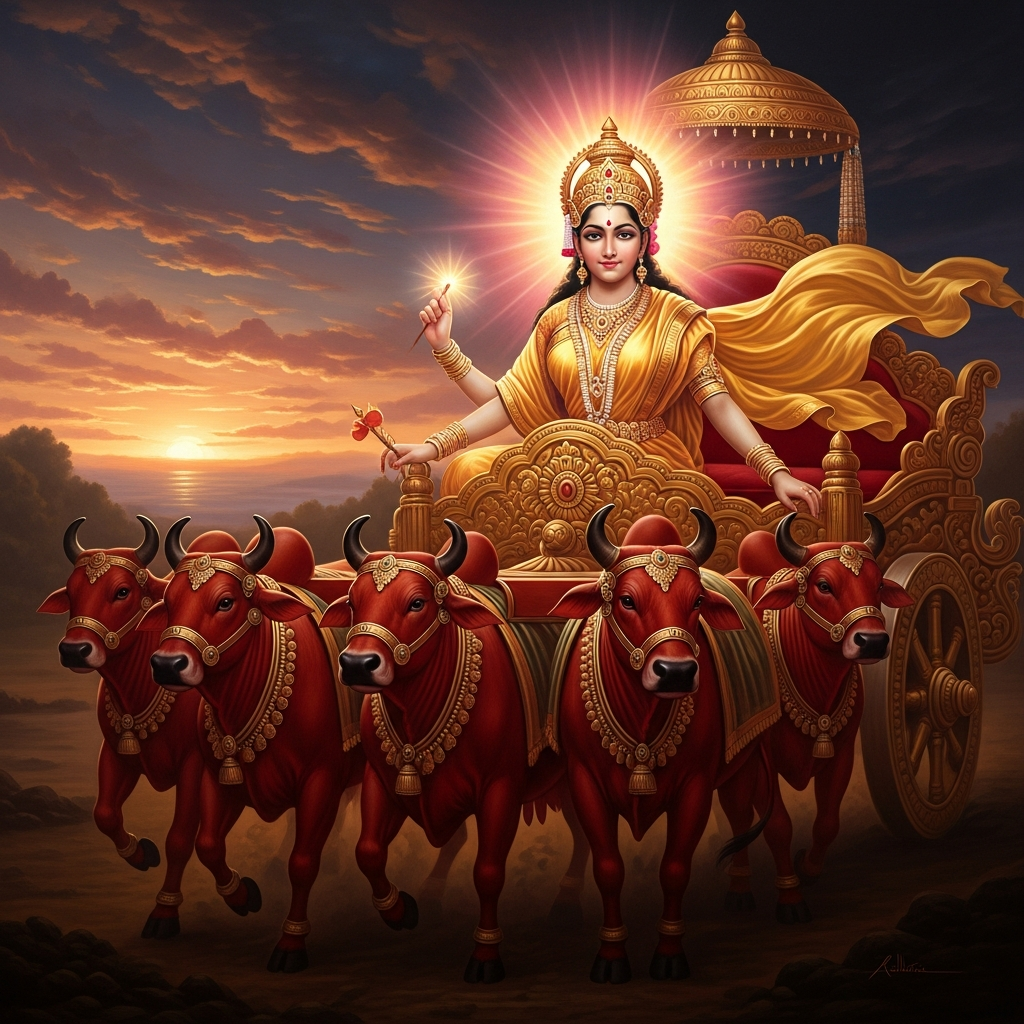
The Vedic cosmos has three stacked realms: Prithivi (earth), Antariksha (the middle air, atmosphere), and Dyaus (the bright sky). Each realm has presiding deities — Agni and the earthly fires below, Indra and the storm gods in the middle, and the sun-gods (Adityas) above. Beneath everything lies the cosmic waters from which creation emerged. Above everything is rita, the impersonal cosmic order that even the gods obey.
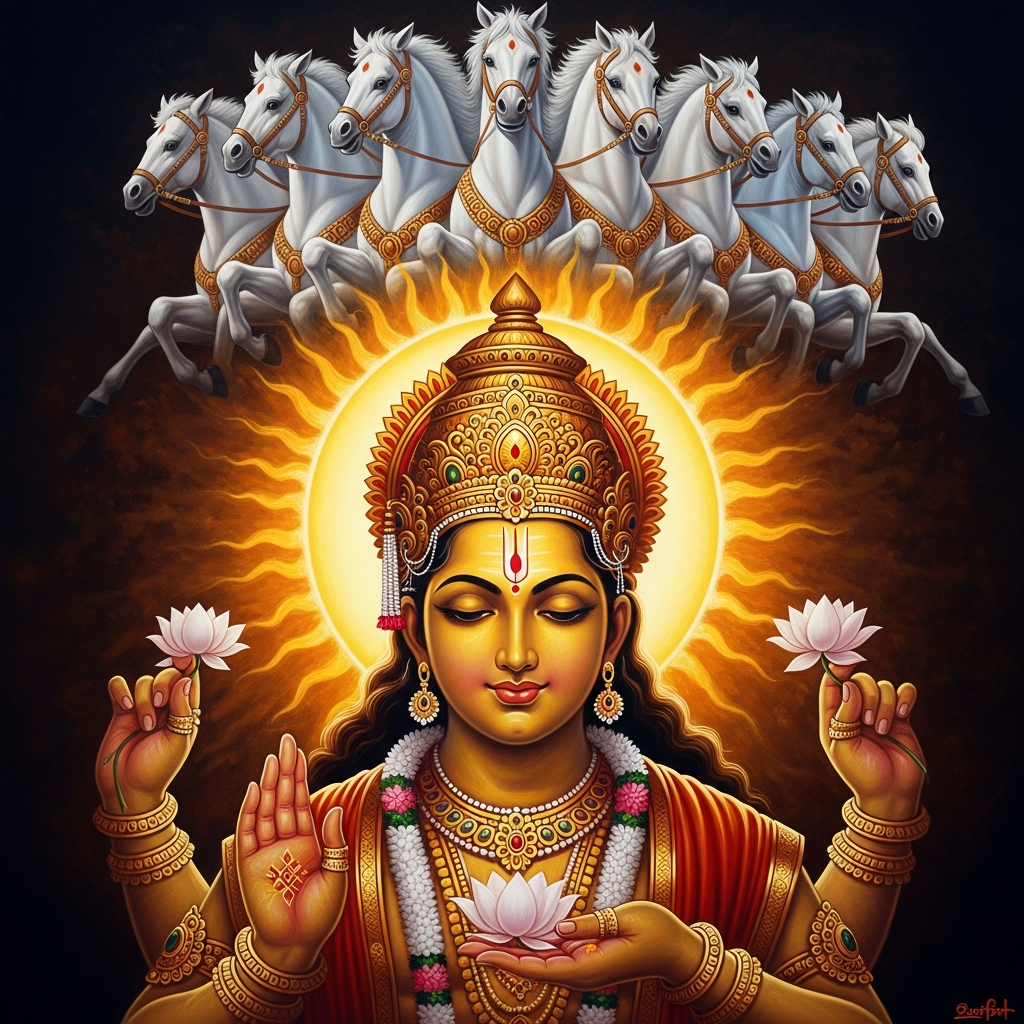
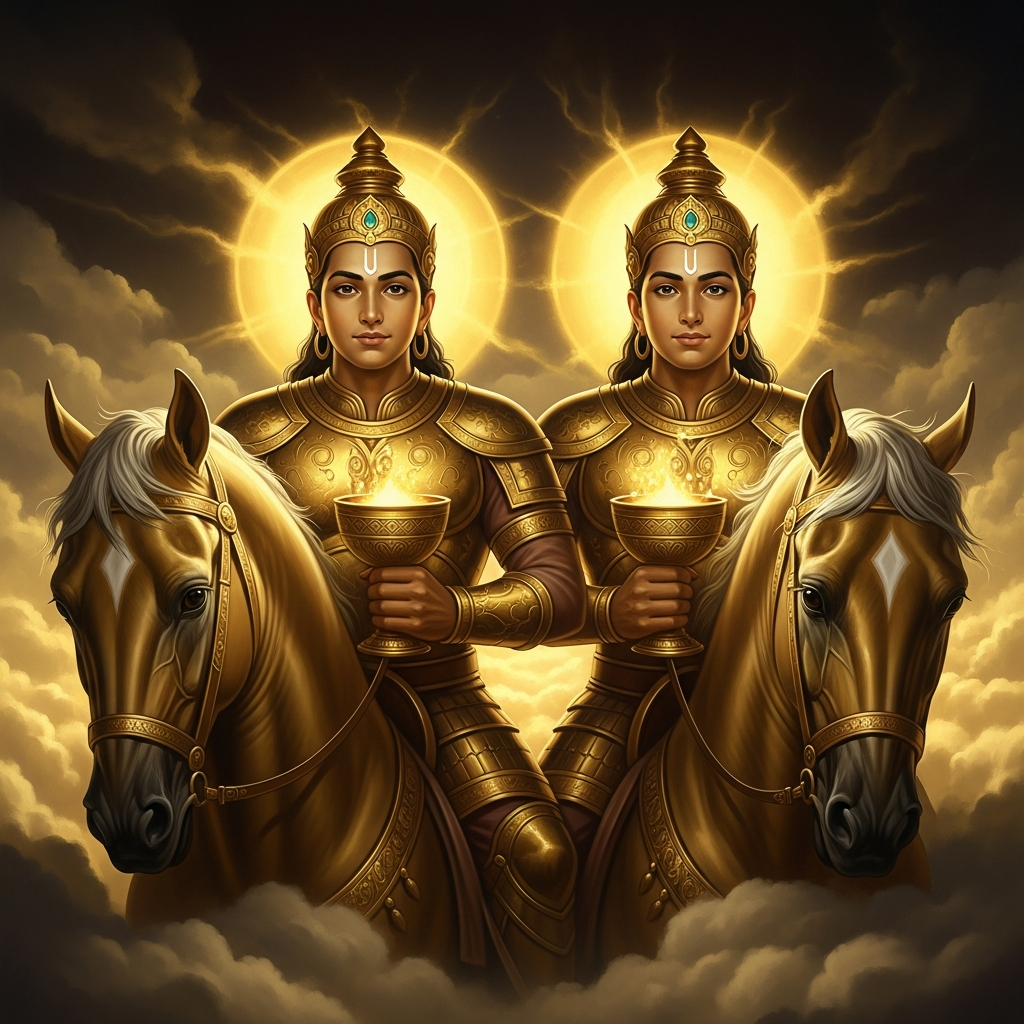
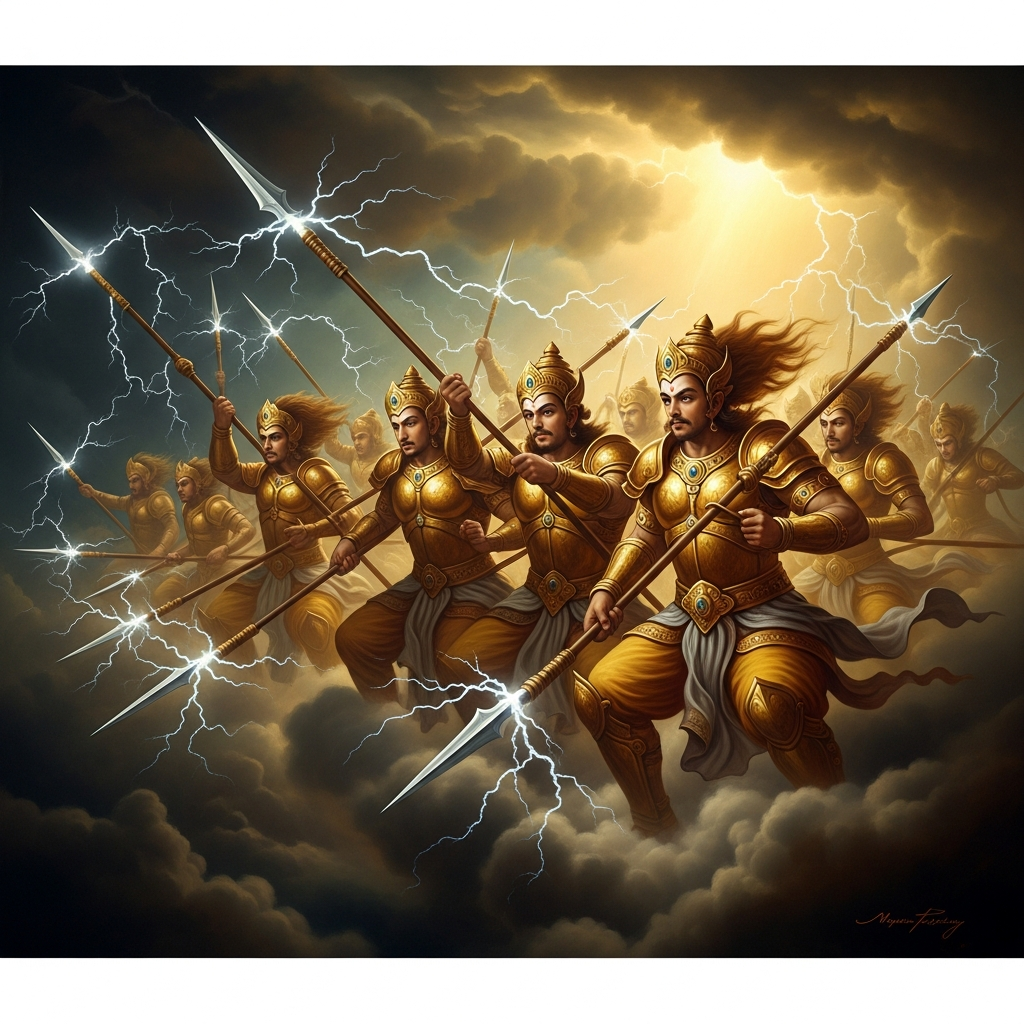
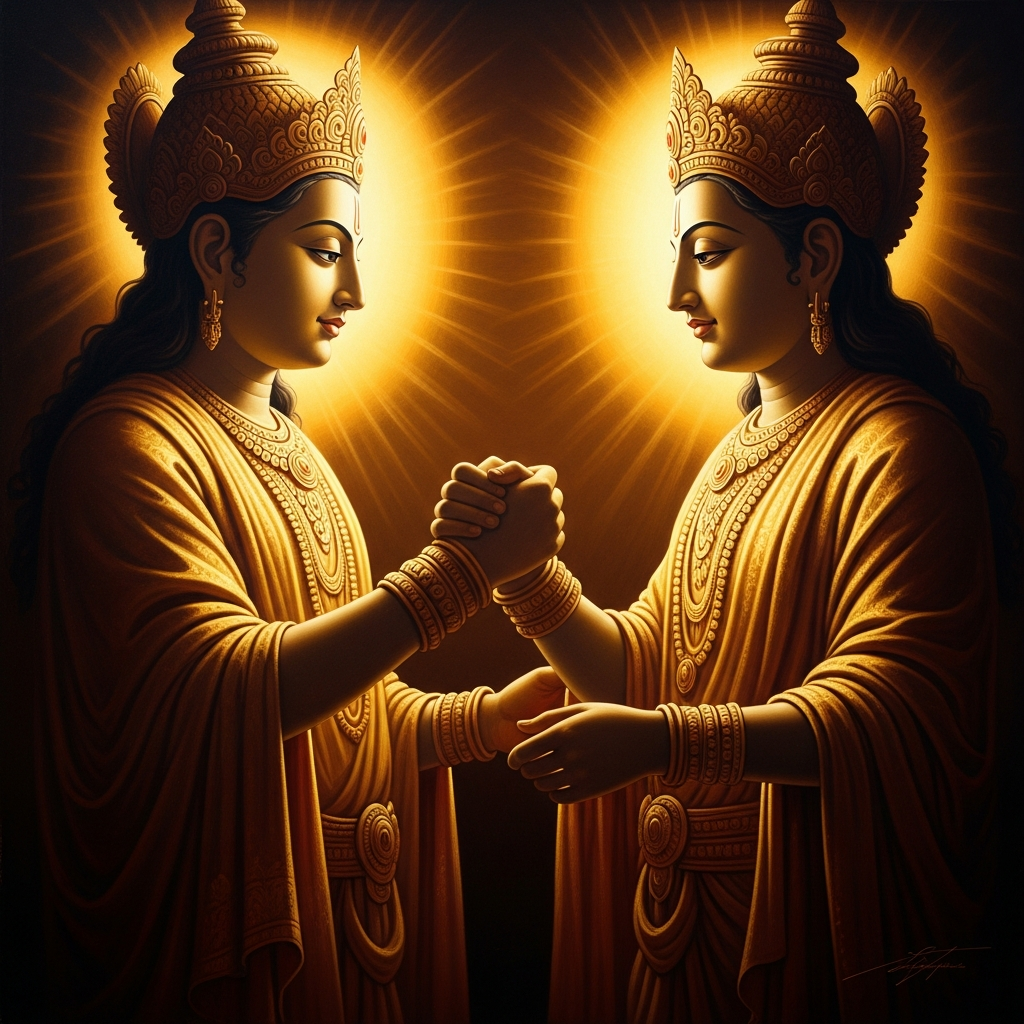
The gods are organized in functional groupings rather than a single court. The Adityas are the sons of Aditi — solar, sovereign, ethical (Varuna, Mitra, Aryaman, and others). The Maruts are the storm troops of Indra. The Ashvins are the divine twins who ride the dawn. The Vasus are the eight elemental gods. The Asuras (originally the older sovereign powers — Varuna himself was an Asura) and the Devas (the newer warrior-gods led by Indra) split into rival camps; in later Indo-Iranian religion, the daevas of Zoroastrianism are demons and the ahuras are gods, while in India the polarity reverses. Same word, opposite valence.