Combat Profile
Twin Rescue
The Ashvins arrive at the moment of greatest crisis, healing wounds, rejuvenating the aged, and rescuing the trapped from any predicament; cannot be summoned but always appear when prayed to in extremity
Indivisible Brothers
The Ashvins fight, heal, and travel as one entity in two bodies; injuring one is healed instantly by the other, and they cannot be separated by any power
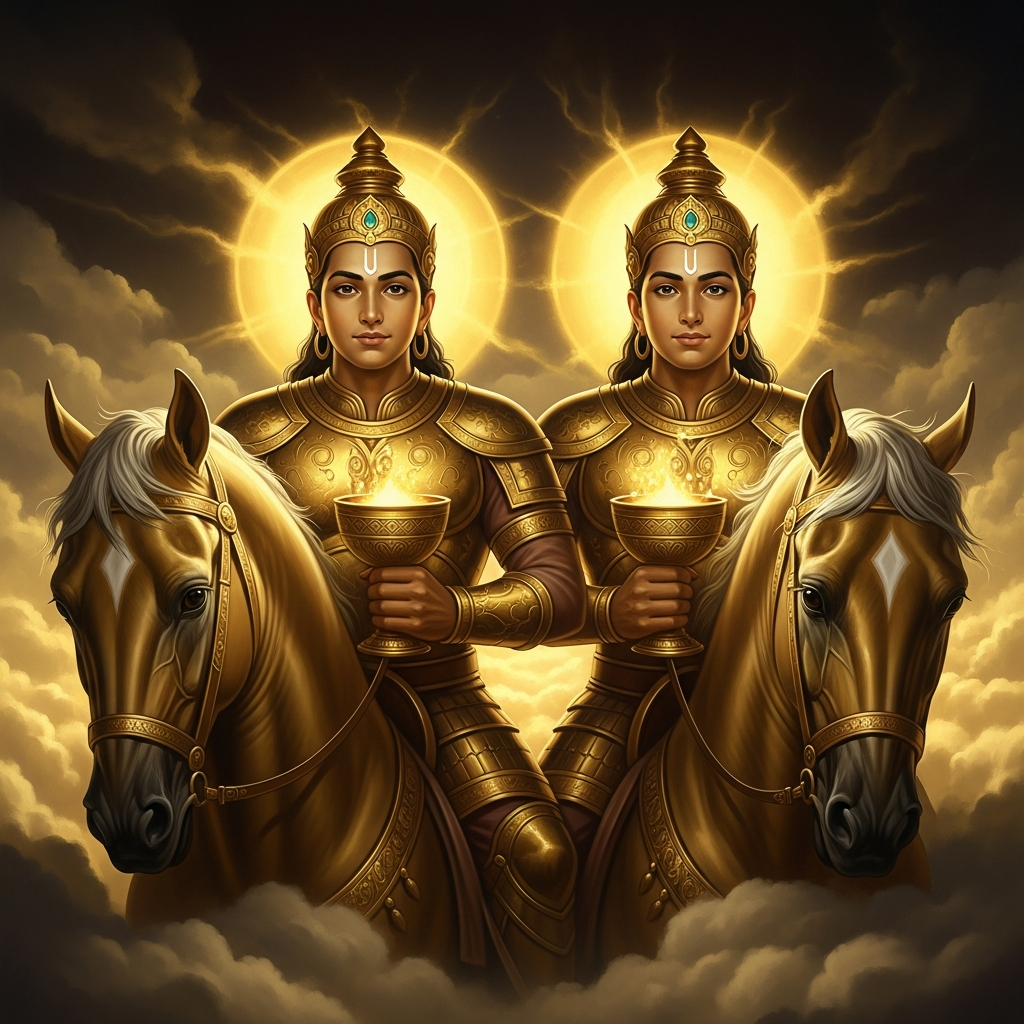
The Ashvins are the divine twins — two horsemen who ride a golden chariot drawn by horses (or sometimes birds) across the sky just before dawn, immediately preceding their sister Ushas. They are healers, and the Rigveda preserves a remarkable catalog of their cures: they restore sight to the blind, give a wooden leg to the warrior Vispala, rejuvenate the aged Chyavana, rescue shipwrecked sailors, deliver children stuck in the womb. They are the most accessible of the Vedic gods — the ones a peasant might invoke when his wife is in labor or his son has fallen ill.
They are paradoxical: they are gods, but they are also somehow younger and lower than the other gods, and there are hymns in which the senior gods at first refuse to share soma with them. They are eventually admitted to the Vedic pantheon through ritual maneuvering by the rishi Chyavana. They embody the Indo-European motif of the Divine Twins — paired horseman-saviors who appear at moments of crisis and rescue mortals from impossible situations.
Biblical Parallels: No direct biblical parallel — Hebrew religion does not have divine twins — but the Ashvins’ miraculous-healing function parallels the healing miracles of Christ (Matthew 9, restoration of sight, healing of the lame) and the apostles (Acts 3). Their last-minute rescue function echoes the angelic deliverance of Peter (Acts 12) and Daniel from the lions (Daniel 6).
Cross-Tradition: Direct cognates with Greek Castor and Pollux (the Dioscuri — also horsemen, also twin saviors of sailors and warriors), Roman Castor and Pollux, Latvian Dieva Dēli, and the Anglo-Saxon Hengist and Horsa. The Indo-European “Divine Twins” archetype is among the most secure reconstructions in comparative mythology — paired horseman-saviors, usually sons of the sky-god, appearing at moments of crisis. The pattern persists into Christianity in figures like Saints Cosmas and Damian (twin healer-saints).
1 min read