Combat Profile
Dawn's Revelation
Ushas's arrival dispels darkness, illusion, and concealment across the entire battlefield; hidden enemies are exposed and demoralized foes regain hope
Eternal Renewal
Ushas is reborn each day; her power, beauty, and youth cannot be permanently diminished, and she lifts despair from any ally who witnesses her arrival
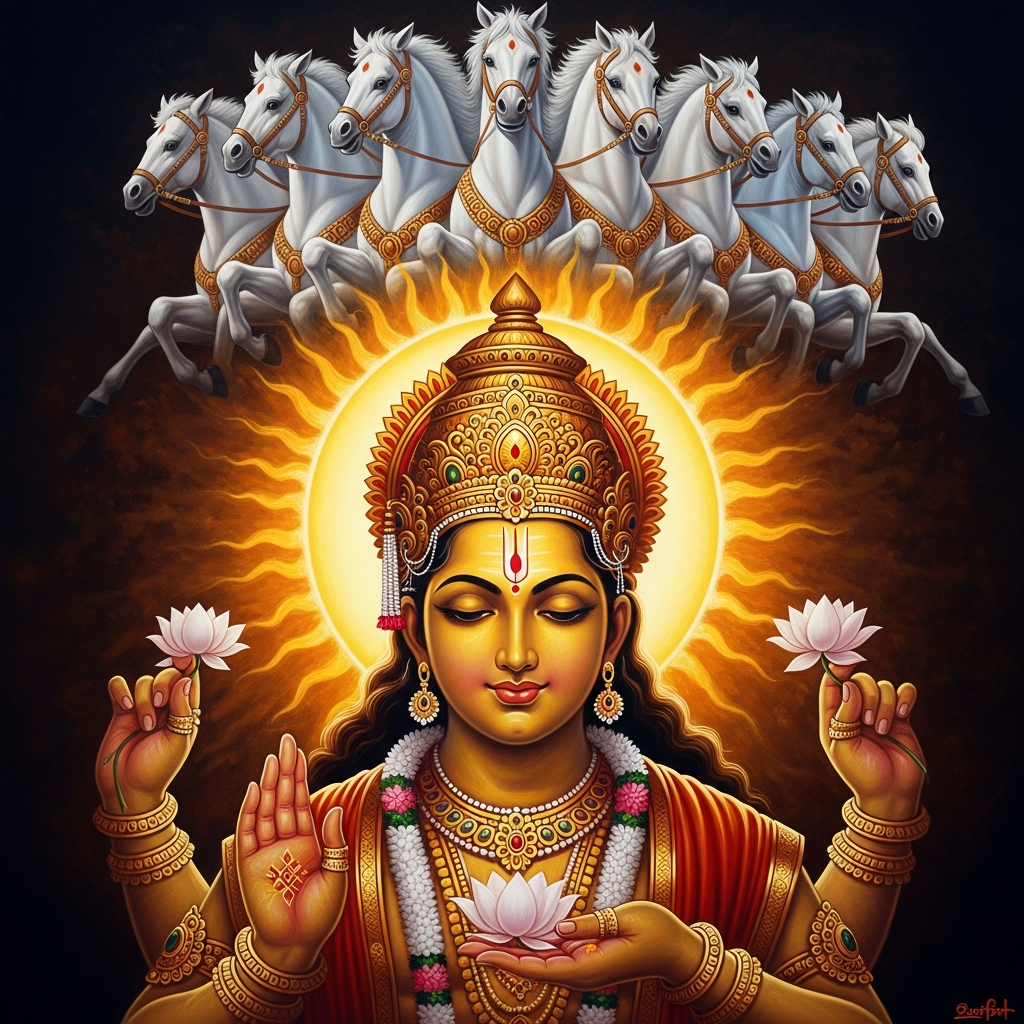
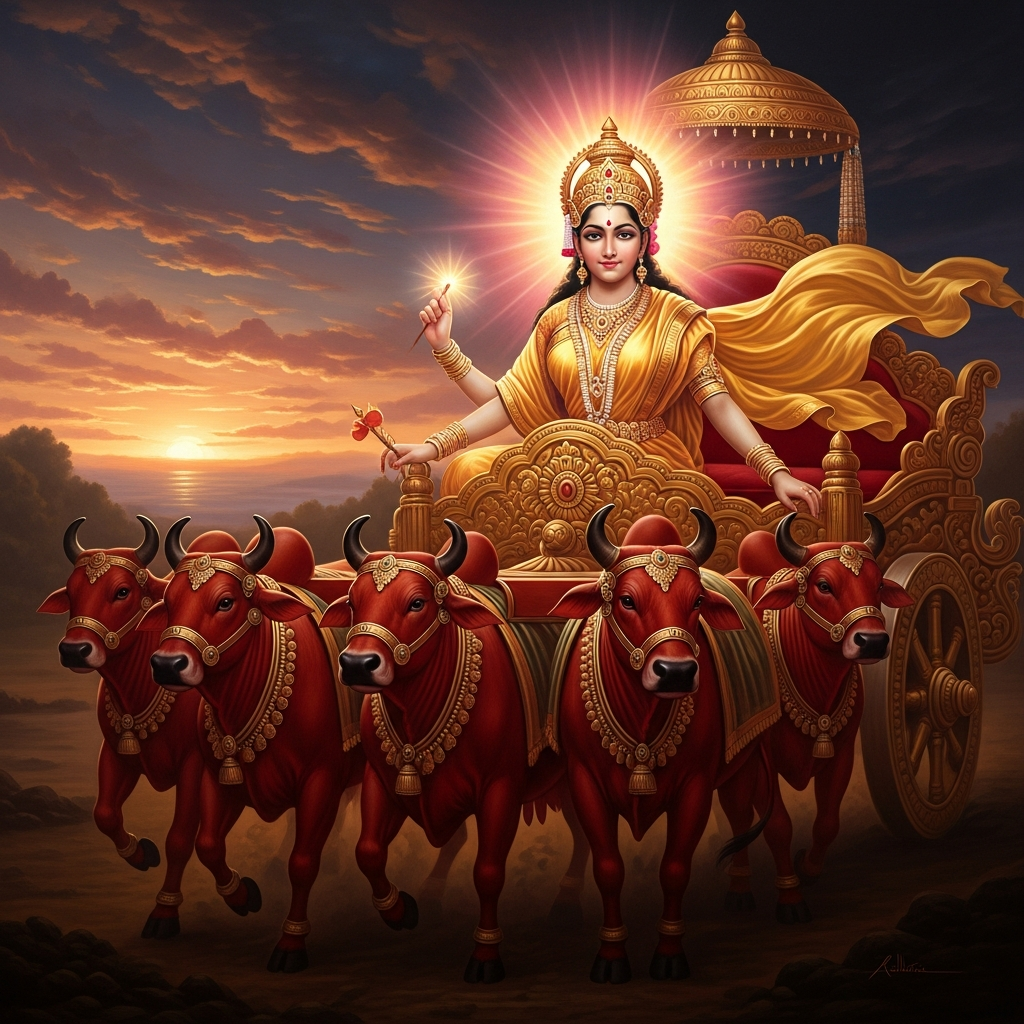
Ushas is the dawn — and the Rigveda contains some of the most lyrically beautiful hymns ever composed to a deity, all addressed to her. She is described as a young woman who throws back the dark cloak of night, reveals her shining breast, drives forth in a chariot drawn by red cows, and brings light, warmth, and motion back to the world after the long death of night. She is the daughter of the sky (Dyaus), sister of the night (Ratri), and beloved of all gods and mortals alike. She comes daily, eternally young, and yet — the poets note with a melancholy that startles when one finds it in a Bronze Age hymn — each dawn shortens the lives of those she shines upon.
Ushas is one of the most Indo-European deities in the Vedic pantheon, with direct cognates across the entire family. Her hymns preserve some of the oldest poetic imagery in human literature: the dawn as a young woman, as a chariot driver, as a goddess who reveals herself piece by piece across the eastern horizon.
Biblical Parallels: Ushas parallels the personified Dawn of Job 38:12 (“Have you ever given orders to the morning?”) and the dawn-imagery of Psalm 19 and Psalm 130:6. The “morning star” attributed to Christ (Revelation 22:16) and the Christian dawn-resurrection of Easter Sunday continue the same theological logic: dawn as divine revelation, light as the defeat of death-night.
Cross-Tradition: Direct cognates across Indo-European: Greek Eos, Roman Aurora, Lithuanian Aušrinė, Anglo-Saxon Ēostre (from whom the word “Easter” derives). All are dawn-goddesses, all are described as young women in chariots, all share the Proto-Indo-European root *h₂éwsōs meaning “dawn.” This is one of the most securely reconstructed deities in the Indo-European pantheon.
1 min read