Hitchhiker's Guide to Religion
Vedic

Rudra

Vedic Vedic Rudra c. 1500 BCE; Shatarudriya hymn (Yajurveda) systematizes his 100 names and forms c. 1000–800 BCE; gradual coalescence into Shiva c. 600 BCE – 300 CE Mountain wilderness and forest margins of the Vedic world; Mount Kailash and the Himalayan high country are his natural domain — the landscape that becomes Shiva's
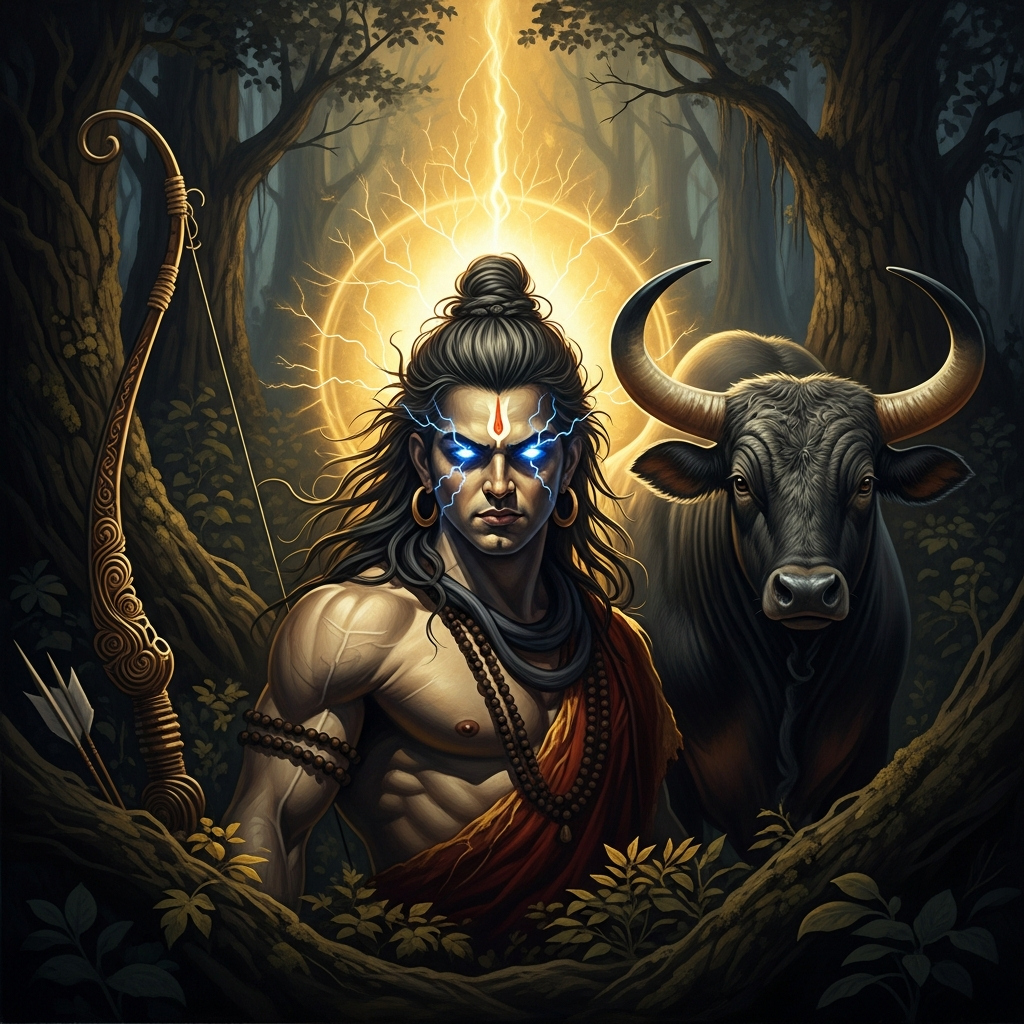
Portrait of Rudra
Combat
ATK 9
DEF 7
SPR 10
SPD 8
INT 8
Element Shadow
Role Destroyer
Rarity Legendary
Threat Extreme
LCK 4
ARC 10
Special Plague Arrows — Rudra's quiver contains arrows that carry disease and madness; struck targets suffer illness that spreads to nearby allies unless propitiated
Passive Wild Margins — Rudra is strongest in untamed places (forests, mountains, wilderness); his power doubles when away from settlements and weakens within consecrated villages
Epithets "The Howler" (*Rudra*), "The Red One" (*Rudra* — alternate etymology from *rudhira*, red), "The Auspicious" (*Śiva* — propitiatory epithet), "Lord of Animals" (*Paśupati*), "The Healer" (*Jalāṣabheṣaja* — he of the healing remedies in water)
Sacred Animals Associated with wild animals of forest and mountain — especially deer, boar, and the cattle he threatens with his arrows; his son the Maruts ride swift deer; the bull (ancestor of Nandi, Shiva's later vahana)
Sacred Objects Bow and arrows (his primary weapons — his arrows carry disease), medicines and healing herbs (also his domain, since he both sends and heals illness)
Sacred Colors Brown/Ruddy (red — from *rudhira*), Black (the wilderness night), matted grey
Sacred Number 11 (the Ekadasha Rudras — eleven forms of Rudra enumerated in the Rigveda, the seed of Shiva's later 11 forms)
Consort(s) Ambika (mentioned once in the Atharvaveda — a seed of the later Parvati identification); his sons the Maruts are born from him without a mother in some accounts
Iconography A terrifying figure of the margins: matted hair, carrying a bow, wearing wild animal skins, smeared with ashes of the cremation ground; not invited into the village or given the prime share of offerings — offerings left at the boundary; simultaneously the healer (*bheṣaja*) whose knowledge of mountain herbs can cure what his arrows cause; the seed of Shiva visible in every detail
Period Vedic Rudra c. 1500 BCE; Shatarudriya hymn (Yajurveda) systematizes his 100 names and forms c. 1000–800 BCE; gradual coalescence into Shiva c. 600 BCE – 300 CE
Region Mountain wilderness and forest margins of the Vedic world; Mount Kailash and the Himalayan high country are his natural domain — the landscape that becomes Shiva's

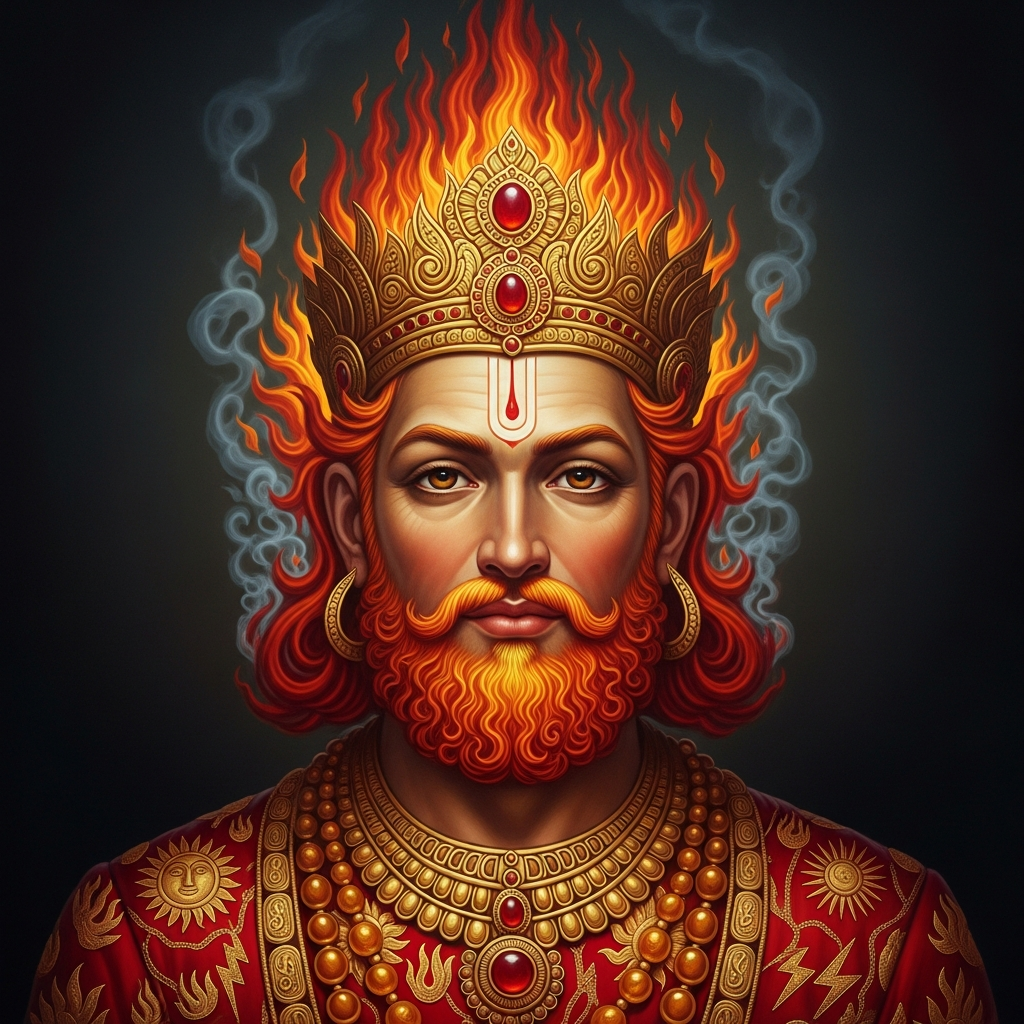
Rudra is the wild and dangerous deity of storms, mountains, and the hunt — a fierce outsider-god who haunts the margins of the Vedic world. His name means “the howler” or “the red one,” and his hymns are uneasy: he is invoked to ward off disease (especially of cattle and children), to deflect his arrows from the village, to be content with his portion of the offering and not come closer. He carries a bow, wears matted hair, dwells in mountain caves, and is the lord of bhutas (spirits, ghosts).

The Rigveda preserves a tense double-attitude toward Rudra: he is praised, but cautiously; he is called shiva (“auspicious”) as a propitiatory epithet — please be auspicious, please don’t come — and from this epithet would eventually grow the entire post-Vedic identity of the great god Shiva. The Vedic Rudra is not yet Shiva, not yet the destroyer of the trimurti, not yet the cosmic dancer or the ascetic on Mount Kailash. But the seeds are there: the wildness, the terror, the auspicious-dangerous polarity, the matted hair, the mountain dwelling.

Biblical Parallels: Rudra parallels the wrath-aspect of Yahweh — the Yahweh of plague (Exodus 12), the Yahweh whose arrows strike down the Egyptian firstborn, the Yahweh who must be propitiated lest he break out (Exodus 19:22). The verb-form “broke out against” used of Yahweh’s outbreaks of wrath captures the Rudra-mood exactly. Azazel, the wilderness-demon to whom the scapegoat is sent (Leviticus 16), shares Rudra’s marginal, dangerous, propitiation-requiring character.

Cross-Tradition: Parallels Apollo in his plague-arrows aspect (Iliad 1, where Apollo’s arrows bring the plague on the Greek camp). Echoes the wild-hunter god archetype found in Greek Pan, Roman Faunus, Celtic Cernunnos, and the Slavic Veles. The matted-hair mountain-ascetic typology connects Rudra (and his successor Shiva) to a deep South Asian shamanic substrate that may predate the Indo-European migrations.


1 min read
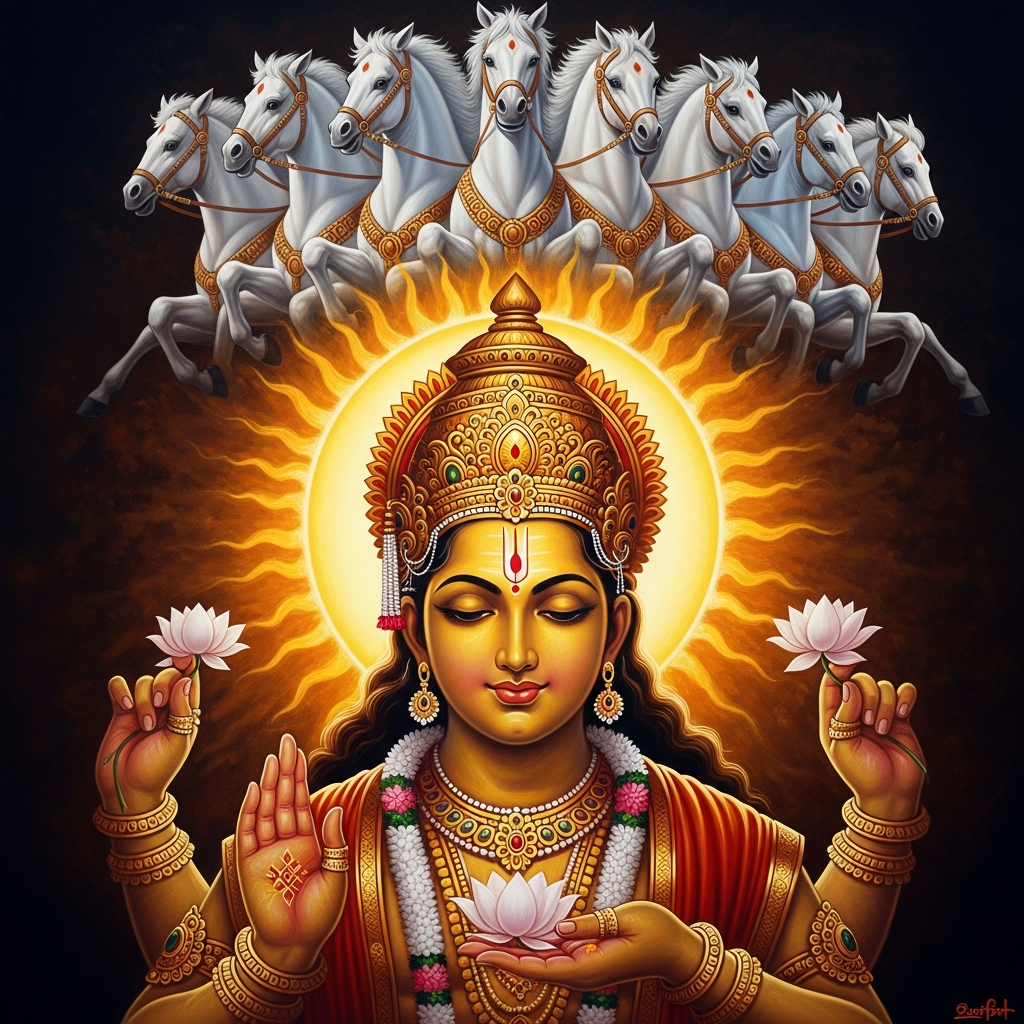
Combat Radar

ATK DEF SPR SPD INT
← Back to Vedic