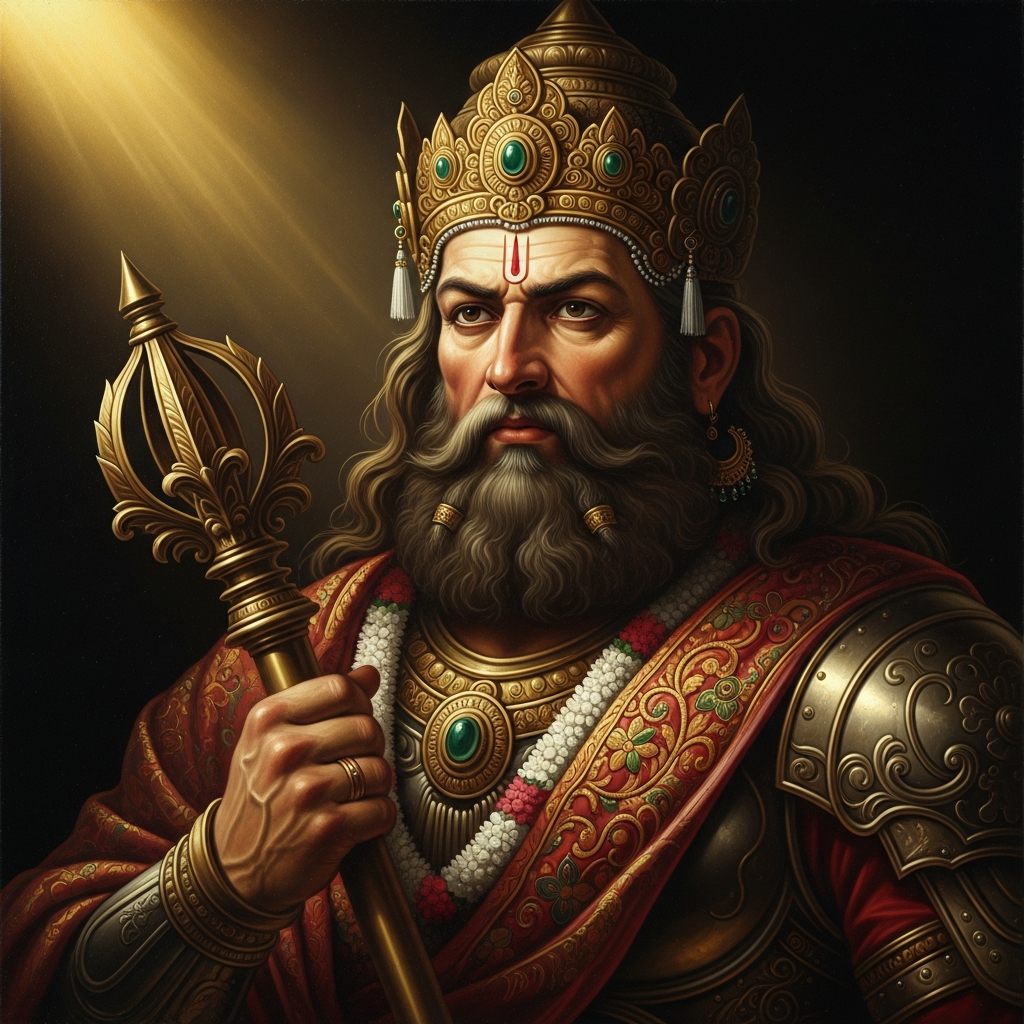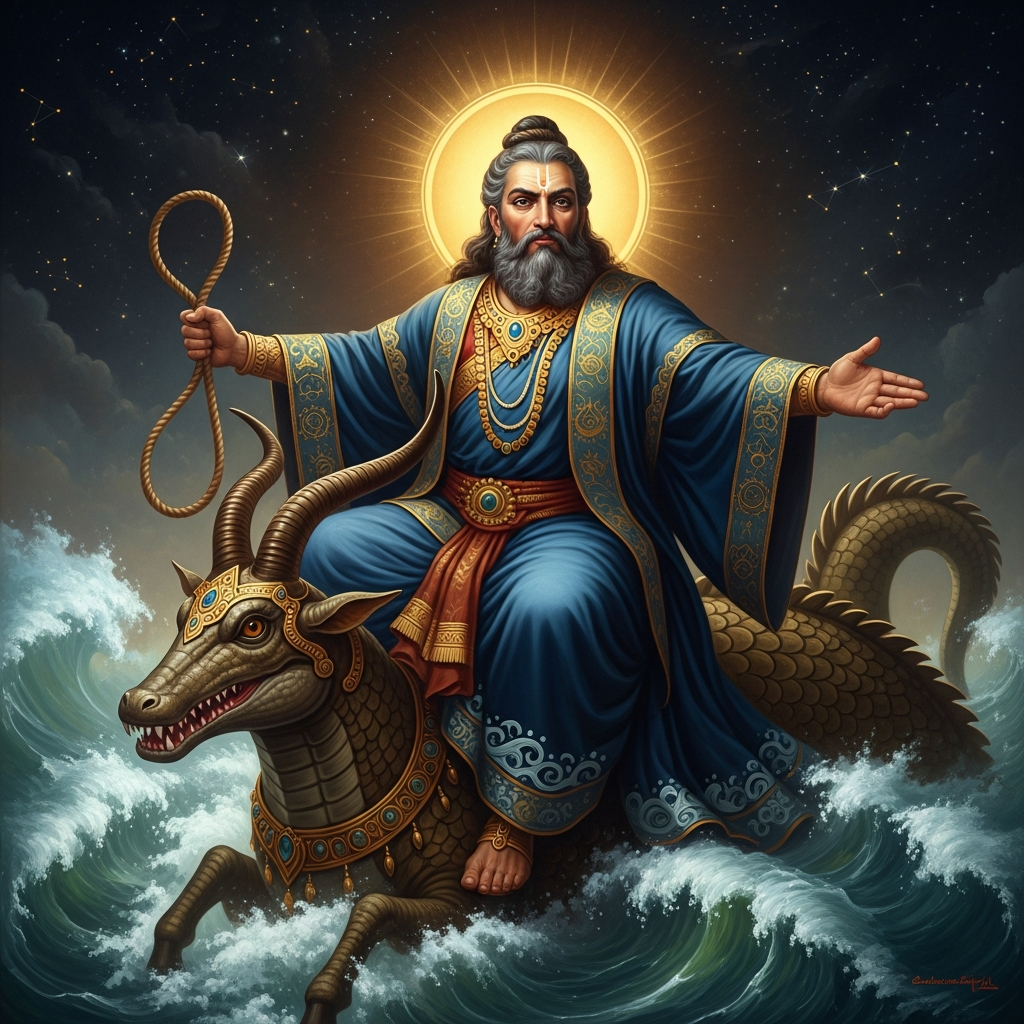
Combat Profile
Noose of Truth
Binds any being who has spoken falsely with invisible cords (*pasha*); the bonds tighten with each additional lie until the liar's life-thread snaps
All-Seeing Sovereign
Varuna perceives every event and every thought across the cosmos; no concealment, deception, or oath-breaking escapes his notice
Varuna is the original sovereign of the Vedic pantheon — older than Indra, more terrifying, more abstract. He is lord of the night sky and of the cosmic waters, but his deepest domain is rita: the order that makes the world coherent. He sees every act, hears every lie, knows the count of every blink of every eye. He binds the wicked with invisible nooses (pasha), and when a man falls sick or his ship sinks, the Vedic instinct is to ask: what oath have I broken? what truth have I betrayed?
Varuna and Mitra rule together as twin sovereigns — Varuna the awful and judicial, Mitra the friendly and contractual. Together they uphold the world’s covenants, the alliances between clans, the marriage bonds, the sworn truth between guest and host. In the Rigveda, Varuna is invoked with a fear and reverence found nowhere else in Vedic poetry: he is the god to whom one confesses. Over the centuries he is demoted, narrowed, eventually shrunk to a mere sea-god in the Puranas. But the older Varuna is one of the great moral deities of human history.
Biblical Parallels: Varuna is the closest pre-Israelite parallel to Yahweh in his judicial-covenantal aspect. Both are sky-gods who see everything (Proverbs 15:3, Hebrews 4:13), both bind oath-breakers, both demand truth as a cosmic principle, both hear confession and forgive when invoked. The “nooses of Varuna” prefigure the binding language of Job 38 and the cords of judgment in the Psalms. The Vedic confession-hymn to Varuna (RV 7.86) is structurally indistinguishable from a penitential psalm.
Cross-Tradition: Cognate with the Avestan Ahura Mazda — both are sovereign sky-gods of cosmic order (asha in Iranian = rita in Vedic). Parallels Greek Ouranos (sky-sovereign overthrown), Roman Caelus, and the older sky-fathers who get displaced by storm-warrior sons. The pattern of “older, judicial sky-god demoted by younger, militant son” recurs across Indo-European mythology.
1 min read