Combat Profile
Storm Charge
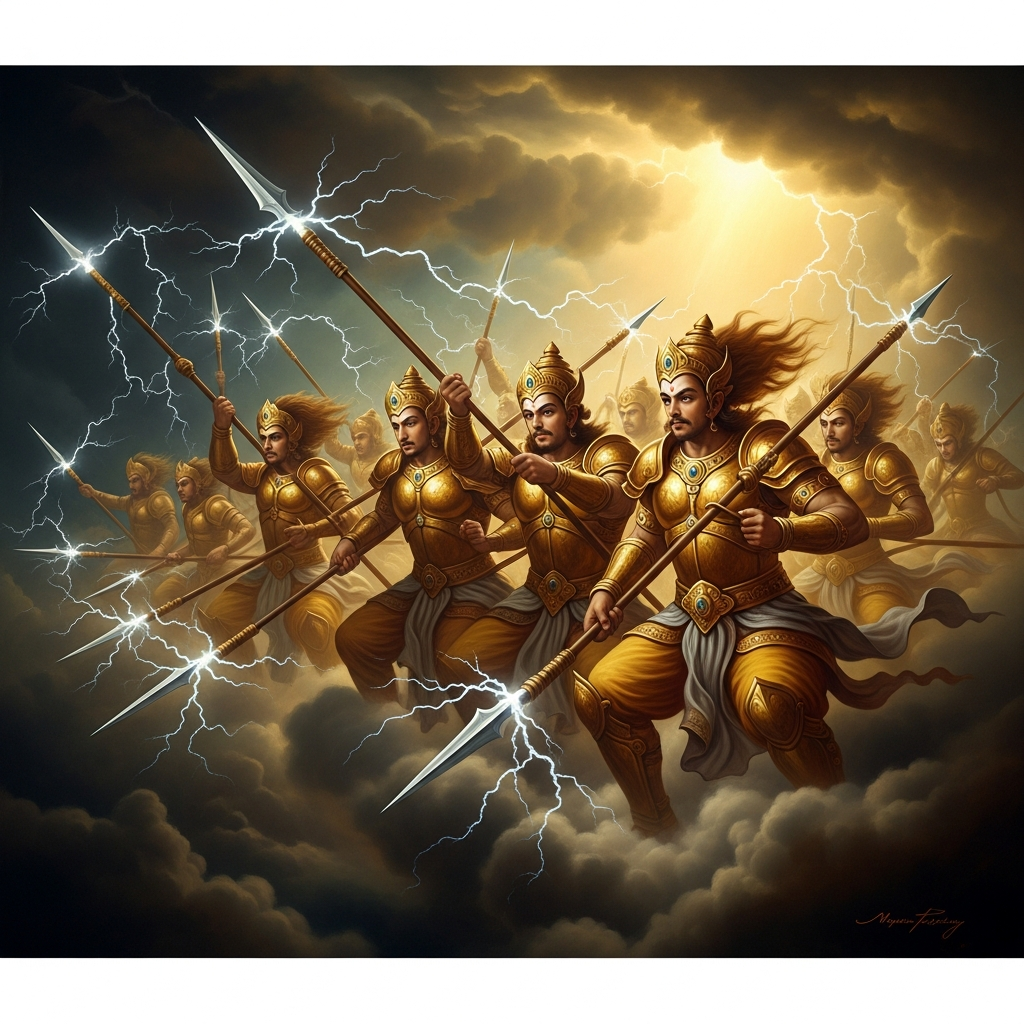
The Maruts attack as a unified front, dealing wind and lightning damage to all enemies in a wide arc; the strike is preceded by a roar that paralyzes the unworthy
Brotherhood of the Wind
The Maruts cannot be separated by force or magic; injuring one strengthens the rest, and they act with a single coordinated mind in battle
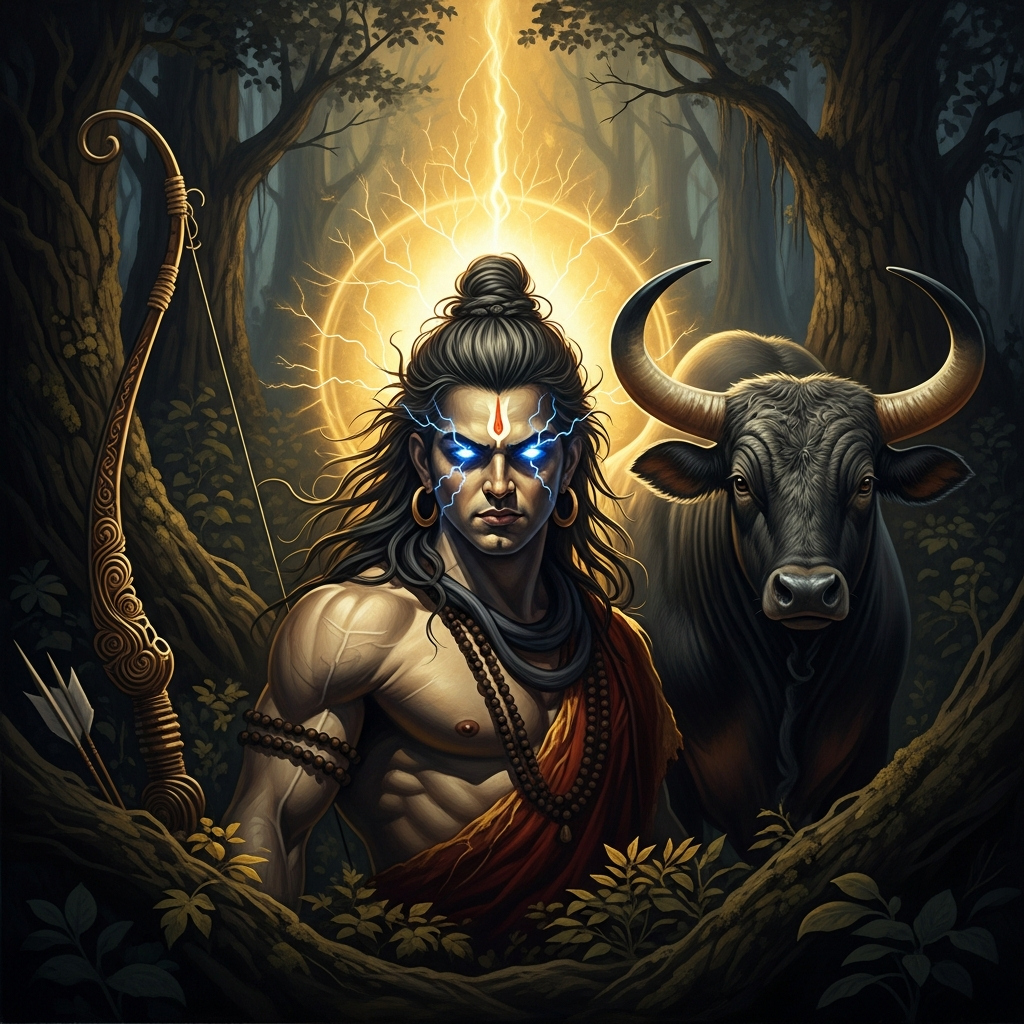
The Maruts are the storm-troops of Indra — a band of young warrior-gods, sons of Rudra, who ride the winds in chariots, brandishing spears of lightning and singing terrifying war-songs that shake the mountains. They number variously twenty-seven, forty-nine, or one hundred and eighty, depending on the hymn. They wear gold ornaments and antelope skins, blow conches, and travel in formation like a storm-front rolling across the plains.
Their relationship with Indra is complex — sometimes his loyal companions, sometimes his rivals (one famous hymn, RV 1.165, depicts a quarrel between Indra and the Maruts over the right to receive an offering). They are the personification of the monsoon storm: the dust-clouds, the thunder, the lashing rain, the ozone smell after the bolt strikes. To the Vedic warrior-clans, the Maruts are the nearest thing to a model of what young aristocratic men should be — fierce, beautifully armed, loyal to their king, terrifying to their enemies.
Biblical Parallels: The Maruts parallel the heavenly host (tzeva’ot) — the angelic armies of Yahweh (1 Kings 22:19, Psalm 103:21). Both are organized warrior-bands of the storm-god, both ride the clouds (Psalm 18:10-11), both sing terrifying songs that herald divine action. The “chariots of fire” of 2 Kings 6:17 and the angelic legions of Revelation 19:14 descend from the same cosmic-host imagery.
Cross-Tradition: Direct cognate with the Roman Mars and the war-band etymology underlying “martial.” Parallels the Norse Einherjar (Odin’s chosen warriors who feast in Valhalla), the Greek Kouretes (armed dancers attending the infant Zeus), and the Celtic Fianna. The “wild hunt” of Germanic folklore — Odin and his ghostly warriors riding the storm — is a direct mythological cousin.
1 min read