Combat Profile
Panic's Touch
Faunus inflicts sudden, irrational fear on a target or group; the affected flee in disorganized terror, dropping weapons and breaking formation, regardless of the actual danger
Dream-Speaker
Sleeping in Faunus's groves grants prophetic dreams; the dreams are obscure and come at a price (often a small misfortune in waking life), but they reveal truths unobtainable by other means
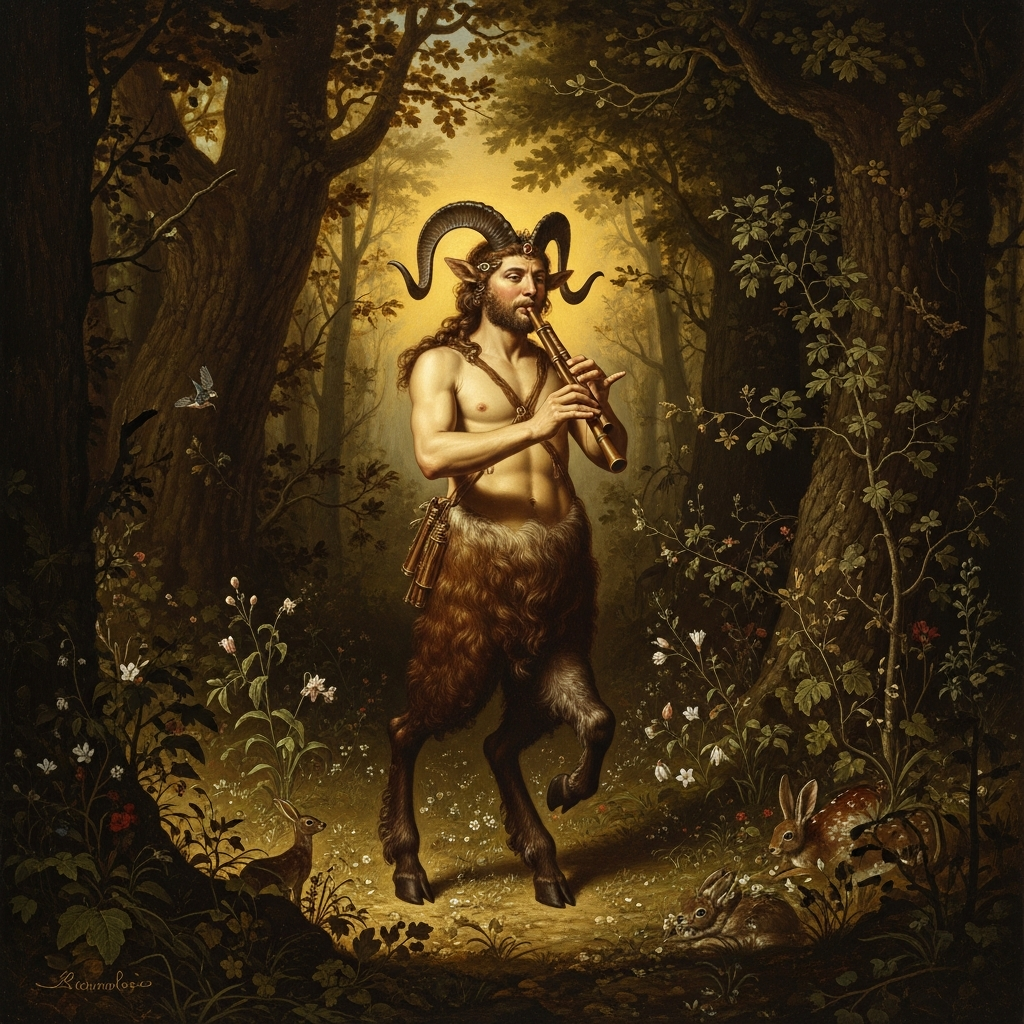
Faunus is the rustic god of wild places — woodlands, pastures, rocky outcrops — and of the Lupercalia, one of Rome’s strangest and oldest festivals. He is half-goat, horned, hooved, frequently identified (after Greek influence) with Pan, but his older Italic identity is more specific: he is the spirit of the half-cultivated, half-wild margin between the farm and the forest, and he is the god of the dream-prophecy that comes to those who sleep in his groves.
The Lupercalia (February 15) was Faunus’s main festival and one of the most pre-Hellenic in Roman religion. Young men called Luperci, naked except for goat-skin loincloths, ran through the streets of Rome striking women with goat-skin thongs to promote fertility — a wild and ancient rite that even the Romans regarded as primitive but refused to abolish. The festival continued well into the Christian era; Pope Gelasius I finally suppressed it in 494 CE and replaced it with the feast of the Purification of the Virgin.
Faunus is also the god of panic — the sudden, irrational fear that strikes flocks and shepherds in lonely places. The Latin word panicus (whence English “panic”) originally meant “of Pan,” but in Italy was attributed to Faunus, his older indigenous version. Anyone who has hiked alone in deep woods at twilight has felt the fear that the Romans named for this god.
Biblical Parallels: Faunus parallels the wilderness-spirits and seirim (he-goat demons) of the Hebrew Bible, particularly the goat-figure of Leviticus 17:7 (“they shall no more sacrifice to the goat-demons”) and the wilderness-goat Azazel of Leviticus 16. The Christian Devil’s traditional iconography — horns, hooves, goat-features — derives partly from the demonization of Faunus and Pan during late antique Christianization. Faunus’s panic-inducing function parallels the “terror by night” of Psalm 91:5.
Cross-Tradition: Functionally identical to Greek Pan (the Greek-Roman identification was complete by the late Republic). Parallels Celtic Cernunnos (the horned forest god), Norse forest-spirits, and the various horned wild-gods of pre-Christian European folklore. The half-goat wilderness deity is one of the most ancient Mediterranean archetypes, possibly going back to Neolithic shepherd-religion.
2 min read