Combat Profile
Ambrosial Draught
Bestows temporary immortality and visionary clarity on any who drink; reveals hidden truths and the speech of gods
Lunar Renewal
Wanes and waxes with the moon; depleted reserves replenish themselves over a 28-day cycle and cannot be permanently exhausted
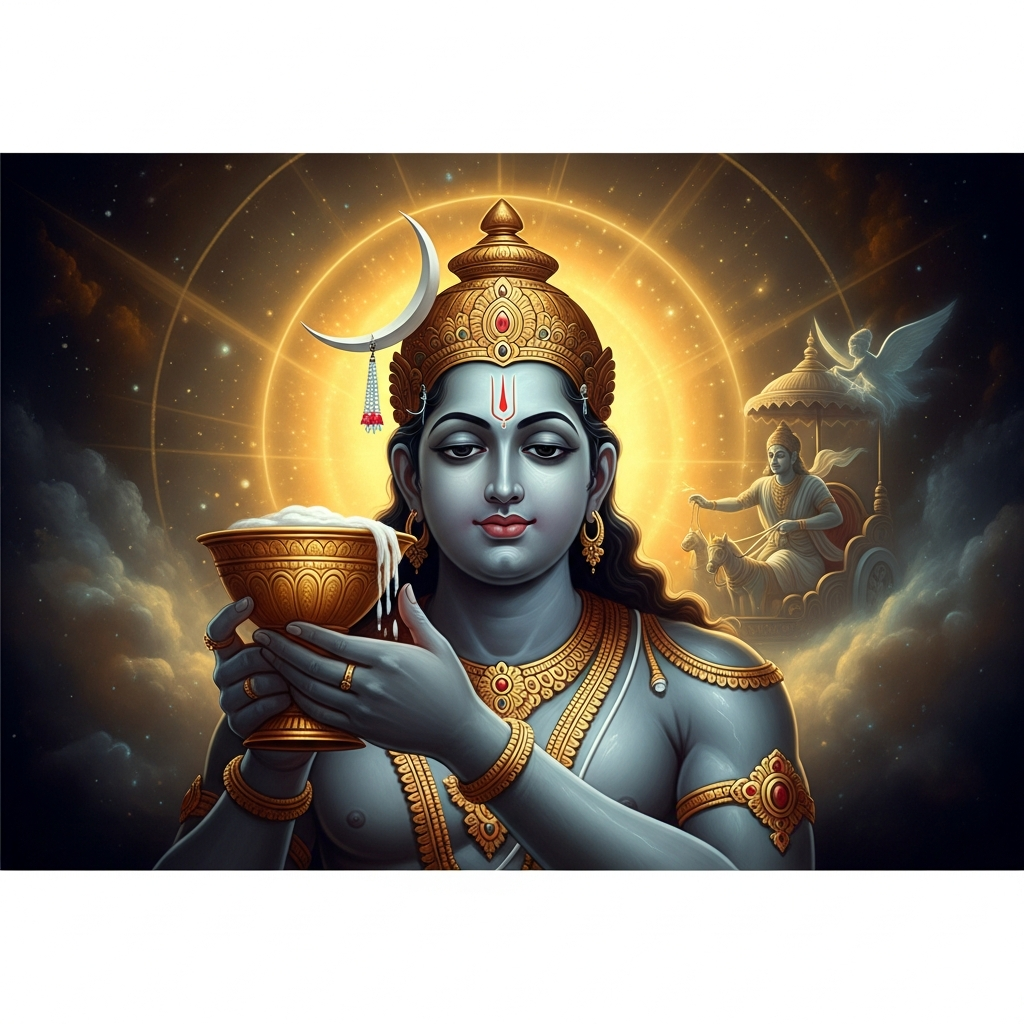
Soma is paradox: a plant, a drink, a god, a moon. The plant is unidentified — scholars have proposed Ephedra, Sarcostemma, Amanita muscaria, and Syrian rue — but its juice, pressed between stones and filtered through wool, produced an ecstatic clarity that the rishis identified with direct visionary contact with the gods. The ninth book of the Rigveda is dedicated almost entirely to Soma: 114 hymns sung as the priests pressed and filtered the sacred drink, addressing the liquid itself as a god streaming from the press into the wooden vats.
Indra drinks soma before slaying Vritra. The poets drink soma to compose hymns. The gods drink soma to remain immortal. Over the centuries Soma is identified with the moon (waxing as the gods drink and refill it), and the original plant is lost — by the late Vedic period, substitutes are already being used. What remains is the principle: that altered consciousness, ritually framed, is a pathway to the divine. The Soma cult is among the earliest documented religious uses of psychoactive substance in human history, and the hymns describe the experience with disconcerting modernity: We have drunk the soma. We have become immortal. We have come into the light. We have found the gods. (RV 8.48)
Biblical Parallels: The closest Hebrew parallel is the manna of Exodus 16 — divine substance that sustains, falls from above, and is gathered ritually. The wine of the Psalms (“wine that gladdens the heart of man”, Psalm 104:15) and the eucharistic wine of Christianity carry the same theological logic: a liquid that confers contact with the divine. Christ’s “I am the true vine” (John 15:1) inverts the soma-tradition: the sacred liquid is now identified with the deity rather than offered to him.
Cross-Tradition: Direct cognate with the Iranian Haoma, central to Zoroastrian ritual and still used in Parsi liturgy today (the underlying word is identical: Sanskrit soma = Avestan haoma). Parallels Greek nectar and ambrosia, the Norse mead of poetry (Kvasir’s blood), and the Mesoamerican use of psilocybin and peyote in shamanic practice.
2 min read