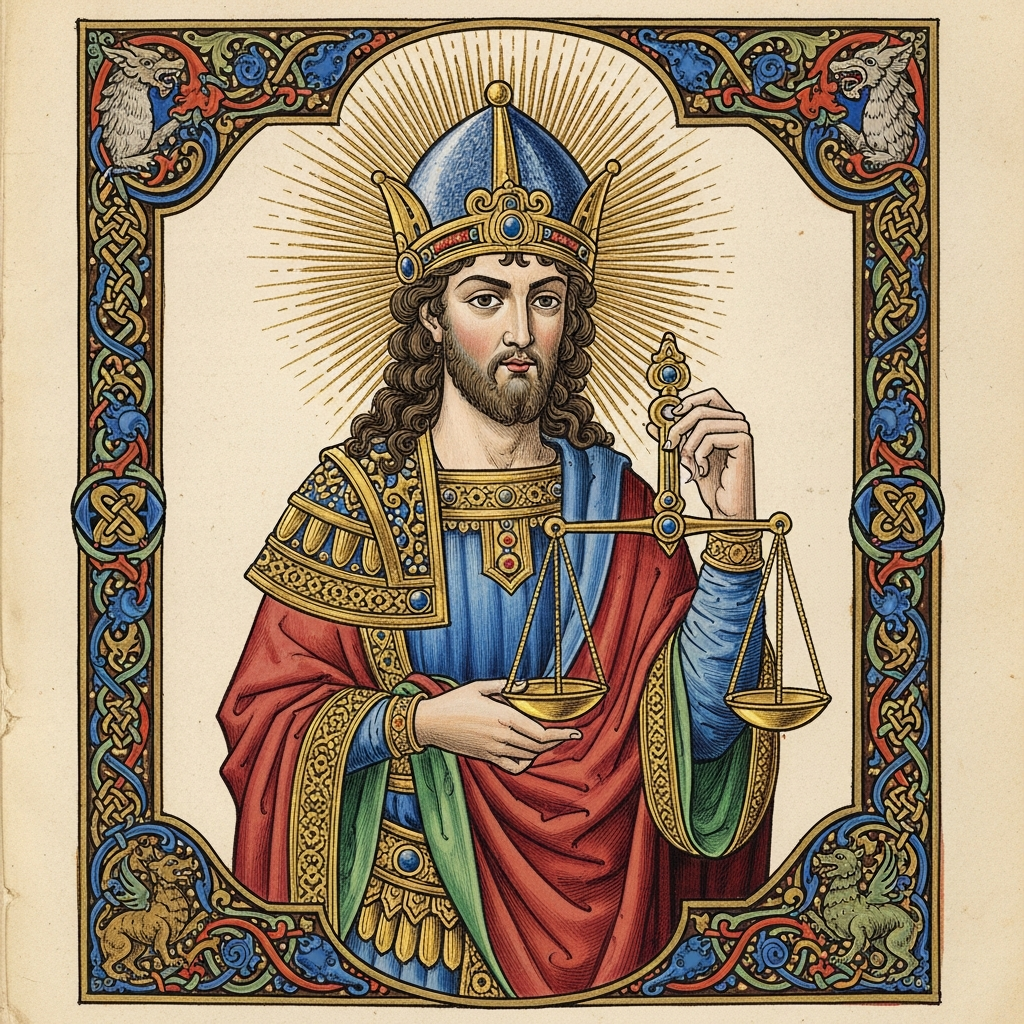
Combat Profile
Oath-Breaker's Reckoning
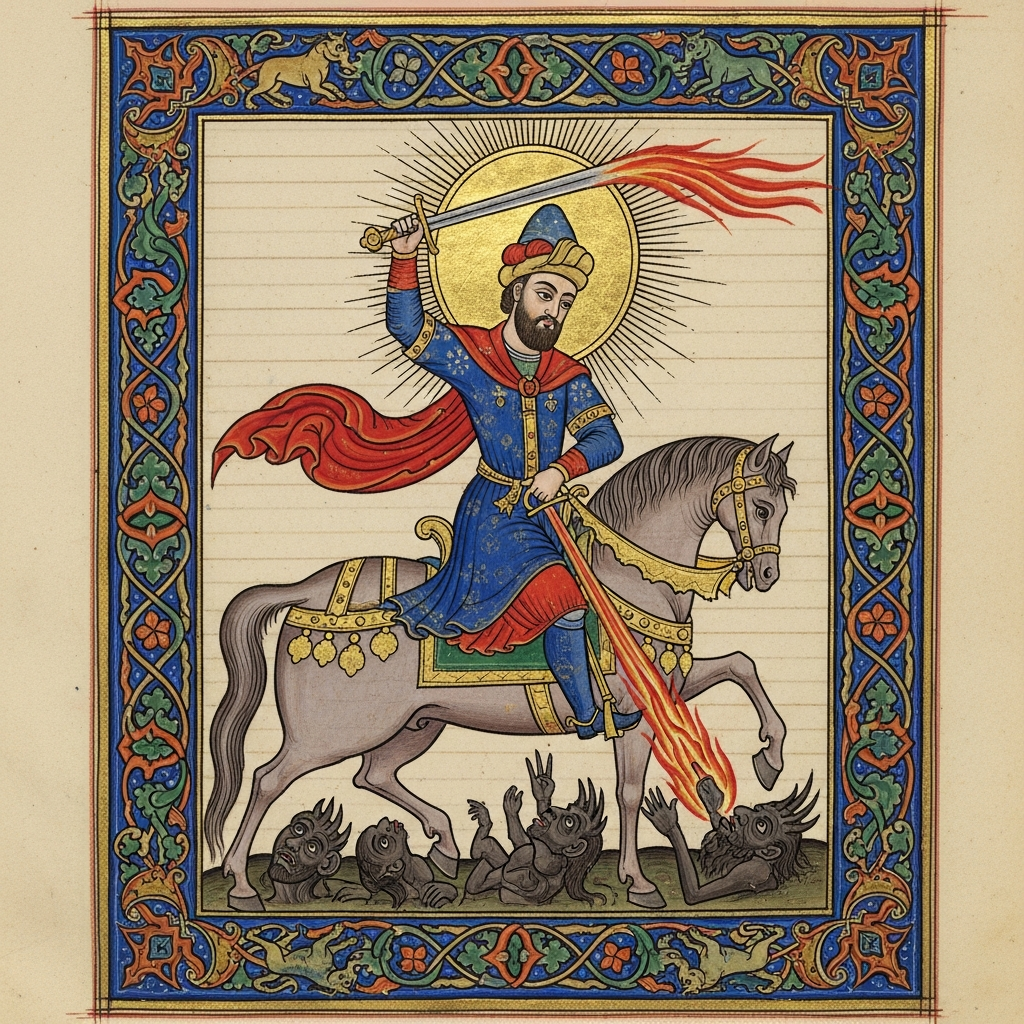
Mithra strikes down those who violate sacred contracts with divine judgment that cannot be evaded or forgiven.
Solar Justice
Mithra's presence illuminates all deception and falsehoods, granting allies enhanced perception of hidden truths and treachery.
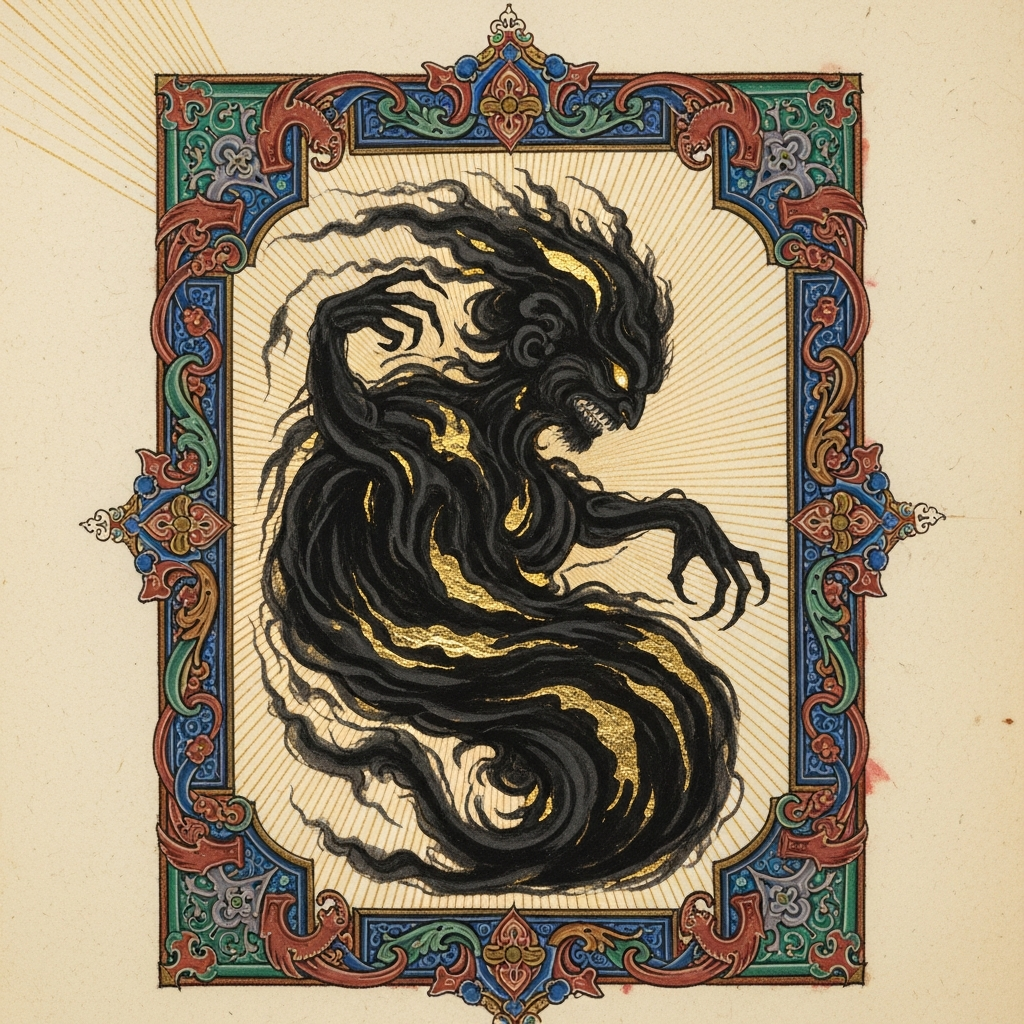
None recorded; oath-breakers are his special enemies
“Mithra of wide pastures, of the thousand ears, of the myriad eyes — the Yazata invoked by his own name.” — Mithra Yasht (Yasht 10:1)
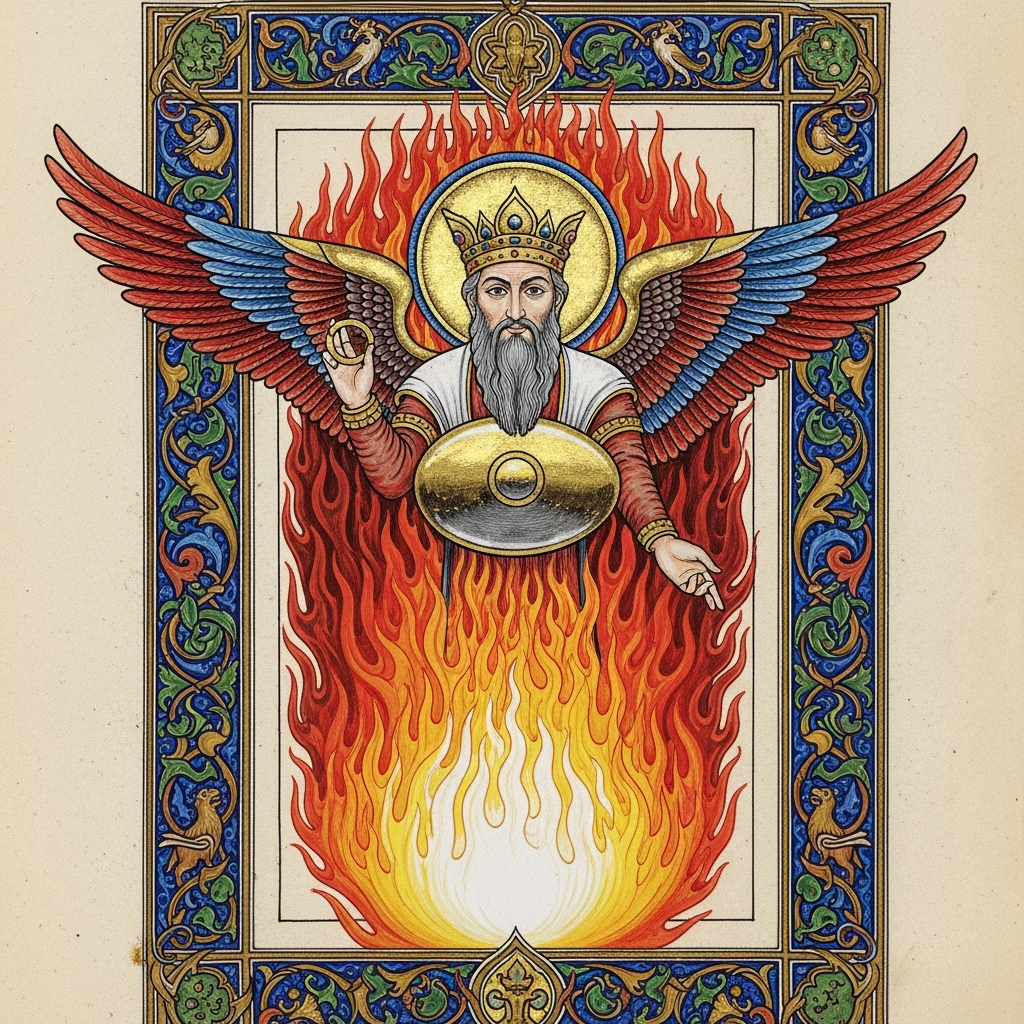
Lore: Mithra is one of the most powerful Yazatas (divine beings “worthy of worship”) — the god of contracts, covenants, the sun, and cosmic justice. He oversees all oaths and punishes those who break them. He rides a chariot of white horses across the sky, has a thousand ears and ten thousand eyes (he sees and hears everything), and judges the souls of the dead alongside Rashnu. In the Roman Empire, Mithra became Mithras, the center of a mystery religion that was Christianity’s single greatest rival in the first three centuries AD. Mithraism had baptism, communion meals, Sunday worship, December 25 celebrations, and called Mithras the “Sol Invictus” (Unconquered Sun).
Parallel: → The “Son of God” concept / Christ parallels. Mithra is born miraculously (from a rock, in some traditions on December 25), is associated with the sun, mediates between God and humanity, and judges the dead. Mithraism and early Christianity competed for the same converts in Rome, and many scholars argue that Christmas on December 25, Sunday as the holy day, and the halo (solar disk) in Christian art are all borrowed from Mithraic imagery. This does NOT mean “Jesus was copied from Mithras” — the theology is different. But the cultural influence is undeniable.
1 min read
Lying, oath-breaking, treachery
Mithra Yasht (Yasht 10); Vendidad; Roman Mithraic inscriptions