Combat Profile
Scales of Truth
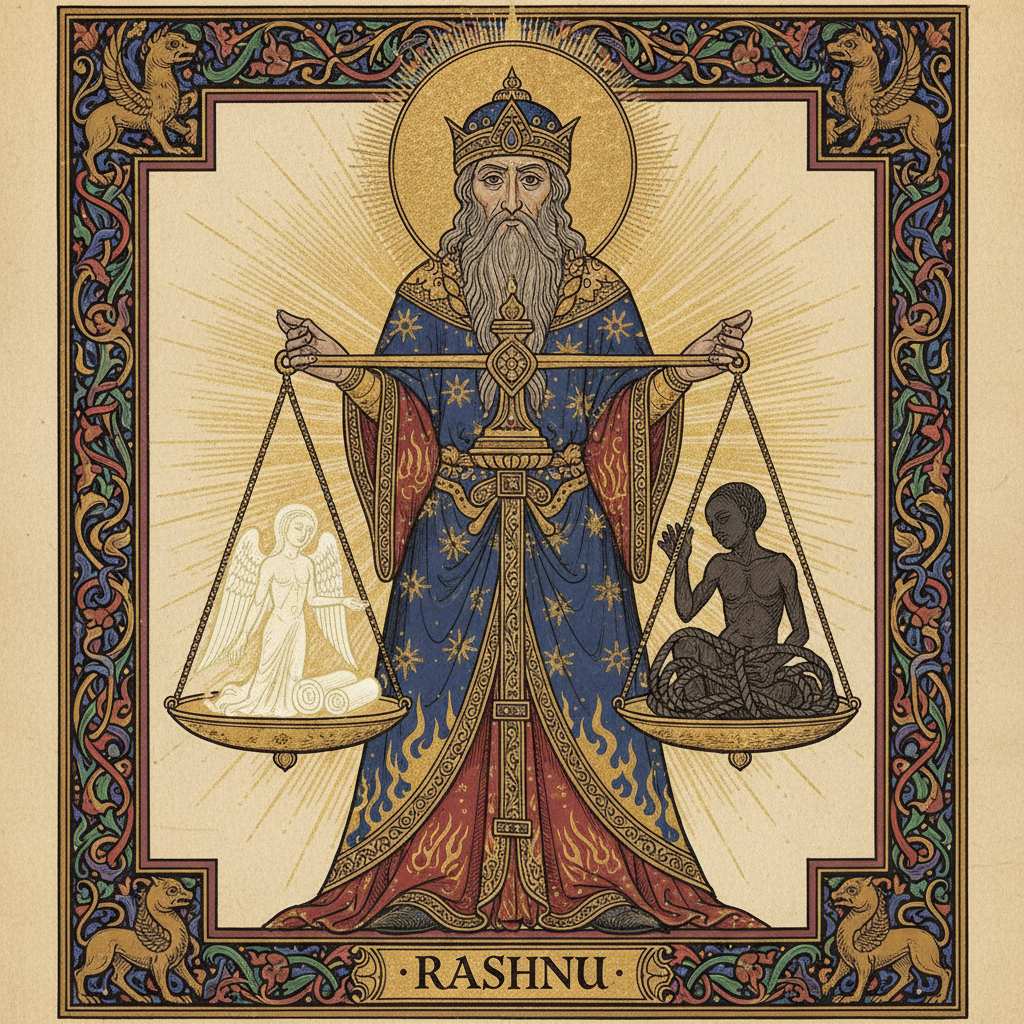
Rashnu weighs the deeds of the dead with perfect accuracy, revealing the true moral weight of any soul or action without deception or error.
Divine Witness
Rashnu perceives all truths and cannot be deceived; judgment rendered in their presence is immutable and binding across all realms.
None -- perfectly impartial
“Rashnu the most righteous, who weighs deeds on golden scales that not even the gods can tilt.”
Lore: Rashnu (“the Just”) is the Yazata of absolute justice who presides over the judgment of the dead at the Chinvat Bridge (the “Bridge of the Requiter”). When a soul arrives at the bridge, Rashnu weighs its thoughts, words, and deeds on golden scales. If the good outweighs the evil, the bridge widens into a broad path to paradise. If evil outweighs good, the bridge narrows to a razor’s edge and the soul falls into hell. Rashnu cannot be bribed, deceived, or moved — not by wealth, not by status, not by pleading. He is perfectly impartial.
Parallel: → Judgment in Revelation / Egyptian Ma’at. The image of souls being weighed on scales appears in both Egyptian religion (Ma’at’s feather, weighed against the heart by Anubis) and in Christian eschatology (the Great White Throne judgment, Revelation 20:12-15, where the dead are judged “according to what they had done”). The Zoroastrian version at the Chinvat Bridge is the most developed and the most likely direct source for the post-exilic Jewish concept of individual judgment after death.
1 min read
Self-deception, hidden sin
Rashnu Yasht (Yasht 12); Vendidad; Menok-i Khrat