Pazuzu: The Demon Who Guarded the Door
Neo-Assyrian period, c. 900–600 BCE · amulets found across the ancient Near East · Assyria and Babylonia · the household threshold · the southwest desert wind
Contents
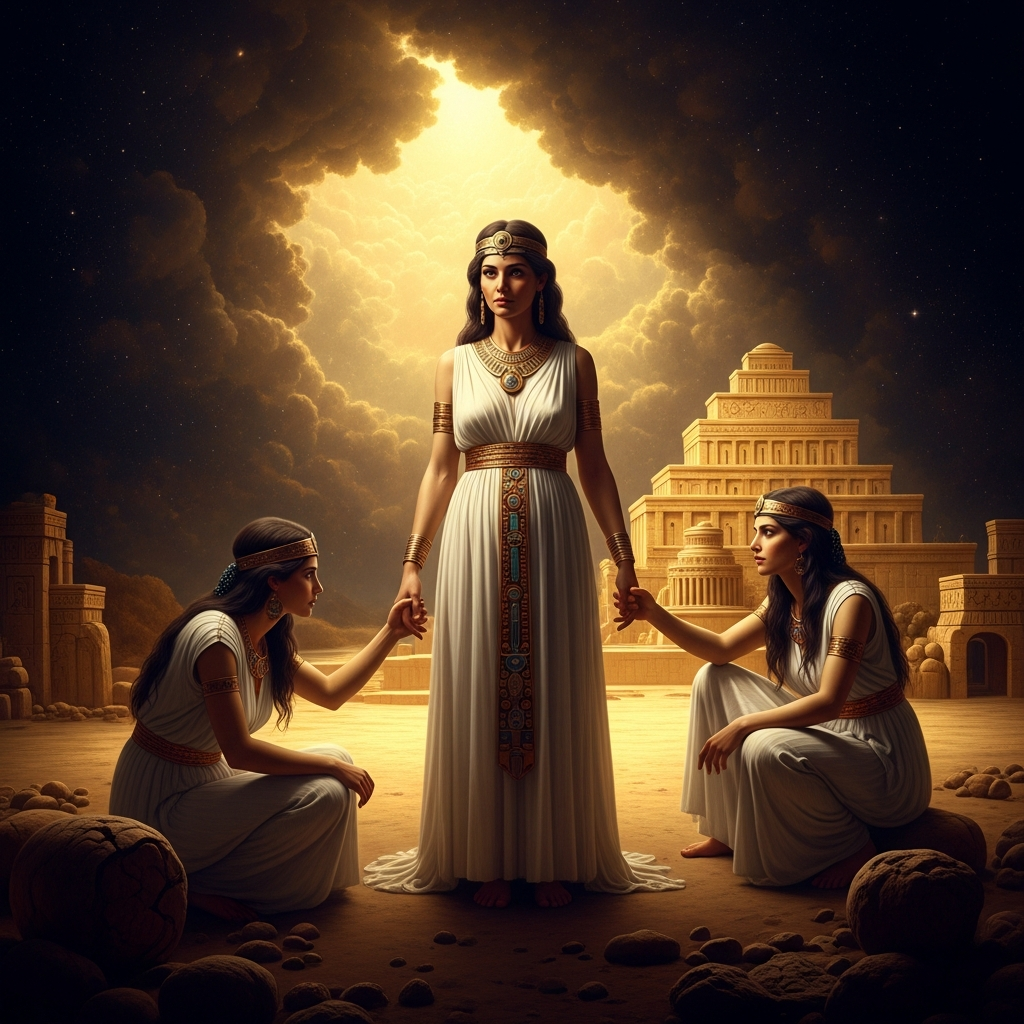
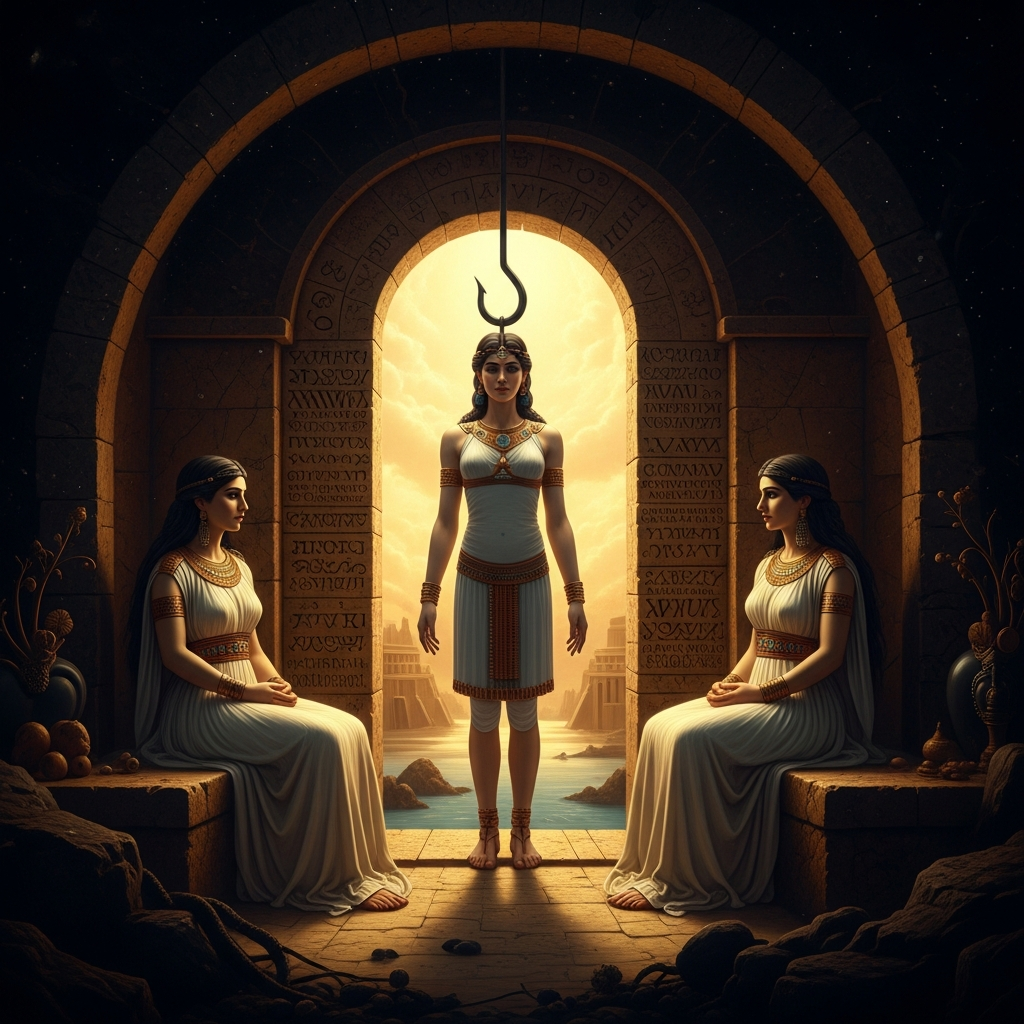
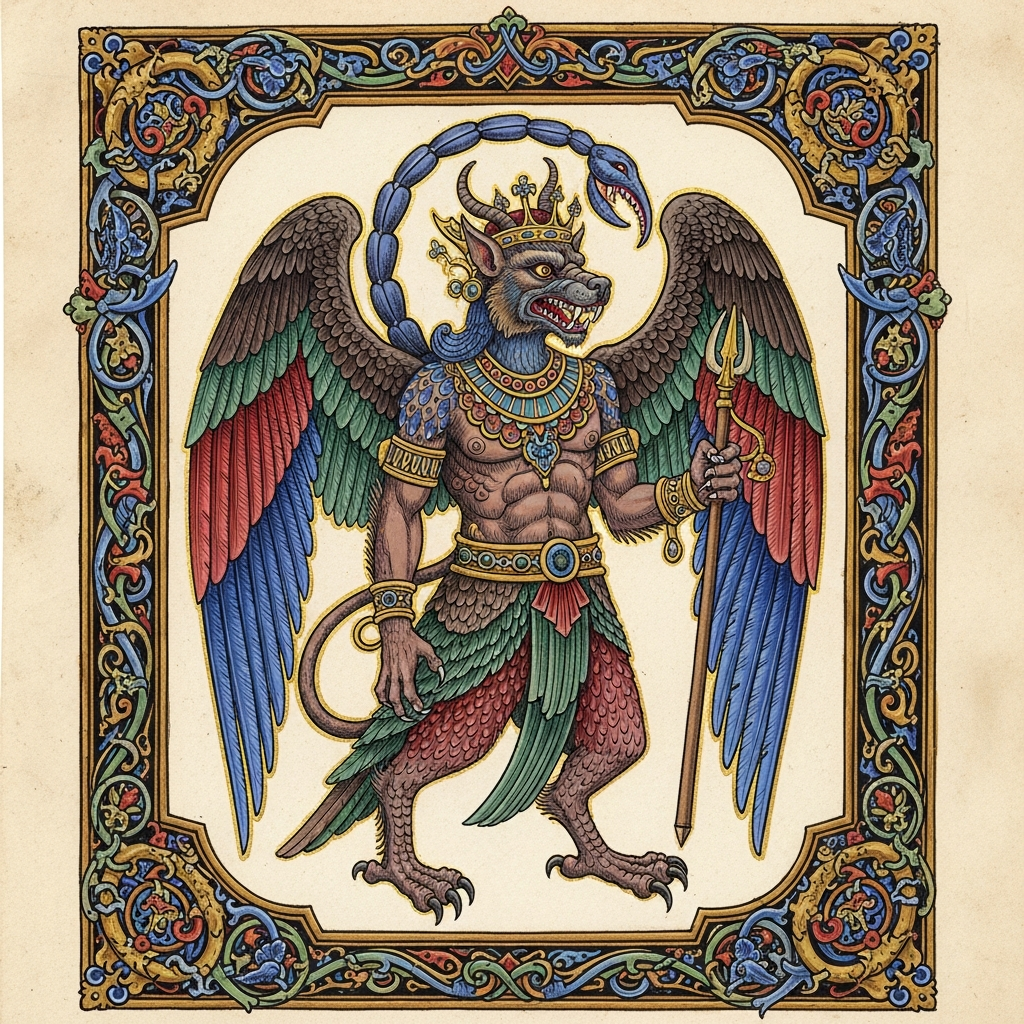
Pazuzu was the king of the southwest wind demons — the wind that brought drought, locusts, and fever across the Assyrian plain. He was among the most terrifying beings in the Mesopotamian cosmos: dog face, eagle talons, scorpion tail, four wings, scaly body, the body of a man warped into something the desert had dreamed. Yet for a thousand years, mothers in labor kept his image on the wall above the bed, wore him as a pendant against their skin, pressed his face to the bellies of pregnant women. He was the guardian of the threshold. He was the thing that kept the other things out.
- When
- Neo-Assyrian period, c. 900–600 BCE · amulets found across the ancient Near East
- Where
- Assyria and Babylonia · the household threshold · the southwest desert wind
The wind that came from the southwest smelled like death before it arrived.
In Assyria and Babylonia, in the centuries when the great empires pressed their cuneiform into soft clay and dried it into permanence, the people who lived in the valleys between the rivers understood the wind the way a navigator understands a current: as a force with character, with intention, with something that might be called a will. The north wind brought cool air down from the mountains. The east wind carried moisture from the sea. The west wind was neutral, a messenger.
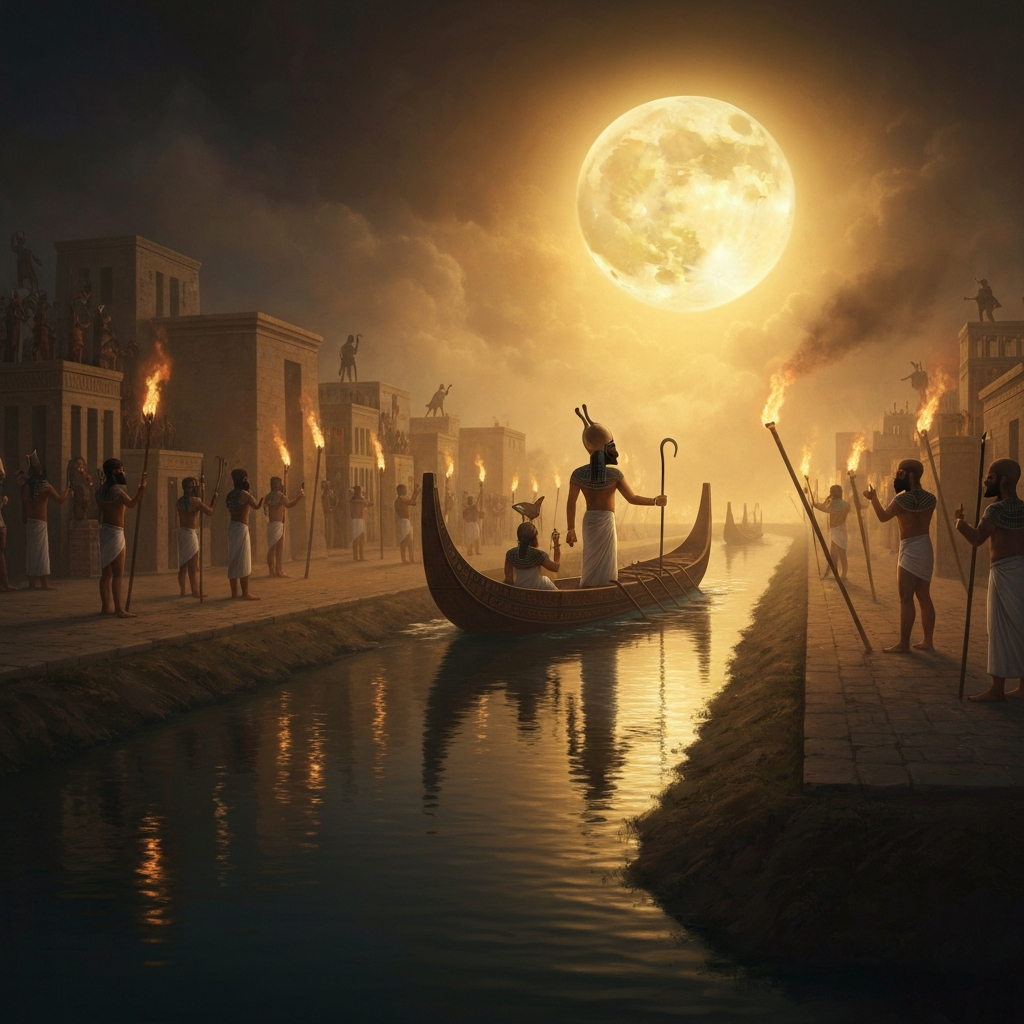
The southwest wind was the wind of Pazuzu. It crossed the desert. It arrived dry and terrible, carrying with it the dust of places nothing grew, and behind it, as if the wind had opened a door, came the locusts, the fever, the crop failure, the death of cattle, the strange killing sicknesses of children. The Mesopotamians were not wrong to personify this. The connection between desert wind and epidemic was real. They simply named the mechanism and gave it a face.
The face they gave it was not a human face.
Pazuzu had the head of a dog — or a lion, the accounts vary slightly — and the body of a man scaled over like a fish, and four wings that could carry him the length of a sky, and the talons of an eagle where his feet should have been, and a scorpion’s tail curled behind him. His member was erect, which in the iconographic language of Mesopotamia signified both generative power and threat. He was depicted always in the same posture: one hand raised, one hand lowered, the wings spread, the face turned slightly to the side as if he had been caught mid-motion, in the act of arriving.
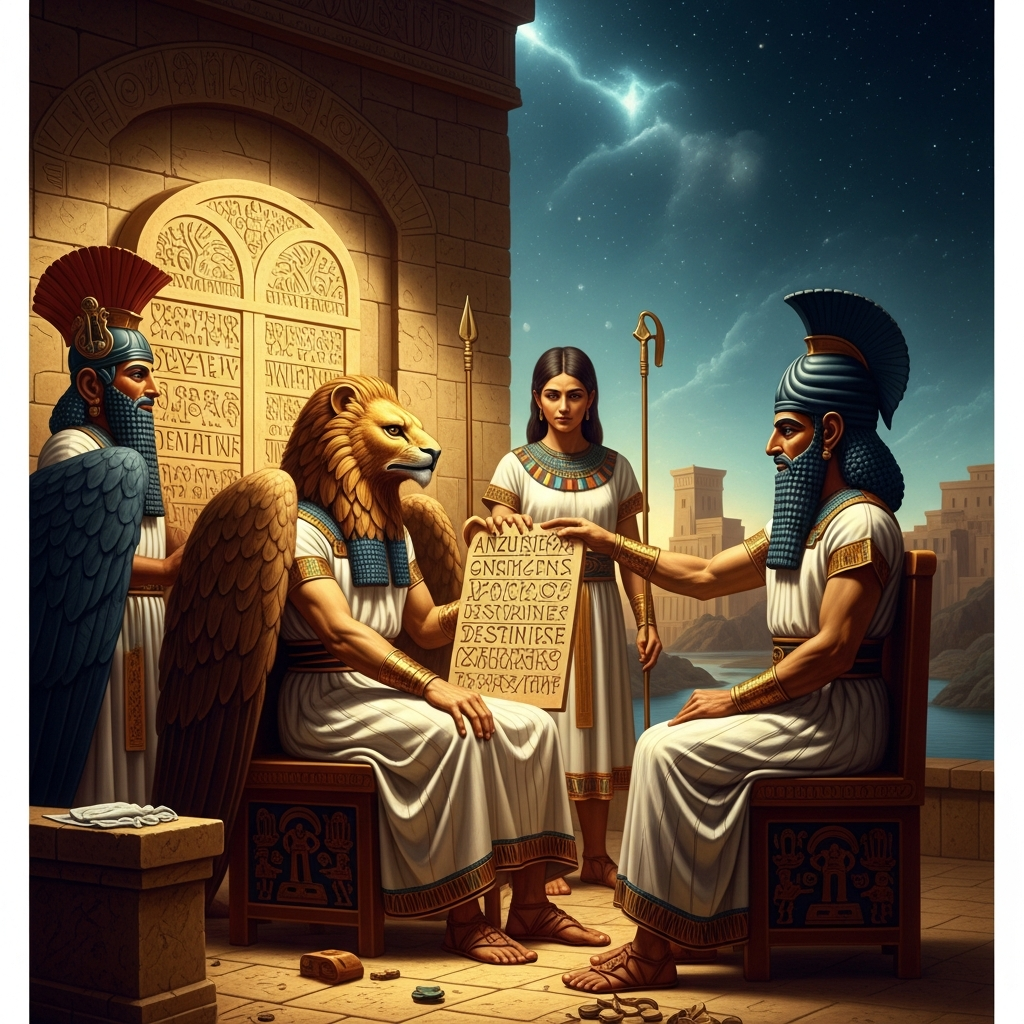
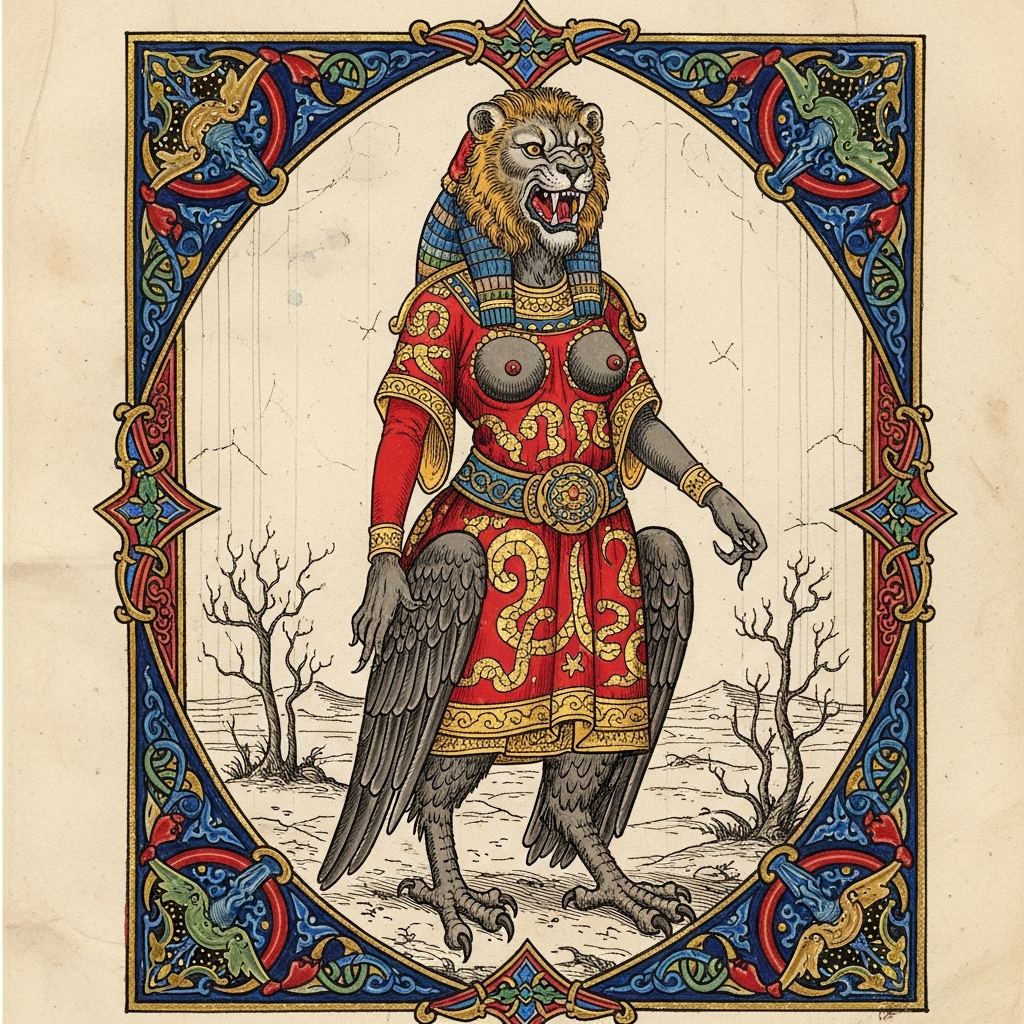
He was king of the wind demons, a rank with meaning in the Mesopotamian cosmos. The spirit world was not undifferentiated. It was structured. There were hierarchies, offices, subordinate relationships. Lamashtu, the demon who killed infants in the womb and at the breast, who caused miscarriage and crib death and the fevers that took children in their first weeks — Lamashtu was the daughter of Anu, the sky god, which gave her divine parentage and considerable power. But Pazuzu outranked her. She feared him the way a lesser official fears the arrival of a greater one: not because he was good, but because he was senior.
This is the entire foundation of the amulet logic. It has nothing to do with goodness.
Imagine the room.
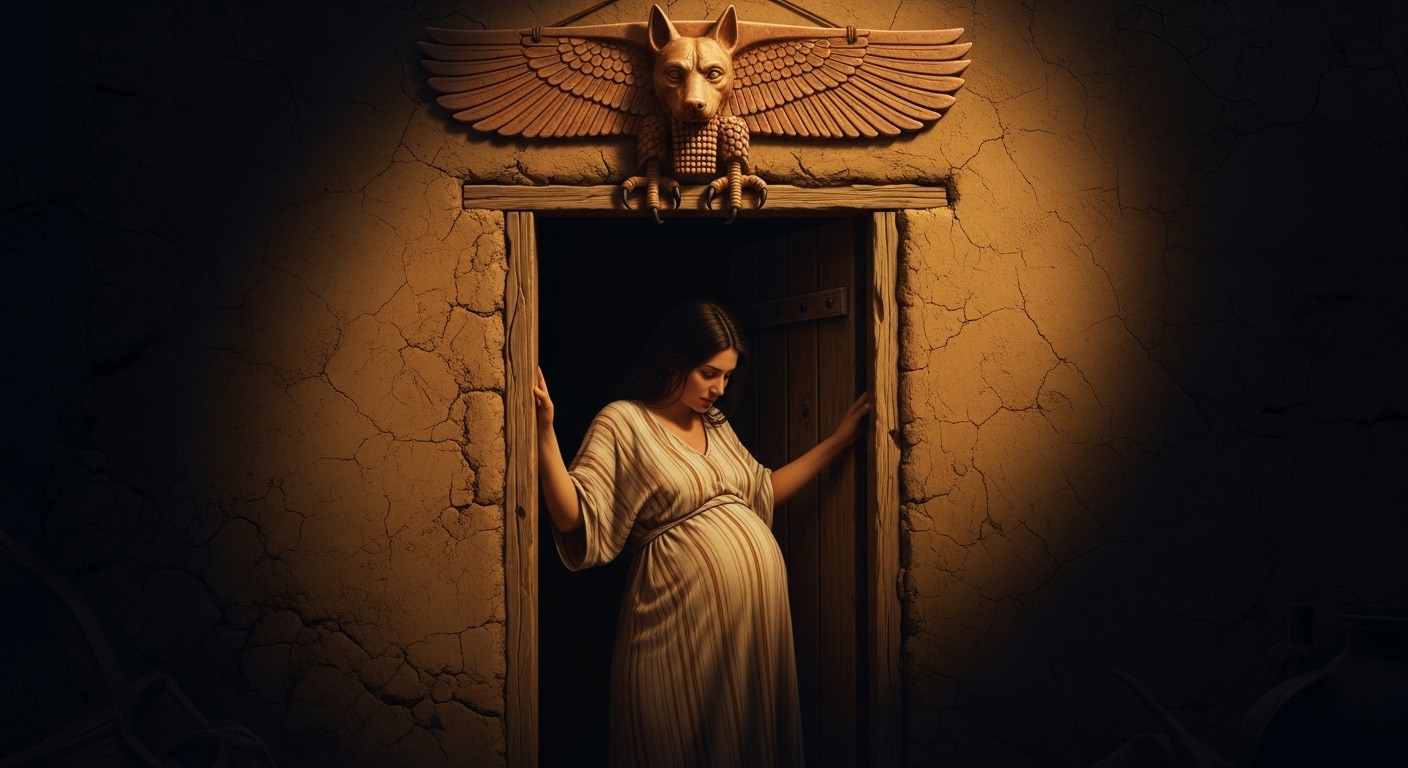
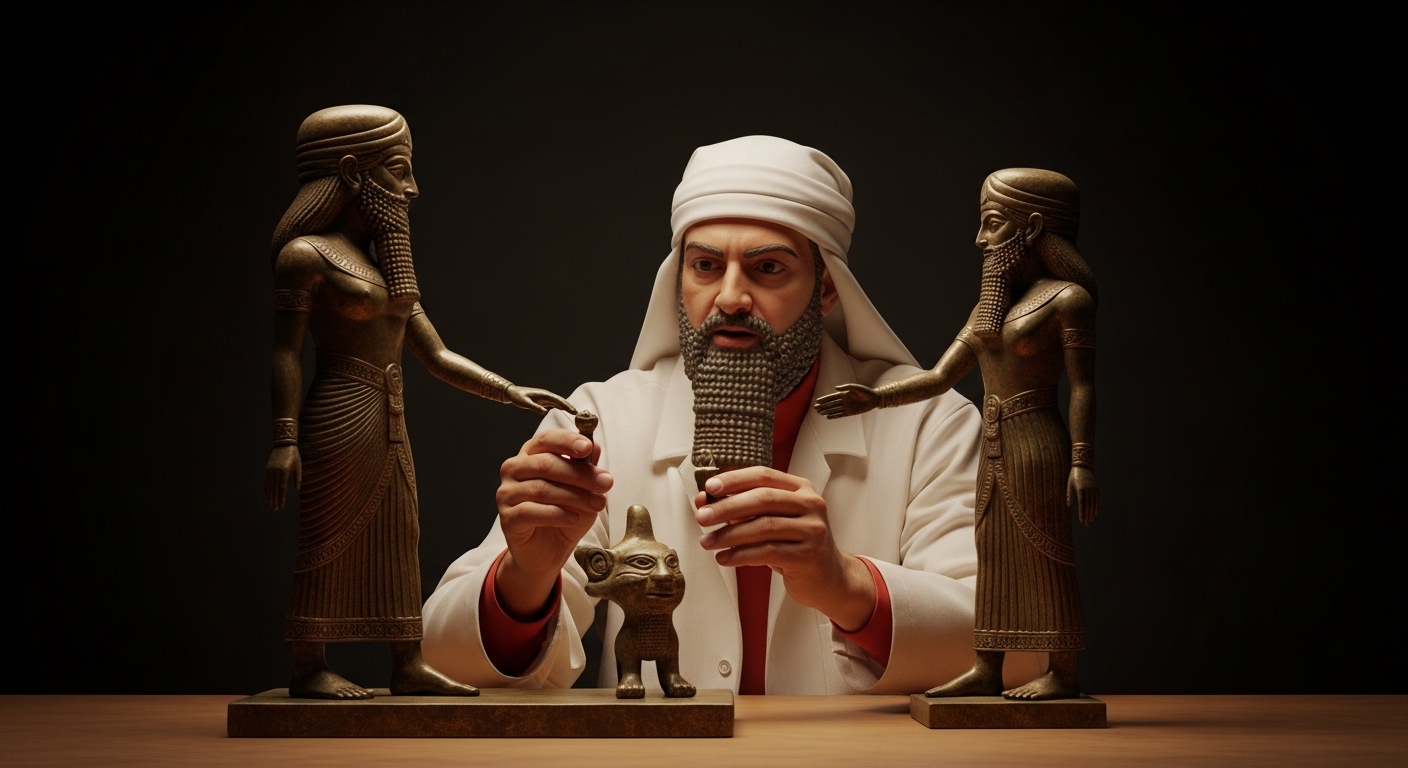
A woman is in labor. In Assyria, in the seventh century before the common era, this is among the most dangerous passages a human body can undertake. The mortality rates for mothers and infants are realities the family has lived with, has buried people into, has built their ritual practice around. The physician — who is also the exorcist, the roles are not yet separated — has been called. He brings his incantation texts, his bronze figurine, his knowledge of which demon is responsible for which symptom.
Lamashtu is the one who kills newborns. Everyone knows this. She is depicted descending from the sky toward the mother’s bed, her donkey’s head and lion’s claws reaching for what she wants. Against Lamashtu, you call Pazuzu.
The physician sets the bronze figure of Pazuzu in the room. He recites the incantation, which is not a prayer in the sense of asking a benevolent power for help. It is closer to a summons, a command issued through the proper channels: Pazuzu, king of the southwest wind demons, I invoke your authority against Lamashtu. The hierarchy of the spirit world is being activated. The superior is being called to discipline the subordinate.
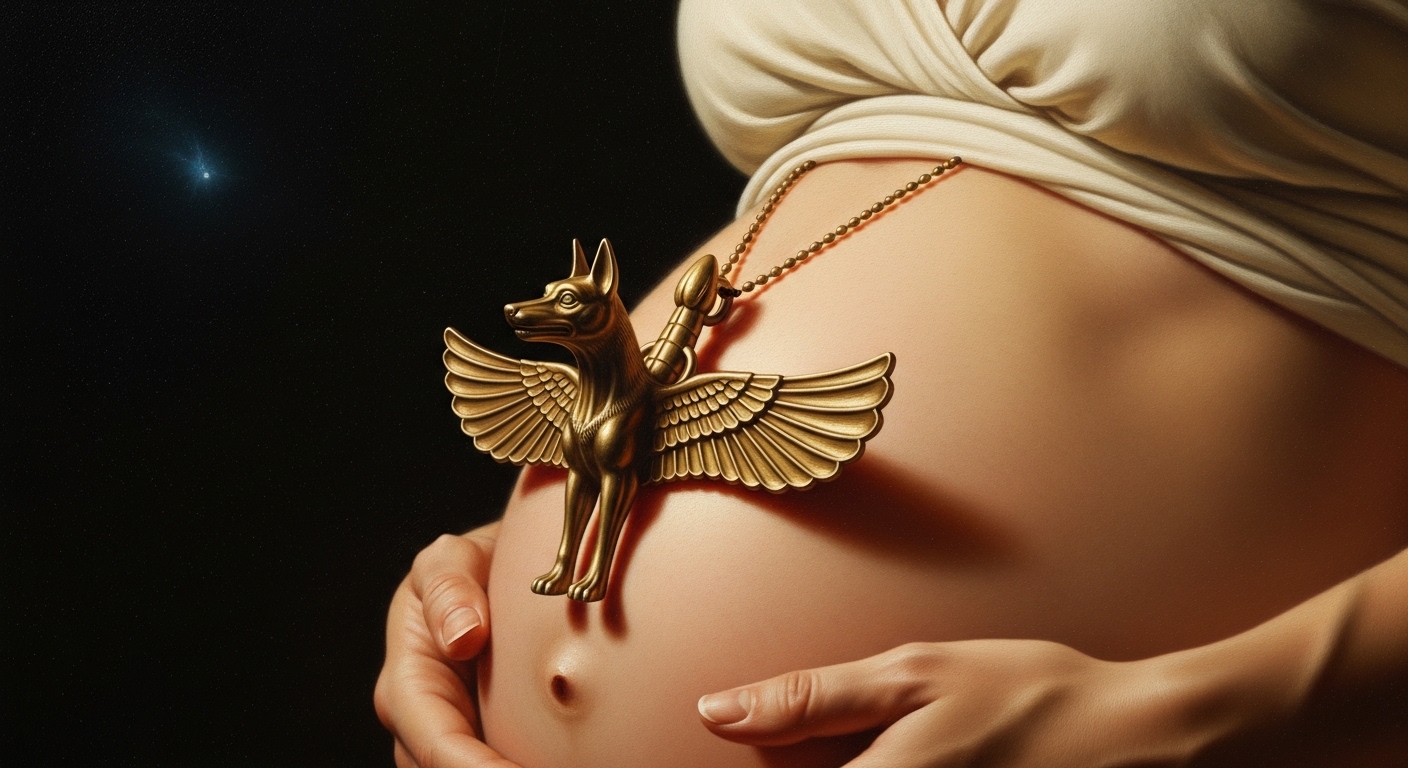
The mother wears a Pazuzu pendant against her skin. When the excavators come three thousand years later, they will find these pendants still with the women who wore them — not discarded, not broken, but kept. Some will be found with the infants, placed in graves that tell the story of when the system failed and the demon came anyway.
But the amulets persist. The logic persists. You wear the king of disease to ward off disease. You hang the destroyer of children above the bed where the child will be born. The thing that embodies the terror is also the thing that stands between you and the terror, because the terror has a chain of command, and you have learned the name of the one at the top.
What the Mesopotamians understood that later traditions sometimes obscure is that evil is not simple. It is not a uniform darkness that can be pushed back by light. It is organized. It has structure. Lamashtu has jurisdiction. Pazuzu has jurisdiction over Lamashtu. To work within the system, you must know the system.
This is not cynicism. It is a specific kind of theology, one that takes seriously the complexity of the spiritual world and refuses the comfort of pretending that power is always aligned with goodness. Pazuzu was not good. He brought drought. He carried the locusts on his four wings across the desert. When he arrived, crops failed and children developed the fever that killed them in three days. His nature did not change because he was useful. His usefulness was a function of his nature: he was more powerful than what threatened you, and that was enough.
The Exorcist, released in 1973, used Pazuzu as the possessing demon — the head rotating, the voice dropping into something that came from the desert. It is a powerful film. It has almost nothing to do with Pazuzu. The actual Pazuzu would be hanging above the girl’s bed, invoked by a Babylonian physician, recited over in correct Akkadian, used to drive out whatever was inside her. The Pazuzu of Mesopotamian religion would be the cure, not the disease.
There is a head of Pazuzu in the Louvre — bronze, about nine inches, dating to the early first millennium BCE — that captures something the amulets cannot fully express. The face is not simply monstrous. It is watching. The eyes are wide, not in fear but in vigilance. The cheeks are carved into the expression that comes between a grimace and a grin. Whatever this face is doing, it is not sleeping. It has been placed somewhere and it is attending to its function.
That function was protection. The most terrifying face in the Mesopotamian spirit world was also the face that mothers wanted at the threshold. He was the king of the evil wind, and he stood at the door, and the evil wind knew his face and did not enter.
The logic is brutal and completely coherent. You do not lock the door against a river by placing something softer than water in the frame. You place something the river cannot move. Against Lamashtu, who took children before they could be named, the Assyrian mother placed the king of what Lamashtu feared. She did not ask him to be good. She asked him to be present. She asked him to be senior.
He stood there for a thousand years, watching the door, holding rank over the thing that wanted to come in. In every house that kept him, in every birth where the amulet worked — or seemed to work, or worked often enough that the practice persisted — Pazuzu fulfilled the only obligation anyone had ever asked of him.
He was the demon. He kept the demons out.
That was enough.
Scenes
Echoes Across Traditions
Entities
Sources
- Lamashtu amulets and incantations (various Assyrian/Babylonian tablets, Neo-Assyrian period)
- Erika Reiner, 'Astral Magic in Babylonia' (1995)
- Frans Wiggermann, 'Mesopotamian Protective Spirits' (1992)
- Assyrian medical texts and incantation series (Maqlu, Shurpu)