Combat Profile
Locust Plague
Pazuzu summons a devastating swarm of locusts that devours crops and inflicts famine across the land, weakening all enemies over time
Lord of the Lilu
Pazuzu commands dominion over all wind demons and maintains perpetual protection against curses of childbirth, granting immunity to debilitating hexes
“I am Pazuzu, son of Hanpa, king of the evil wind demons. I ascended the mighty mountains which trembled.”
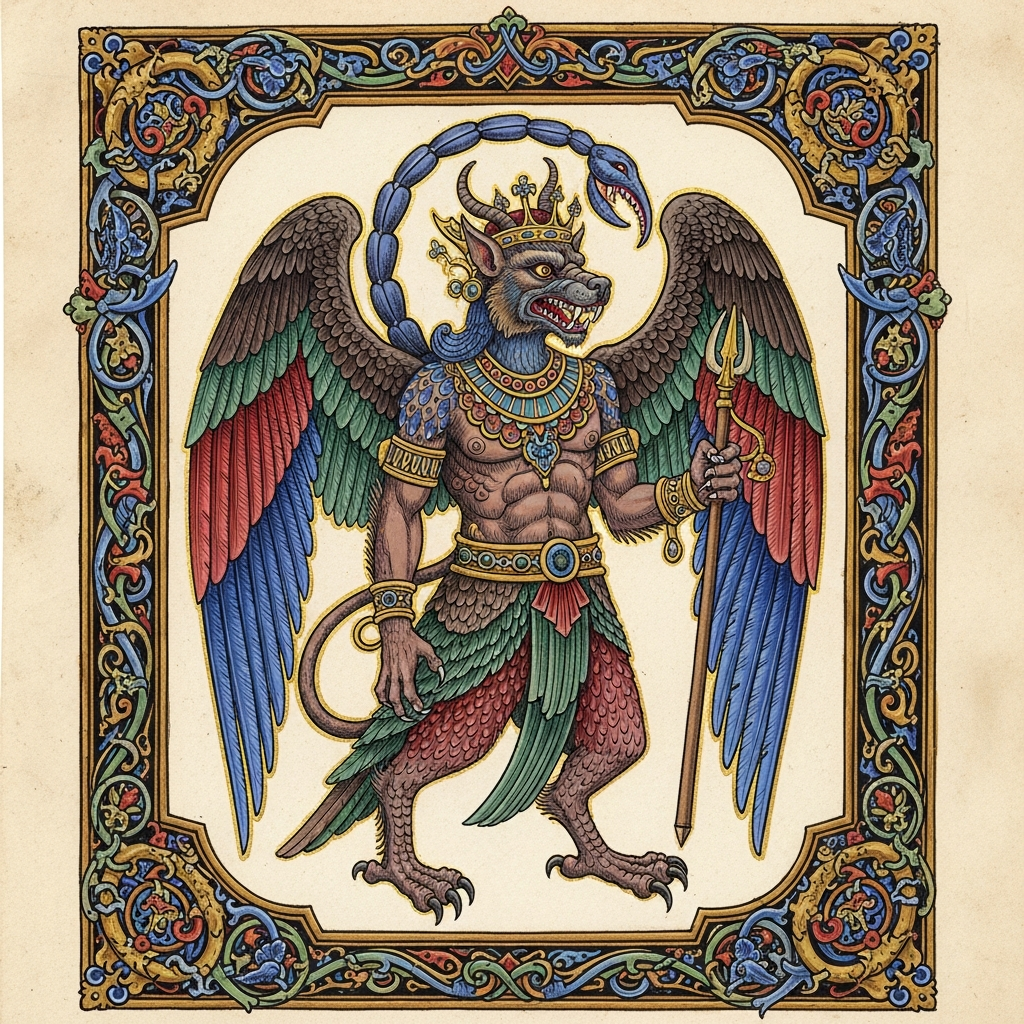
Pazuzu is the demon you summon to fight a worse demon. With his canine face, bulging eyes, four wings, serpentine body, and scorpion tail, he is the most visually iconic Mesopotamian demon — and the one modern audiences know best from William Peter Blatty’s The Exorcist (1973). In Mesopotamian practice, Pazuzu amulets were hung over the beds of pregnant women and infants to ward off Lamashtu, the she-demon who preyed on them. He embodies a principle entirely foreign to biblical demonology but central to ancient Near Eastern practice: that evil can be weaponized against evil, that one demon’s domain can be used to block another’s. The Bible’s closest analogue is the Pharisees’ accusation that Jesus casts out demons by Beelzebub (Matt 12:24) — a charge Jesus rejects precisely because the idea of demon-vs-demon protection was commonplace.
1 min read
Neo-Assyrian amulets and incantation texts (1st millennium BCE)