Sraosha: The Ear That Hears the Cosmic Song
The eternal present — Sraosha's fight with Aeshma repeats through cosmic time · The divine realm and the boundary where holy attentiveness meets demonic chaos
Contents
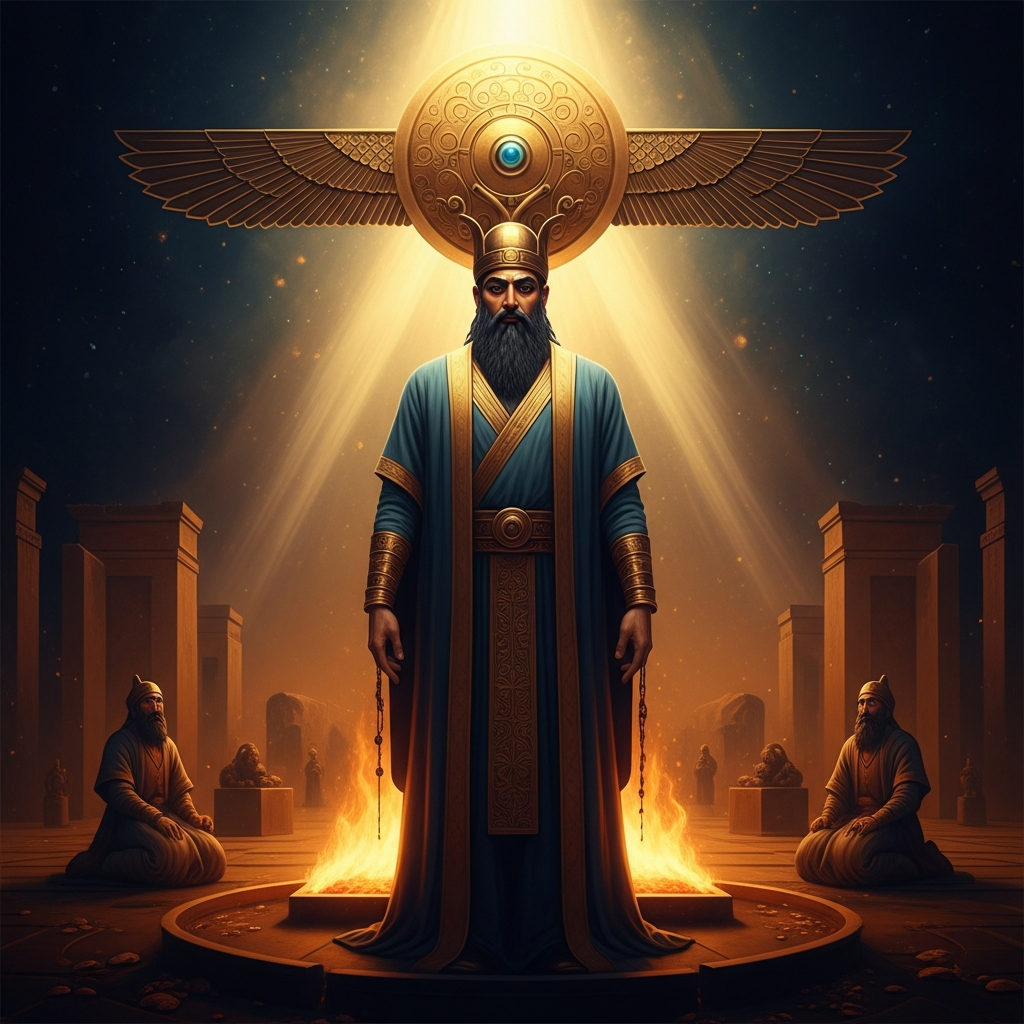
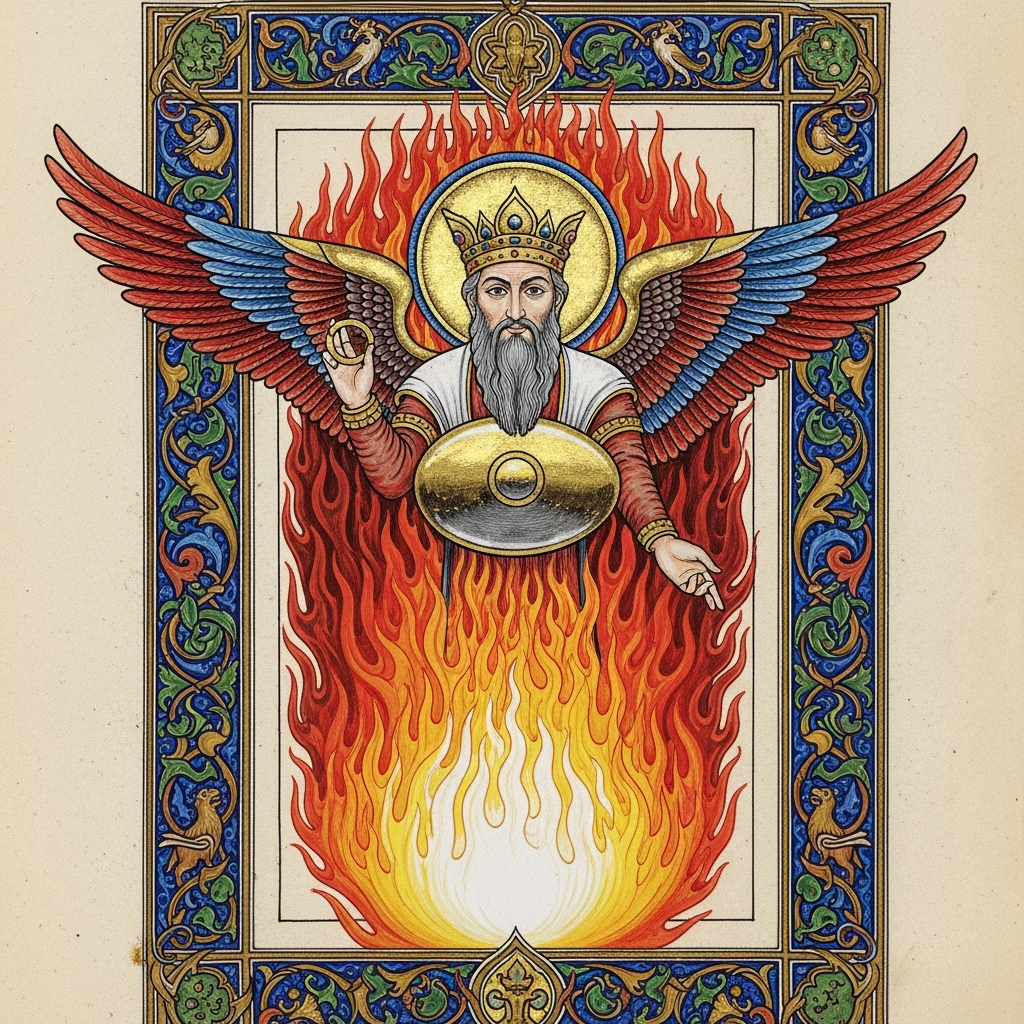
Sraosha, the yazata of holy obedience, is the first divine being to worship Ahura Mazda — the original act of righteous response that all subsequent worship imitates — and he fights the daeva of wrath each night to keep the world from sliding into chaos.
- When
- The eternal present — Sraosha's fight with Aeshma repeats through cosmic time
- Where
- The divine realm and the boundary where holy attentiveness meets demonic chaos
Before any human being heard the divine order, Sraosha heard it.
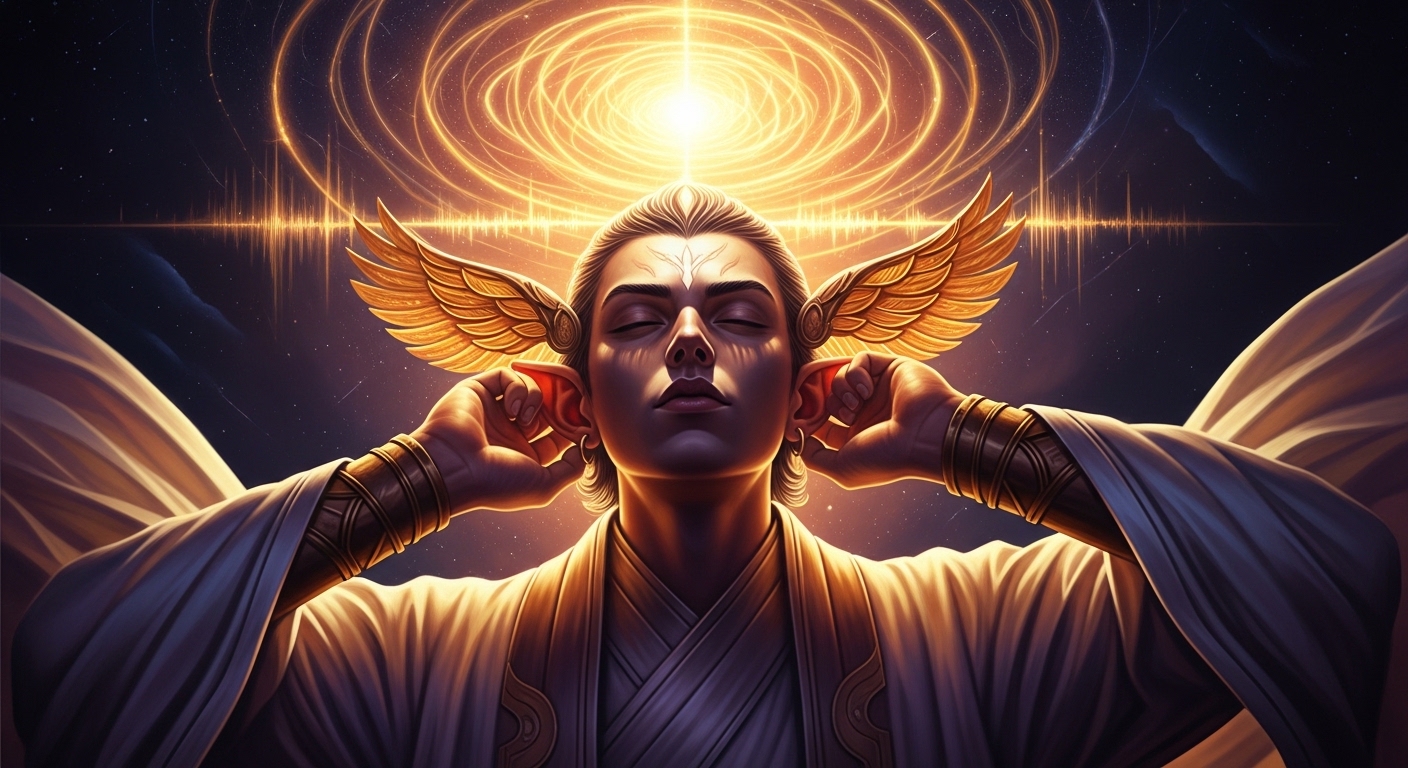
He is the yazata of holy attentiveness — the divine quality of hearing what is, and responding to what is heard, rather than to what one desires or fears or imagines. The Avestan word sraosha is cognate with words in many Indo-European languages that mean hearing: the Greek akouō, the Latin audio, the English ear all share the same root, the same fundamental act of turning toward what is rather than away from it.
His function is not passive. He is not a receptive listener who waits for the cosmos to speak and then nods. He is the first divine being who took what he heard from Ahura Mazda and performed it in the spiritual world — the first act of worship, the first alignment of a spiritual will with the divine will, which Zarathustra then performed in the material world and which every subsequent worshipper imitates.
He has three residences, the Srosh Yasht says.
The first is on the top of a mountain. The second is in the middle of the divine realm. The third is wherever righteous worship is performed, because wherever someone correctly names the divine and aligns their actions with what the naming implies, Sraosha is present. He comes to the fire temple at dawn not because the priest’s ritual summons him but because the priest’s ritual is his natural habitat — correct ritual is where Sraosha lives.
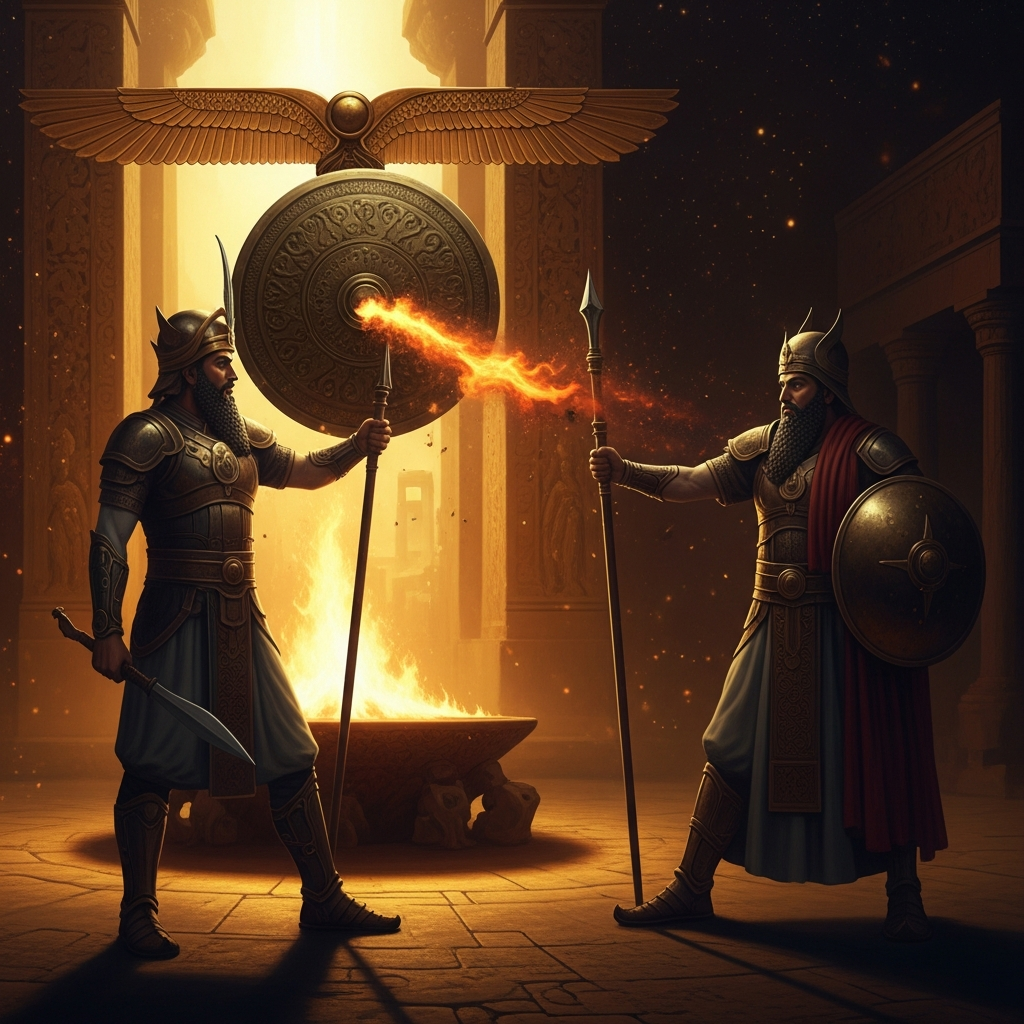
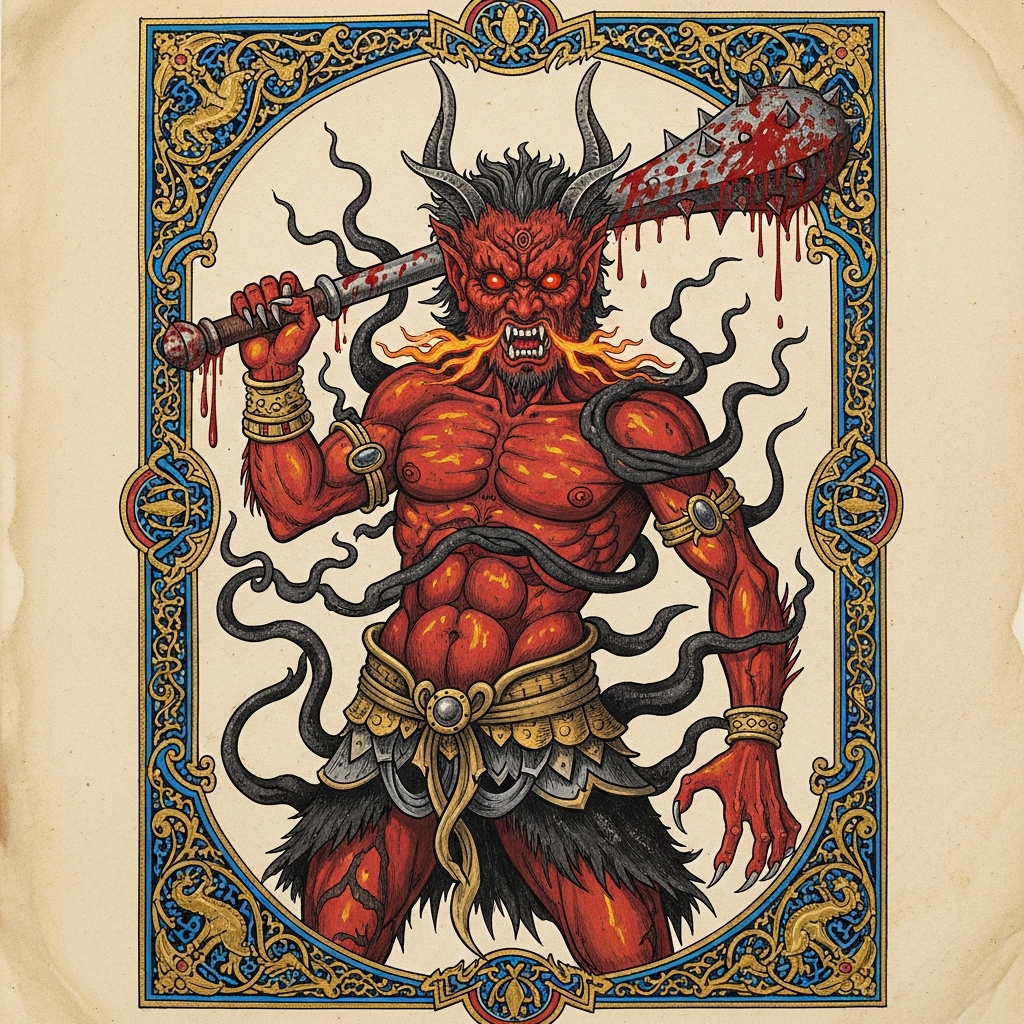
Each night he fights Aeshma.
Aeshma — the daeva of wrath, of berserker fury, of the cattle-raiding violence that is the darkness of the night — assaults the sleeping world between sunset and sunrise. The cattle are most vulnerable at night: the raids that devastated Bronze Age Iranian communities came in the dark, when the herd could not be defended and the violence of the raid was amplified by darkness and surprise. Aeshma is that violence elevated to a cosmic principle: the destructive energy that has no purpose beyond destruction, the fury that does not build and does not sustain but only breaks.
Sraosha fights him.
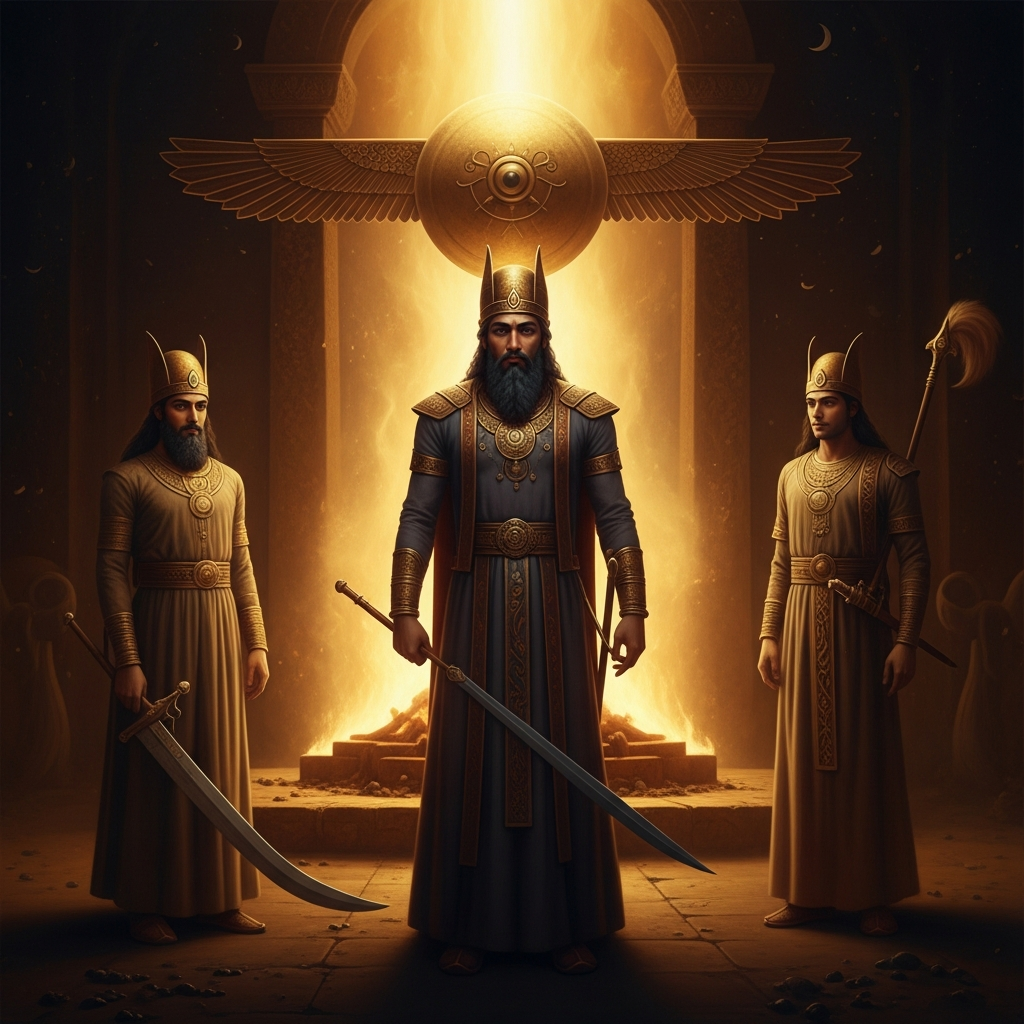
He carries a club — the weapon of pure force, the weapon that ends violence by the application of greater force in service of a purpose. His club strikes Aeshma and drives him back. Not permanently: the fight is repeated each night because the principle of chaos is not defeated once but is defeated continuously, every night, through the sustained effort of righteous attentiveness against mindless destruction.
This nightly combat is one of the most practically oriented mythological images in the Avestan tradition. The priest who recites the Srosh Drōn at dawn is not performing a symbolic act of remembrance — he is lending his energy to the cosmic battle that was just fought through the night, acknowledging the victory and asking for its continuation.
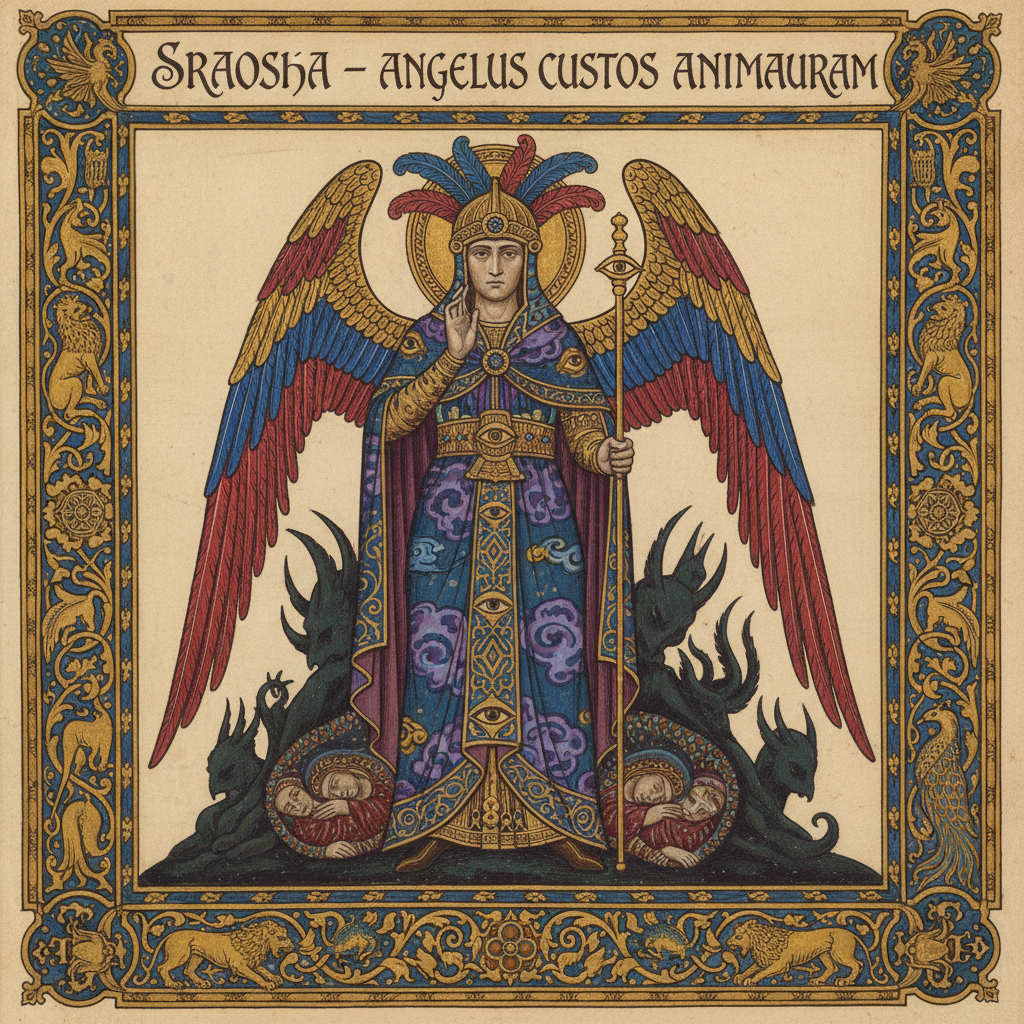
At the Chinvat Bridge, Sraosha accompanies the soul.
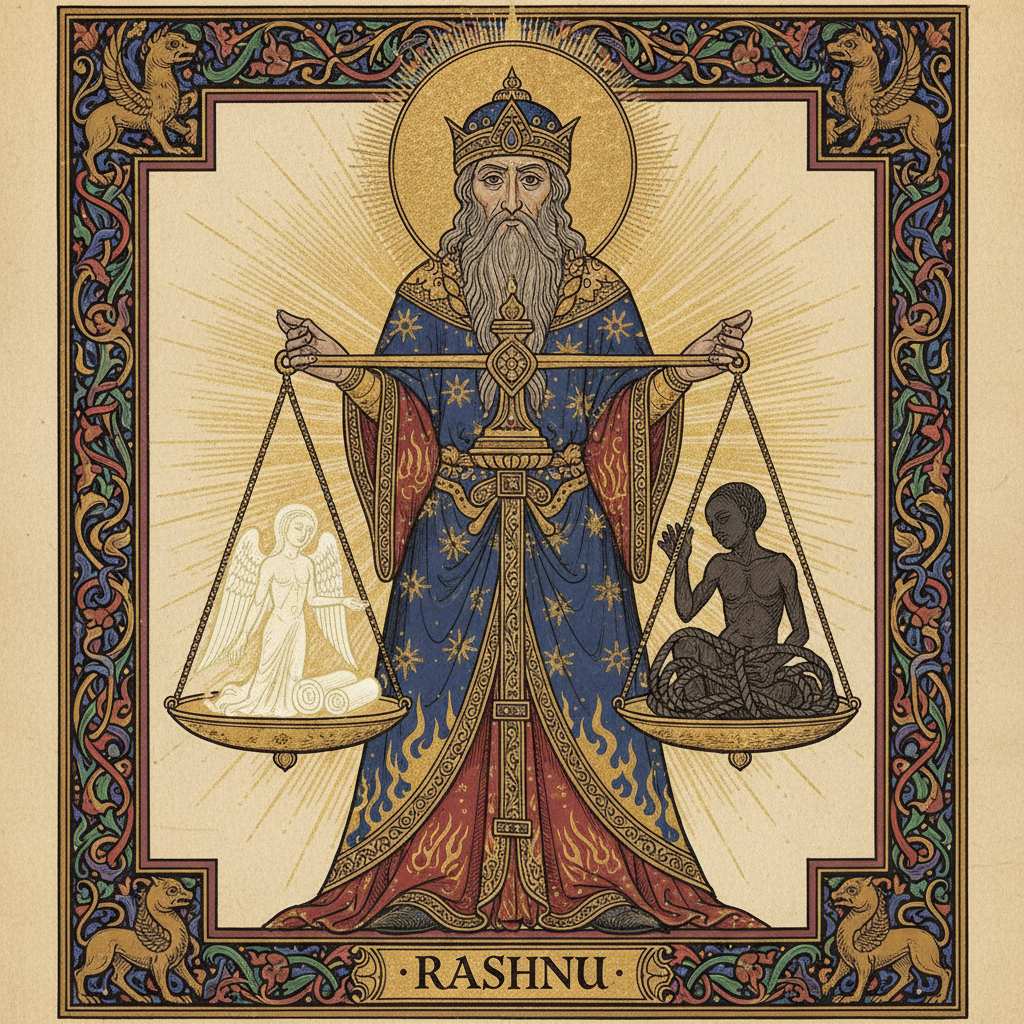
He is one of the three judges — with Mithra and Rashnu — who watch the crossing. His role is not the weighing of actions (that is Rashnu) or the observation of covenants (that is Mithra) but the hearing of the soul’s inner reality: the alignment or misalignment between what was professed and what was practiced, the gap or coherence between the words spoken at the fire and the choices made in the dark.
He hears everything.
Not because he is omniscient in the way Ahura Mazda is omniscient — he is a yazata, not the Wise Lord — but because the quality of attentiveness that he embodies cannot be deceived. Sraosha is the divine quality that hears the difference between the sincere prayer and the ritual formula recited from habit. He hears the resonance or dissonance in the soul’s account of itself. You cannot lie in front of Sraosha because Sraosha is the quality that makes lying immediately audible.
The Gathas of Zarathustra invoke him directly: Come with Good Mind and with Truth. The invocation is for Sraosha to bring his cosmic listening into the human act of prayer, so that the prayer becomes not a performance but a real transmission — words that mean what they say, going where they need to go.
He is already there, listening, as the words leave the mouth.
He was there before the mouth opened.
Scenes


Echoes Across Traditions
Entities
- Sraosha
- Ahura Mazda
- Aeshma
- Zarathustra
- Rashnu
Sources
- Avesta, *Srosh Yasht* (Yasht 11), translated by James Darmesteter
- Mary Boyce, *A History of Zoroastrianism*, Vol. I (Brill, 1975)
- Prods Oktor Skjærvø, 'Sraoša,' *Encyclopædia Iranica* (2009)
- Shaul Shaked, *Wisdom of the Sasanian Sages* (Westview, 1979)