Cú Chulainn at the Ford
Mythic Iron Age · recorded ~7th–8th century CE in the Lebor na hUidre · The fords and passes of Ulster — the contested border between Connacht and the Ulaid
Contents
A boy of seventeen holds the gap of Ulster alone against an army, his body twisting itself into a monster, until the morning he must kill the brother he loves.
- When
- Mythic Iron Age · recorded ~7th–8th century CE in the Lebor na hUidre
- Where
- The fords and passes of Ulster — the contested border between Connacht and the Ulaid
The men of Connacht come for the Brown Bull at samhain.
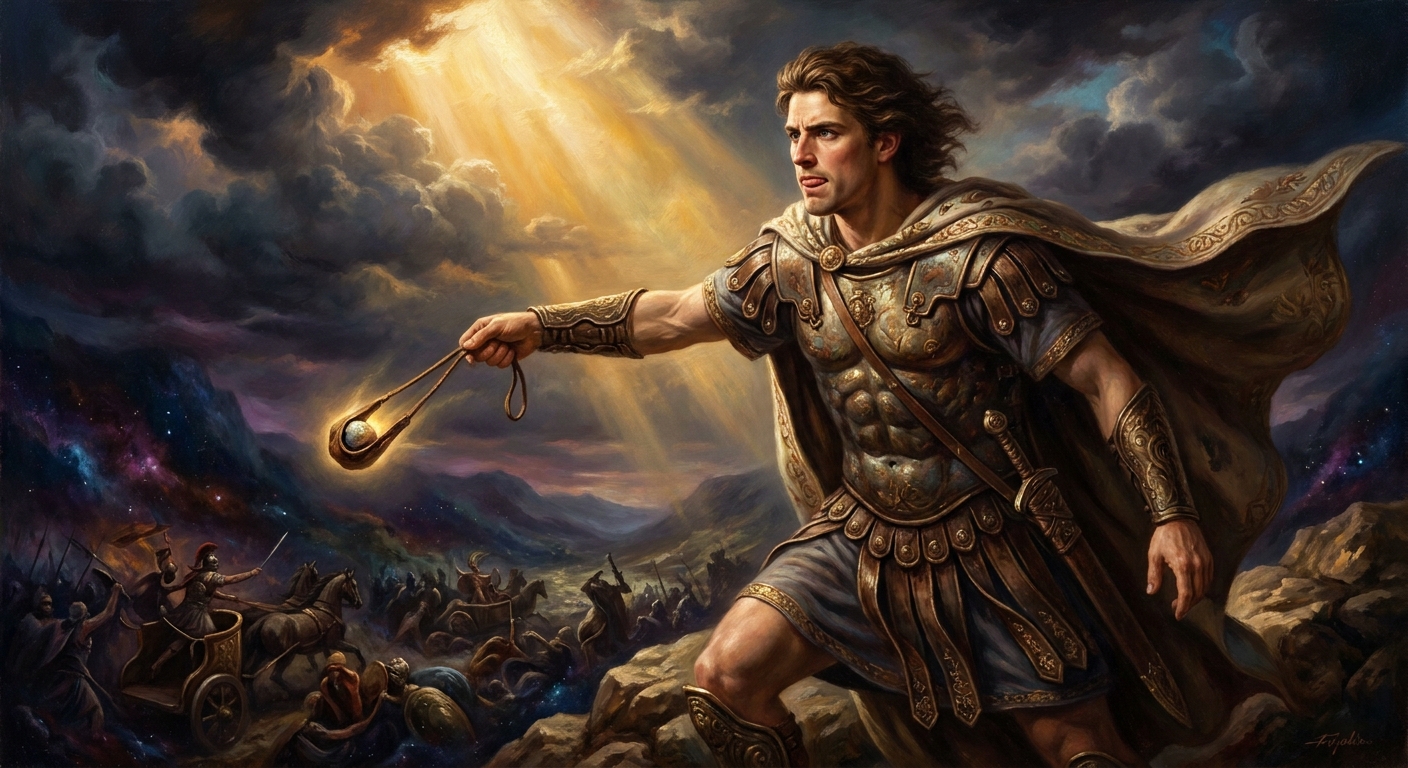
Queen Medb has counted her wealth against her husband’s and found herself one bull short. So she gathers an army — Connachta, Leinstermen, mercenaries, the exiled sons of Ulster — and marches for the cattle of Cooley. The Ulaid cannot rise to meet her. They lie under the cess noínden, the nine-day weakness laid on them by the goddess Macha generations ago, and only one Ulsterman is exempt: a boy of seventeen with no beard, who killed his first man at six and his first hound at five and took the hound’s name as his own.
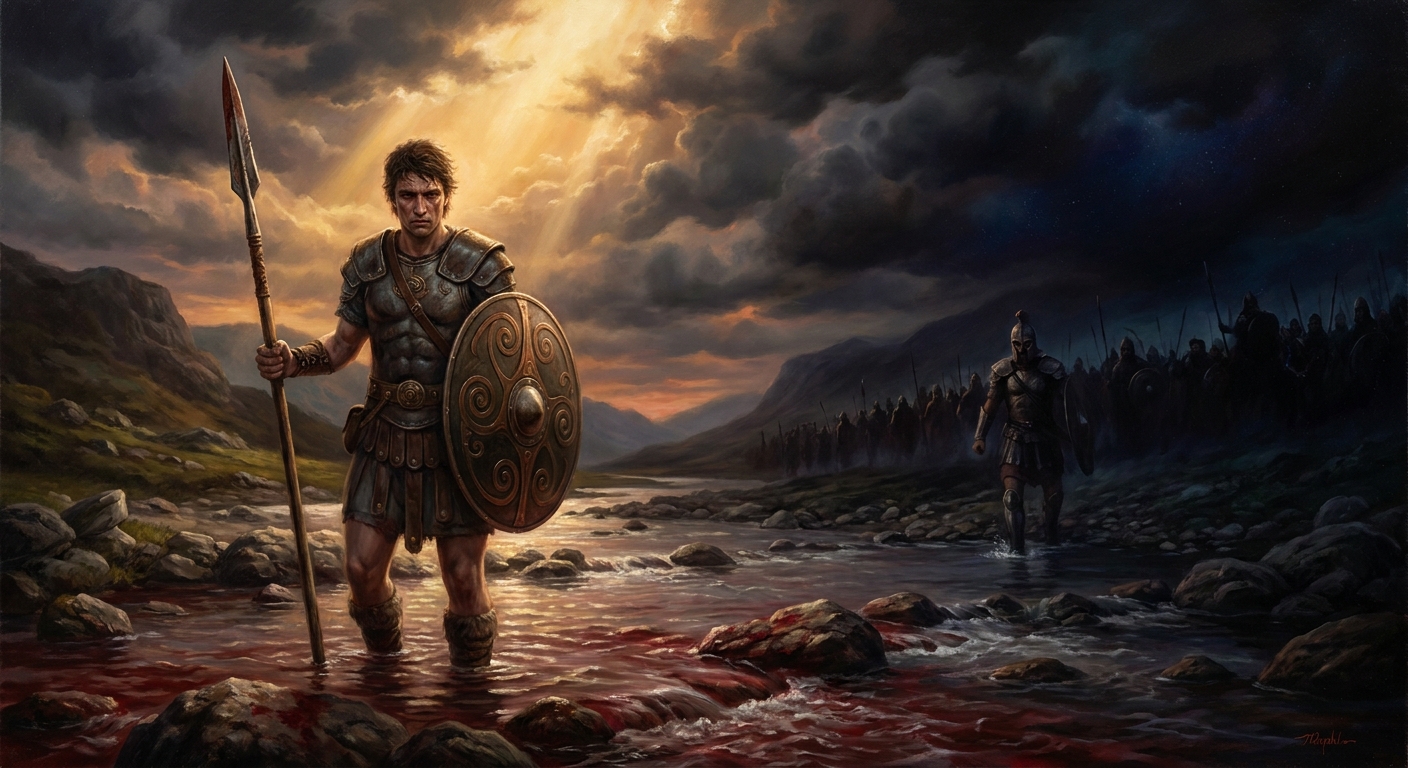
He stands at the ford alone. Behind him, an undefended kingdom. Across from him, an army.
He has no orders. He gives himself one.
The first day he kills them by single combat. Medb sends a champion; he kills the champion. She sends another; he kills that one too. He invokes the old law of the ford — one man at a time — and binds the army to it by the sheer fact that the alternative is them all rushing him at once and finding out what he is.
Lóeg, his charioteer, watches from the trees. He has known the boy since they were children together at Emain Macha. He has seen him sulk, eat too much, weep at songs. He does not recognize what is happening on the riverbank now.
By the third day Cú Chulainn has not slept. The cuts on his arms have stopped bleeding. He drinks river water out of his cupped palm and his palm shakes.
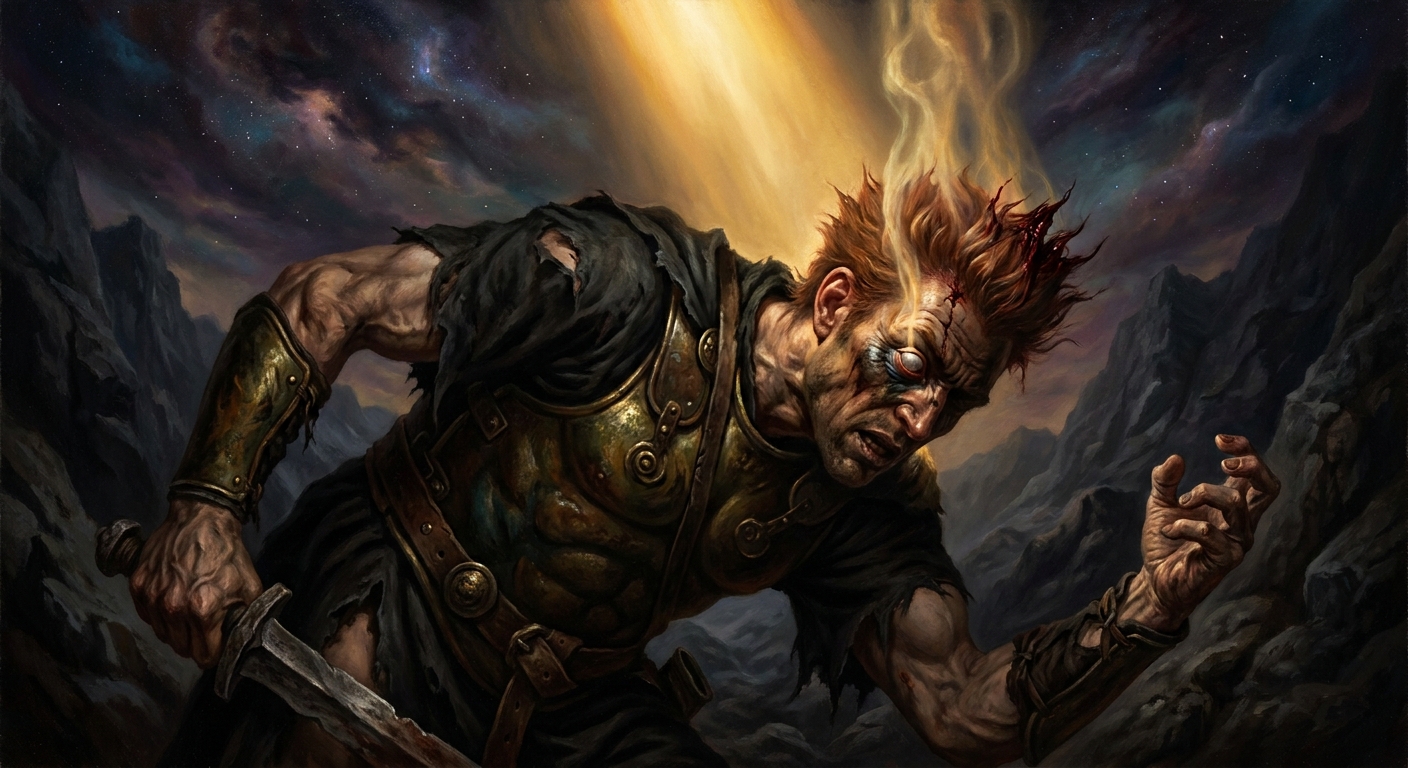
On the seventh day the ríastrad takes him.
His body forgets its shape.
One eye sucks back into his skull deep as a cauldron. The other bulges out onto his cheek, the size of a child’s fist. His mouth tears open ear to ear. His calves rotate on his shins until the knees face backward and the heels point forward. His hair stands up so violently that an apple thrown at his head would be impaled on each strand. From the crown of his head rises a column of dark blood — the lon láith, the hero-light — taller than the mast of a ship.
He is no longer a boy. He is no longer, strictly, a person. He is a thing the war-goddess put on the shore to keep the army on its own side of the water.
The men of Connacht see him from across the ford and stop singing.
Medb sends Ferdiad last.
Ferdiad mac Damáin is the only champion she has left who matches him — and he matches him because they were foster-brothers, raised together under the warrior-woman Scáthach in Alba, taught the same arts on the same training-grounds, sharing one cloak in the cold and one cup at meals. They learned the Gáe Bolga, the spear of mortal pain, side by side. Ferdiad does not want to come to the ford. Medb shames him. Medb bribes him. Medb threatens his honor. He comes.
The fight lasts three days. They embrace at sunset each evening. They share food across the river. Their charioteers sleep in the same camp. On the third morning Cú Chulainn says, “It is sad what we are doing,” and Ferdiad says, “It is, but we will do it anyway.”
The Gáe Bolga is the weapon you cast with your foot, underwater, into the body of a man who is wading toward you. It enters him with a single point and opens inside him like a flower made of barbs. There is no surviving it. There is no removing it without taking the body apart.
Cú Chulainn casts it.
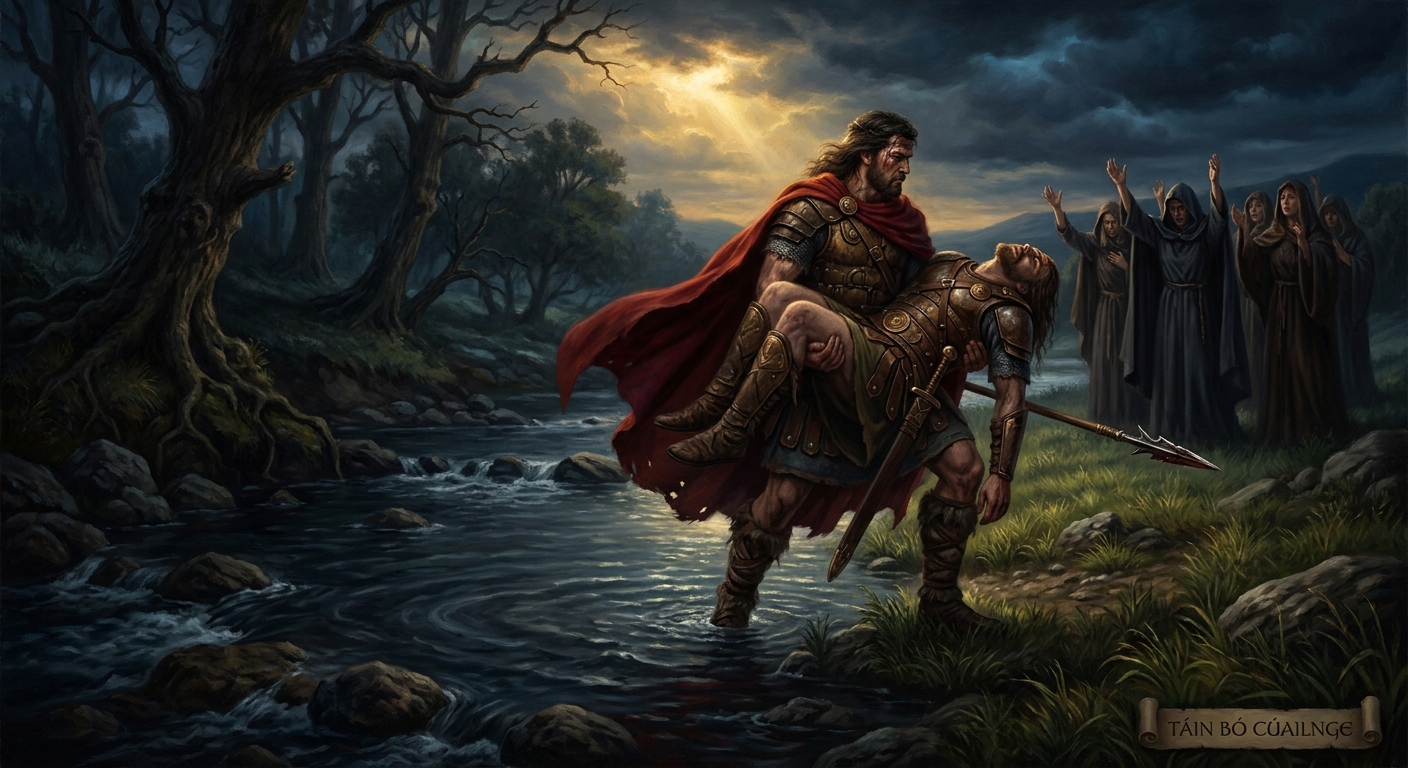
Ferdiad falls forward into the water. The river around him reddens slowly, the way a sky reddens at dusk — without hurry, without drama, just the patient arithmetic of a wound too big to close. Cú Chulainn drops his shield. He wades out and lifts his foster-brother in his arms and carries him back to the bank he came from, weeping, and sets him on the grass.
He sings the lament that the manuscripts still preserve. Ferdiad of the hosts, of the hard blows. Beloved golden pillar, beloved. He says it badly. He says it again. The army of Connacht does not interrupt him.
The Ulaid finally wake from their curse and rise. The Brown Bull and the White-Horned bull meet and tear each other apart across the length of Ireland. Medb goes home one bull short, the way she started. The whole war ends having accomplished nothing.
But Cú Chulainn does not recover. The ríastrad has burned through him. His body never sits right in itself again. He will die young, tied to a standing stone so that he can fight to the last breath, with a raven on his shoulder so the enemy will know it is safe to approach.
He is seventeen at the ford. He is twenty-seven when he dies. In the ten years between, he never speaks of Ferdiad without breaking.
The Táin is older than the manuscripts that record it. Linguists trace some of its lines to a verbal stratum from before Christianity reached Ireland, preserved in a meter that resists rephrasing. The monks who wrote it down in the eighth century did not approve of it — they kept reminding the reader, in marginal notes, that this was pagan material — but they could not bring themselves to leave it out.
The ríastrad is the West’s oldest surviving picture of the warrior remade by rage. Every later berserker, every Hulk, every Achilles in the river — they descend, in a line, from a boy who held a ford alone for a kingdom that was asleep.
And the killing of the brother is the wound the Indo-European warrior story keeps reopening. Arjuna against his cousins. Rostam against Sohrab. Cain against Abel. The hero discovers, every time, that the enemy is wearing his own face.
Scenes
The ríastrad — the warp-spasm taking hold
Generating art… The boy at the ford
 Generating art…
 Ferdiad in the river, the Gáe Bolga done its work
 Generating art…
 Echoes Across Traditions
Entities
- Cú Chulainn
- Queen Medb
- Ferdiad
- Lóeg mac Riangabra
- the Morrígan
Sources
- Thomas Kinsella (trans.), *The Tain* (1969)
- Cecile O'Rahilly (ed.), *Táin Bó Cúalnge from the Book of Leinster* (1967)
- *Lebor na hUidre* (the Book of the Dun Cow, ~1100 CE)
- Joseph Falaky Nagy, *The Wisdom of the Outlaw* (1985)
- Kim McCone, *Pagan Past and Christian Present in Early Irish Literature* (1990)