Contents
The Marasa — the divine twins — are the most dangerous and the most beloved Lwa in Haitian Vodou. They are fed before the other spirits, even before Legba. They are represented as children, but their power is absolute: they control the doorway between life and death, and their anger brings illness to children. Twins in Vodou are sacred precisely because they confuse the world — two souls in two bodies, yet one entity. They must always be treated together.
- When
- Haitian Vodou tradition; rooted in Fon/Dahomean Mawu-Lisa twin deity tradition
- Where
- Haiti; West Africa (Dahomey); the spirit world between life and death
They are fed first.
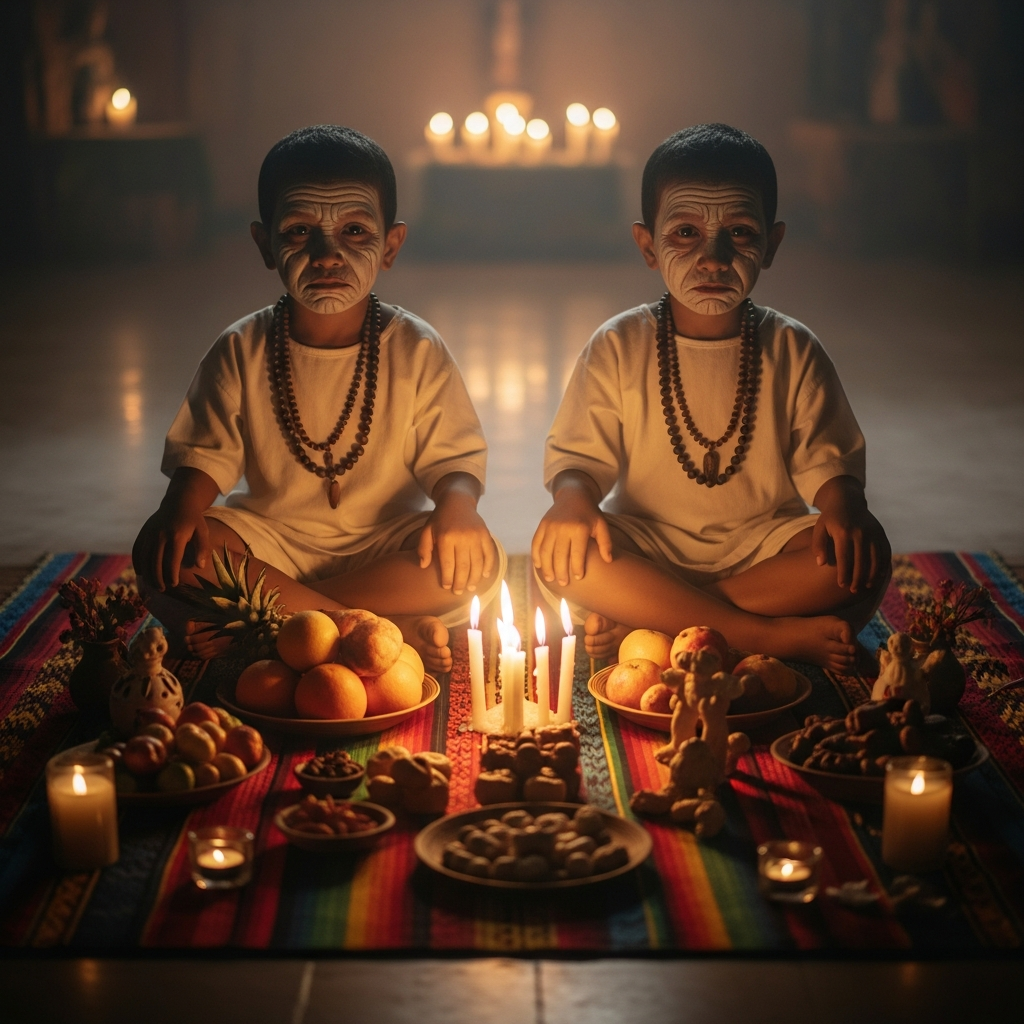
Before Legba is called. Before the gate is opened. Before any of the other Lwa receive their offerings — the rum and the tobacco and the flowers and the specific foods that each spirit requires — the Marasa receive theirs. Two plates, identical. Two glasses, identical. The same portion twice, placed side by side, because if you give one more than the other the consequences are immediate and unpleasant.
The Marasa are children. They behave as children: they are greedy, they are playful, they are deeply and completely offended by any act of favoritism. If one twin in a family is better dressed or better fed than the other, the Marasa notice. If a family hosts a ceremony and sets unequal plates for the twins, the Marasa notice. Their displeasure takes the form of illness in children — the children of the family, the children of the community, children in general, because the Marasa are the patrons of all children and also their most demanding protectors.
You protect what you govern by making the cost of neglect clear.
The word Marasa comes from the Fon language of Dahomey. Hohovi is what the Fon called such children — spirit children, children of the gods, whose birth was itself a communication from the divine world. The Dahomean theology of twins was ancient and specific: twins were not simply unusual siblings. They were a single divine entity that had divided itself across two bodies, and both bodies were equally real and equally necessary.
In Haiti, the Marasa became one of the earliest and most stable elements of the Vodou synthesis. They survived the Middle Passage and the plantation system because the African traditions that honored twins were too deep and too widespread to be eradicated. Wherever there was a Vodou ceremony in Saint-Domingue, the Marasa were served.
They are called Marasa Dosu Dosa in full — the names Dosu and Dosa indicating the genders of the twins, one male and one female, though the divine twins transcend this too. They are also associated with a third entity, the Marasa Twa — the triplet, or the third force that emerges from the twin dynamic. The mystery of the Marasa is not two but three: one divided into two, and what comes from the two together.
The problem the Marasa pose to ordinary theology is the problem of identity.
Every tradition that has developed a category of the self assumes, at some deep level, that a self is singular. You have one soul. You have one name. You inhabit one body. The great monotheisms built their ethics on this assumption — individual judgment, individual reward, individual responsibility.
Twins violate the assumption.
When one soul, or one divine force, is present in two bodies simultaneously — when two people share a single fate in the Vodou understanding — the categories break down in ways that are uncomfortable to systematize. Which twin is responsible for the act the other committed? If one twin dies, is half the soul in the world of the dead and half still among the living? The Yoruba tradition of the ere ibeji figures — the twin dolls that must be maintained if one twin dies — suggests the answer is yes: the dead twin’s soul remains active in its figure, and it must be fed and clothed or it will pull the living twin after it.
The Marasa make the boundary between life and death porous in a specific and domestic way. They are not death deities, not exactly — that domain belongs to the Gede family. But they stand at the door. They know the way in and out. Their anger brings children to that threshold. Their pleasure keeps children safe from it.
When a ceremony for the Marasa is held — and many families hold them annually, especially families where twins have been born or where children have been sick — the aesthetic is deliberate sweetness.
The space is decorated with bright colors: red and blue, the Marasa’s colors. The offerings include candy, sugarcane, sweet pastries, soft drinks alongside the rum — because the Marasa are children and children want sweet things. The music is faster and lighter than the music for the warrior Lwa. The participants in the ceremony may act playfully, may move with a childlike quality, in honor of the spirits being invited.
When the Marasa mount believers — which they do, though their possessions are less common than those of the other major Lwa — the mounted person behaves as a child: wide-eyed, easily pleased, easily offended, absolute in their demands. The twin aspect means that ideally two people are mounted simultaneously, and they move in the ceremony together, mirroring each other, the two-in-one made visible.
The houngans watch the interactions carefully. If the Marasa in possession show signs of displeasure — if one of the mounted twins turns away from the other, if the mirroring breaks down — this is read as information about something in the community that has been handled wrongly. Someone has treated equals unequally. Someone has shown favoritism in a situation where the Marasa are watching.
There is a theology inside the Marasa’s precedence over all other Lwa that the priests describe this way: the Marasa were there before the categories.
Legba opens the gate. But the Marasa existed before the gate needed to be opened — before there was a boundary between worlds, before there was a separation between the living and the dead. They are the memory of a time when the world was undivided, when two was the same as one, when the difference between life and death was not yet fully established.
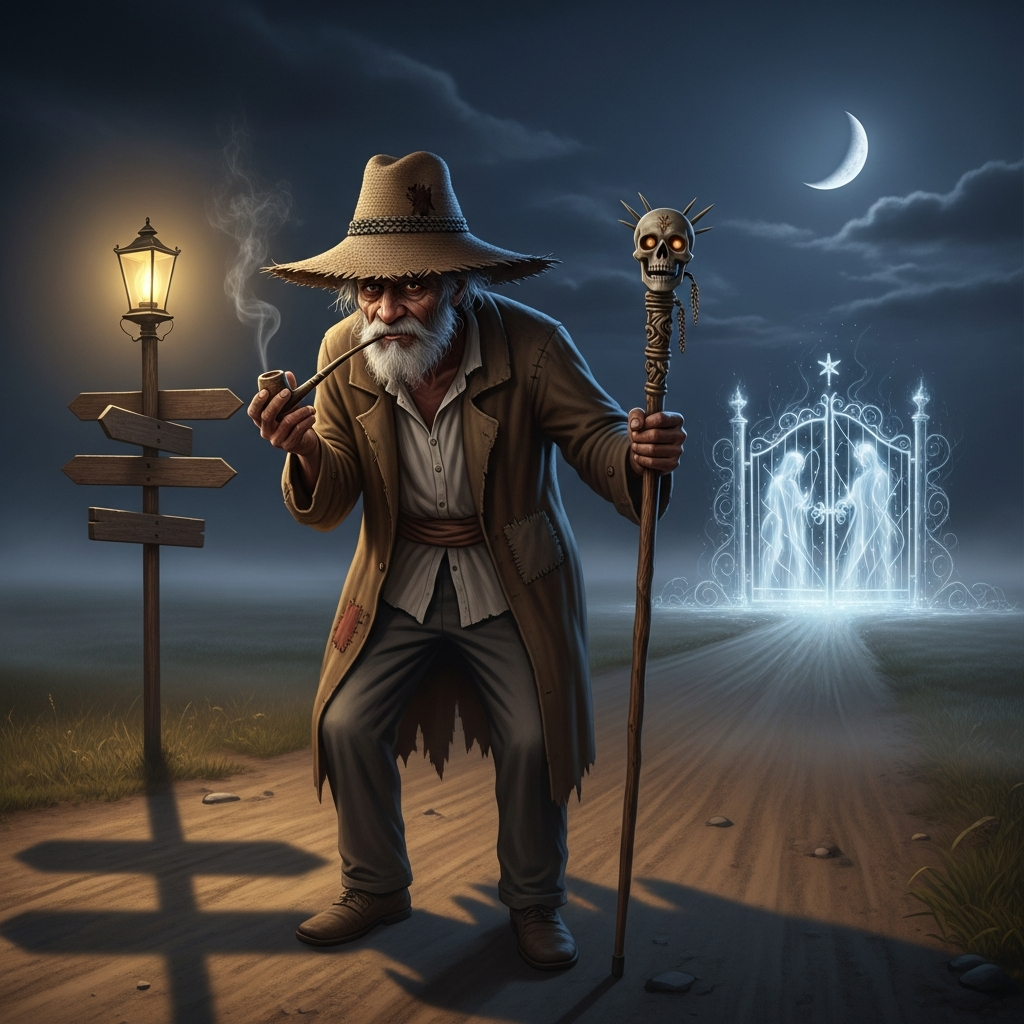
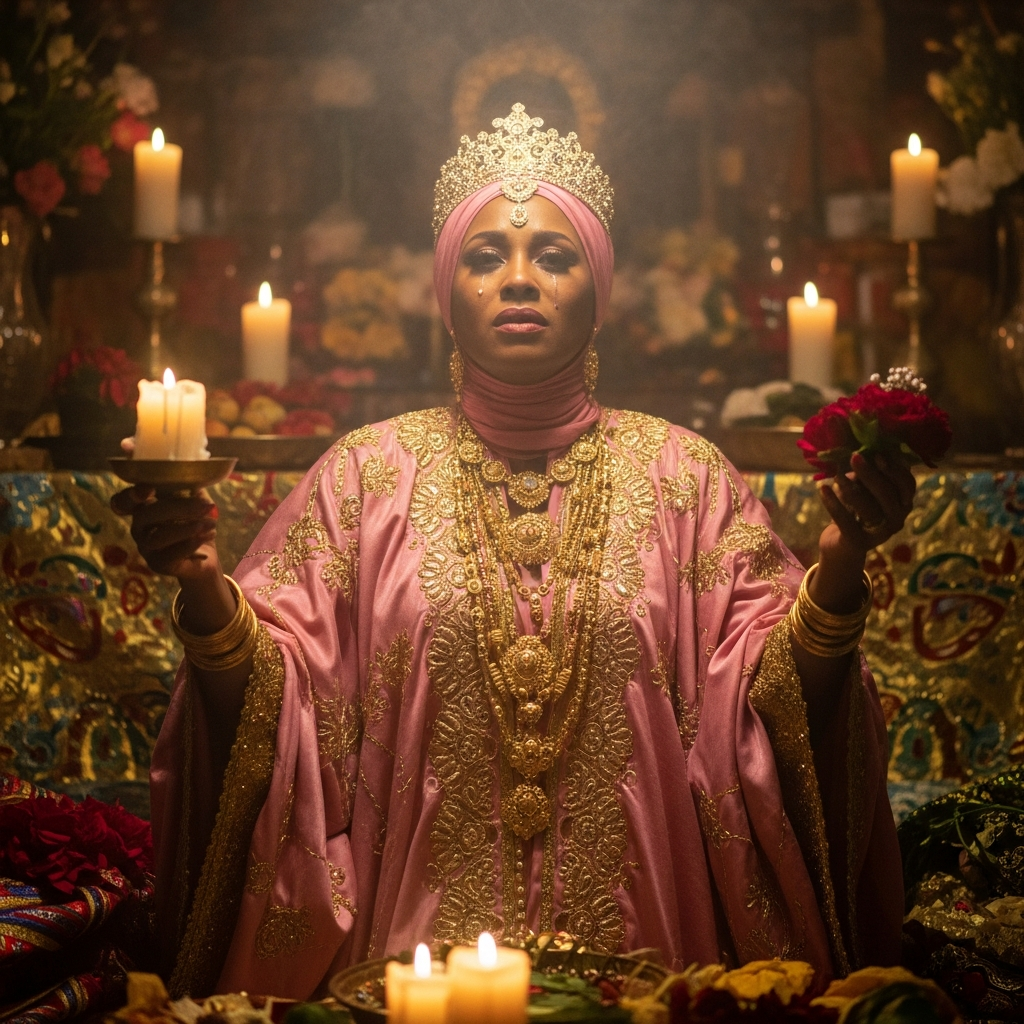
When you feed them first, you are honoring the time before the categories. You are acknowledging that all the order that comes after — Legba at the gate, Ogou with his iron, Erzulie with her tears — is built on a foundation that was once a unity.
The divine twins are fed first because they are the beginning.
Every family in Haiti with a set of twins understands this in practical terms.
The twins must be dressed alike, at least on ceremonial occasions. They must receive equal gifts. When one twin is punished, the parent considers carefully whether the punishment is just, because the Marasa are watching through the eyes of their twin children, and injustice toward twins is injustice toward the divine pair itself.
This is not superstition. It is theology applied to daily life. The Marasa insist on equality because equality between equals is one of the things the cosmos requires to hold together, and they are willing to enforce this insistence in ways that make their nature as sacred children very clear.
Two plates. Same food. Same portion. Always.
They are watching.
Echoes Across Traditions
Entities
- The Marasa Dosu Dosa
- Legba
- the family who hosts them
Sources
- Alfred Métraux, *Voodoo in Haiti* (Oxford University Press, 1959)
- Karen McCarthy Brown, *Mama Lola: A Vodou Priestess in Brooklyn* (University of California Press, 1991)
- Donald Cosentino (ed.), *Sacred Arts of Haitian Vodou* (UCLA Fowler Museum, 1995)
- Robert Farris Thompson, *Flash of the Spirit: African and Afro-American Art and Philosophy* (Pantheon, 1983)
- Suzanne Preston Blier, *Vodun: West African Roots of Vodou* in *Sacred Arts of Haitian Vodou* (1995)
- John Mason, *Four New World Yoruba Rituals* (Yoruba Theological Archministry, 1985)