The Morrigan: Crow on the Shoulder
Mythic time / early historical · the Ulster Cycle (mythic); Battle of Clontarf 1014 CE (historical context) · The ford of Áth na Foraire, the battlefield of Clontarf, the liminal spaces between worlds
Contents
She is three goddesses in one body — Badb the crow, Macha of horses and sovereignty, Nemain of panic and frenzy. She washes armor at the ford before battles and the warrior who recognizes his own gear is the one who will die. She offers herself to Cú Chulainn and is refused. She lands on his shoulder when he is dead. She is not the goddess of evil. She is the goddess of the truth that was woven into every life from the first day.
- When
- Mythic time / early historical · the Ulster Cycle (mythic); Battle of Clontarf 1014 CE (historical context)
- Where
- The ford of Áth na Foraire, the battlefield of Clontarf, the liminal spaces between worlds
She is at the ford before the battle.
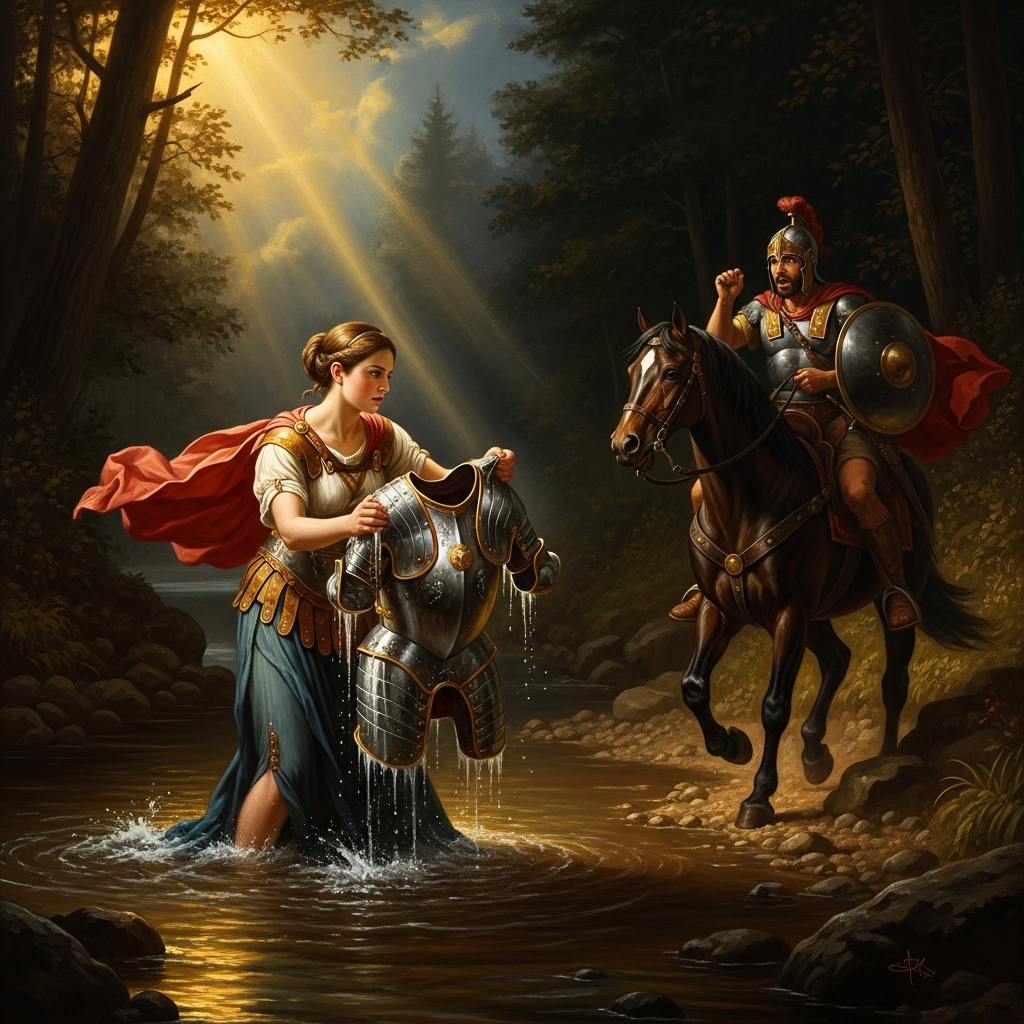
Anyone riding to combat at the ford — and the ford is where battles are decided in the old Irish geography, the place where two countries press against each other across moving water — is supposed to look. Whether you look is a kind of test. If you look and see only an old woman doing laundry, you have failed to see what is in front of you and the day will go badly. If you look and see a young woman scrubbing a tunic in the water and recognize, with a cold drop of understanding, that the tunic is your own — that the rust on the linen is your own blood from a wound you have not yet received — then you know what is coming and you can decide what to do about it.
She is the bean nighe, the washer at the ford, in the older grammar of the word. She is the Morrigan in one of her three persons.
Most warriors do not look closely.
She is one goddess in three bodies, and the texts disagree about exactly which three.
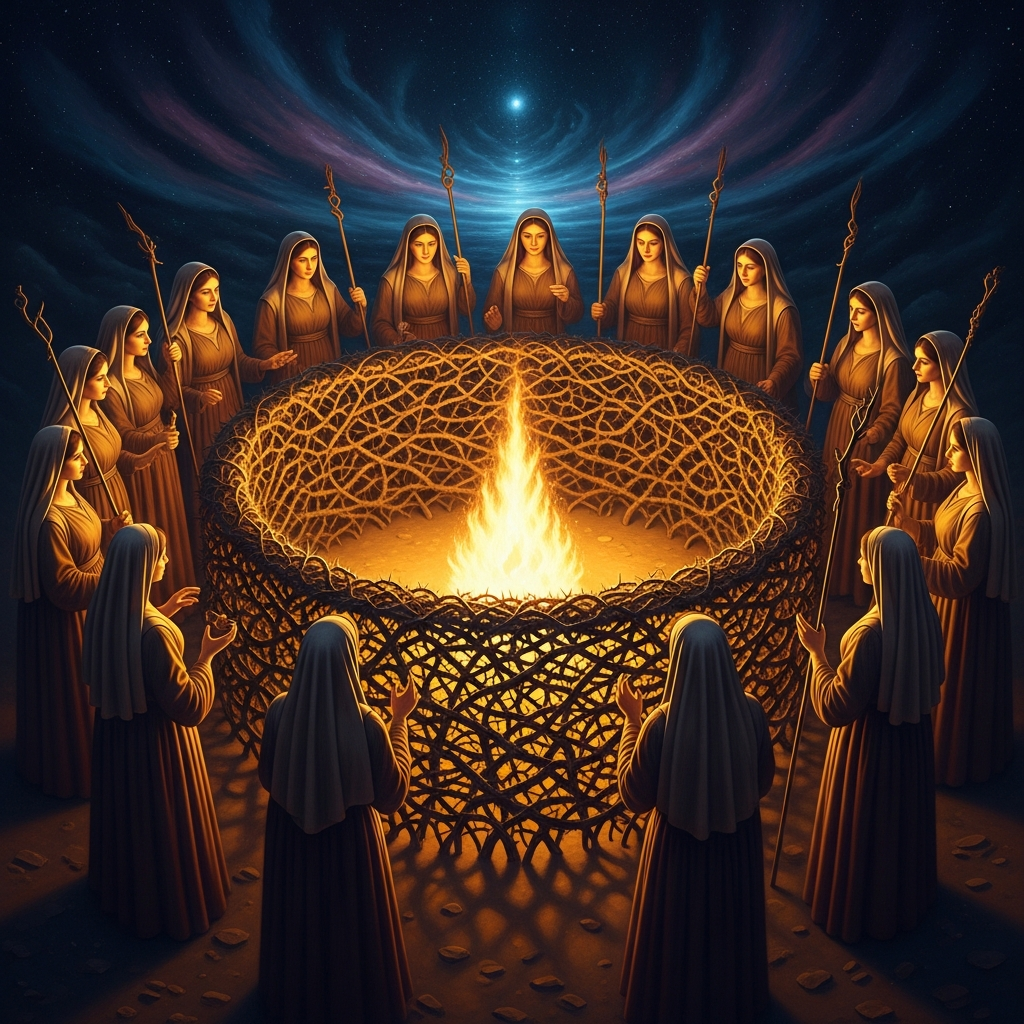
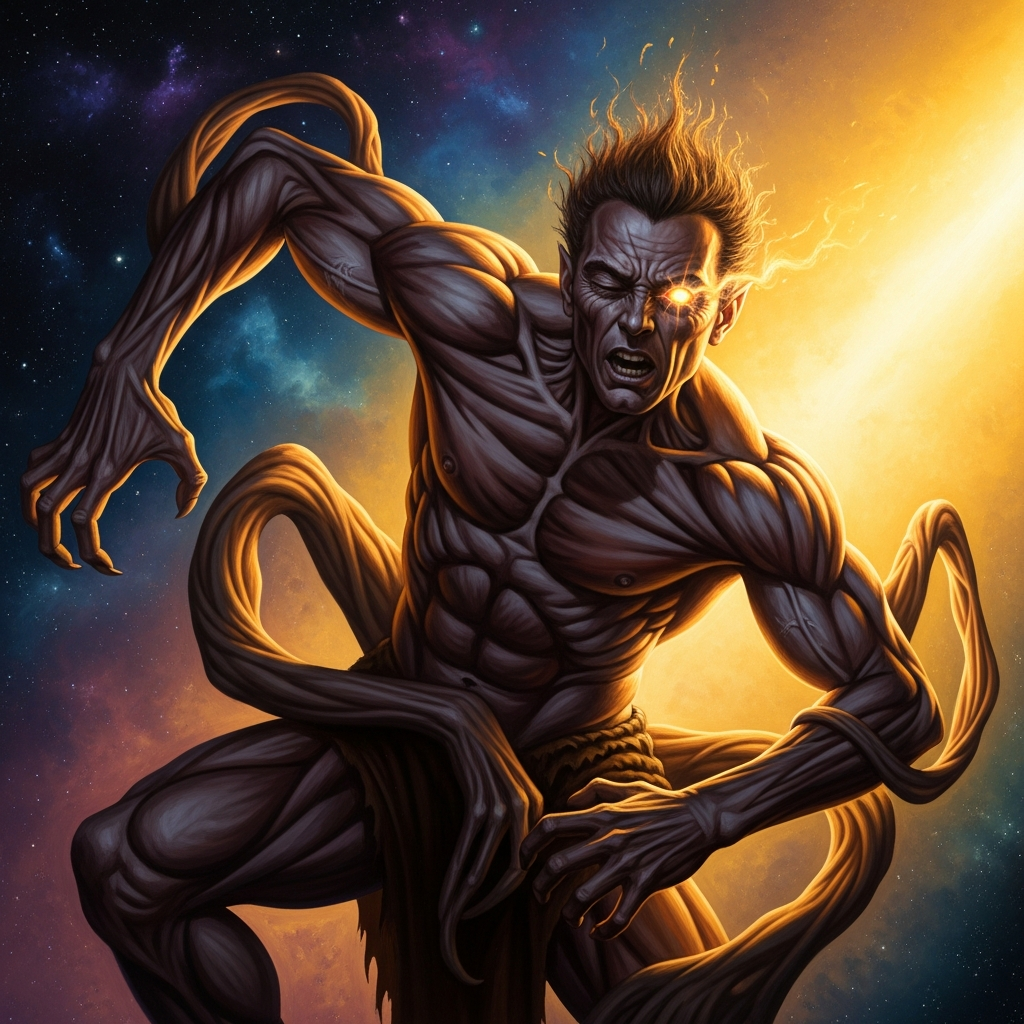
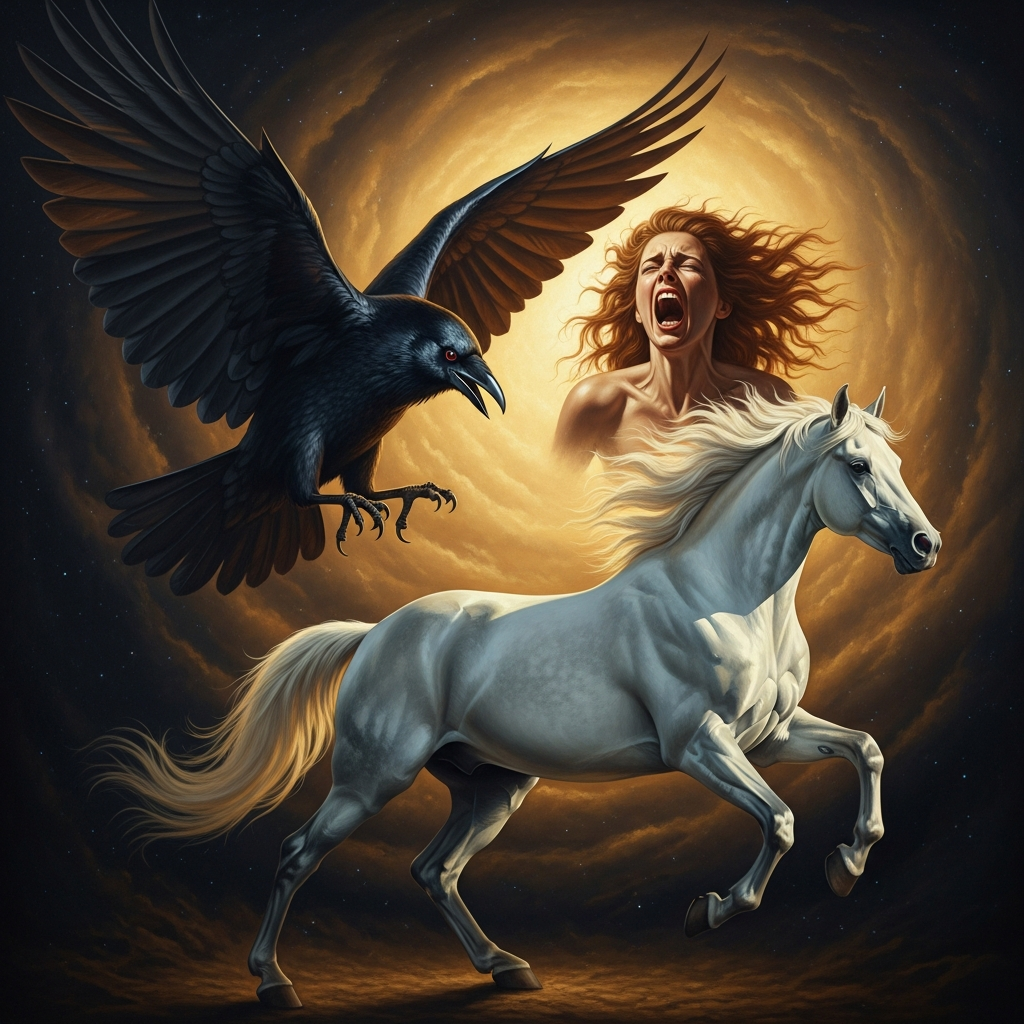
The most consistent triad is Badb, Macha, and Nemain. Badb is the crow — she appears on the battlefield in bird-form, hopping among the dead, her cry a high cracked note that the men in the army still alive can hear when the fighting stops. Macha is the goddess of horses and sovereignty — she is the one who curses the men of Ulster to lie in the labor pains of women whenever the province is attacked, and she is the one whose name attaches itself to Emain Macha, the ancient capital, the twins of Macha, after she gives birth in the chariot race the king made her run while pregnant. Nemain is panic — the goddess of the fennsa, the dread that breaks an army from the inside before the enemy reaches it, the moment when the formation loses its cohesion and the men begin to look at each other instead of forward.
The three are aspects of one goddess. The texts are unembarrassed about this. They use the names interchangeably. They sometimes say the Morrigan and mean specifically Badb; they sometimes say Badb and mean the whole goddess; they sometimes say the three Morrígna as if they were three separate sisters, and then have one of them speak for the other two without commentary. The grammar of the Celtic threefold goddess does not require the kind of arithmetic precision the modern reader sometimes wants.
She is the goddess of war, but war in a particular sense.
She does not cause war the way Mars causes it.
She sees war. She sees it before it happens. She tells the truth about what is going to happen. She makes the dread that breaks the army; she makes the laundry-omen at the ford that warns the warrior about his own death; she makes the cry of the crow at the moment the body falls. She is the truthfulness of war — its inside, its honesty, the reality that all the heroic poetry around battle is trying to look away from.
She is also the goddess of sovereignty.
This is the part most outsiders miss. The kingship of Ireland, in the old religion, is a marriage. The king marries the goddess of the land. He marries her at his inauguration in the form of a white mare, in some of the older rituals; he drinks the fír flaithemon, the truth of rulership, from her cup; the prosperity of the kingdom for the years of his reign is the gift she gives in exchange for his correct conduct as her consort. The Morrigan is one of the goddesses who plays this role. To be king of a province is to be the husband of the Morrigan in her aspect as Macha. The king who fails his duties — who lies in judgment, who breaks the geasa of his office — is the king the goddess will divorce, and the divorce is the failure of the harvest, the death of the herds, the loss of the kingdom.
War and kingship and the truth that connects them: this is her domain.
She comes to Cú Chulainn at the ford during the Táin.
He is alone there, holding the line against Medb’s army, killing the champions one at a time, exhausted, wounded, not sleeping. She comes to him in the form of a young woman — beautiful, richly dressed, royal. She offers him her love. She offers him her assistance in the combats to come. The text is explicit about what she is offering: it is a divine alliance, the kind of thing that would make him the husband of the Morrigan in the same sense that a king is the husband of the goddess of his land. To accept would be to pass from being a great mortal warrior into being something higher — a hero of the sídhe, a lover of the goddess, a man whose strength is permanent because the goddess’s strength is permanent.
He does not recognize her.
He treats her as an ordinary woman who has come to distract him from the work of holding the ford. He refuses her with rough words. He says he has no time for love right now. He says she is interfering with him. He sends her away.
She tells him that she will be against him in the days to come.
She comes to him again, in the form of an old woman driving a cow. He helps her with the cow, not knowing who she is. She returns to him in the form of a young woman to ask if his wound has healed; she returns in the form of an eel coiling around his legs in the water during the next combat; she returns in the form of a wolf at his shoulder; she returns in the form of a heifer leading a stampede toward him. Each time she takes a wound from him in the form she is in. Each time she comes back to be healed, in disguise, and he heals her without knowing he is healing the goddess he refused.
The text presents this as a tragedy of recognition rather than a story of revenge. The Morrigan is not punishing Cú Chulainn for hurting her feelings. She is showing him, again and again, the consequence of failing to see clearly. He is the greatest mortal warrior in Ireland. He is also a young man who does not see the goddess when she stands in front of him. The two facts together make his death inevitable.
The day of his death comes.
The geasa unravel. The crones at the side of the road feed him the dog-meat. The satirists take his spears and turn them against him. He drags himself, dying, from the chariot to the standing stone on the plain of Muirthemne. He ties himself to the stone with his own intestines. He stands there for three days bleeding into the earth.
The army of Connacht watches from a respectful distance. They cannot tell if he is alive or dead. They are afraid to approach. The hero-light is no longer rising off his head, but the warp-spasm has come on him so many times that no one wants to be the first to find out whether it has finally left him for good.
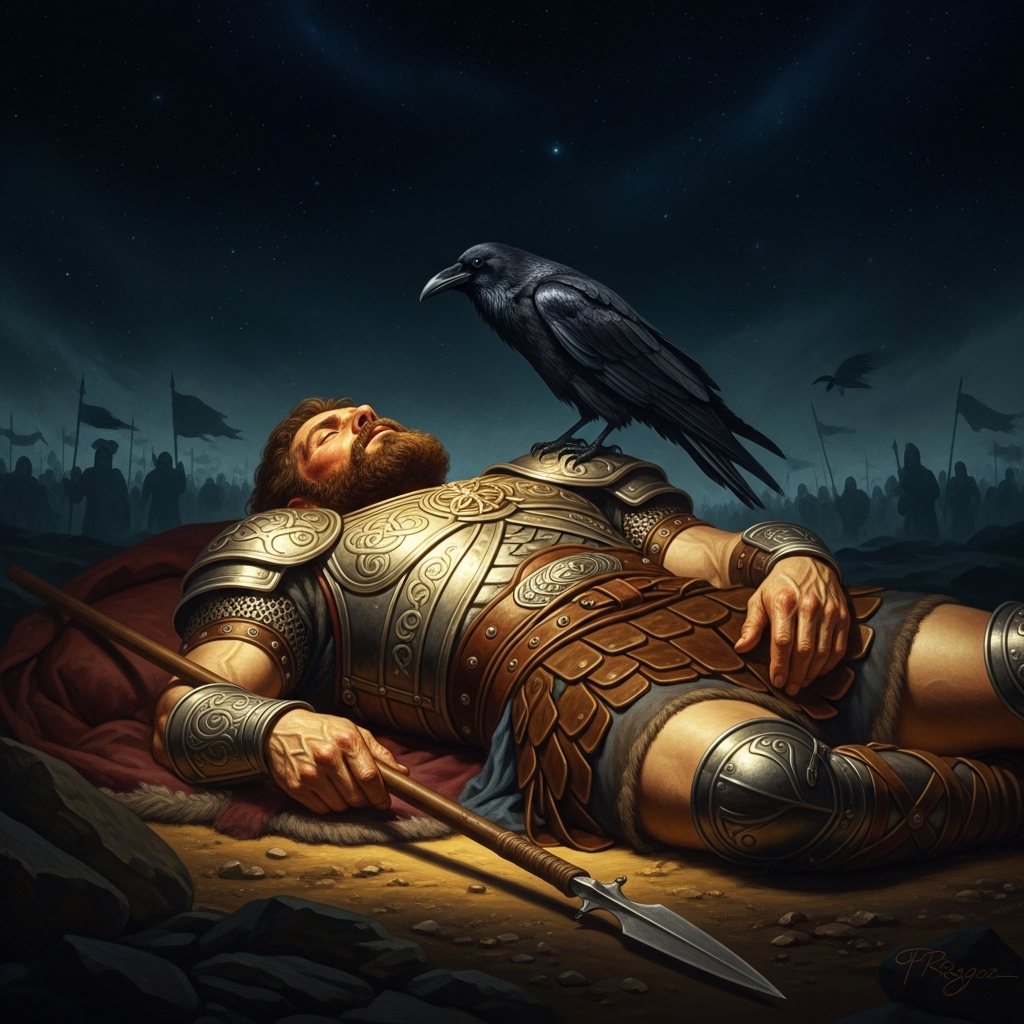
A crow flies down from the sky.
It lands on his shoulder.
The Morrigan keeps her promises. She has promised him, at the ford, that she would be there at his death. She is there. She is the bird that lands on the shoulder. She is the signal the army has been waiting for. The men of Connacht move forward then. They take his head. They take the great sword Cruadín Catutchenn from his hand. The Hound of Ulster is finally over.
The crow stays where it is.
She is also at Clontarf.
The Battle of Clontarf is fought outside Dublin on Good Friday, 1014 CE. The High King Brian Boru — old, in his seventies, leading the armies of Munster and most of the southern provinces — meets the combined force of the Dublin Vikings and the Leinstermen and the foreign warriors hired from Orkney and the Hebrides. It is one of the great battles of medieval Ireland. Brian’s army wins. Brian himself is killed in his tent at the end of the day by a Viking warrior named Brodir who finds him praying and runs him through.
The chronicle of the battle — Cogadh Gaedhel re Gallaibh, The War of the Irish with the Foreigners, written about a hundred years after the events — includes a vision sequence the night before. Brian sees a woman of terrifying aspect standing in his camp. She is washing armor in a basin. The water in the basin is red with blood that does not come from the linen. She tells him what will happen the next day. She tells him that the battle will be won. She tells him that he himself will not survive it. She tells him that his dynasty will continue but in a diminished form, that the High Kingship he has built will fragment after he is gone, that the Norse will be broken at Clontarf but Ireland will not be unified by the breaking.
He thanks her.
That is the part that distinguishes Brian from Cú Chulainn. He thanks her. He understands who she is. He goes to bed and sleeps the last sleep of his life and rides out the next morning to win the battle and die in his tent during the rout. The dynasty diminishes. The Norse are broken. The High Kingship fragments. Everything she said happens.
She is not a goddess of evil because she tells you these things. She is a goddess of truth, and truth in the matter of war and death is, by its nature, terrifying.
The medieval Christian writers do not entirely know what to do with her.
They cannot ignore her — she is in too many of the foundational texts. She is in the Táin. She is in the Second Battle of Mag Tuired, where she stands beside the Dagda before the fight and chants a poem of victory that helps the Tuatha Dé Danann defeat the Fomorians. She is in Togail Bruidne Da Derga, prophesying the death of King Conaire. She is woven into the kingship rituals that the church is trying to reorient around Christian theology of legitimacy. She is the goddess the soil of Ireland still recognizes when the new religion has been laid over the old one.
So they do what the Irish church does best.
They keep her.
They demote her to the level of a banshee — a bean sídhe, a fairy-woman, a being of the sídhe who appears at certain houses to wail before a death. The banshee is the Morrigan in the diminished register the Christian period allows her. She is no longer a goddess; she is a kind of supernatural attendant. She is no longer a participant in war; she is a herald of personal mortality, attached to specific Irish families who claim her as part of their inheritance. Her cry is no longer the fennsa that breaks an army; it is the keening at the door of a single dying person, in a single Irish house, on a single bad night.
But the structure is the same. She still appears before the death. She still tells the truth before it happens. She still makes the family that hears her recognize what is coming, and gives them the chance to compose themselves before it arrives.
The Morrigan is still in the landscape.
You can see her at certain fords if you know where to look. You can see her at certain mounds. There is a place in County Cavan called the Gort na Morrígna, the Field of the Morrigan, that the local farmers will not plough. There is a cave in the Cuilcagh Mountains called Uaimh na gCat, the Cave of the Cats, that one tradition identifies as the Morrigan’s hall. There are crows on every battlefield in every century of Irish history — at the Battle of the Boyne, at the Easter Rising, at the Somme, at every place where Irish men have died fighting other men — and the texts have prepared their readers, for fifteen hundred years, to know what the crow is and whose shoulder it is looking for.
She is not the goddess of evil.
She is the goddess of what is true about war.
She tells you ahead of time, if you know how to look.
She lands on you at the end, when the looking is over.
Scenes
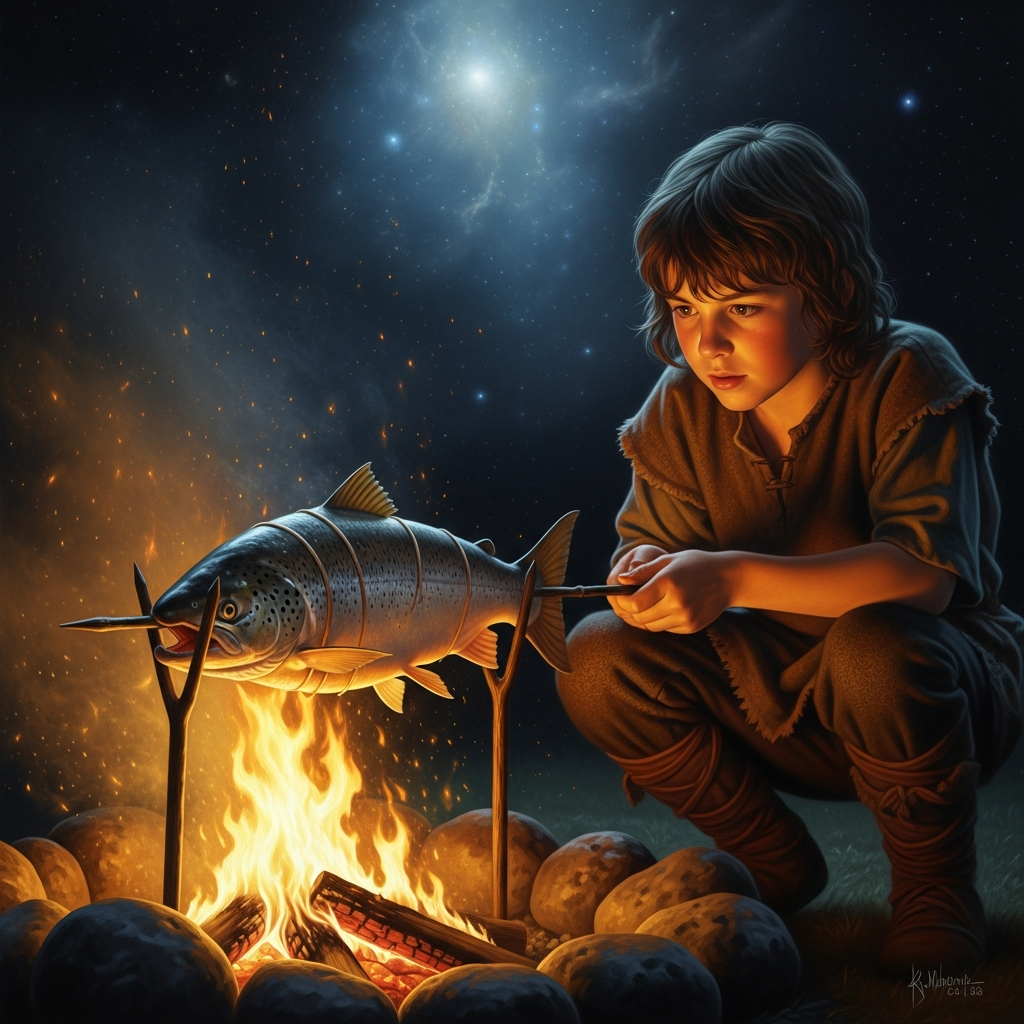
She washes armor in the ford before the battle — the warrior who rides past and recognizes his own gear in her hands is the warrior who will not come back from the day
 Generating art…
 Three forms in one — Badb the crow, Macha the white mare, Nemain the screaming panic of an army losing its order; one goddess seen at three angles of the same fact
 Generating art…
 The crow lands on Cú Chulainn's shoulder when he is dead
Generating art… Echoes Across Traditions
Entities
- the Morrigan (threefold war goddess)
- Badb (the crow)
- Macha (sovereignty and horses)
- Nemain (panic and frenzy)
- Cú Chulainn
- Brian Boru
Sources
- *Táin Bó Cúailnge* (The Cattle Raid of Cooley), trans. Thomas Kinsella (1969)
- *Cath Maige Tuired* (The Second Battle of Mag Tuired), trans. Elizabeth Gray (Irish Texts Society, 1982)
- *Togail Bruidne Da Derga* (The Destruction of Da Derga's Hostel), trans. Whitley Stokes (*Revue Celtique* XXII, 1901)
- Rosalind Clark, *The Great Queens: Irish Goddesses from the Morrigan to Cathleen ní Houlihan* (Colin Smythe, 1990)
- Miranda Green, *Celtic Goddesses: Warriors, Virgins, and Mothers* (British Museum, 1995)
- *Cogadh Gaedhel re Gallaibh* (The War of the Irish with the Foreigners), c. 1100 CE — for Clontarf