Cú Chulainn: The Distortion
Mythic time · Ulster Cycle, written down c. 7th–8th century CE from earlier oral traditions · Ulster and Connacht — the ford of the River Dee (Áth na Foraire), the plain of Muirthemne, and the standing stone of his death
Contents
Ulster's hero stands alone at the ford against the army of Connacht. The warp-spasm comes on him — one eye sinks, the other swells, his body unknots and reknots into the killing thing the gods made for war. He kills his foster-brother Ferdia in a combat that lasts three days. He dies tied to a standing stone, on his feet, with a raven on his shoulder.
- When
- Mythic time · Ulster Cycle, written down c. 7th–8th century CE from earlier oral traditions
- Where
- Ulster and Connacht — the ford of the River Dee (Áth na Foraire), the plain of Muirthemne, and the standing stone of his death
The men of Ulster lie on their backs.
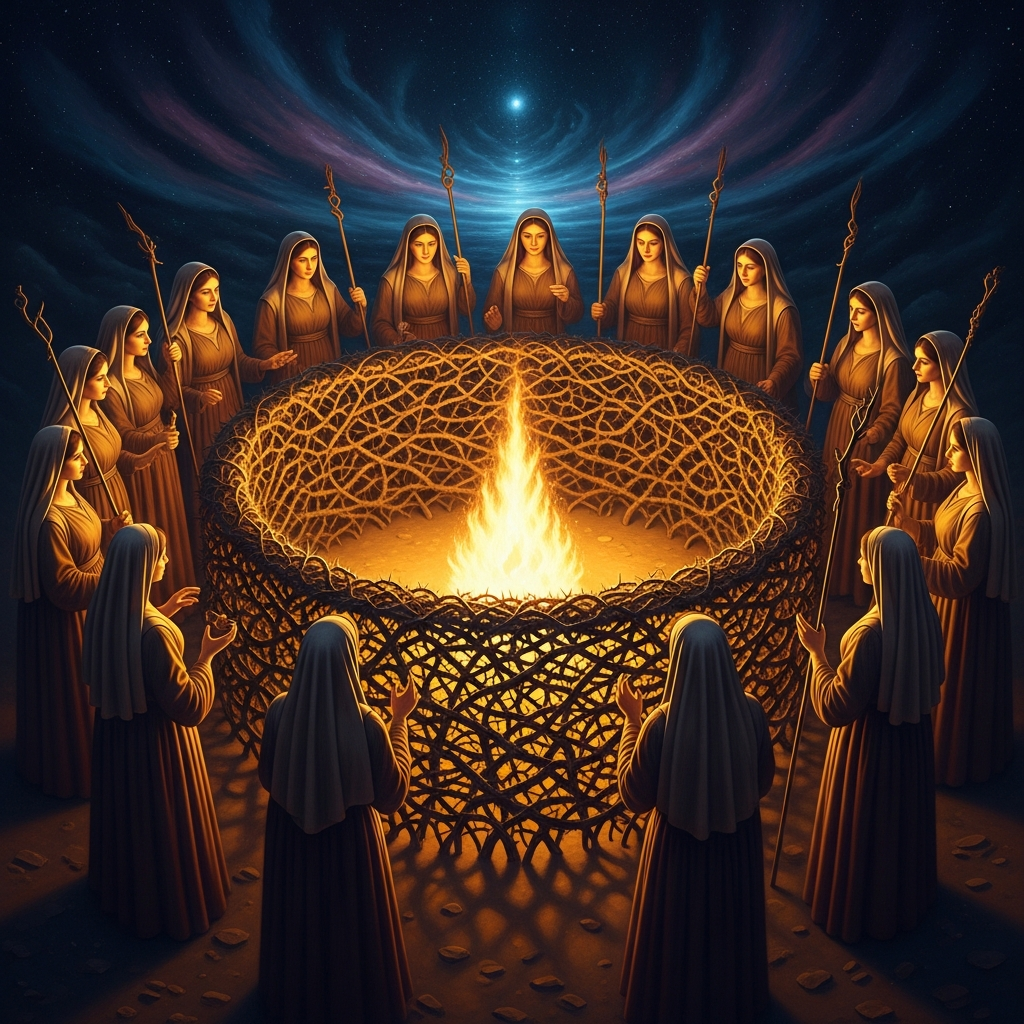
Macha cursed them — the goddess they made run a chariot race against horses while she was pregnant, the goddess who broke the curse over them on her way to the birthing bed, the goddess whose pain reached upward into the rafters of the assembly hall and bent the kingship of Ulster sideways for nine generations. The curse comes on them in their hour of need. The men of Ulster, the warriors of the Red Branch, the champions of King Conchobar mac Nessa, are flat on the ground in the labor pains of women whenever the province is under attack.
The province is under attack now.
Queen Medb of Connacht has assembled four provinces against one. Her quarrel is with her husband Ailill, who has one bull more than her in his herd. She wants the Brown Bull of Cooley. To get it, she will burn Ulster down. Her army crosses the border and finds nothing in the way of it. The Red Branch is on its back, groaning.
There is one warrior who is not bound by Macha’s curse. He is seventeen years old. His mother is the sister of the king. His father is the god Lugh of the Long Arm. His name was once Sétanta. He is now Cú Chulainn — the Hound of Culann — because as a boy he killed the smith’s guard-dog with his bare hands and offered to do the dog’s work himself until a replacement could be raised.
He goes alone to the ford.
The ford is a sacred place. It is the place where two countries meet across moving water. It is the place where a man can hold the bridge of an army by single combat — by the old laws of war, the invading host must send champions one at a time, and the defender must meet them one at a time, and the army stands and waits while the duel happens. Medb’s army sends champion after champion. Cú Chulainn kills them at the ford. The water runs red and clears and runs red again.
He has been here for months.
He has not slept in any way a man sleeps. Laeg his charioteer brings him food and binds his wounds and keeps the chariot ready. The Morrigan herself appears at the ford in three forms — a young woman offering love, an old woman offering milk, an eel coiling around his legs in the water — and he refuses her in all three, not knowing she is divine, and she promises him that she will be against him at the hour of his death. He has been warned. He keeps killing the champions one by one.
Then Medb sends Ferdia.
Ferdia is his foster-brother. They learned the warrior’s craft together at Scáthach’s school on the Isle of Skye. They slept under the same cloak. They ate from the same plate. They have skin-knowledge of each other that no other warrior in Ireland possesses. Medb has bribed Ferdia with land and with her daughter Findabair and with promises of poems sung against him forever if he refuses. Ferdia comes to the ford because his honor cannot let him refuse, and his honor cannot let him fight, and there is no third option.
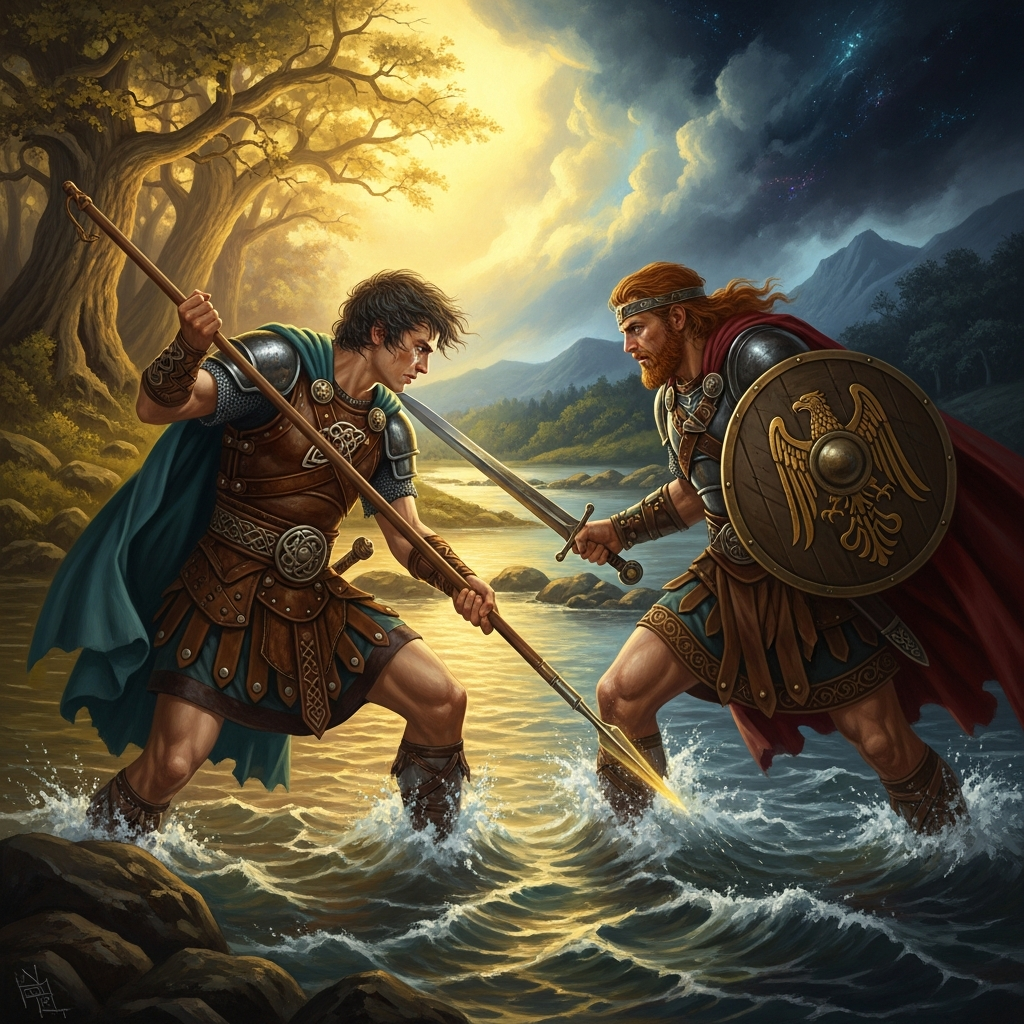
The combat lasts three days.
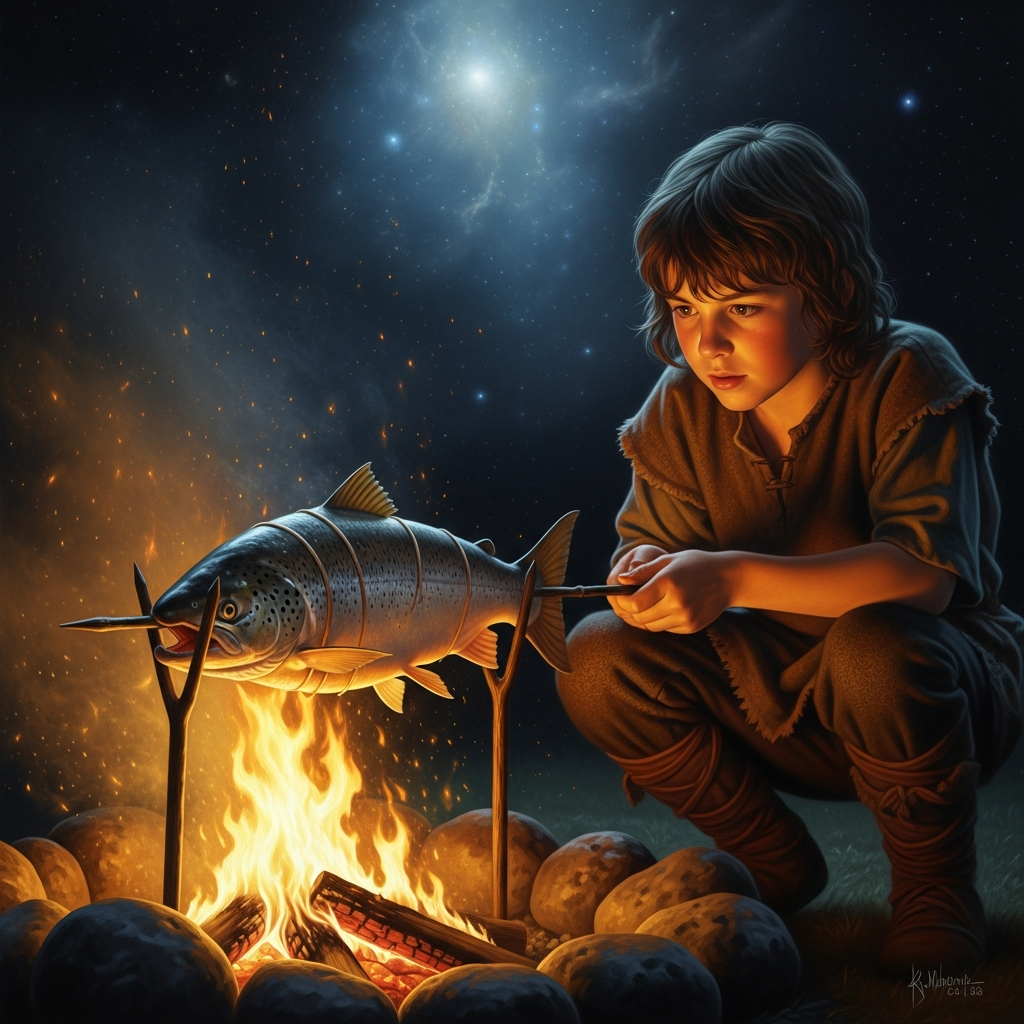
On the first day they fight with throwing weapons across the water. They throw all day and rest at evening and Cú Chulainn sends across the ford healing herbs for Ferdia’s wounds, and Ferdia sends across the ford food and wine for Cú Chulainn, because they are still foster-brothers even now.
On the second day they fight with spears and short swords in the water itself. They fight close enough to feel the breath of each other. They wound each other terribly and at evening they rest and divide the herbs and the food again, but they speak less than they did the night before, because each of them knows what the third day means.
On the third day Cú Chulainn calls for the gae bolga.
The gae bolga is the spear that opens. It is given to him by Scáthach as the final lesson of her school. It is thrown from the foot, between the toes, into the water, and it travels under the water and enters the body of the enemy and opens inside him into thirty barbs that cannot be drawn. Cú Chulainn has held it back for three days because to use it on Ferdia is to kill him in a way that has no honor in it. On the third day, with both of them bleeding into the river and neither of them able to stand much longer, Cú Chulainn drops the gae bolga into the water with his foot.
Ferdia dies in his arms.
The lament Cú Chulainn speaks over the body of his foster-brother is one of the most beautiful poems in any language. He says: we were two against the world. Now I am one against everything.
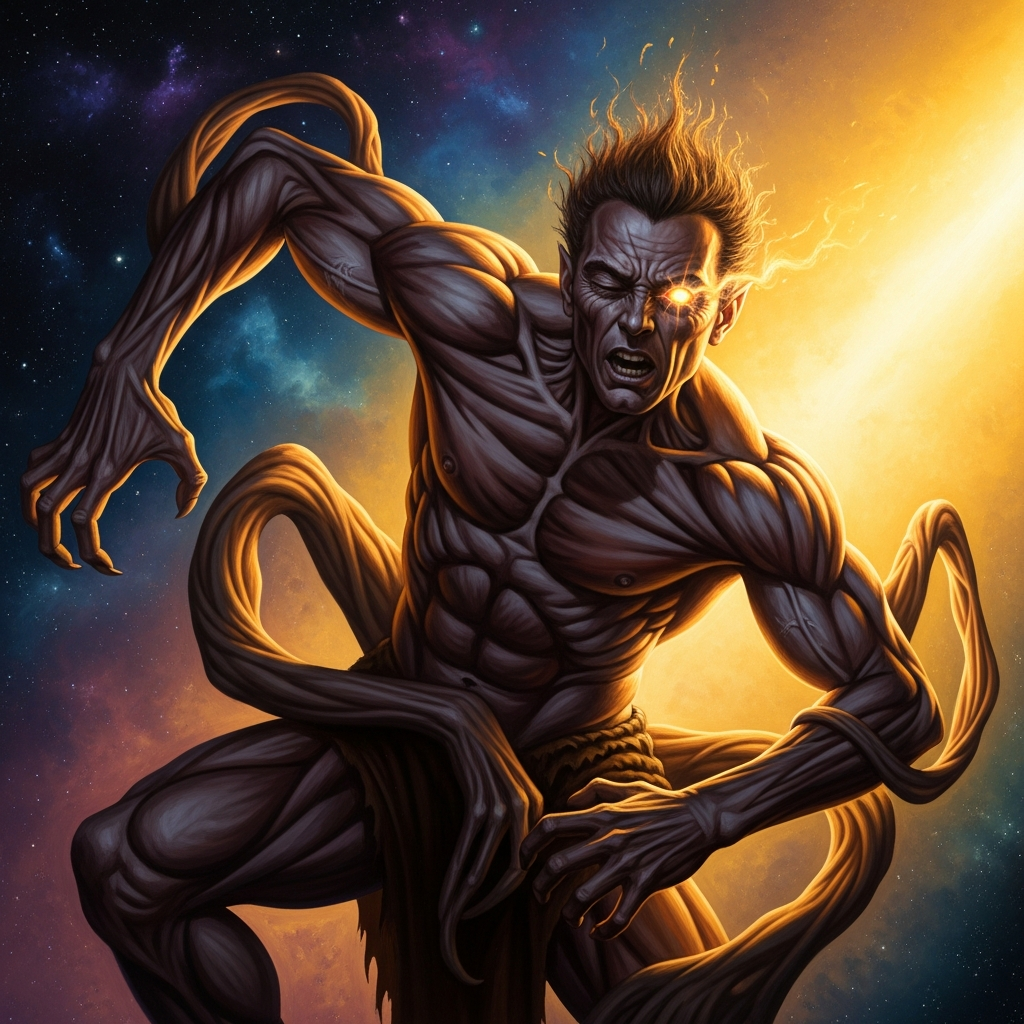
The ríastrad — the warp-spasm, the distortion — has come on him before. It comes on him now.
The text describes it in a kind of catalogue, as if the scribe is trying to record an event that exceeds language. One eye sinks deep into his skull until you could not reach it with the talon of a heron. The other eye swells out enormous on his cheek. His mouth meets his ear. Every hair on his body stiffens like a thorn and emits a spark when the wind brushes it. The hero-light rises off his head — a column of black blood, a smoke of something that is not smoke, a fire that is not fire, the lón láith, the moon-of-the-hero. His muscles unknot beneath his skin and reknot themselves in new configurations. The calf of one leg comes around to the front. His heart beats so loud it can be heard like a hound’s bark across the field.
He is no longer a man.
He is the killing thing the Ulstermen need.
He goes through Medb’s army and what he leaves is a field of dismemberments. The text does not flinch. It tells you what the heap looks like at the end of the day — heads stacked, limbs sorted as if for accounting, the river thick. The army of four provinces breaks against him because there is nothing in the world that does not break against the ríastrad once it is fully on him.
When it leaves him, he is a boy again. Laeg has to wash him in three vats of cold water before he is cool enough to touch. The first vat boils. The second vat steams. The third vat is warm enough to bathe a child in. Then he is Cú Chulainn again, seventeen years old, standing in the chariot, looking out across what he has done.
The geasa unravel.
A geis is a sacred taboo, a binding placed on a hero at his naming or his coming-of-age. Cú Chulainn has many geasa. He cannot eat the meat of a dog (because he is the Hound). He cannot refuse hospitality offered by a woman. He cannot pass a hearth-fire without stopping at it. The geasa make him strong because they are the price his strength is paid for. They also build into his life a network of trip-wires, and any enemy who knows the geasa knows how to make him fall.
Medb’s daughters know the geasa.
They come to him on the road to his last battle. They are three crones cooking a dog at a hearth on the side of the path. They invite him to eat. To accept is to break one geis (the dog-meat). To refuse is to break another (the offered hospitality). He stops. He eats. He continues to the battlefield with one geis already broken, knowing what is coming.
In the battle, his spear is taken from him by a satirist who threatens to satirize his honor if he does not give it up. (A geis: he cannot refuse a poet’s request.) The spear is thrown back and kills Laeg. He is given a new spear; the same trick is played; the spear kills his horse, the Gray of Macha, who has been with him since the beginning. He is given a third spear. This one is thrown back and pierces him through the belly.
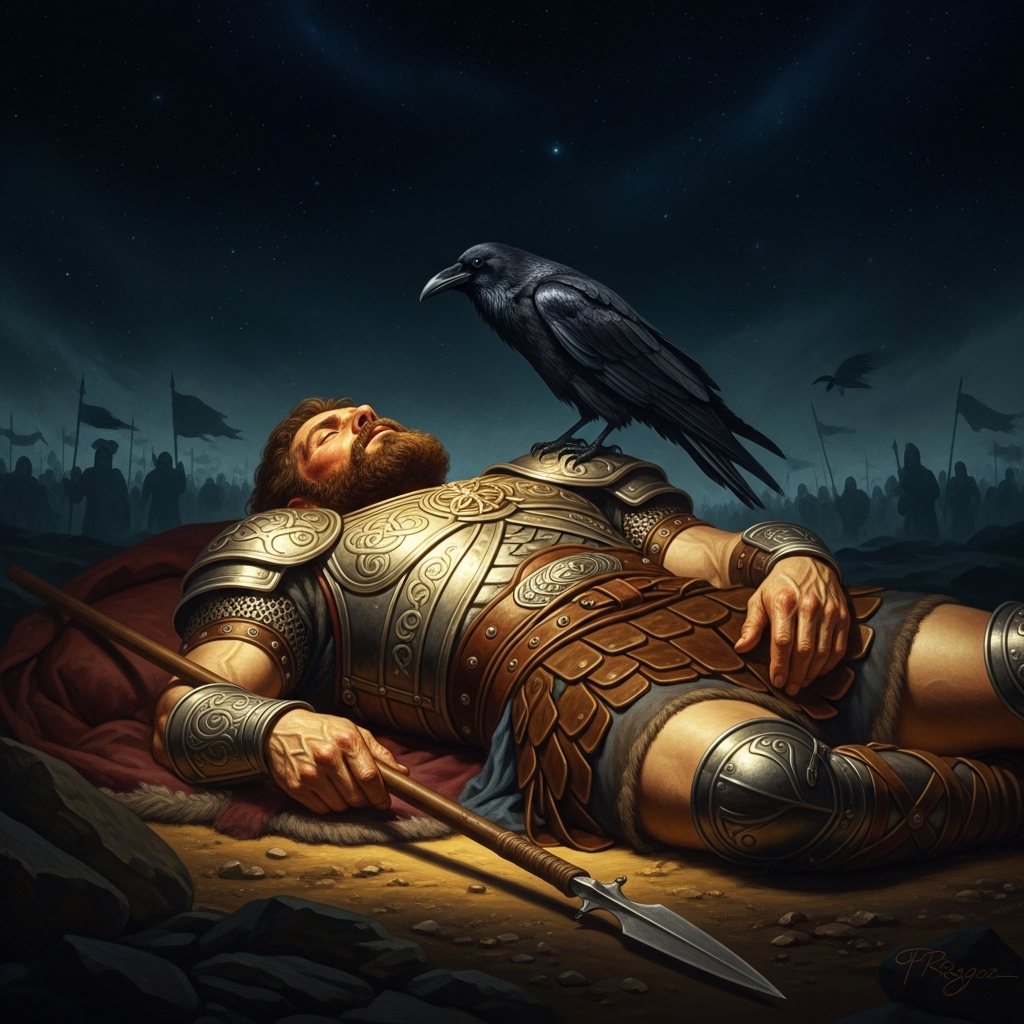
He drags himself from the chariot to a standing stone on the plain of Muirthemne.
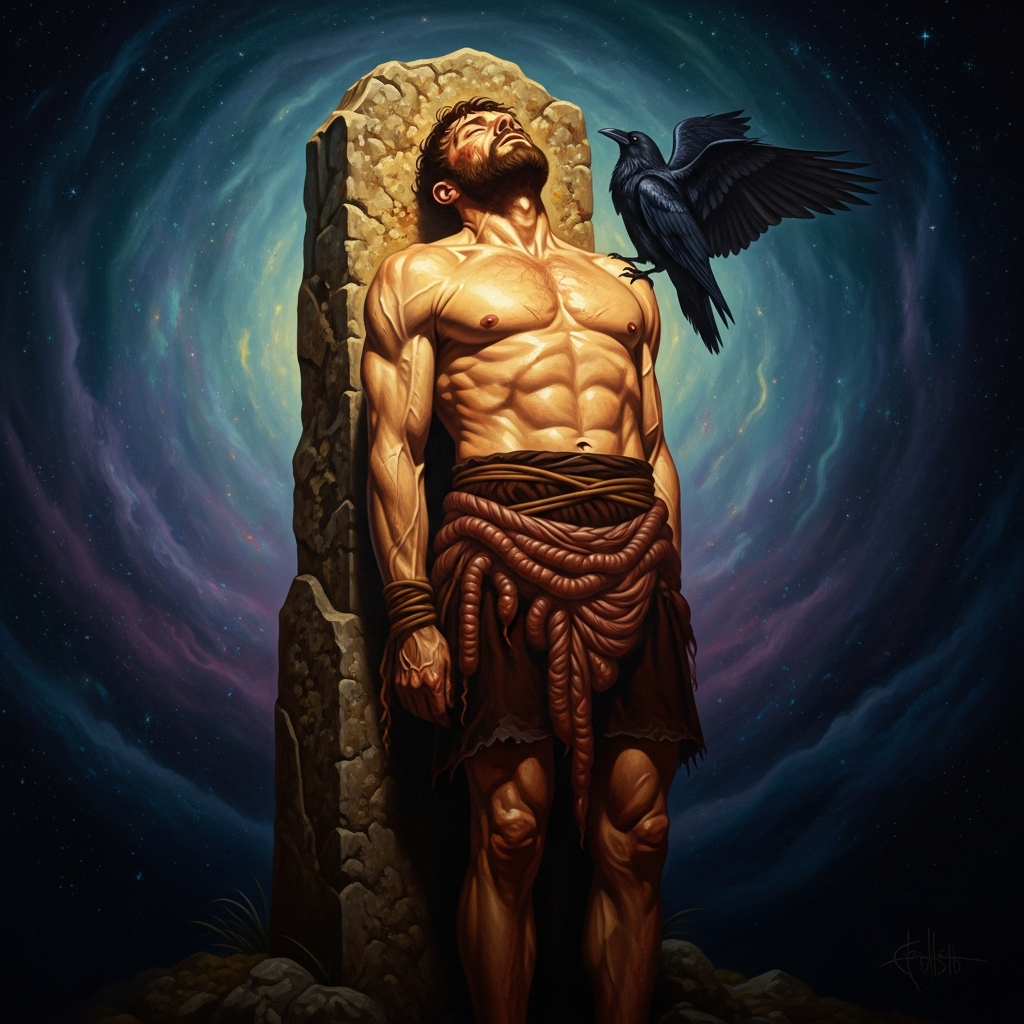
He ties himself to it with his own intestines.
He will die on his feet. That is the last thing he can give to the army watching him from the field. The men of Connacht see him standing there bleeding and they will not approach because they cannot tell if he is alive or dead. He stands for three days against the stone.
The Morrigan, who promised him that she would be there, comes in the form of a crow.
She lands on his shoulder.
That is how the army knows.
The crow on the shoulder is the sign that the warp-spasm is over for the last time, that the Hound of Ulster is finally an animal of the field like any other, that what comes next is a head and a sword. They approach him. They take his head. The boy who was named Sétanta is a relic now, a story for poets, the structural template of the Irish hero — the one who chose the short bright life, the one whose body was a weapon, the one whose taboos finally caught him and undid him strand by strand until the only thing left was the stone he had tied himself to and the bird that always finds the dead.
The text ends with the lament. It is one of the longest in Irish literature. It does not say he was the best of us. It says there will not be another like him, and the absence of another like him is the new shape of Ulster.
The ford runs clear again. The river goes back to being a river. The standing stone weathers in the rain for a thousand years.
The Hound is gone.
Scenes
Cú Chulainn undergoes the warp-spasm — his body twisting beyond human shape, the killing machine the gods made for war
Generating art… Three days at the ford with Ferdia his foster-brother — the most beautiful and most terrible friendship in Irish myth
 Generating art…
 Cú Chulainn ties himself to the standing stone so he will die on his feet; a raven lands on his shoulder when it is over
 Generating art…
 Echoes Across Traditions
Entities
- Cú Chulainn
- Ferdia
- Queen Medb of Connacht
- the Morrigan
- Laeg (charioteer)

Sources
- *Táin Bó Cúailnge* (The Cattle Raid of Cooley), trans. Thomas Kinsella (Oxford UP, 1969); trans. Ciaran Carson (Penguin, 2007)
- *Aided Con Culainn* (The Death of Cú Chulainn)
- Kuno Meyer, *The Death-Tales of the Ulster Heroes* (Royal Irish Academy, 1906)
- Marie-Louise Sjoestedt, *Gods and Heroes of the Celts* (1949; Eng. trans. Myles Dillon, 1949)
- Proinsias Mac Cana, *Celtic Mythology* (Hamlyn, 1970)