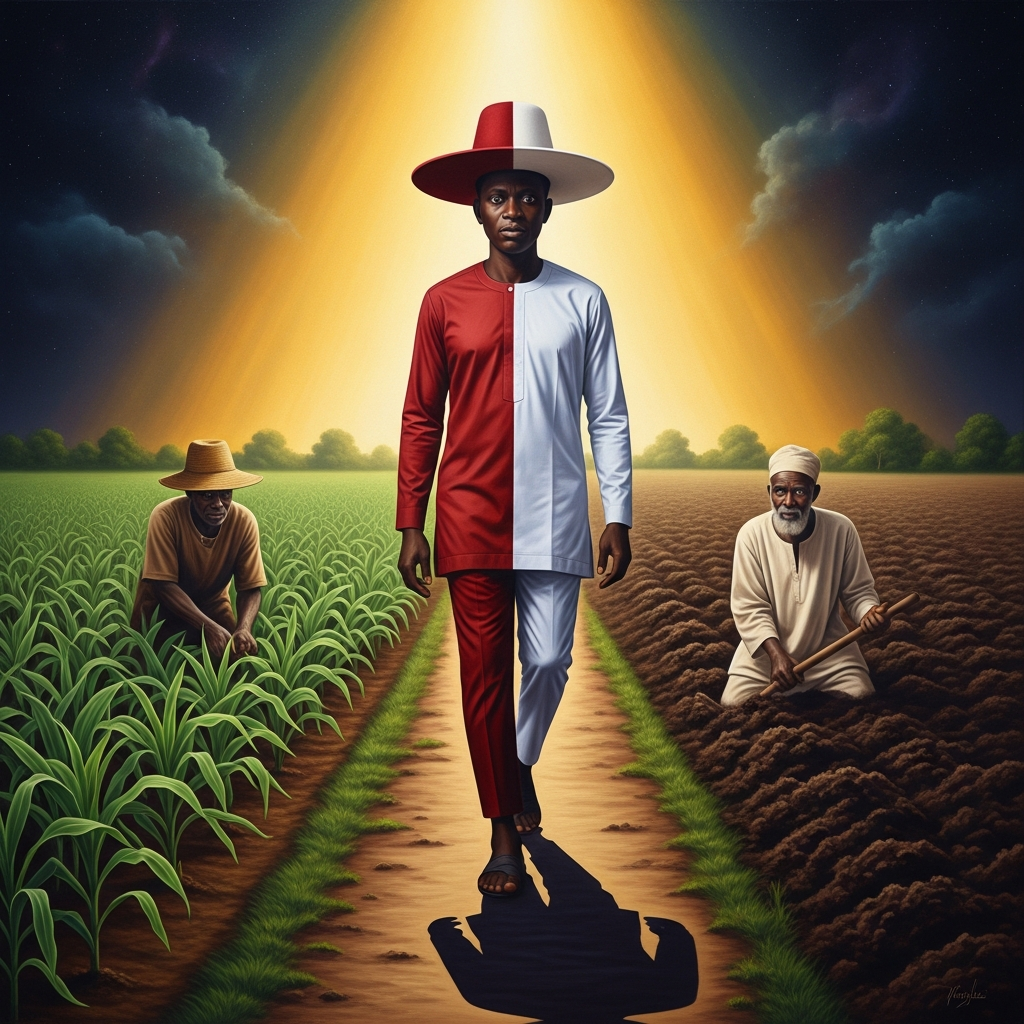
Ogun and the First Blade
In the beginning; and ~first iron-smelting era in Yorubaland, ~500 BCE–500 CE · The primordial forest — and the first forge, on the edge of the known world
Contents
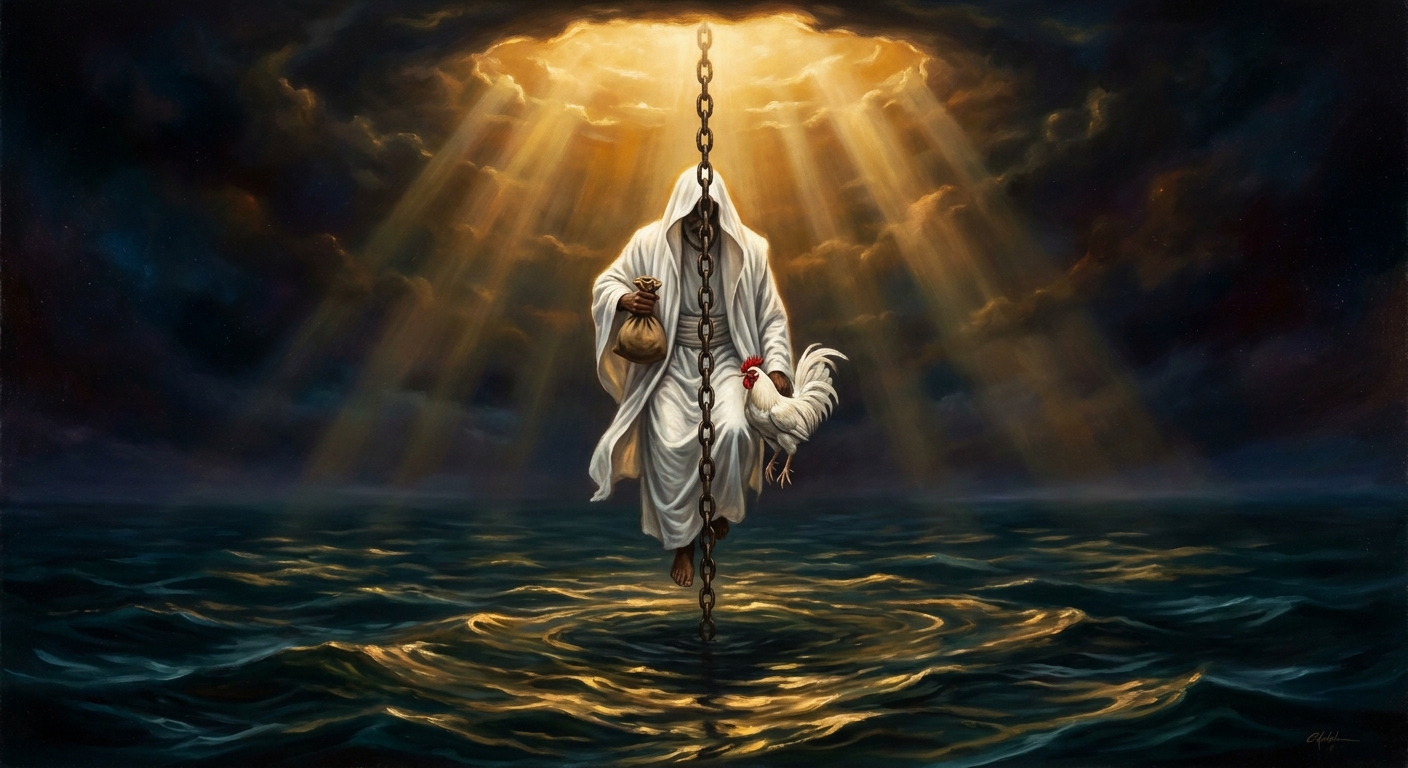
Before any orisha could descend to earth, Ogun hacked through the primordial forest with iron tools. The first blacksmith repays that gift with blood.
- When
- In the beginning; and ~first iron-smelting era in Yorubaland, ~500 BCE–500 CE
- Where
- The primordial forest — and the first forge, on the edge of the known world
Before there is a path, there is Ogun.
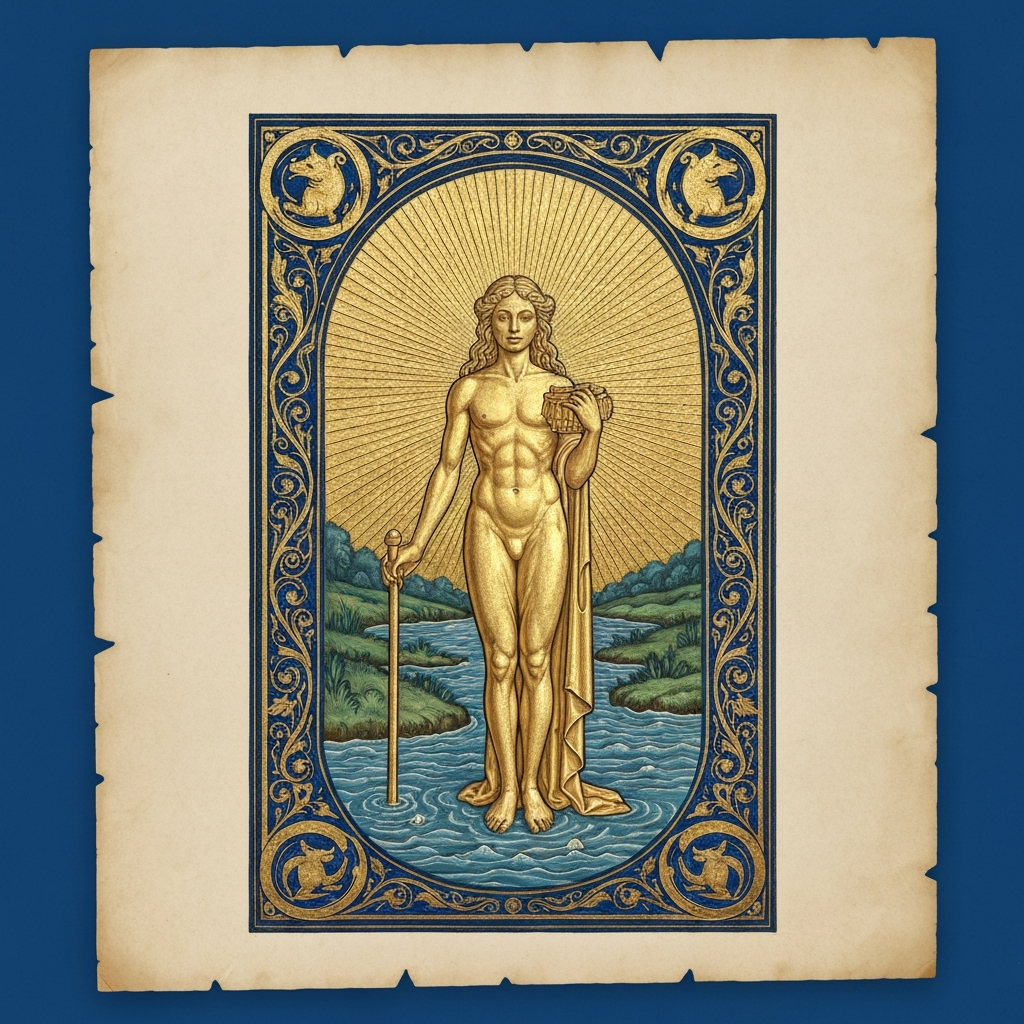
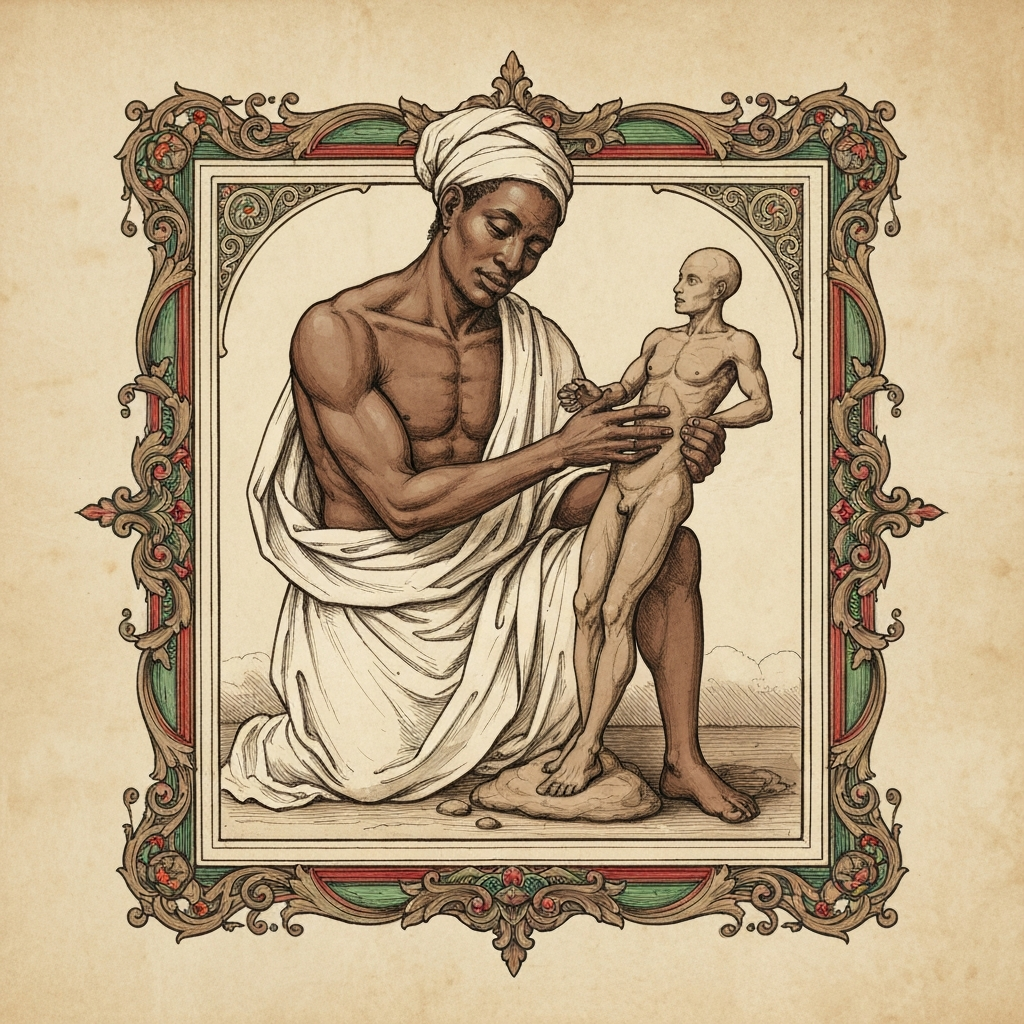
The orishas exist before the earth is ready for them. They stand at the edge of heaven — Obatala with his white cloth, Orunmila with his divination chain, Shango with his thunder still unspent — and below them is the primordial earth, thick with forest so dense that light falls only in narrow columns through the canopy, and the floor beneath is root and thorn and dark growth and the particular resistance of a world that has not yet been asked to receive anyone. Olodumare looks at this and considers. The forest cannot be cleared by thunder or by prophecy or by white cloth or by beauty or by any of the powers the other orisha hold. It requires something different: iron wielded without ceremony, the labor of cutting and clearing and pushing through, the work that gets blood on the hands and mud on the knees and does not pause to mark itself as sacred.
He calls Ogun.
Ogun does not ask what is expected of him.
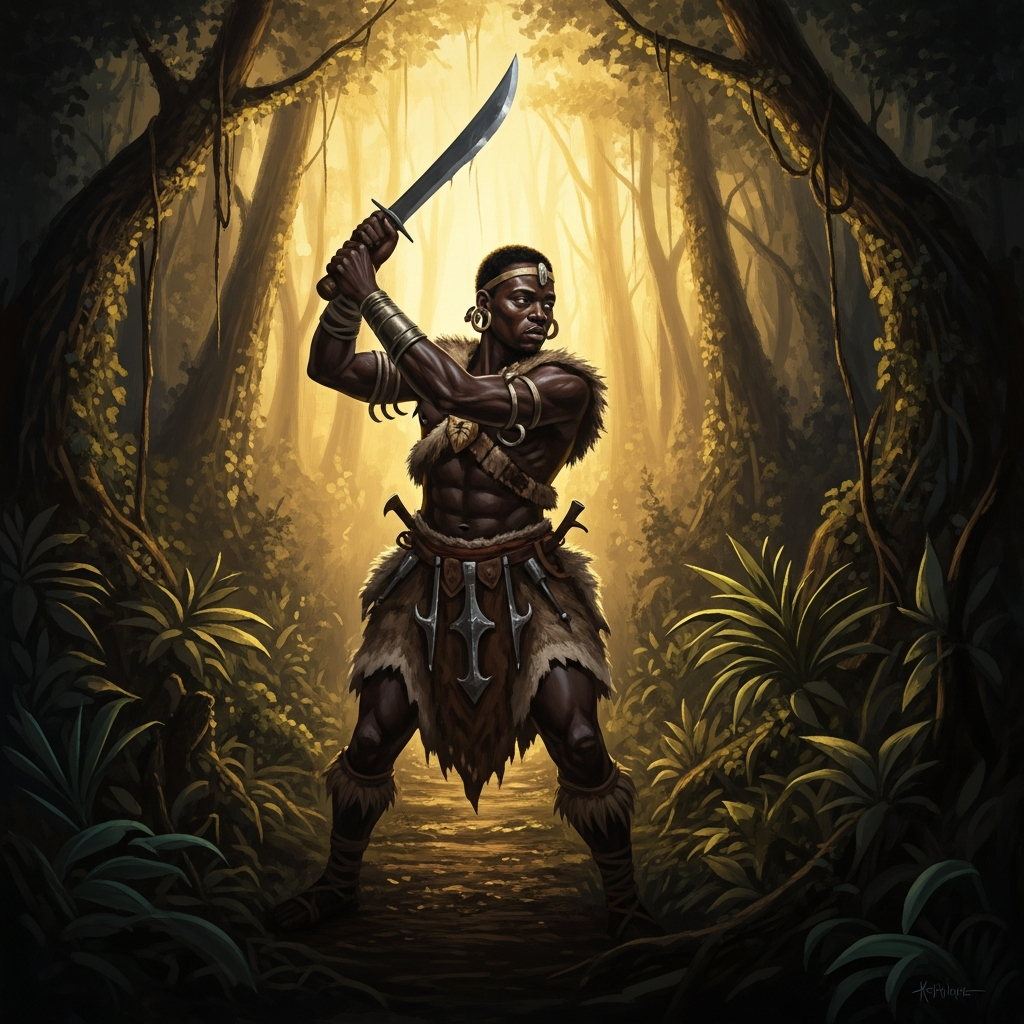
He takes his cutlass — iron, the first iron, the metal that his nature owns as directly as Shango owns the lightning — and he walks to the edge of the primordial forest and begins. He does not wait for the other orisha. He does not look back at the bright company standing at heaven’s edge watching him go. He swings the cutlass and the first tree falls and the first path begins, and it is not beautiful work: it is the work of repetition, of ten thousand swings, of knowing that the only way through a dense thing is through it, that there is no shortcut that does not leave the roots, and roots grow back.
He works alone. He always works alone. This is his nature and his limitation and his irreplaceable quality — the orisha of iron can clear the path because he has no need of company. He does not get lonely. He gets tired, the way iron gets tired: slowly, at the level of structure, in ways that don’t show until much later.
When the path is clear, the orishas descend.
They come down the path Ogun has cut and spread across the earth and begin their work: creating, governing, protecting, testing. The world fills with people and kingdoms and ceremonies and offerings. Ogun returns to the forest’s edge and lives there, at the margin between the cleared and the uncleared, because that is where his work always is. He is the patron of smiths and hunters and soldiers and drivers — everyone whose work takes them to the edge of what has been made, to the border where the tool enters the unresisting world and either cuts or doesn’t.
He waits.
He is waiting for the first blacksmith.
The first blacksmith is a man who watches the earth very carefully.
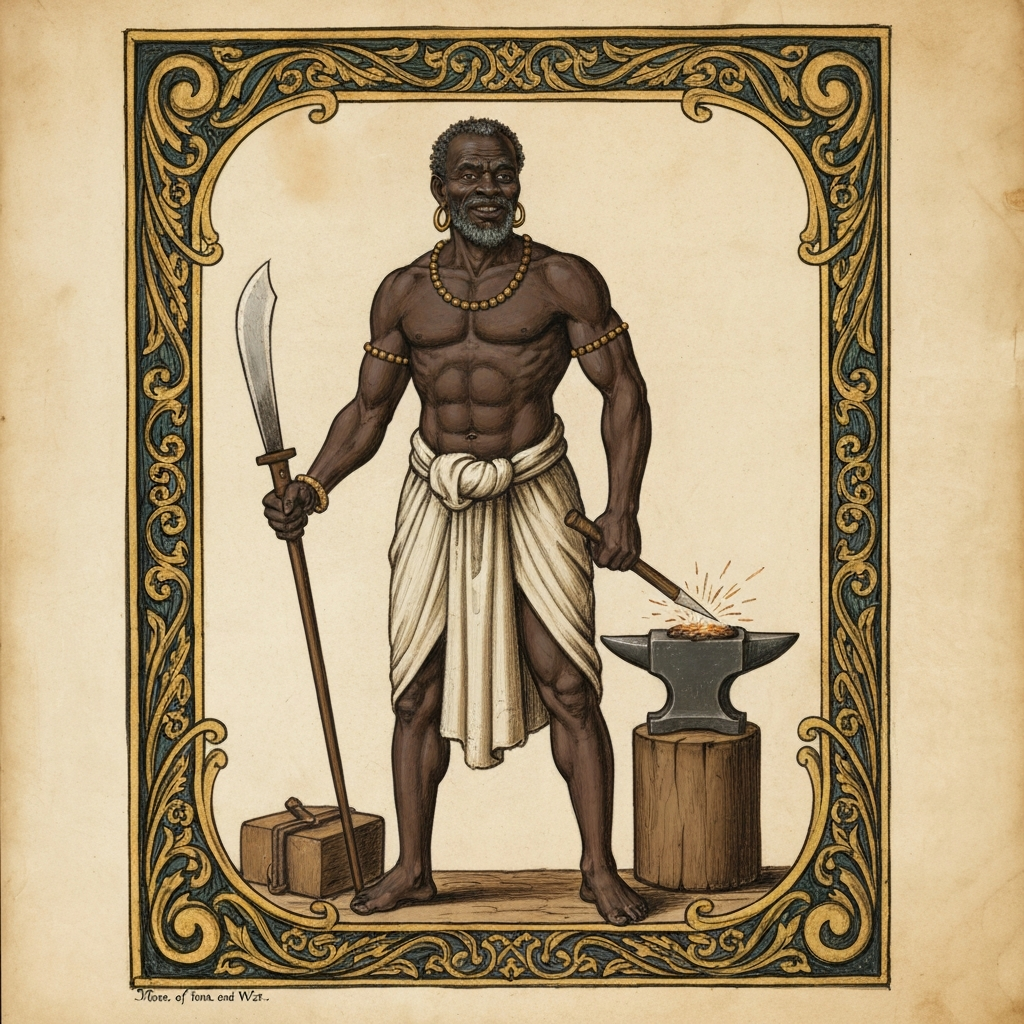
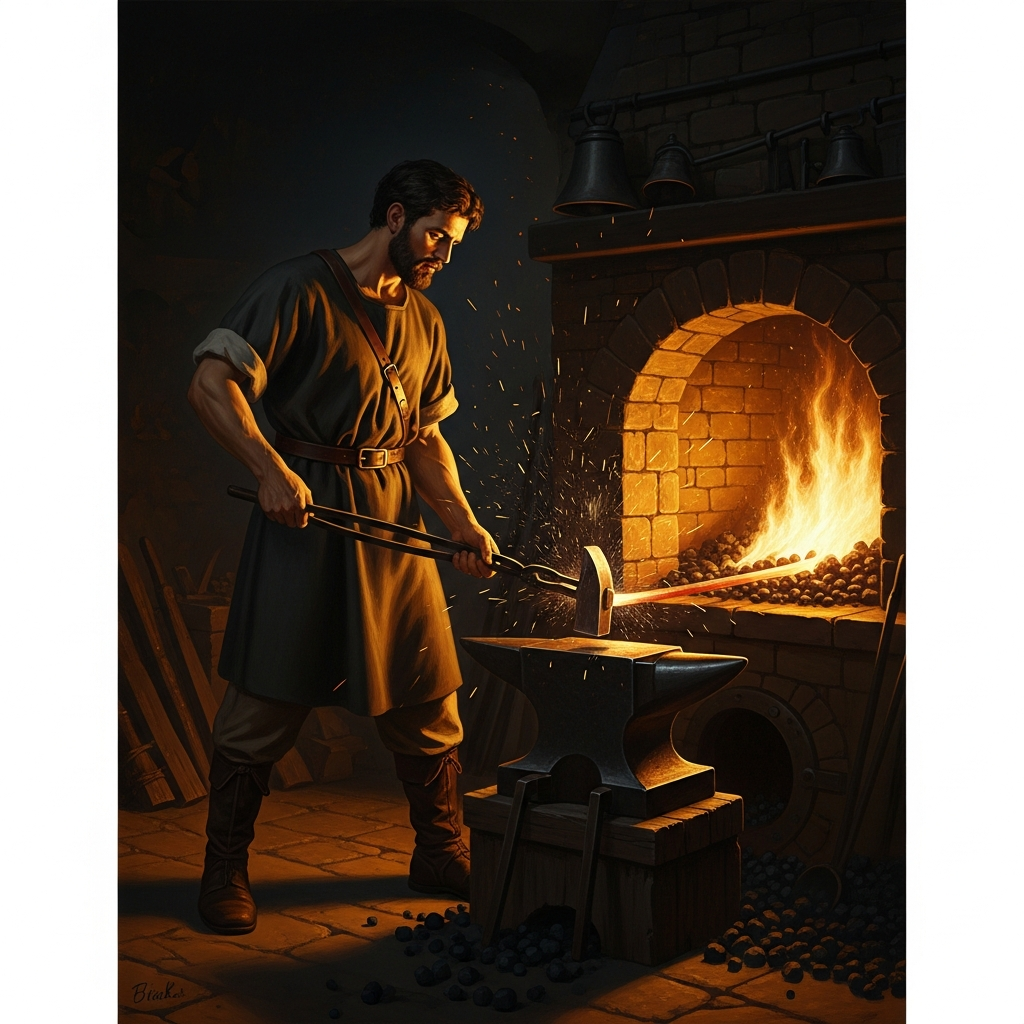
He has spent years watching: watching where the red rock weeps rust when it rains, watching where the earth near certain hills carries a heaviness, a density, an iron smell. He digs. He finds the ore. He builds the first furnace — a clay cylinder, belly-tall, bellows made from goatskin — and he learns by burning his hands the exact temperature at which the rock gives up its metal. The iron runs out of the ore like a slow truth being admitted. He collects it. He reheats it. He beats it. He is the first man to hear the sound the hammer makes against hot iron — the ring that is not quite music and not quite percussion but something between them, the sound of transformation in progress.
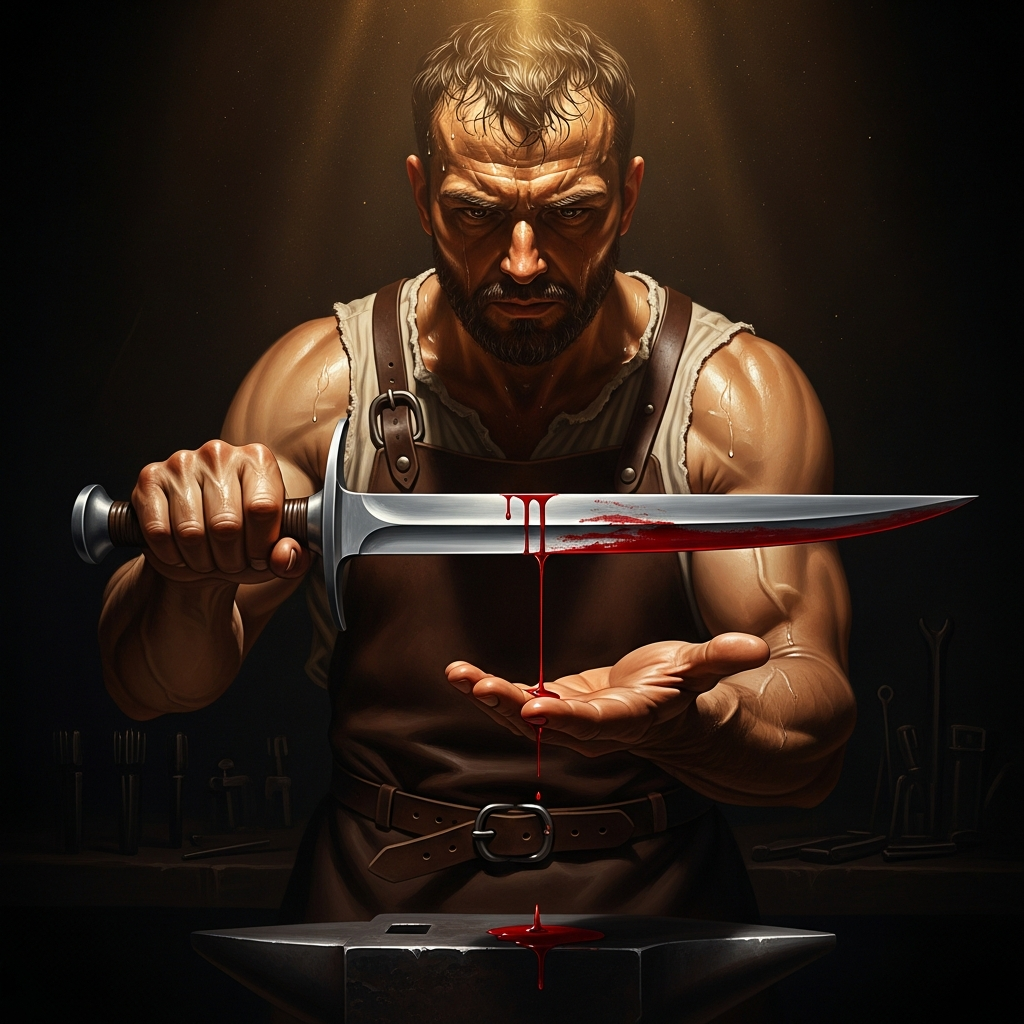
He shapes the metal. He hammers and turns, hammers and turns, the bar narrowing at one end, the edge forming, the point emerging. When he quenches it in water the steam rises in a column. He lifts what he has made. It is a blade. It is the first blade. He tests the edge against his thumb and draws blood without intending to.
He holds the blade and looks at the blood on his hand and understands, with the instinct of a man who has been working in the presence of something larger than himself, that this is not an accident.
He turns to the forge.
He holds his bleeding hand over the blade, over the iron that is still warm from the quenching, and lets the blood run along the flat of it. The blood is dark on the bright metal. It does not wash away easily — iron takes blood the way certain kinds of truth take telling: it enters the structure and stays there. He speaks no formal prayer. He does not know one yet; he is the first. He says the thing he knows, which is this: I made this from the earth. You made the earth from before the earth. I am returning part of what making costs.
Ogun receives this.
He receives it the way iron receives heat — completely, without negotiation, transforming. The forge fire brightens without new fuel. The blade in the blacksmith’s hand rings once, alone, in no wind. And from that moment, every smithy has a corner for Ogun: a rough iron figure, or a bundle of tools, or a palm frond laid over crossed machetes, or simply the understanding that every object made from iron carries the weight of the first clearing and the debt it established.
The blade cuts clean from that day forward.
Every surgeon who opens a body and closes it again, every soldier who fights and returns, every driver who arrives, every blacksmith who pulls iron from fire and makes it into something useful — all of them are in a relationship with Ogun that they may not have chosen but that they inhabit the moment they put their hands on metal. He demands no complicated devotion. He demands the acknowledgment of what work costs: the attention, the repetition, the blood that will eventually come, the honesty about the violence that is always latent in any tool, the tool that cuts wood and can cut flesh and does not know the difference and does not pretend to.
Ogun is the orisha who does not pretend.
The forest had to be cleared. The path had to be cut. The blade had to be made. Every act of making requires something to yield to the tool, and the tool is always, at its deepest level, iron, and iron belongs to him.
The first blacksmith learned what every craftsman learns eventually: the work does not belong to you. You belong to the work. The blood on the blade is not payment for the object — it is the acknowledgment of everything that had to happen before you were standing there holding it.
Scenes
Ogun hacks through the dense primordial forest alone, iron cutlass rising and falling, clearing the path the other orishas will use to descend to earth
Generating art… The first blacksmith at the forge: bellows driving the fire white-hot, iron rod pulled glowing from the coals, hammer ringing on the anvil
 Generating art…
 The blade cuts clean
 Generating art…
 Echoes Across Traditions
Entities


Sources
- Wande Abimbola, *Ifá: An Exposition of Ifá Literary Corpus* (1976)
- Robert Farris Thompson, *Flash of the Spirit* (1983)
- Sandra Barnes, *Africa's Ogun: Old World and New* (1989)
- Rowland Abiodun, *Yoruba Art and Language* (2014)