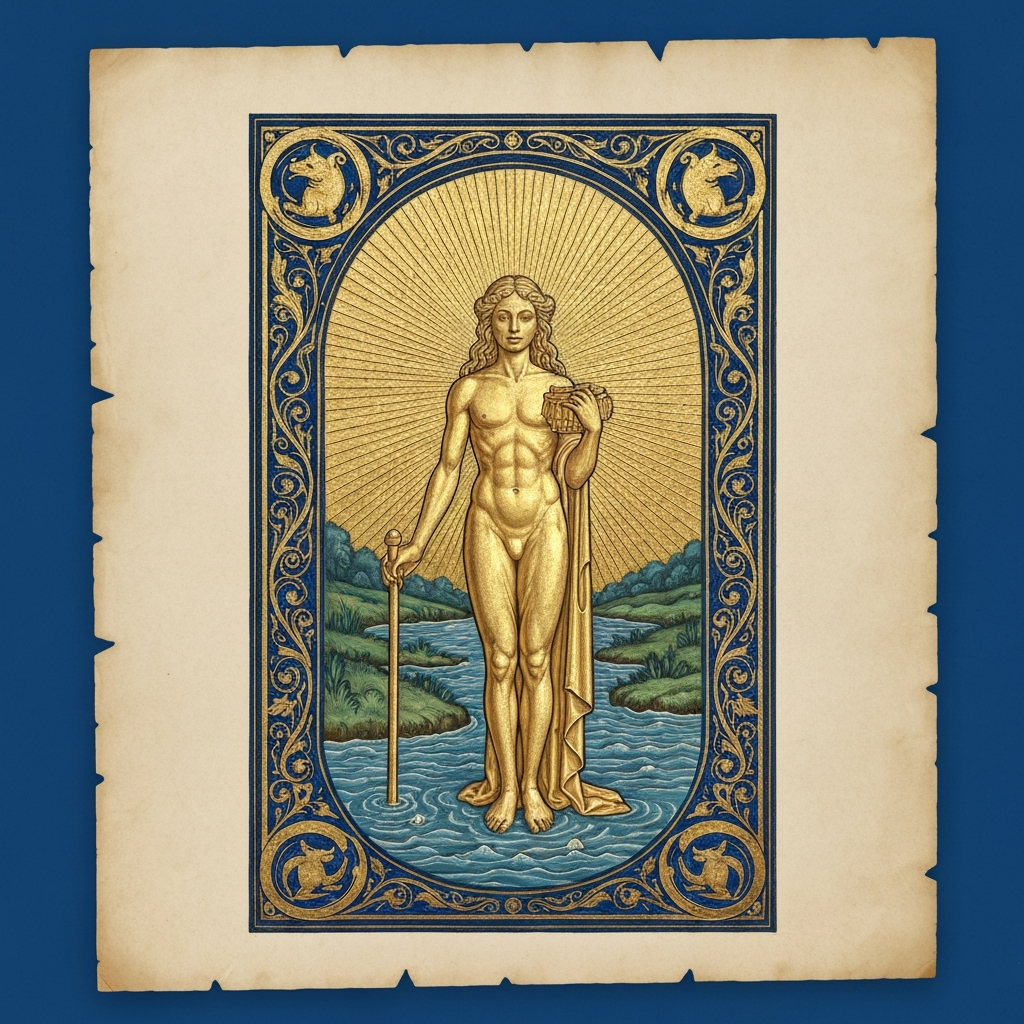
Oshun Saves the Cosmos
In the time before the world remembered what it needed · Yorubaland — the rivers, the dry earth, and the top of the sky
Contents
The male Orishas exclude Oshun from the divine council and the world begins to die. Crops wither, rivers run dry, women cannot conceive. Only when the goddess of sweet water carries honey to the sky does Olodumare recover — and creation breathe again.
- When
- In the time before the world remembered what it needed
- Where
- Yorubaland — the rivers, the dry earth, and the top of the sky
The world does not fail all at once. It fails the way a river fails in dry season — from the edges first, the shallow places, the smaller tributaries, the places that were already thin.
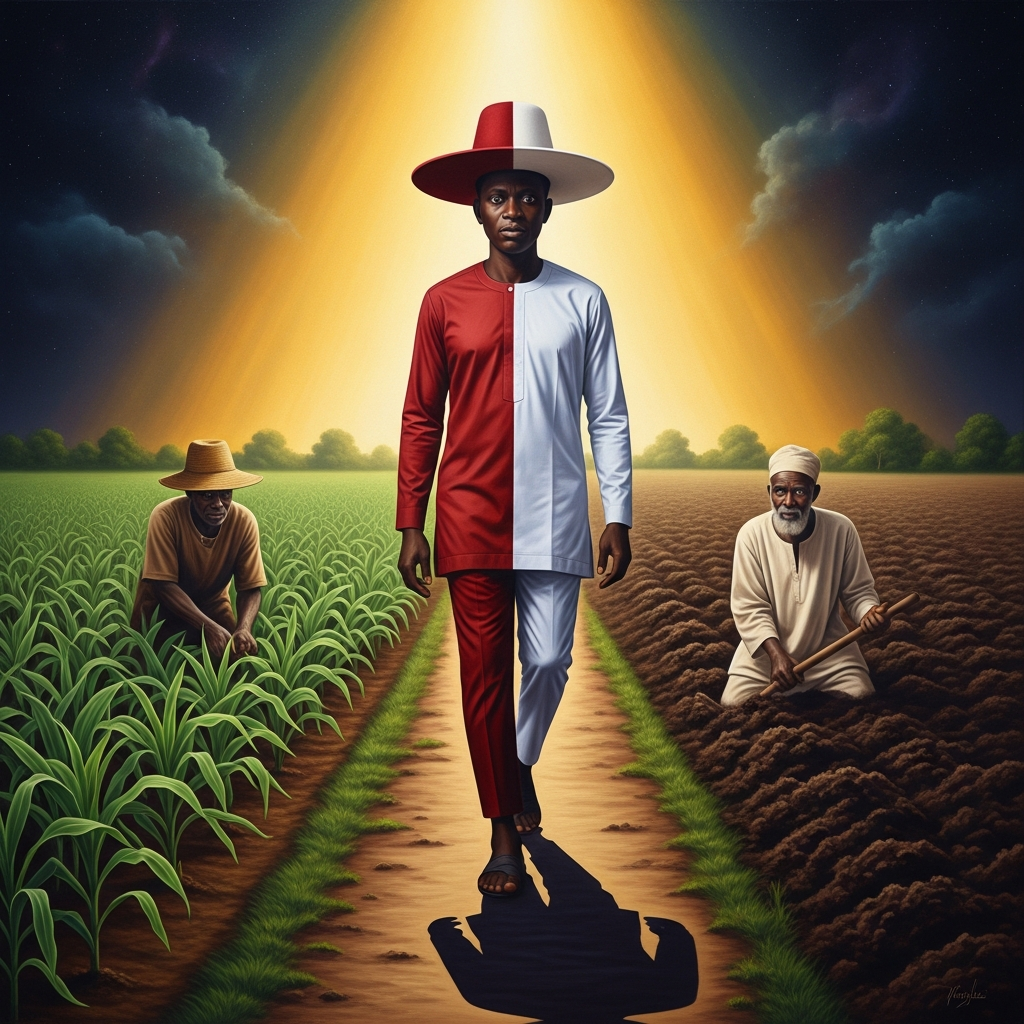
It begins with the crops. The millet ripens early, then stops. The yam vines extend but set no tubers. The cassava yellows from the tips of its leaves inward, methodically, as if something is working backward through the plant’s own logic. The women who tend the fields walk the rows in the morning and find nothing to harvest, and they look at one another with the specific expression of people who know the difference between a bad year and the end of something. This is the end of something.
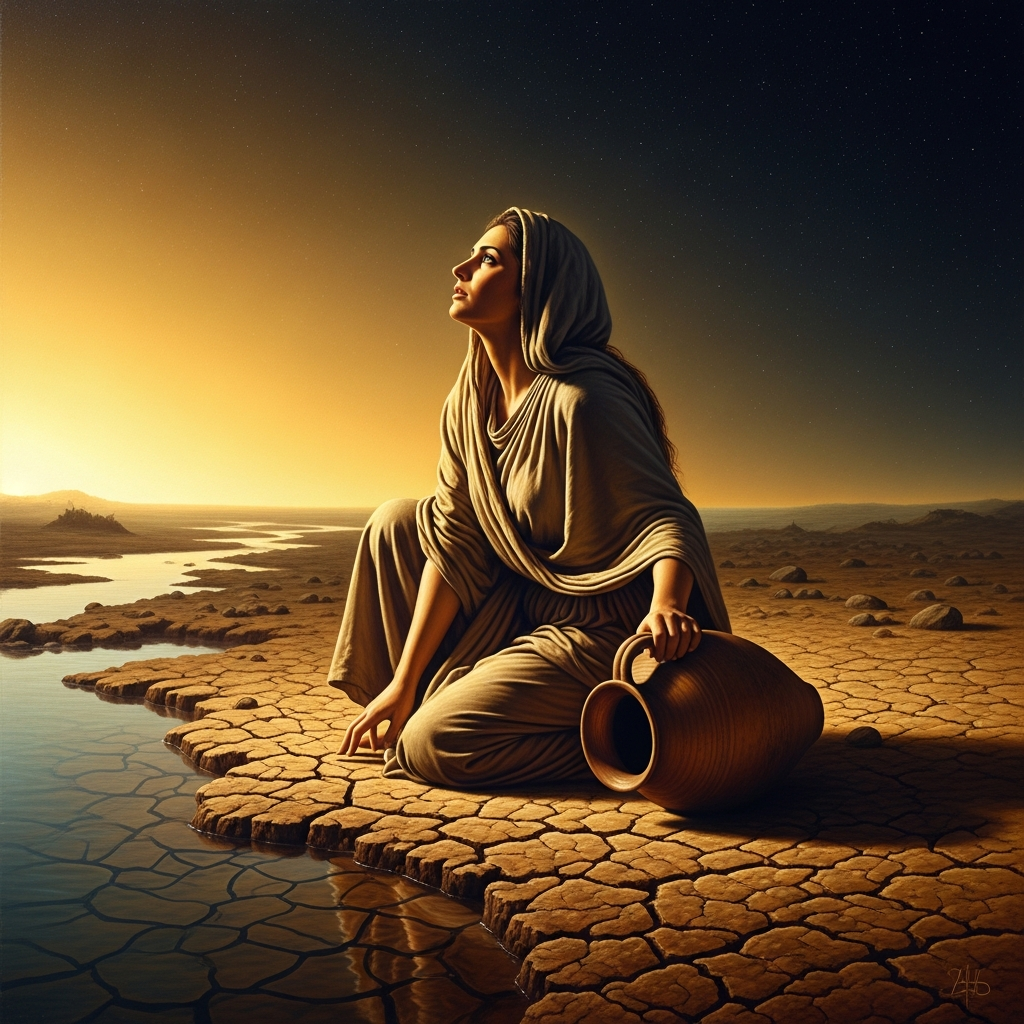
Then the river. Not all at once — Oshun never works all at once — but the current slackens, and the bright places where the river runs shallow over smooth stones go dry, and the pools where women wash cloth grow stagnant and shrink. The fish leave before the water does. The children who played in the shallows are called back from the bank by mothers who cannot say clearly what has changed, only that the river does not feel right, that the river does not feel present, that the river sounds different when you put your ear to the surface — and when they listen, they hear nothing, which is not silence but absence.
Then the women cannot conceive.
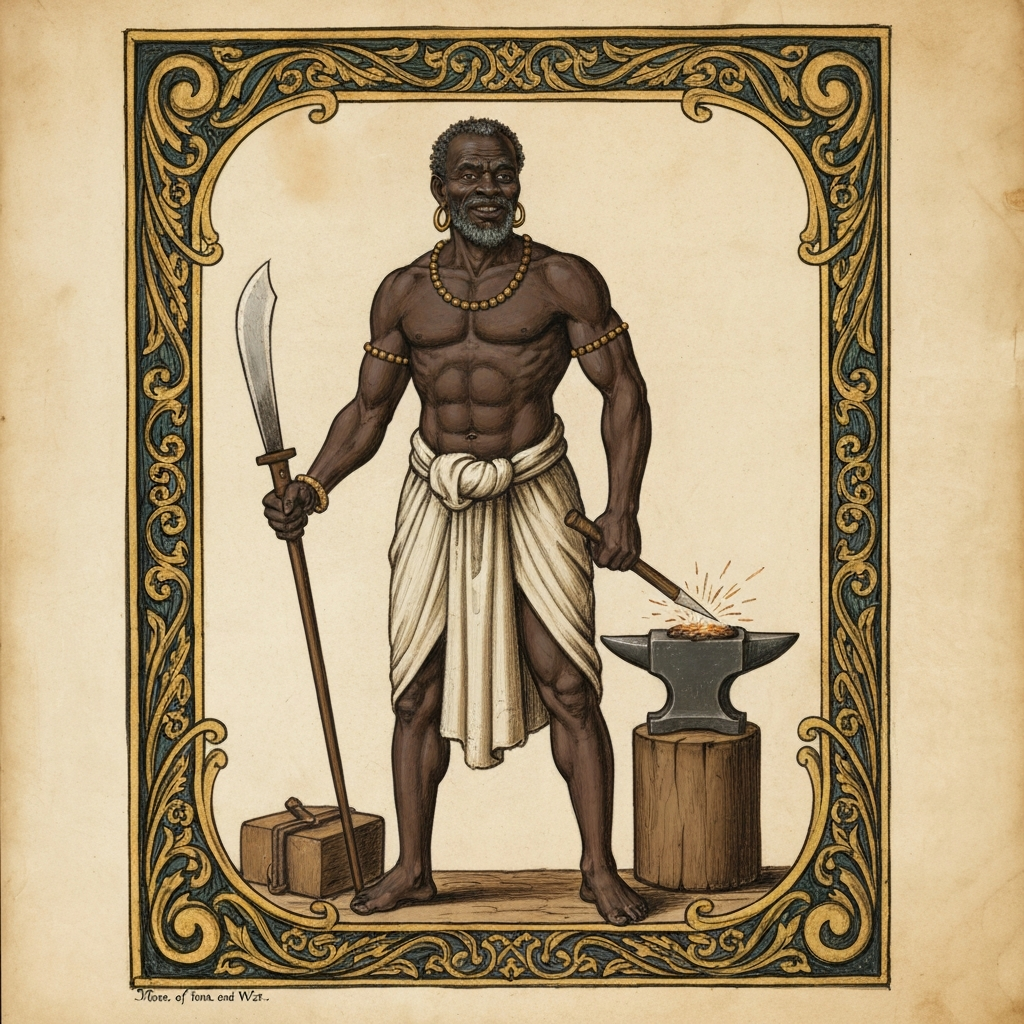
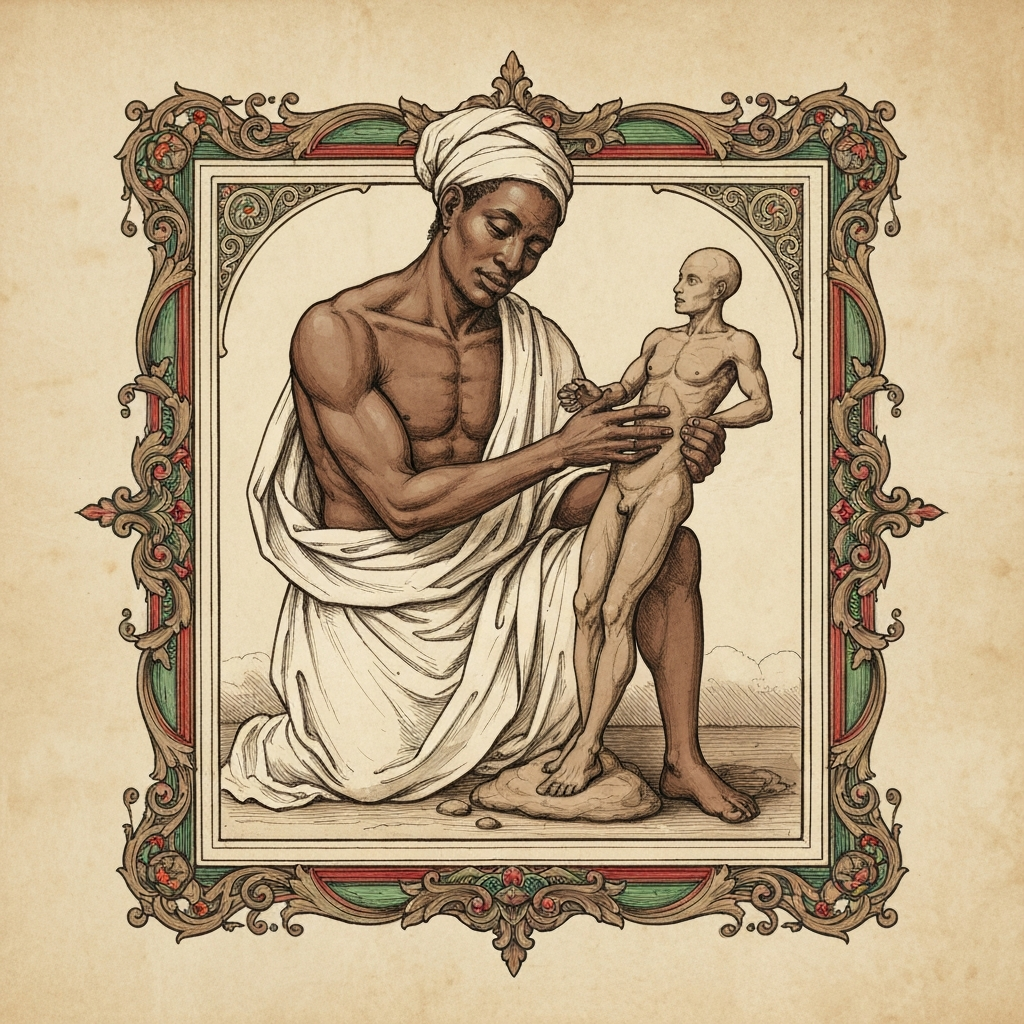
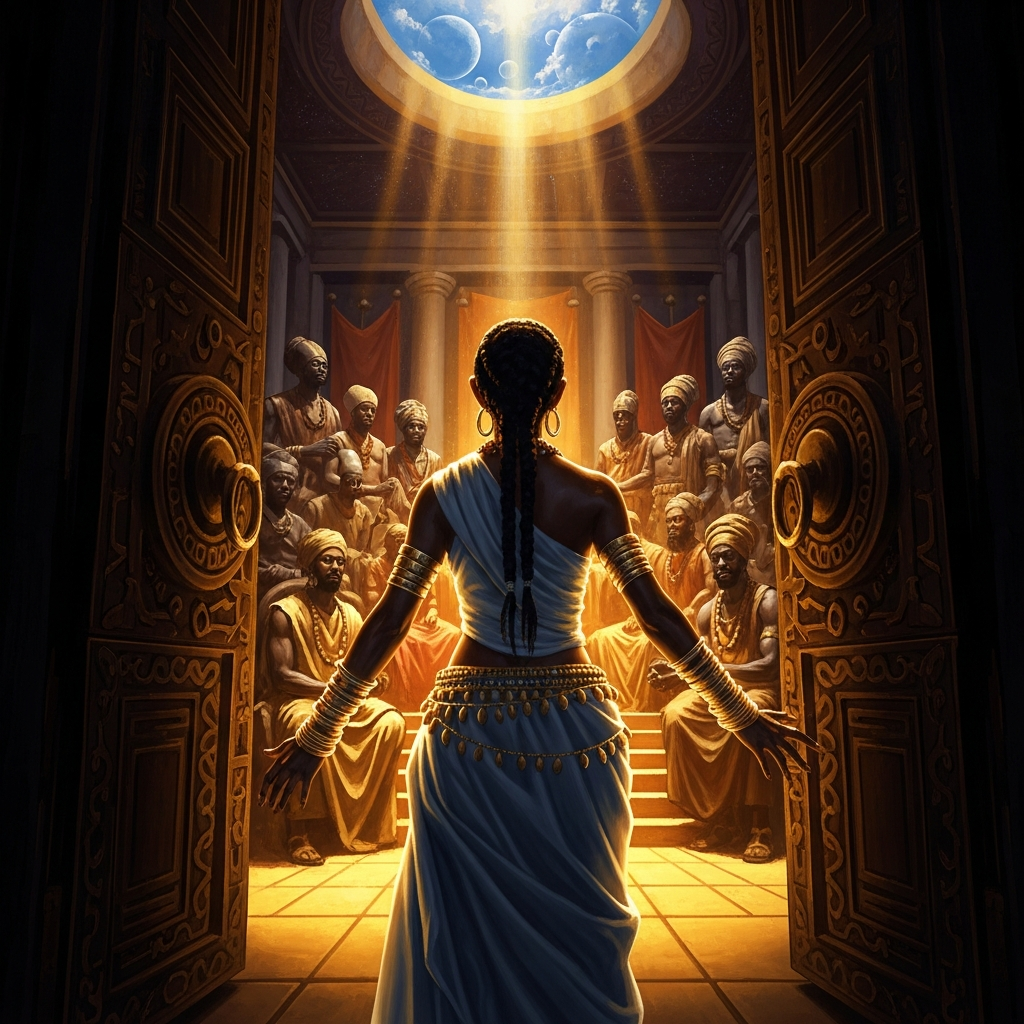
The male Orishas meet. They have been meeting for months, because the failing world is obviously a problem that requires solution, and they are the divine council and problems requiring solution are their domain. Ogun reviews the catalogue of iron he can no longer sharpen — his tools rust now at a rate that defies the chemistry of rust, as if the iron itself is grieving. Shango reports that his thunder lands but starts no fires, the lightning falling into dry fields that should be tender and combustible but are not. Even Obatala, who shapes the human form in clay with the focused patience of someone who has never worked quickly, reports that his clay will not hold the shape — that the figures he makes collapse as the moisture leaves them, that the human form requires something he cannot supply alone.
Orunmila is called.
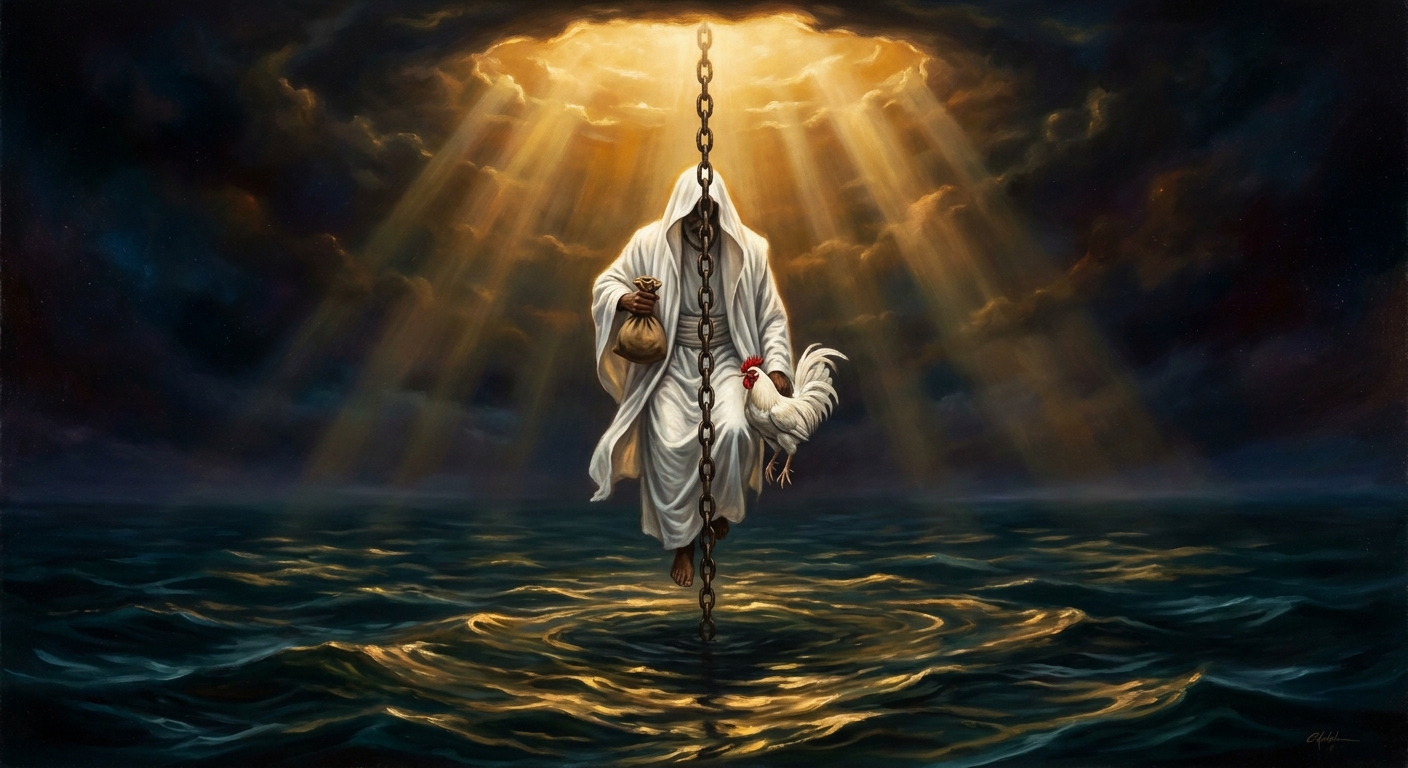
He arrives with his divining chain — the opele, sixteen seed pods on a cord, each seed a binary proposition, the chain itself a record of all the questions the universe has ever been asked and all the answers it has given. He tosses it. He reads the pattern. He tosses it again. The same Odu comes both times, which does not happen unless the answer is urgent and certain and the universe is losing patience with being asked.
He reads it. He is quiet for a long time after reading it.
Then he says: You left out Oshun.
The silence that follows is the silence of beings who know they have done an obvious and catastrophic thing and have been told so by a chain of seeds that cannot lie.
They left her out because she is female. Not because she is weak — none of them made that mistake in their own estimation; they are not crude in their theology — but because the council was about power and resources and the governance of the world, and power and governance had, by some assumption so old it was invisible, been classified as the domain of the masculine divine. Oshun is the orisha of sweet water, of love, of beauty, of gold and brass and the particular quality of light in a clear river over smooth stones. She is not, they reasoned without reasoning — without making the reasoning explicit enough to examine — in charge of anything structural.
The opele disagrees. The opele says: She is the structural. You have been governing the ornament and ignoring the foundation.
They send for her.
She does not come.
She is at her river — what remains of it, which is very little, a slow dark thread between banks that used to require a strong swimmer. She knows what has happened. She knew when it started happening. She sat by her river and watched it withdraw and felt the withdrawal in herself, in the exact hollow that forms in a body when something it generated is no longer welcomed by the world, and she let it happen because the world had made its choice and choices have consequences and she has never been willing to pretend that consequences are optional.
The Orishas come to her. They come in full dignity, which is a different thing from coming in humility, and she receives their message without moving from her position on the dry bank. She is wearing her brass bracelets — five on each wrist, heavy, the color of old sun — and her yellow cloth, and her hair is dressed and oiled in the way she dresses it when she wants to remind the world what beauty looks like before it decides whether beauty matters. She is holding a gourd of honey.
She has had the honey the whole time.
She listens to the Orishas’ apology. She listens long enough that they understand she is really listening, which is different from waiting for them to finish. Then she says: I will go to Olodumare. Not for you. For the world.
She means this distinction. She has no interest in their reconciliation as its own object. She is interested in the river.
She transforms at the edge of what used to be the riverbank.
The transformation is not dramatic in the theatrical sense — there is no flash, no noise, no obvious rupture between before and after. It is more like watching a river decide to go underground: the woman is there, and then the woman is not there, and a vulture stands where she was, large-eyed, patient, with the gourd of honey somehow carried in the geometry of the bird’s body. The vulture stretches its wings and rises.
She rises for a long time. The sky above Yorubaland is not a short distance, and the top of it, where Olodumare lives, is farther than distance measures. She rises on the thermals above the dry earth, on the heat that rises from land that is losing its moisture, on the breath of a world that is sick and exhaling. She does not hurry. Vultures know that hurrying is a misunderstanding of how the world actually works. She rises.
At the top of the sky, Olodumare is ill.
He has been ill since the world started failing — not as cause but as symptom, the creator’s health and the creation’s health bound together in the way that a river and its source are bound, so that what afflicts the world afflicts him and what afflicts him afflicts the world. He has been given everything the male Orishas know how to offer: thunder and iron and the precise geometry of the human form and prophecy and all the powers they command. None of it has helped. A creation that has lost its sweetness cannot be healed by power.
Oshun lands beside him and opens the gourd.
The honey is the color of the river used to be when the sun hit it at the right angle. She dips her fingers in it and brings them to his lips, and the sweetness moves through him the way water moves through dry earth — not soaking in gradually but rushing along the cracks, finding every passage, going everywhere at once. He breathes. His breathing changes. The quality of the sky changes.
Below, at the dry riverbank, the thread of dark water thickens.
The river comes back loudly.
It does not trickle back; it returns the way a river returns after good rains far upstream — all at once, the whole weight of it, flooding the banks with the energy of something that has been held and is released. The fish return before the water is even fully in its banks. The crops straighten in the fields in the space of a morning. The millet fills out. The yam tubers swell in the earth. The cassava loses its yellow at the leaf-tips and greens again from the root outward. The women who have been waiting conceive.
Ogun’s iron stops rusting. Shango’s lightning lands in burning grass and fire leaps up gratefully. Obatala’s clay holds the shape of the hand that worked it.
Oshun returns to her river and removes her sandals and stands in the water up to her ankles and feels the current against her skin. The brass bracelets catch the river-light. She does not say anything about what has happened. She does not need to. The river says it for her, saying it now the way rivers always say things — continuously, without pausing, in all directions at once, to anyone who will be still enough to listen.
No creation works without the feminine divine — not because the masculine divine is insufficient, but because creation is not one thing. It is the conversation between two principles that can generate sweetness and power only together. When one is excluded, what is lost is not half of something — it is the whole of the thing that the conversation produced. Oshun’s honey is the proof. It is what the world was missing. It is what the world is always missing when it forgets to ask.
Scenes
The male Orishas gather at the divine council beneath a sky still bright with possibility
 Generating art…
 The rivers withdraw into their beds
 Generating art…
 Oshun transforms: the woman dissolves into a vulture — wings dark against the white sky, rising in a thermal column toward the top of the world where Olodumare waits
 Generating art…
 Echoes Across Traditions
Entities


Sources
- Wande Abimbola, *Ifá: An Exposition of Ifá Literary Corpus* (1976)
- Robert Farris Thompson, *Flash of the Spirit* (1983)
- Judith Gleason, *Oya: In Praise of an African Goddess* (1987)
- Diedre Badejo, *Osun Seegesi: The Elegant Deity of Wealth, Power, and Femininity* (1996)