The Houngan Calls the Loa Down the Center Post
traditional time — the ceremony that has been performed since the enslaved Africans brought it to Haiti · Haiti — the Haitian peristyle (ceremony house), the diaspora of an African religious tradition
Contents
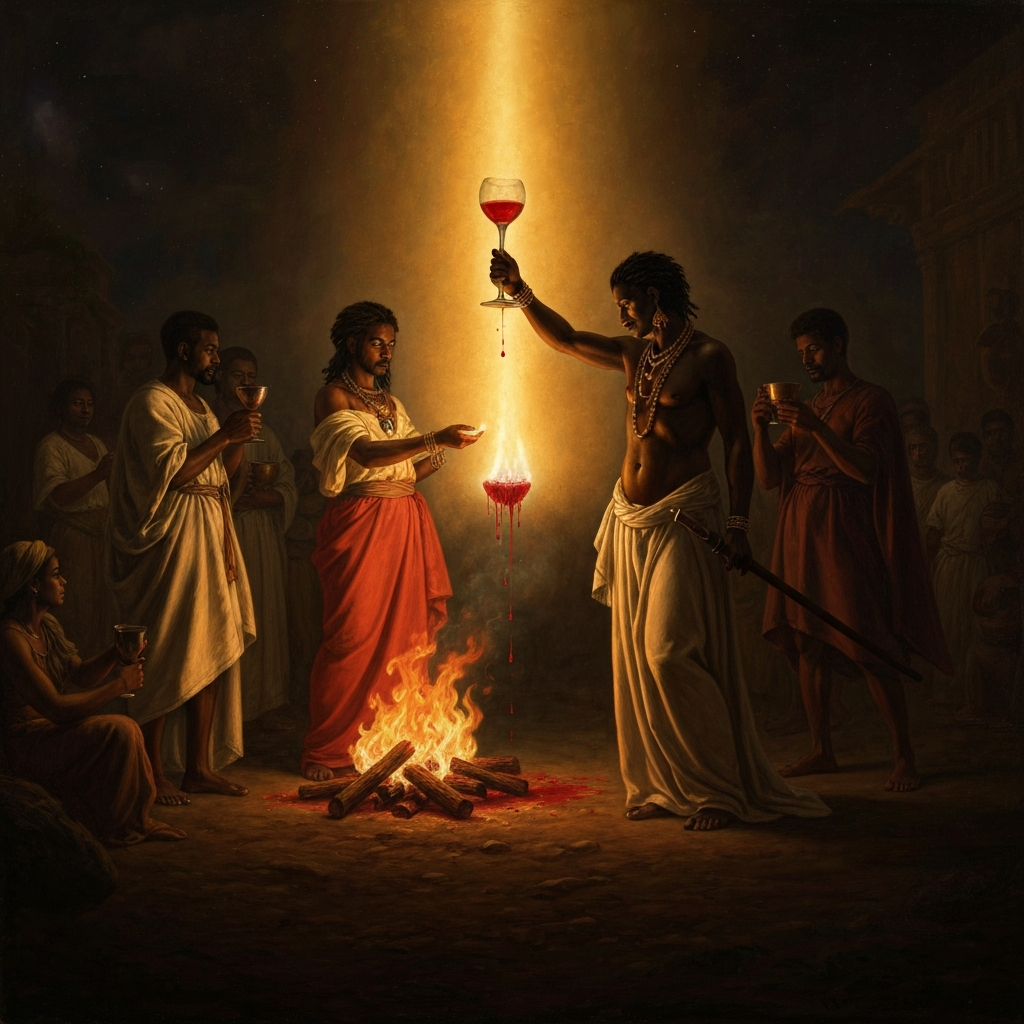
In a Haitian Vodou ceremony, the houngan calls the loa down the poteau mitan — the center post that is the axis of the world — and the spirit enters the body of a dancer, transforming the person into the divine being's vehicle and bringing the invisible world into direct contact with the community.
- When
- traditional time — the ceremony that has been performed since the enslaved Africans brought it to Haiti
- Where
- Haiti — the Haitian peristyle (ceremony house), the diaspora of an African religious tradition
The ceremony begins with Legba.
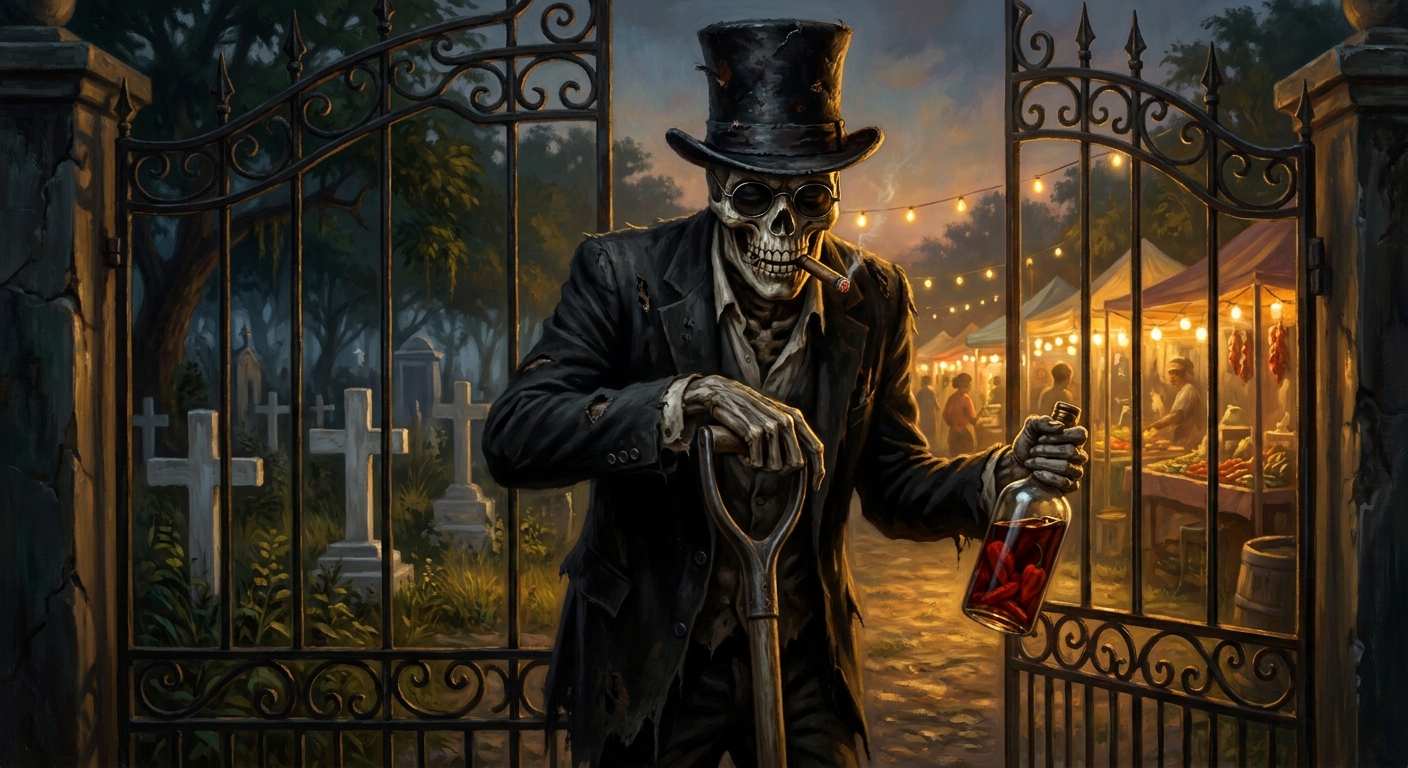
Always Legba, in every ceremony, before any other loa can come: the old man at the crossroads, the keeper of gates, the being who stands between the world of the living and the world of the loa. Without Legba’s permission, the gates are closed. The loa cannot enter. The houngan calls Legba with his specific songs and his specific offerings, and Legba, who is a crotchety old man with a cane and a bad leg and a sense of humor, opens the way.
Attibon Legba, l’ouvri baye pou mwen — Legba, open the gate for me.
The ceremony is in the peristyle — a large roofed space open at the sides, with a dirt floor and the poteau mitan at its center. The center post is painted in Damballah’s colors (white and green) because Damballah is the oldest of the loa, the great serpent, and his symbol is the pole. But every loa’s path runs through the poteau mitan — it is the axis of the world, the connection between the living and the dead and the divine, and it is physically present in the center of the ceremony space the way the World Tree is physically present in the Siberian shaman’s tent.
The drums begin.
There are three drums. Their specific rhythms, their specific timbres, their specific relationships to each other are the language in which the loa are spoken to. Different rhythms call different loa; the experienced houngan and the experienced community read the drums the way you read a conversation, following the direction of the calling and the responses.
The dancers move around the poteau mitan.
Vodou ceremony is communal — everyone participates, not as an audience watching a performance but as the active body that the ceremony requires. The singing and the dancing and the clapping and the specific responses to the drums are the mechanism by which the loa’s attention is drawn, by which the space of the peristyle is prepared to receive them.
Someone begins to move differently.
It happens gradually or suddenly depending on the loa and the person. The body’s movement changes — not more violent or more extreme but more specific, more recognizable to those who know the loa. If it is Ogou, the warrior-spirit, the person’s posture changes to the proud military bearing, the voice drops, the eyes acquire a fixed focus. If it is Erzulie Freda, the love goddess, the movement becomes languid, flirtatious, the hands beginning to reach for the gifts and flowers she favors.
The person is no longer themselves.
The loa is riding.
This is the moment the community waits for.
Not because they are waiting for a spectacle — the people present have been in many ceremonies, they know what possession looks like, it is not entertainment to them. They wait because the loa’s presence means the loa can be spoken to directly. The person who was your neighbor a moment ago is now a divine being who can tell you what you need to know: the diagnosis of the illness in your household, the direction of the trouble you feel coming, the meaning of the dream that has been disturbing your sleep.
The loa speaks in direct conversation, moves through the space touching people with healing attention, responds to the specific needs that the community members approach the possessed person to discuss.
The houngan manages the ceremony during the possession. He maintains the songs, the drum rhythms, the offerings that the loa needs. Different loa require different things: Ogou wants rum and cigars, Erzulie wants perfume and sweets, Damballah wants white things and eggs.
The community does not experience this as asking for favors from an arbitrary authority. The loa are family — difficult family, powerful family, the divine ancestors whose concerns extend beyond the human but whose attention is real and responsive and personal in a way that the more distant deities of other traditions are not.
The drums call.
The gate is open.
The loa are here.
Echoes Across Traditions
Entities
- the houngan (Vodou priest)
- the loa (divine spirits)
- the poteau mitan (center post)
- the chwal (horse — the person being ridden)
- Legba, the opener of gates
Sources
- Deren, Maya, *Divine Horsemen: The Living Gods of Haiti* (Thames & Hudson, 1953) — the foundational documentary account
- Brown, Karen McCarthy, *Mama Lola: A Vodou Priestess in Brooklyn* (California, 1991)
- Métraux, Alfred, *Voodoo in Haiti* (Oxford, 1959)