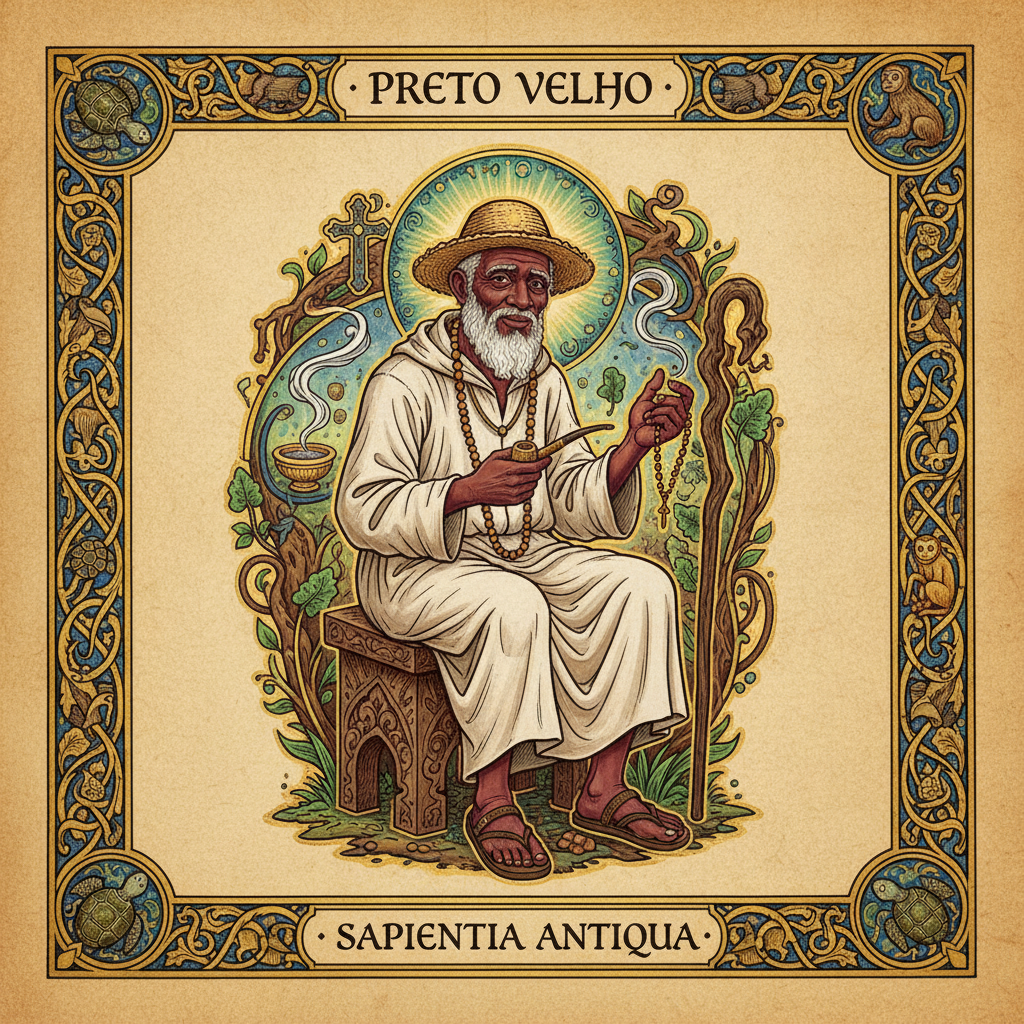
Combat Profile
Wisdom of Suffering
channels the accumulated spiritual knowledge of ancestral pain into profound healing and life-altering counsel that mends both body and spirit
Gentle Authority
radiates patient humility and protective grandfather-wisdom that soothes conflict and invokes forgiveness in all who approach
None -- but they require humility from those who seek them. Preto Velhos do not respond to arrogance or entitlement. They give their wisdom freely to those who approach with respect, and they withdraw from those who treat their counsel as a service rather than a gift
“I have suffered everything there is to suffer. And I am still here. Sit down, child. Tell me your trouble.” — Preto Velho speaking through a medium
Lore: The Preto Velhos are one of the most emotionally complex categories of spirit in the Americas — and the most specifically Brazilian. They are the spirits of enslaved Africans who lived and died in Brazilian slavery. They did not die free. They did not experience liberation. They lived the full span of captivity — years and decades of plantation labor, of family separation, of violence, of the slow erosion of everything that had made them who they were before the Middle Passage — and they endured. And in Umbanda theology, their endurance transformed them. The suffering was the forge.
The Preto Velho who appears in ceremony is not a recreation of an enslaved person in their humiliation. They have become wise. The body of the medium stoops under the memory of labor, but the spirit inside that stooped body is ancient and serene. They smoke their pipe slowly, because they have all the time in the world now. They are not in a hurry. They have already outlasted everything that tried to break them.
The theological move here is radical and precise: Umbanda tradition is saying that the people who suffered most completely under Brazilian slavery were not destroyed by that suffering but were, through it, transformed into vessels of the deepest spiritual wisdom. This is not a romanticization of slavery — Preto Velhos do not tell you that suffering was good for you. They tell you that they survived suffering through spirit, and they offer you what they learned. The distinction is everything.
The Preto Velhos prescribe herbal remedies drawn from African and indigenous Brazilian plant knowledge — a living pharmacopoeia that survived the plantation system. They speak of patience as the supreme virtue, not because suffering should be accepted passively but because patience is the discipline that kept the spirit intact through everything designed to break it. They forgive — not the systems that enslaved them, but the people who come to them carrying smaller griefs. They have perspective.
Parallel: The Preto Velhos are structurally similar to ancestor-veneration figures across many traditions — the wise dead who counsel the living is universal. But their specific character has the closest parallel in Job (the righteous sufferer whose torment does not diminish but deepens his wisdom and his authority to speak of God, Job 42), and in the figure of the slave spirituals’ theological imagination: “Nobody knows the trouble I’ve seen / Nobody knows but Jesus.” The enslaved people of the Black Church tradition who created the spirituals were doing in song what Umbanda did in ceremony: they were insisting that their suffering had not separated them from God but had, in ways that defied slaveholder theology, brought them closer. The Preto Velho is that claim made spirit.
2 min read
Nothing counters the Preto Velhos. They are the ancestors. They have endured. They have transcended. The slave masters could kill their bodies but not what they carried in their souls. They are the proof that spirit outlasts oppression
Diana DeG. Brown, *Umbanda: Religion and Politics in Urban Brazil* (1994); Stefania Capone, *Searching for Africa in Brazil* (2010)