Combat Profile
Herald's Proclamation
Unveils divine truth that transforms the spiritual understanding of all who hear it, ushering in a new age of enlightenment.
Redemptive Sacrifice
Their suffering and martyrdom sanctify all who follow their path, converting persecution into spiritual elevation and lasting transformation.
Mortal; executed by firing squad at age 30
“I am, I am, I am the Promised One! I am the One Whose name you have for a thousand years invoked, at Whose mention you have risen, Whose advent you have longed to witness, and the hour of Whose Revelation you have prayed God to hasten.”
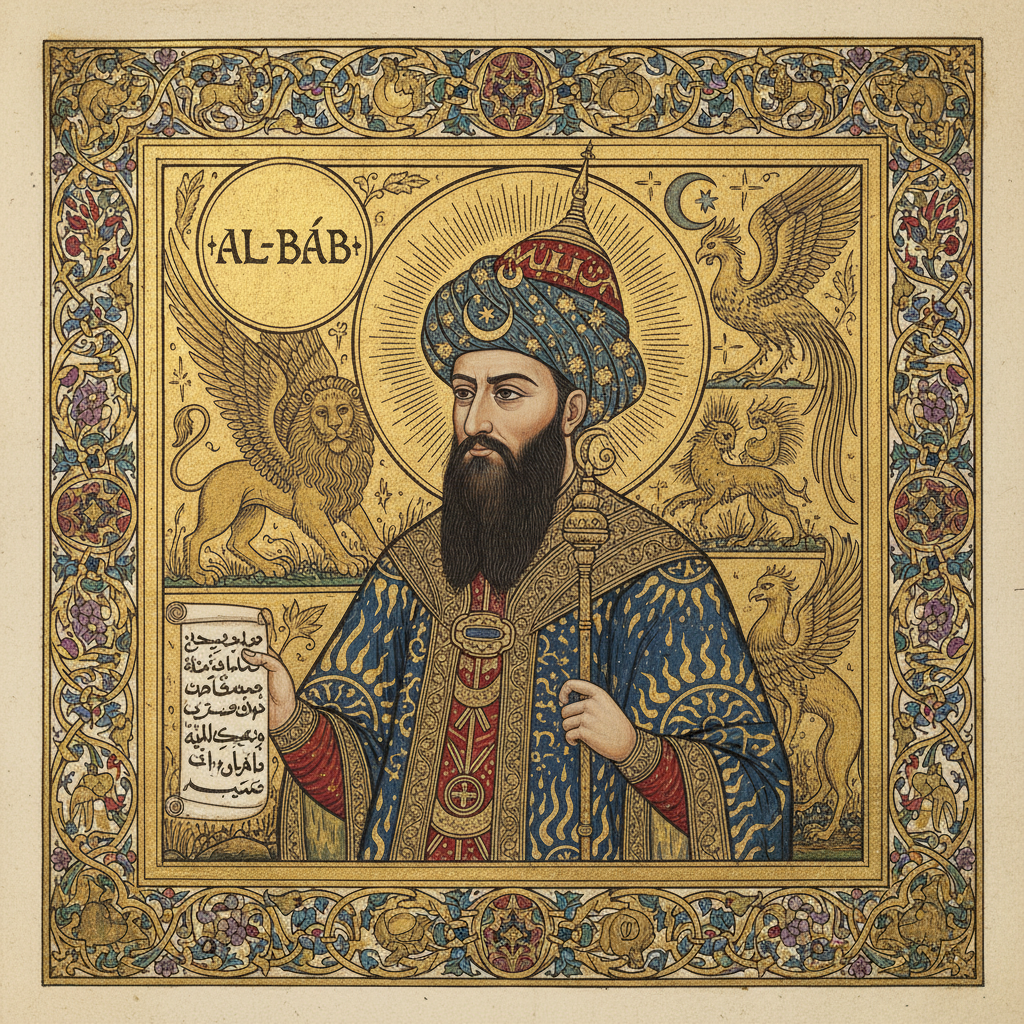
Lore: Siyyid ʻAlí-Muḥammad — the Báb, “the Gate” — was a young merchant from Shiraz, 25 years old, when he declared himself the Promised One of Islamic prophecy in 1844. He claimed to be not merely a prophet but the gateway (báb) to a far greater revelation to come: the one he called “Him Whom God shall make manifest.” He called his followers Bábís, wrote prolifically in a style his contemporaries found miraculous for its speed and volume, and watched his movement spread across Persia with the velocity of wildfire — and the violence to match.
The Persian authorities and Shi’a clergy combined to contain him. He was imprisoned in remote fortresses, his followers were massacred by the thousands, and his letters were intercepted. He was brought to Tabriz in 1848 for a theological examination by the clergy, who expected to expose him as an uneducated fraud. When they asked him who he was, he said: “I am, I am, I am the Promised One.” They condemned him to death. Two years later, on July 9, 1850, he was brought into a courtyard in Tabriz to be executed.
A regiment of 750 soldiers fired. The smoke cleared. The Báb was not there. The bullets had cut his ropes. Guards found him in the room where he had been imprisoned, finishing a conversation with his secretary. He was brought back to the courtyard, suspended again. A second regiment fired. This time he died.
He was 30 years old. He had been publicly active for six years. In those six years, he had produced volumes of scripture, inspired thousands of followers (tens of thousands of whom died for the faith), and designated the successor he never met. Bahá’u’lláh was already in prison in Tehran when the Báb was executed.
Parallel: John the Baptist (forerunner, executed to make way for the main revelation — the Báb explicitly cast himself in this role). Jesus (executed by the state at approximately the same age, leaving followers in disarray who then regrouped around a successor). The Báb’s execution is one of the most well-documented miracles in modern religious history: multiple eyewitness accounts, Western observers, a public spectacle in a crowded city. The British consul filed a report. Whatever happened in that courtyard, something did.
2 min read
The Shah's government and the Shi'a clergy, who viewed his claims as heresy and sedition
Nabil-i-Zarandi, *The Dawn-Breakers*; Peter Smith, *A Concise Encyclopedia of the Bahá'í Faith*; Shoghi Effendi, *God Passes By*