Combat Profile
Divine Assembly
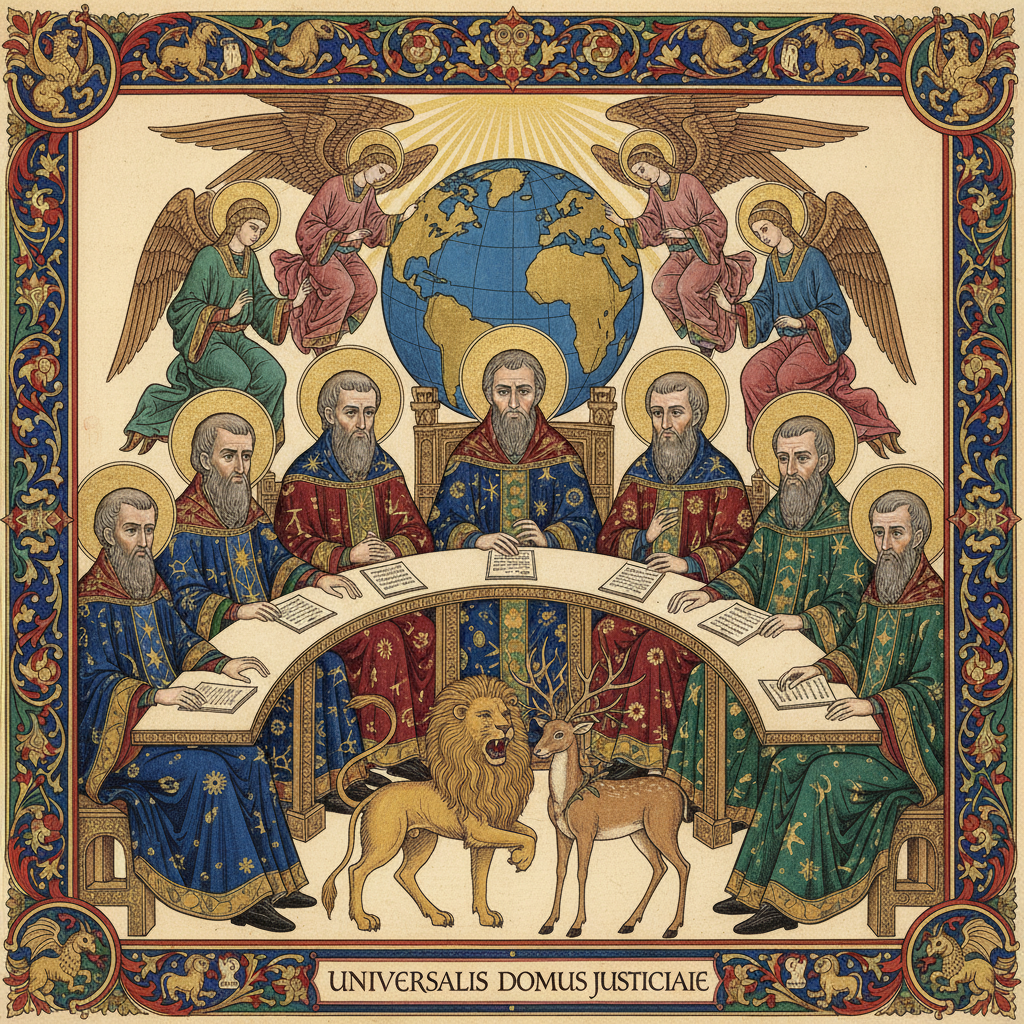
Gathers the faithful in sacred communion to renew collective purpose and align individual will with community destiny.
Luminous Unity
Radiates spiritual cohesion that strengthens bonds between believers and manifests divine order through shared governance.
Requires a functioning local community; weakened by isolation or persecution
“Blessed is he who, at the hour of dawn, centring his thoughts on God, occupied with His remembrance, and supplicating His forgiveness, directeth his steps to the Mashriqu’l-Adhkár and, entering therein, seateth himself in silence to listen to the verses of God.”
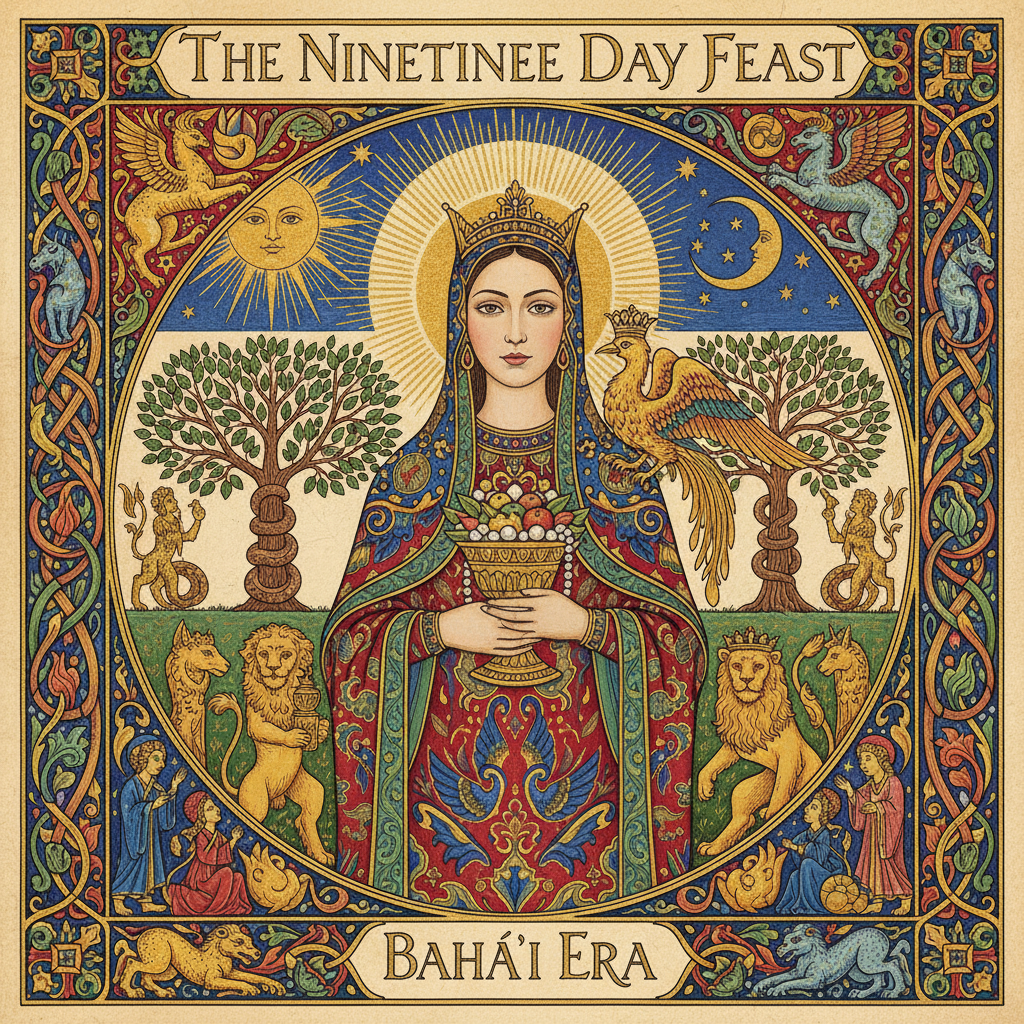
Lore: The Bahá’í calendar consists of 19 months of 19 days each (plus 4-5 intercalary days). Every 19 days, the local community gathers for the Nineteen-Day Feast. The Feast has three distinct and equally essential parts: devotional (prayers, meditation, and reading from the scriptures of any tradition), administrative (the community discusses practical matters — the local Spiritual Assembly reports to the community, and community members provide input), and social (fellowship, food, conversation).
This structure is deliberately tripartite: the Feast is not a worship service with some business attached, nor a business meeting with some prayer. Each third is given equal weight. The devotional part ensures the community remains connected to its spiritual foundation. The administrative part ensures the community governs itself with transparency and participation. The social part ensures that unity is embodied in actual human relationship, not merely proclaimed in principle.
The 19-day rhythm is not arbitrary — it emerges from the Bahá’í calendar, which in turn is linked to the Báb’s declaration on March 20, 1844 (Naw-Rúz, the Bahá’í new year, also the Persian new year). Communities that have maintained the Nineteen-Day Feast across persecution, diaspora, and displacement — including Iranian Bahá’í communities that held them secretly for decades — regard it as the heartbeat of the faith.
Parallel: The Sabbath (Jewish — the weekly anchor of communal and spiritual life). Sunday worship (Christian — the rhythm that structures the week). Friday prayers (Islamic — Jumu’ah, the communal gathering at the mosque). But the Nineteen-Day Feast differs from all of these in combining the devotional, the governmental, and the social as three explicitly equal components. You don’t vote on church doctrine at Sunday Mass. You don’t open the floor to community concerns after Friday prayers. The Feast builds community governance into the worship rhythm.
2 min read
Persecution (historically, gatherings were banned in Iran)
Bahá'u'lláh, *Kitáb-i-Aqdas*; 'Abdu'l-Bahá, on the meaning of the Feast; Smith, *A Concise Encyclopedia of the Bahá'í Faith*