Combat Profile
Divine Architecture
channels heavenly blueprints into earthly institutions, establishing structures that harmonize spiritual principles with administrative order
Custodian of Revelation
interprets divine teachings with unassailable authority, translating celestial wisdom into clear guidance that cannot be misconstrued
Mortal; died unexpectedly in London in 1957, leaving no successor and no will
“The world’s equilibrium hath been upset through the vibrating influence of this most great, this new World Order. Mankind’s ordered life hath been revolutionized through the agency of this unique, this wondrous System — the like of which mortal eyes have never witnessed.”
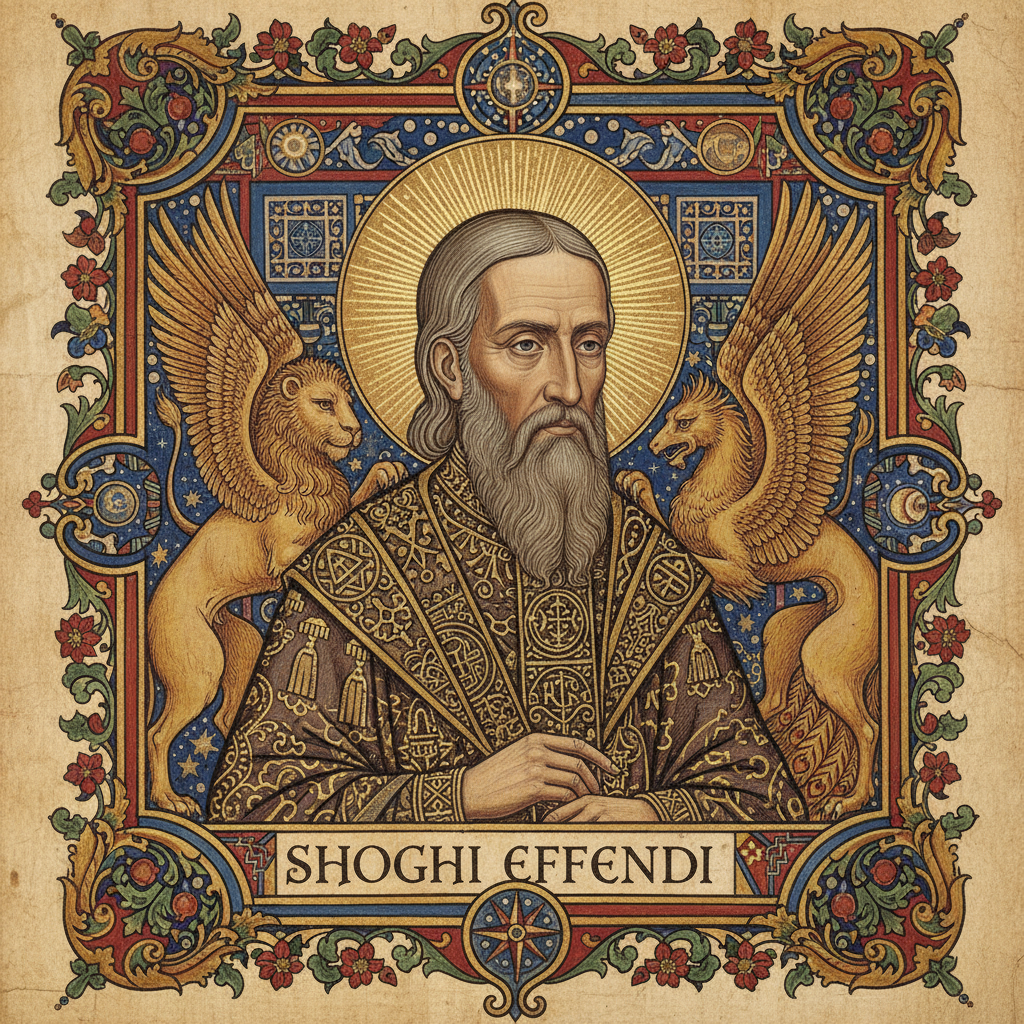
Lore: Shoghi Effendi Rabbani was ‘Abdu’l-Bahá’s eldest grandson, 24 years old and studying at Oxford when his grandfather died and left him, in his written Will and Testament, as the Guardian of the Bahá’í Faith — its sole authorized interpreter and the head of its administrative order. He did not seek the position. By his own account, he was devastated. He retreated to the Swiss Alps for months before he was able to return to Haifa and assume his duties.
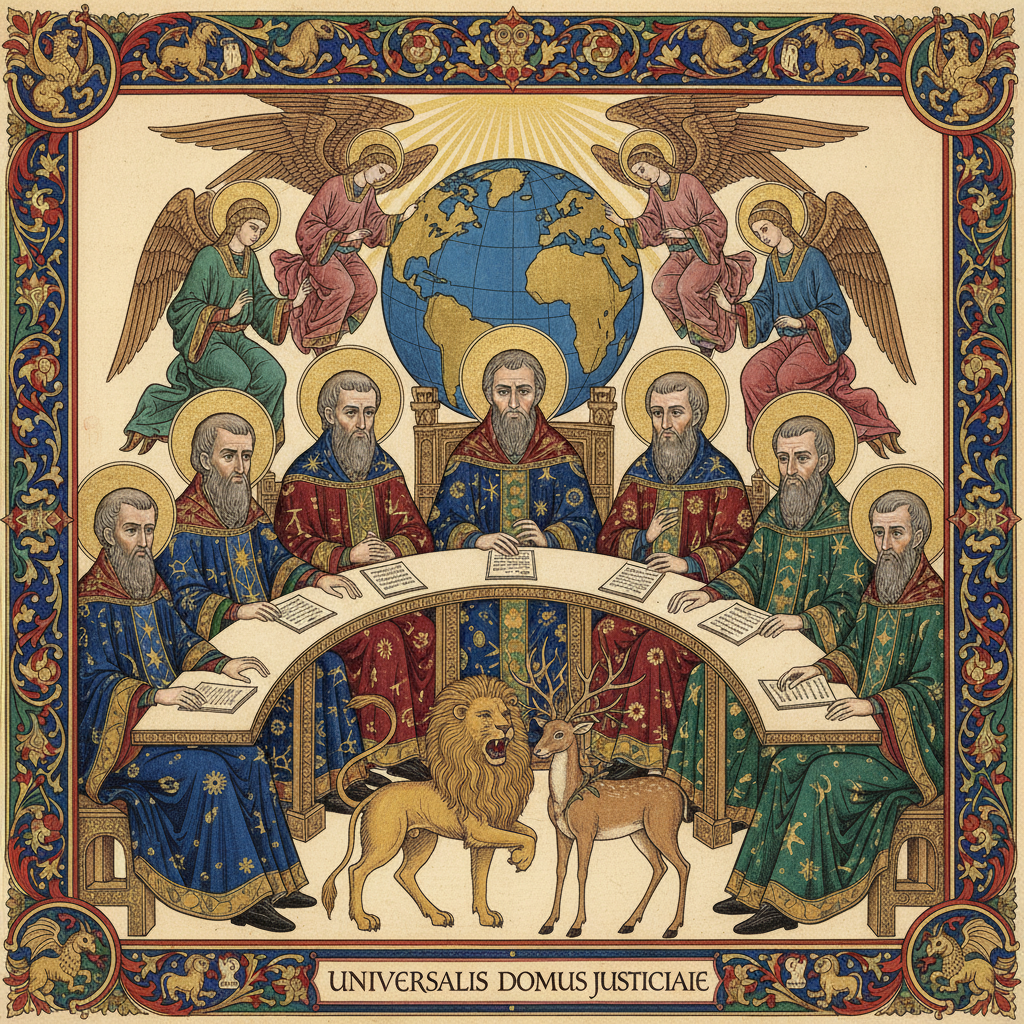
He spent the next 36 years transforming a Persian religious movement into a global institution. He personally translated the major works of Bahá’u’lláh and ‘Abdu’l-Bahá into English, establishing the authoritative English idiom of Bahá’í scripture. He wrote a massive history of the first century of the Faith (God Passes By). He designed the formal gardens that cascade down Mount Carmel toward the Shrine of the Báb — now a UNESCO World Heritage Site and one of the most photographed landscapes in the Middle East. He developed the administrative order: the system of Local Spiritual Assemblies, National Spiritual Assemblies, and the Universal House of Justice.
He died unexpectedly in London in 1957 from Asian flu, at age 60, leaving no will and no successor. The hands of the Cause — the senior figures he had appointed — determined that the institution of the Guardianship had ended with him and that authority would pass to the Universal House of Justice, which was elected in 1963.
Parallel: Paul of Tarsus (who took the teachings of a charismatic founder and built the institutional church that carried those teachings across the Roman Empire). Ezra the Scribe (who returned from Babylon, compiled and edited the scriptures, and rebuilt the religious institutions of a scattered people). Augustine (who built the theological framework that shaped centuries of Christian thought). Shoghi Effendi’s role was administrative and translative rather than prophetic — he did not claim to add new revelation, only to interpret and systematize what had already been revealed. But without him, the Bahá’í Faith might have remained a Persian sect. He is the reason it is a world religion.
2 min read
Covenant-breakers within the community who challenged his authority; the sheer administrative complexity of building a global institution from scratch
Shoghi Effendi, *God Passes By*; *The World Order of Bahá'u'lláh*; *The Advent of Divine Justice*; Ruhiyyih Rabbani, *The Priceless Pearl*