Combat Profile
Divine Continuity
unifies all prophetic traditions into a coherent theological framework, revealing that each messenger advanced humanity's spiritual understanding according to its capacity
Eternal Pedagogy
radiates the principle that divine guidance is progressive and purposeful, gradually elevating human consciousness across civilizations and ages
Requires followers to give up the claim that *their* tradition is the final, exclusive truth
“There can be no doubt whatever that the peoples of the world, of whatever race or religion, derive their inspiration from one heavenly Source, and are the subjects of one God.” — Bahá’u’lláh
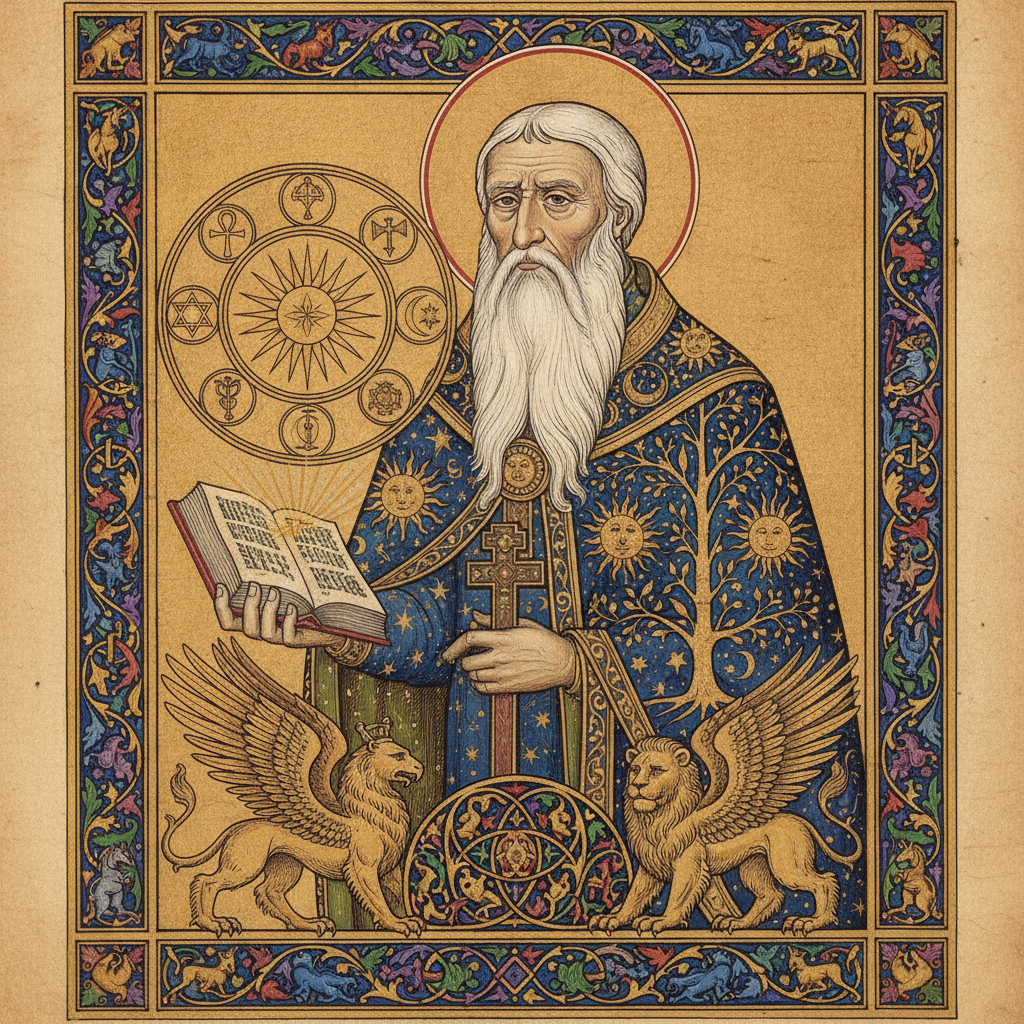
Lore: The doctrine of Progressive Revelation is the theological engine of the Bahá’í Faith. It holds that God has sent a succession of divine educators — the Manifestations of God — throughout human history, each revealing as much of divine truth as the people of that time and place could receive. Zoroaster revealed the cosmic war between good and evil when humanity needed a moral framework. Moses revealed divine law when a people needed structure. The Buddha revealed the nature of suffering and liberation when humanity was ready for that insight. Jesus revealed the primacy of love. Muhammad revealed the unity of God and the brotherhood of the faithful. The Báb and Bahá’u’lláh revealed the unity of humanity and of all religions — the insight required for a global civilization. In Hindu tradition, Krishna had already revealed many of these truths in earlier ages.
Each revelation supersedes the previous on social law (dietary codes, rules of worship, specific legal structures), because those were adapted to their age. But the spiritual truths — love, justice, service, the oneness of God — are consistent across all of them. The differences between religions are not contradictions. They are the same teacher adapting the lesson to the age of the student.
This has a startling implication: the Bahá’í Faith does not merely tolerate other religions. It validates them. Not as preliminary, inferior approximations, but as genuine divine revelation — just not the latest divine revelation. A Bahá’í does not look at a devout Buddhist and see a misguided soul. They see a follower of an authentic Manifestation of God who may not yet know that the revelation continued.
Parallel: THIS IS THE THESIS OF THIS BESTIARY. Every entry in this compendium documents the same truth the Bahá’ís made their founding doctrine: that the same God, the same divine reality, speaks through every tradition. The archetypes of the hero, the prophet, the cosmic mother, the dying-and-rising savior, the trickster, the guardian of the gate — they appear in every culture because they reflect universal truths about the human condition and its relationship to the divine. The Bahá’ís made this the founding claim of their religion. The Bestiary demonstrates it empirically, entity by entity, tradition by tradition.
2 min read
Religious exclusivism; the claim that revelation ended with any single prophet
Bahá'u'lláh, *Kitáb-i-Íqán* (The Book of Certitude); 'Abdu'l-Bahá, *Some Answered Questions*; Moojan Momen, *The Bahá'í Faith: A Short Introduction*