Combat Profile
Silver Thread
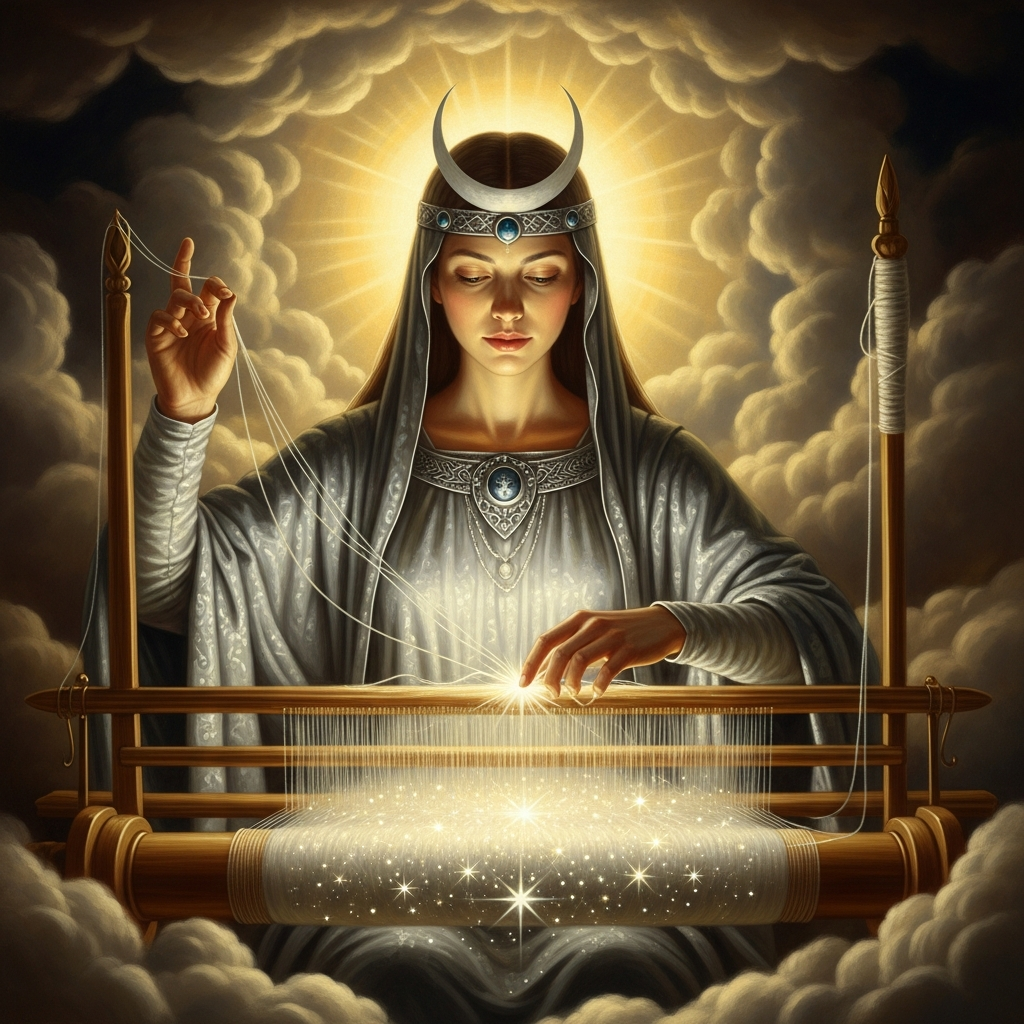
Kuutar weaves a thread of moonlight that, given as a gift, enchants any garment it is sewn into; the wearer cannot be seen by enemies during the night and gains the moon's calm
Lunar Companion
As long as the moon shines, Kuutar's blessing protects travelers from being lost at night, and her presence calms anger and grief in those who look upon her
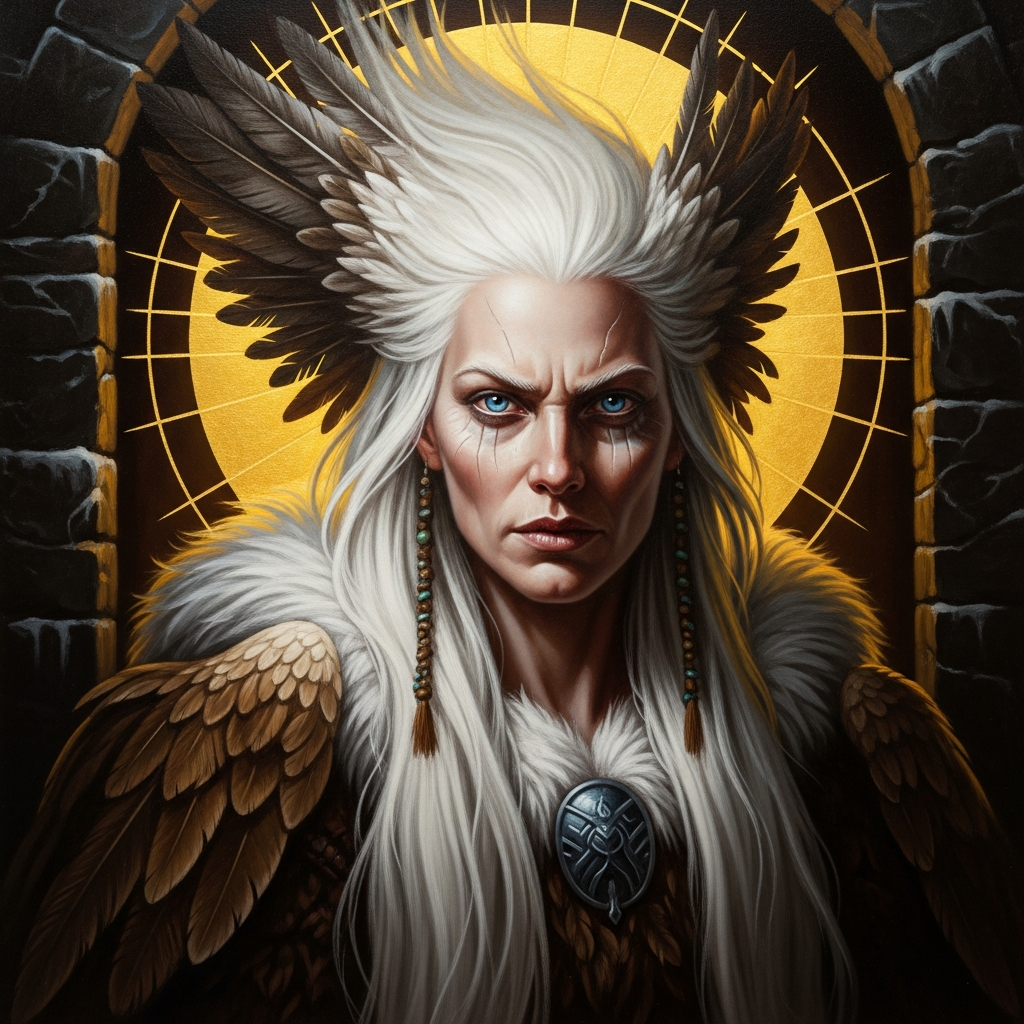
Kuutar is the maiden of the moon — a beautiful young goddess who sits on the moon and weaves silver thread, decorating the night with her ornaments. She is paired with Päivätär, the maiden of the sun, and together they are the female personifications of the celestial lights. In one of the most famous Kalevala episodes, Louhi steals both the Sun and the Moon and locks them inside a mountain in Pohjola; the world plunges into darkness until Väinämöinen and Ilmarinen, after great labor, force their release.
Kuutar’s primary mythological role is in this stolen-moon narrative, but she is also invoked in folk-magic spells for beauty, weaving, and women’s work — her silver thread is the prototype for all fine weaving. She is sometimes called the daughter of Ukko or of the air-maiden, depending on the source.
Biblical Parallels: Kuutar has no direct biblical parallel; Hebrew religion firmly rejects moon-worship (Deuteronomy 4:19) precisely because surrounding cultures elevated the moon (Mesopotamian Sin/Nanna, Canaanite Yarikh) to divine status. The “lesser light to govern the night” in Genesis 1:16 is deliberately depersonalized.
Cross-Tradition: Parallels Greek Selene, Roman Luna, Norse Sól (though Norse Sól is solar), Lithuanian Mėnulis, and Slavic Mesyats. The female-lunar / male-solar pairing of Finnish Kuutar/Päivätär (where both are female) is unusual; in most Indo-European traditions one is male.
1 min read