Combat Profile
Luminous Gnosis
reveals hidden cosmic truths and liberates fragments of divine light trapped within matter and souls
Radiant Awakening
all allies gain increased clarity and resistance to spiritual deception through proximity to transcendent wisdom
Has no physical body and therefore cannot act directly in the material world except through teaching and awakening
“Jesus the Splendor came to Adam, who was sunk in the sleep of death, and woke him, and showed him the particles of light trapped in his body, and taught him the way of liberation.”
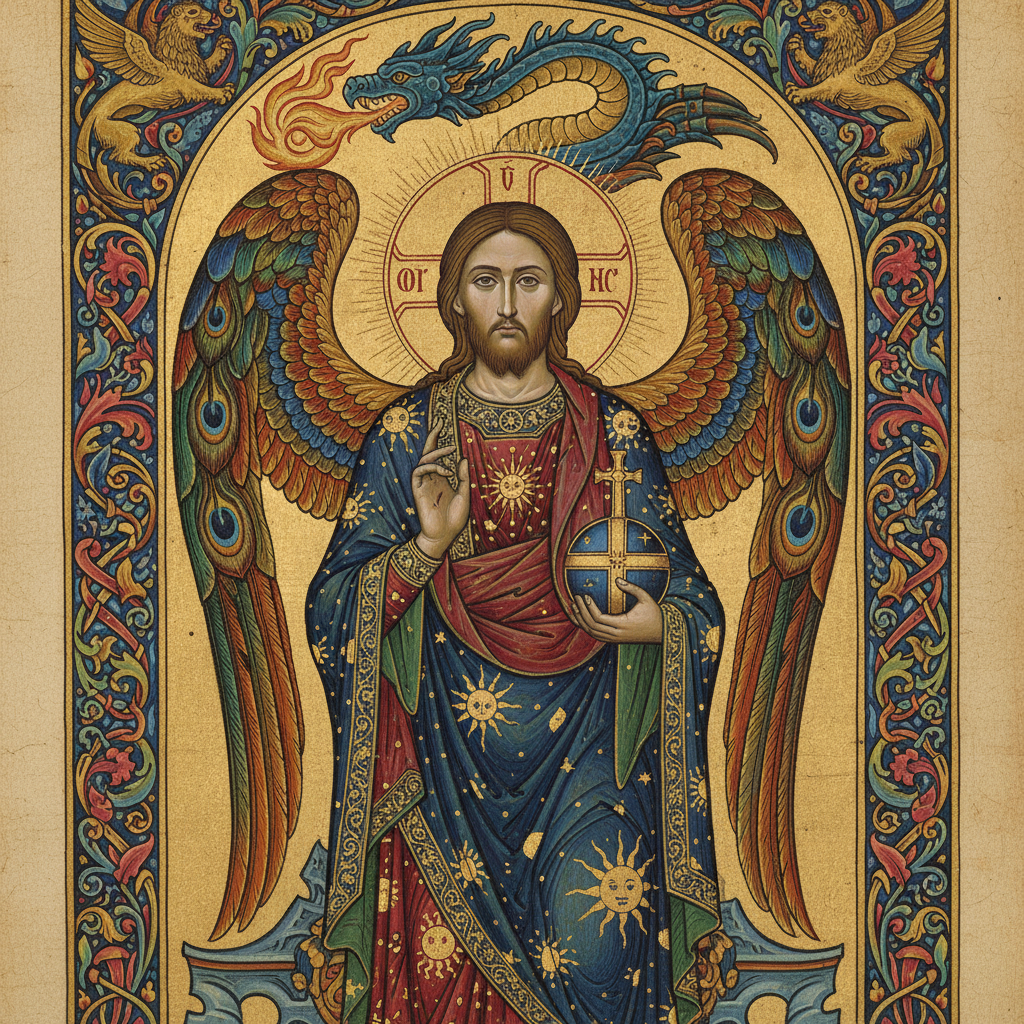
Lore: Jesus the Splendor (Isa al-Ziwa) is Mani’s version of Jesus Christ — and one of the most radical reinterpretations in religious history (Living Gospel). In Manichaean theology, Jesus was purely spiritual, a being of light. He never had a body. He never ate, drank, suffered, or died. The crucifixion was an illusion — a phantom event in which Darkness thought it was killing him but was actually attacking an empty image (Kephalaia). Jesus the Splendor could not be killed. There was nothing physical to kill.
His primary act was not the crucifixion but the awakening of Adam (BeDuhn, The Manichaean Body). In the Manichaean Genesis, Adam was created by the Archons as a prison for trapped light particles. He lay unconscious in the Garden of Eden, unaware that his body was a cage and his soul a fragment of the divine. Jesus the Splendor descended and woke him. He showed Adam the light particles trapped in his body and in all living things. He taught the gnosis needed to begin liberation. The serpent in the Garden was not a tempter — it was a messenger of light. The forbidden fruit was knowledge of one’s true nature (Living Gospel).
Parallel: Jesus the Splendor is a Docetic Christ — “Docetism” (from Greek dokein, “to seem”) is the belief that Christ’s physical body was an illusion. This was declared heresy by the early Church but persisted in Gnostic and Manichaean circles for centuries. The Manichaean Jesus also parallels the Islamic Jesus (Isa in the Quran), who also did not die on the cross — “it was made to appear so to them” (Quran 4:157). The idea that Jesus was purely spiritual and the crucifixion was an illusion represents an independent theological tradition that ran parallel to orthodox Christianity for centuries before being suppressed.
2 min read
Ignorance -- the only thing that defeats Jesus the Splendor is the refusal of souls to wake up
BeDuhn, *The Manichaean Body*; Gardner & Lieu, *Manichaean Texts from the Roman Empire*; the Kephalaia