Combat Profile
Separation of Realms
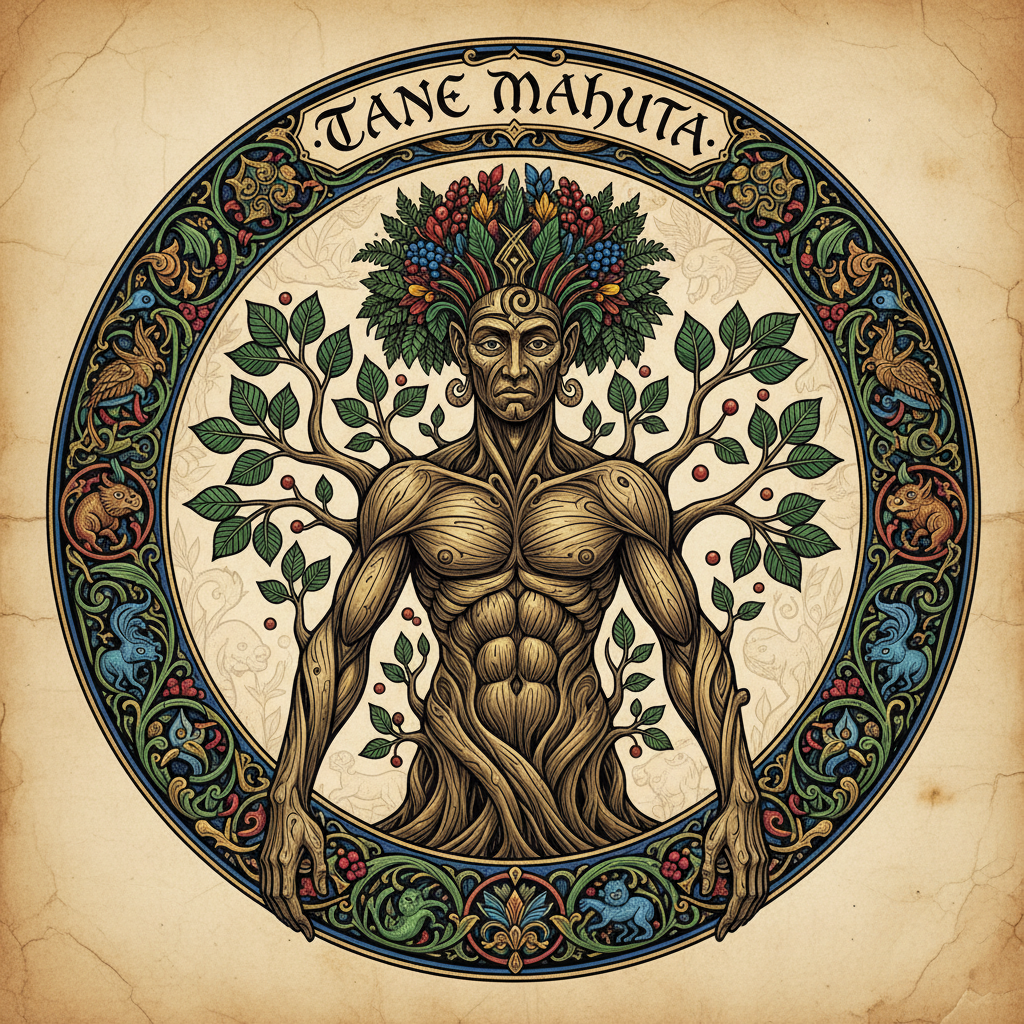
Tāne-mahuta forces apart the boundaries between sky and earth, creating vast chasms or reuniting sundered domains to reshape the cosmic order.
Creator's Radiance
All living things flourish in Tāne-mahuta's presence; forests grow wild and vibrant, birds sing with celestial clarity, and light perpetually breaks through darkness.
His greatest achievement (separating his parents) created light but destroyed their love. His greatest creation (the first woman) became the origin of death. Everything Tāne builds carries the seed of its own tragedy
“Tāne placed his head upon his mother Papa, and his feet against his father Rangi, and he strained, and pushed, and the light rushed in, and the world began.”
Lore: Tāne-mahuta is the most important and most tragic figure in Māori mythology (Grey, Polynesian Mythology). He is the god who did the thing — physically pushed heaven and earth apart, brought light into the world, created humanity, retrieved the three baskets of knowledge (ngā kete o te wānanga) from the highest heaven (Best, Maori Religion and Mythology). He is the achiever, the builder, the civilizer. Every one of his achievements carries catastrophic consequences.
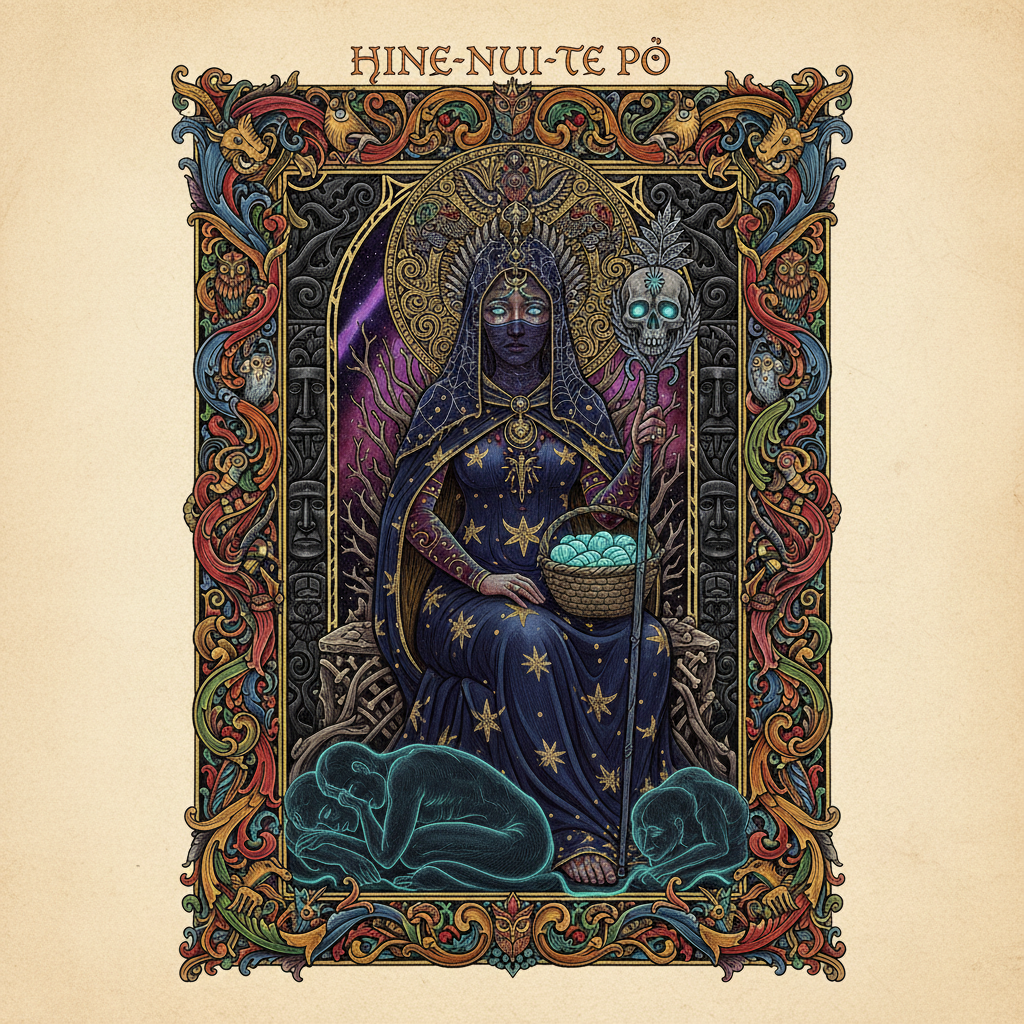
Separating Rangi and Papa was necessary. The children were suffocating between their parents’ bodies. The cost was the permanent grief of two beings who loved each other. Tāne gave the world light, but the price was his parents’ eternal mourning. He then shaped the first woman, Hine-ahu-one (“earth-formed maiden”), from the red clay of Kurawaka, breathing life into her nostrils. She was beautiful. He married her. She bore him a daughter, Hine-tītama (“the dawn maiden”). Tāne married her too. Hine-tītama did not know that Tāne was both her husband and her father’s father. When she asked who her father was — and was told, or discovered, the truth — she was devastated. She fled the world of light, descending to Rarohenga (the underworld), and declared: “From now on, I will remain in the darkness to catch our children as they descend.” She became Hine-nui-te-pō, the Great Woman of the Night, goddess of death. Death exists because Tāne’s creation could not bear the truth of its own origin.
Parallel: The creation of a woman from earth appears in Genesis (Adam from dust, Eve from Adam’s rib) and in Prometheus myth (Prometheus shapes humanity from clay). But neither Genesis nor Greek myth includes the incest-discovery-flight sequence that makes the Māori version uniquely devastating. The closest parallel is the Oedipus cycle (unknowing incest, discovery, self-punishment), but Oedipus blinds himself in horror while Hine chooses her transformation. She does not destroy herself — she becomes something greater. She becomes the guardian of the dead, the one who catches humanity as it falls. Tāne’s tragedy is that he created both life and the reason life must end.
2 min read
Whiro (his eternal adversary, the lord of darkness who opposed Tāne's ascent to the heavens); Hine-nui-te-pō (his own daughter, who became the boundary he cannot cross)
Grey, *Polynesian Mythology*; Best, *Maori Religion and Mythology*; Orbell, *Illustrated Encyclopedia*; Te Ara -- "Tāne"