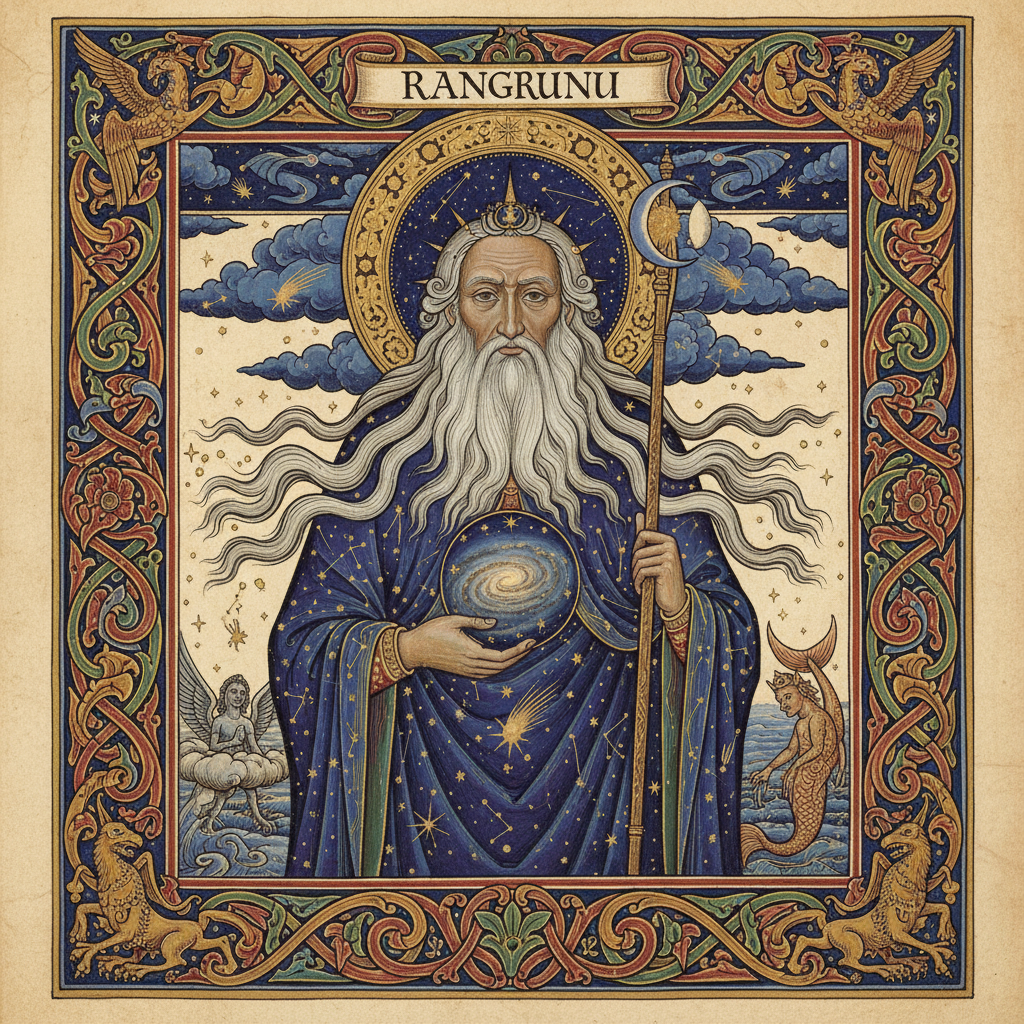
Combat Profile
Rangi's Weeping
Ranginui summons torrential rain and mist that obscure all vision and drench the land, expressing his endless grief at separation from Papatūānuku
Sky Father's Domain
Ranginui controls all weather phenomena and his sorrow manifests as perpetual moisture; his presence brings both nourishment and melancholy to the world
Cannot move. Rangi was pushed upward by his own children and fixed in place. He is the most powerful being in the cosmos and he can do nothing but weep
“And Ranginui, the Sky Father, wept long, and his tears flowed ceaselessly, and the moisture of his grief fell as rain upon the breast of Papatūānuku.”
Lore: Ranginui is the sky. Not the god of the sky — the sky itself, pressed eternally upward, held apart from the earth by the forests that are his son Tāne’s domain. In the beginning, Rangi and Papa lay locked together, and between their bodies, in the crushing darkness, their children were born. Tāne, Tū, Tangaroa, Rongo, Haumia, Tāwhirimātea — they grew unable to stand, unable to see, unable to breathe. They debated. Most agreed: the parents must be separated. Only Tāwhirimātea refused, arguing that the parents’ love should not be broken.
The separation was violence born from necessity. Tāne braced his back against Papa and pushed upward with his legs (Grey, Polynesian Mythology). Rangi was torn from his wife and thrust into the heights. The light flooded in. The world began. And Rangi wept. He has wept ever since. Every rain is his grief. Every mist is his breath reaching down toward the wife he can see but never touch. The Māori understanding of weather is not meteorological. It is emotional (Barlow, Tikanga Whakaaro). The sky grieves. The earth grieves back. The mist that rises from the valleys at dawn is Papatūānuku’s breath, reaching up toward Rangi. They will never touch again.
Parallel: The sky-earth separation myth exists in nearly every culture: Nut and Geb (Egyptian, with Shu holding them apart), Uranus and Gaia (Greek, with Kronos castrating his father to separate them), An and Ki (Sumerian). But nowhere else is the separation this personal. In the Egyptian version, Shu simply holds Nut and Geb apart — it is structural, architectural. In the Greek version, Kronos castrates Uranus — it is violent and political. In the Māori version, children push their father away from their mother, and the father weeps. The rain is tears. The mist is longing. The entire weather system of New Zealand is a love story. No other culture built its meteorology on grief.
2 min read
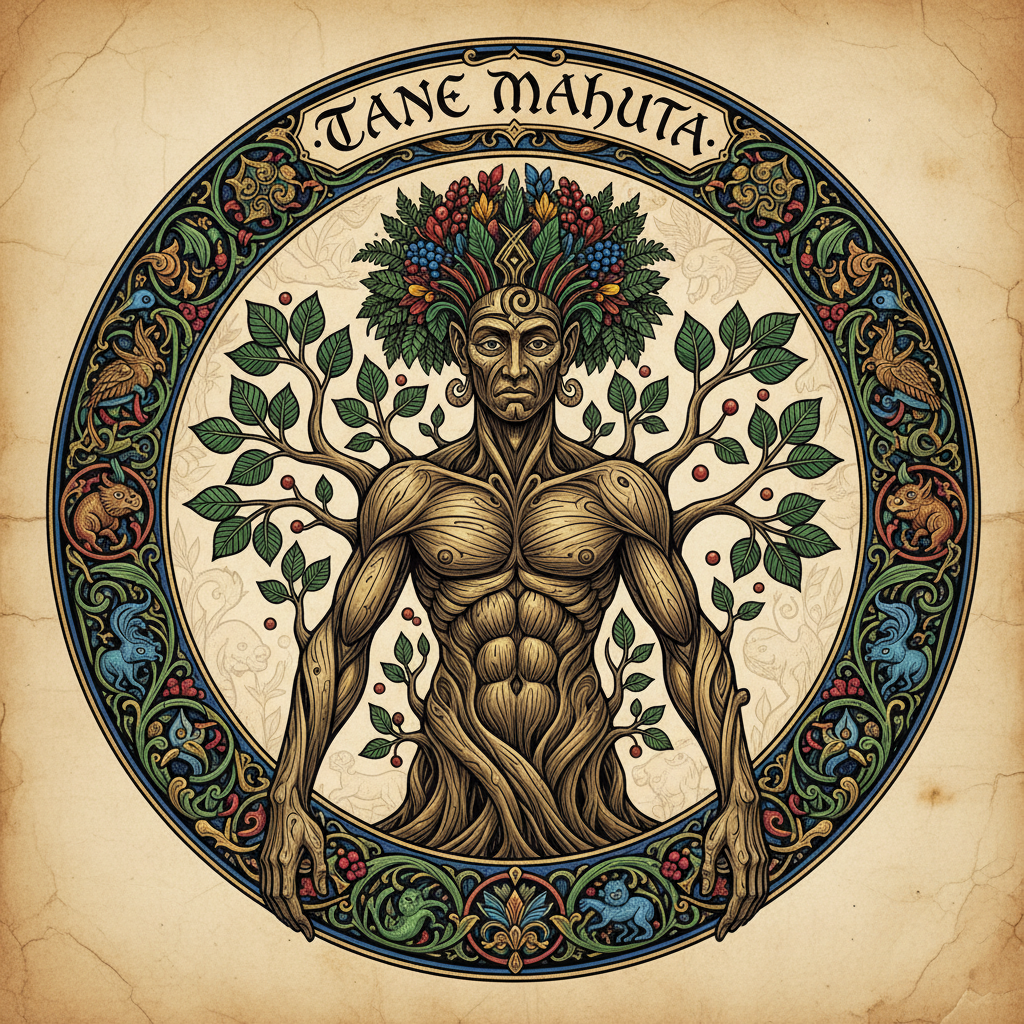
Tāne-mahuta (his own son, who pushed him away from Papa and holds him there with the forests)
Grey, *Polynesian Mythology*; Best, *Maori Religion and Mythology*; Te Ara -- "Ranginui" by Te Ahukaramū Charles Royal