Combat Profile
Whakapapa-of-Warriors
Grant all allies +40 ATK and immunity to fear for 3 turns, honoring the ancestral bloodline of humanity
Tūmatauenga's Fury
Increase damage dealt by 25% when health is below 50%, channeling primal survival instinct and warrior courage
Rage. Tū's response to every problem is confrontation. He stood alone against Tāwhirimātea's storms when all his brothers cowered, but his courage is inseparable from his fury. Humans inherit both
“Tū alone stood upright when the storm came. His brothers fled. And Tū’s anger burned, and he consumed the children of his cowardly brothers, and that is why man eats all things.”
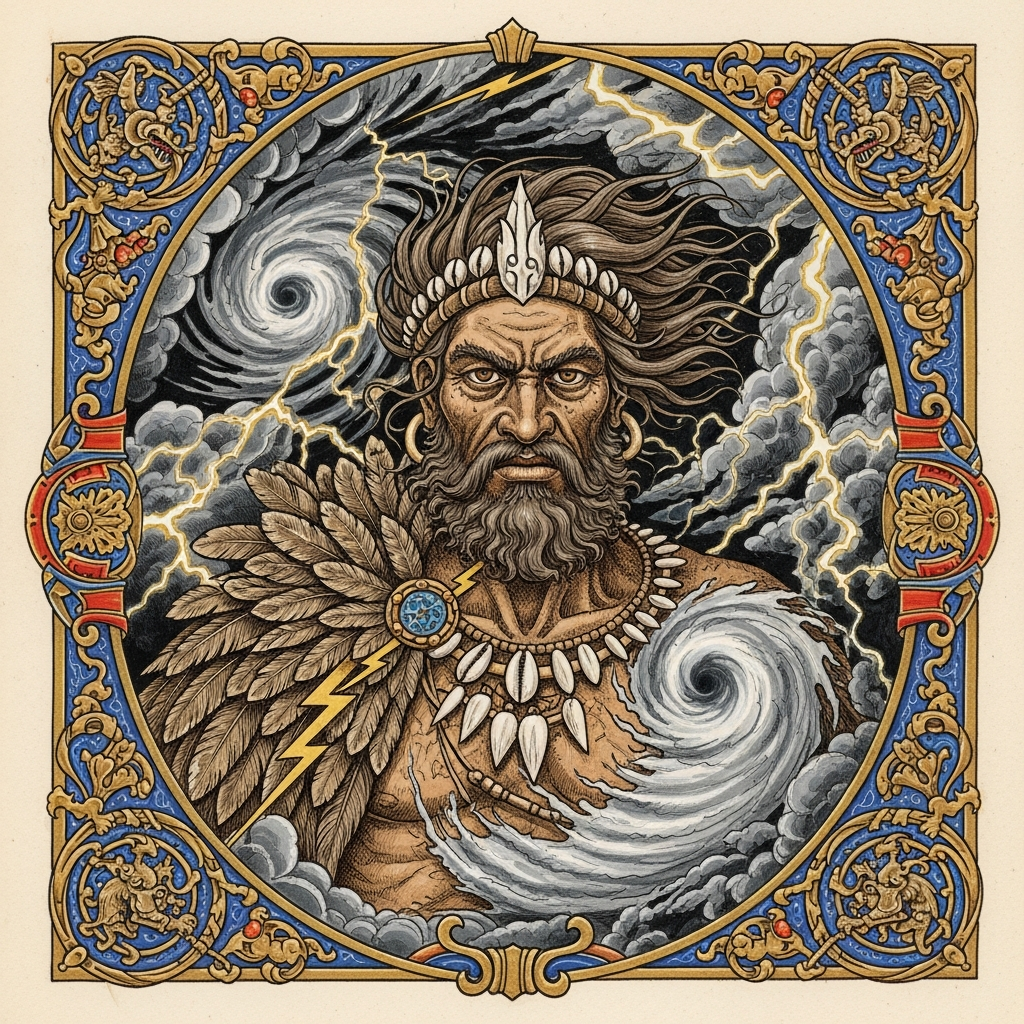
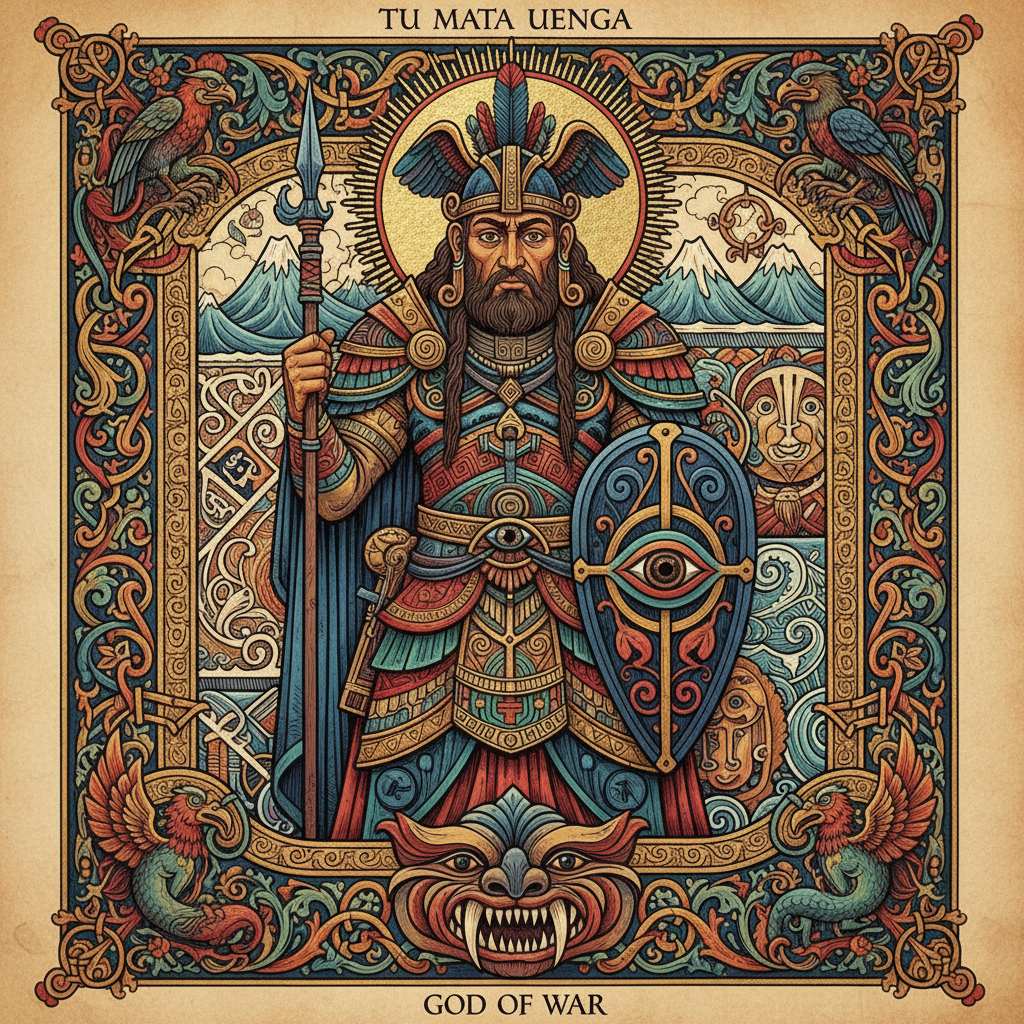
Lore: Tū-mata-uenga (“Tū of the angry face”) is the god of war, and in the Māori tradition he is also the ancestor of humanity (Orbell, Illustrated Encyclopedia). This is theological honesty of an extraordinary kind. Humans are not descended from the god of wisdom or the god of love or the god of creation. Humans descend from the god of war (Grey, Polynesian Mythology). The tradition looks at human behavior — the hunting, the fighting, the consuming of everything around us — and says: yes, this is what we are. We are Tū’s children. We inherited his courage and his rage.
The defining moment of Tū’s mythology is the war with Tāwhirimātea. After Tāne separated Rangi and Papa, Tāwhirimātea — who had argued against the separation — erupted in fury. He tore out his own eyes and hurled them into the sky (they became the stars Mere and Pipiri). Then he unleashed his winds against his siblings. The response was universal cowardice: Tangaroa fled into the depths, Rongo and Haumia burrowed into Papa’s body to hide, even Tāne’s great forests were shattered and scattered by the gales. Only Tū stood. Only Tū fought back. He did not defeat the storms — no one defeats the storms — but he survived them. When the winds subsided, Tū turned his wrath on his brothers. They had abandoned him. They had hidden while he fought alone. So he hunted them down — not the gods themselves but their children, their domains. He caught and ate fish (Tangaroa’s children), snared birds (Tāne’s children), dug up roots (Haumia’s children), harvested crops (Rongo’s children). This is why humans eat everything. This is why humans dominate the natural world. Tū conquered his brothers’ domains because his brothers were cowards.
Parallel: Compare Ares (Greek god of war) — despised by the other Olympians, representing war’s brutality without its honor. Tū is nothing like Ares. Tū is honored. His courage is the foundational virtue of Māori culture. The haka — the war dance performed before battle, before rugby matches, at funerals, at weddings — invokes Tū’s spirit. Compare also Mars (Roman), who was the father of Romulus and Remus and thus the ancestor of all Romans. The parallel is exact: both Rome and the Māori trace their ancestry to a war god, and both cultures built martial courage into their foundational identity. But Tū’s story adds something Rome’s doesn’t: the reason for the anger. Tū fights because his brothers abandoned him. His rage is justified. His violence is earned. Humans are angry because the universe gave us reason to be.
2 min read
Tāwhirimātea (the storm god who attacked him and whom he could not defeat -- the storms still rage, and Tū still fights them)
Grey, *Polynesian Mythology*; Best, *Maori Religion and Mythology*; Te Ara -- "Tūmatauenga"