Combat Profile
Genealogical Resonance
reveals the interconnected lineage of all beings across generations, binding past, present, and future into unified understanding
Foundation of All Knowledge
all Māori existence, identity, and relationships flow from and are sustained by the eternal structure of whakapapa itself
Whakapapa depends on memory. The genealogical knowledge was held by *tohunga whakapapa* (genealogy experts) who could recite hundreds of generations. Colonial disruption -- land confiscation, forced assimilation, suppression of te reo Māori -- damaged these chains of transmission. What was lost is incalculable
“Ko Hikurangi te maunga, ko Waiapu te awa, ko Horouta te waka, ko Ngāti Porou te iwi.” (“Hikurangi is my mountain, Waiapu is my river, Horouta is my canoe, Ngāti Porou is my tribe.”)
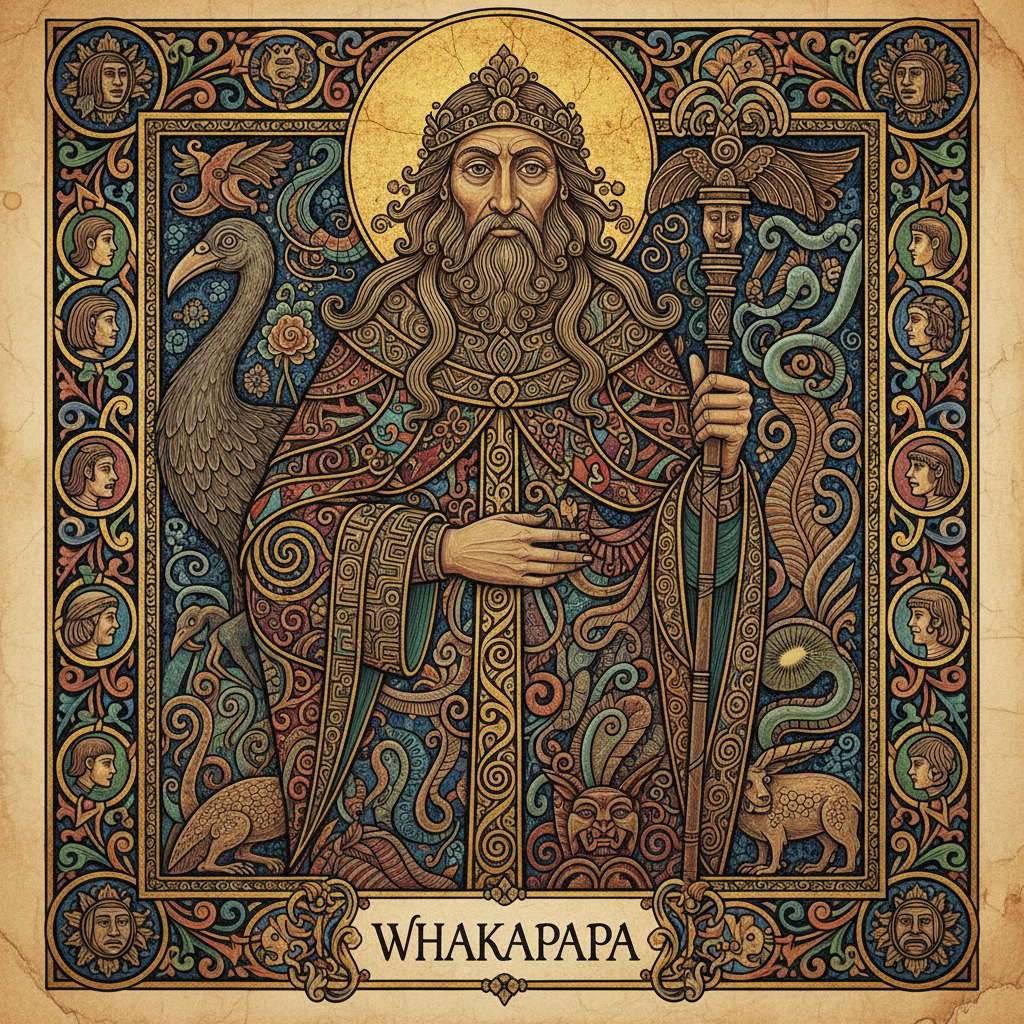
Lore: Whakapapa is not an entity. Not a god, a hero, or a monster. It is something more fundamental: the structure of Māori reality. Whakapapa is genealogy, but calling it “genealogy” is like calling the internet “a phone book.” It connects every Māori person to every other Māori person, to the gods, to the land, to the sea, to the canoes that carried their ancestors across the Pacific, and to the primordial darkness from which all things emerged. It is simultaneously a system of identity, of law, of land tenure, of knowledge organization, and a way of understanding the cosmos.
In Māori tikanga, you introduce yourself through your whakapapa (Mead, Tikanga Māori). You state your mountain, your river, your canoe, your tribe (iwi), your sub-tribe (hapū), your ancestral meeting house (marae). You place yourself in relationship to the land before placing yourself in relationship to other people. This is not metaphor. The mountain is your ancestor. The river is your ancestor. You do not merely live near the mountain — you are descended from it, through a chain of named individuals stretching back to the gods who shaped the world (Royal, Te Ao Mārama).
The legal and political implications are profound. Māori land claims are genealogical claims. When iwi present claims to the Waitangi Tribunal, they present whakapapa — demonstrating that the land in question is an ancestor, that the people making the claim are related to the land, and that confiscation was not just theft of property but severance of a familial relationship (Treaty of Waitangi, 1840, as interpreted through contemporary jurisprudence). You cannot sell your grandmother. You cannot confiscate a relationship. The entire Māori legal framework for land restitution rests on whakapapa.
Parallel: The closest parallel is the Aboriginal Australian concept of the Dreamtime (covered in Dreamtime.md), where the land is also understood as ancestral, shaped by beings whose tracks and actions created the features of the landscape. But there is a critical difference: the Dreamtime is mythic time, a parallel dimension that co-exists with the present. Whakapapa is genealogical time — it is specific, named, sequential. You can trace the chain. You can count the generations. The Dreamtime says: the land is sacred because sacred beings created it. Whakapapa says: the land is family because I can name every ancestor between myself and the god who shaped it, and there are 47 of them, and here are their names. Compare also the “begats” of Genesis (Adam begat Seth, Seth begat Enosh, etc.) — the same impulse to connect the present to the origin through named descent. But the biblical genealogies connect people to people. Whakapapa connects people to everything.
2 min read
Colonialism nearly destroyed whakapapa knowledge. The revitalization of te reo Māori and Māori cultural practice is, among many other things, a reconstruction of broken genealogies
Mead, *Tikanga Māori*; Te Ara -- "Whakapapa"; Royal, *Te Ao Mārama*; Barlow, *Tikanga Whakaaro*