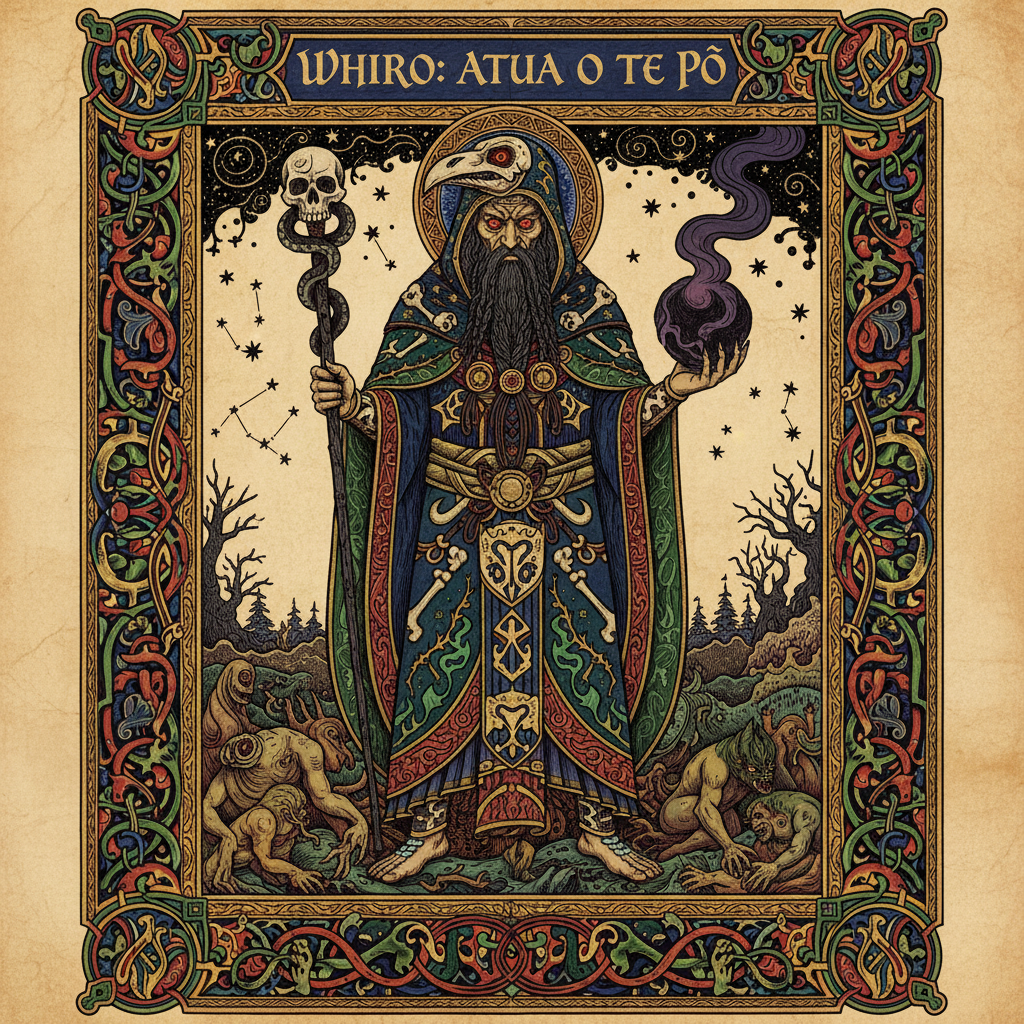
Combat Profile
Whakapupuranga
Whiro unleashes a catastrophic wave of pestilence and corruption that ravages the life force of all who oppose him, leaving only decay in its wake.
Lord of Darkness
All shadows bend to Whiro's will, granting him immunity to light-based attacks and causing his presence to naturally enfeeble and sicken those nearby.
Defeated by Tāne in the ascent to the heavens. Whiro could not reach the highest realm and was cast down. His power is real but bounded -- he operates from below, through agents, through sickness
“Whiro dwells below, and his hatred feeds on the bodies of the dead. Every sickness that strikes, every plague that spreads, is Whiro reaching upward.”
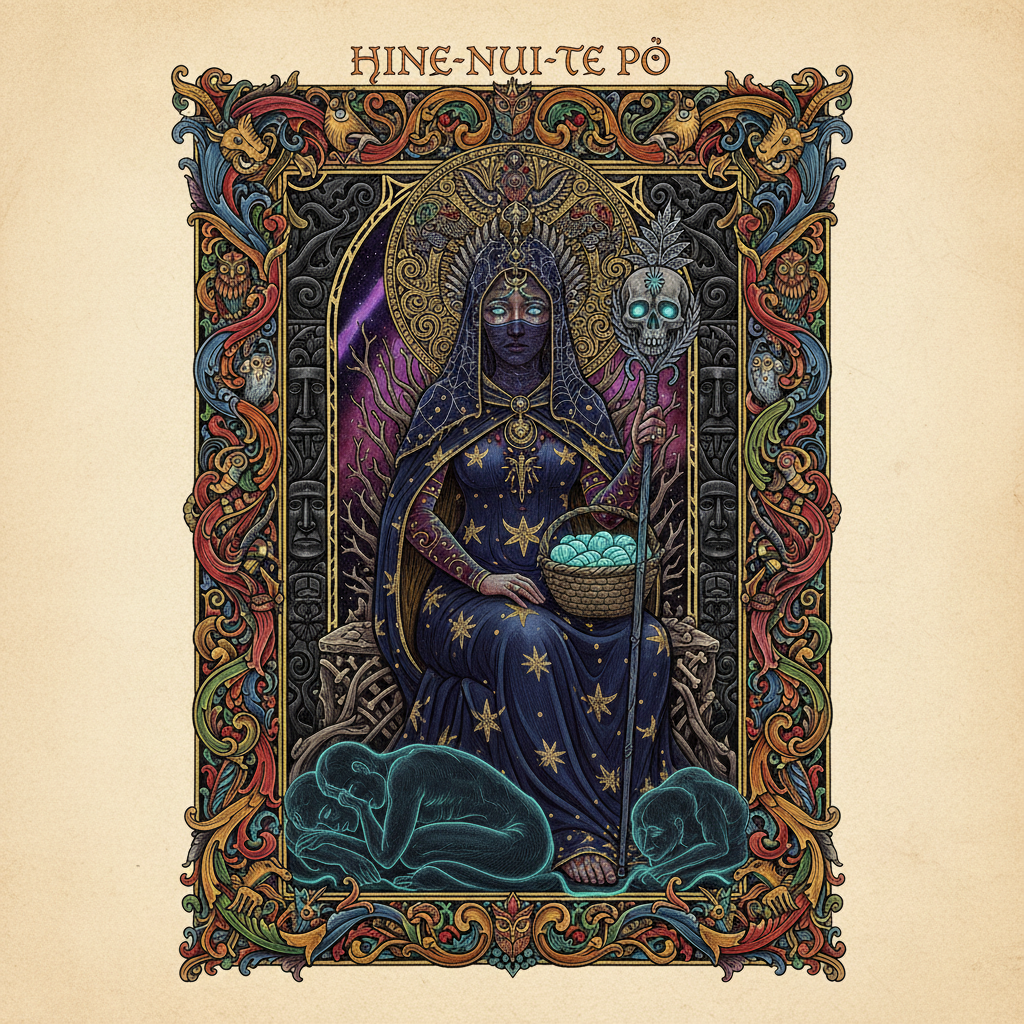
Lore: Whiro is the Māori Satan — and also not, because the comparison, while structurally useful, flattens a more nuanced figure. Whiro is the personification of darkness, evil, and disease. He dwells in the underworld (not to be confused with Hine-nui-te-pō’s domain, the realm of the dead — Whiro’s darkness is something else, something hostile). His origin is a competition: both Whiro and Tāne sought to ascend through the layered heavens to reach the highest realm and the three baskets of knowledge. Tāne chose the outer path, the path of light. Whiro chose the inner path, the path of darkness. Tāne succeeded. Whiro failed — and in his failure became what he is, the enemy below, the source of all disease and evil that reaches into the world of the living.
Whiro’s power is real but indirect. He does not walk the earth. He sends his servants upward — insects, illness, decay. Every disease is Whiro’s agent. Every death feeds him, because the body of the dead, if it reaches the underworld, adds to his strength. This is one of the traditional reasons for cremation in some Māori practices: fire destroys the body before Whiro can claim it, sending the essence upward as smoke rather than downward as decay.
Parallel: The structural parallel to Satan is strong: a powerful being who competed with a brighter figure (Tāne/God), lost, was cast into the underworld, and now sends evil upward to afflict humanity. The parallel to Angra Mainyu (Zoroastrian) is equally strong — the dark twin who opposes the light twin, whose domain is disease and corruption. But Whiro lacks the tragic grandeur of Milton’s Satan or the cosmic dualism of Angra Mainyu. He is more like a force of entropy, a gravitational pull toward decay. He does not tempt. He does not seduce. He rots. He sickens. He is the mold on the bread, the infection in the wound, the wasting illness that takes the strong. In a mythology full of complex motivations, Whiro is the one figure who is simply evil — and his existence makes the rest of the mythology’s moral complexity possible by giving it a baseline.
2 min read
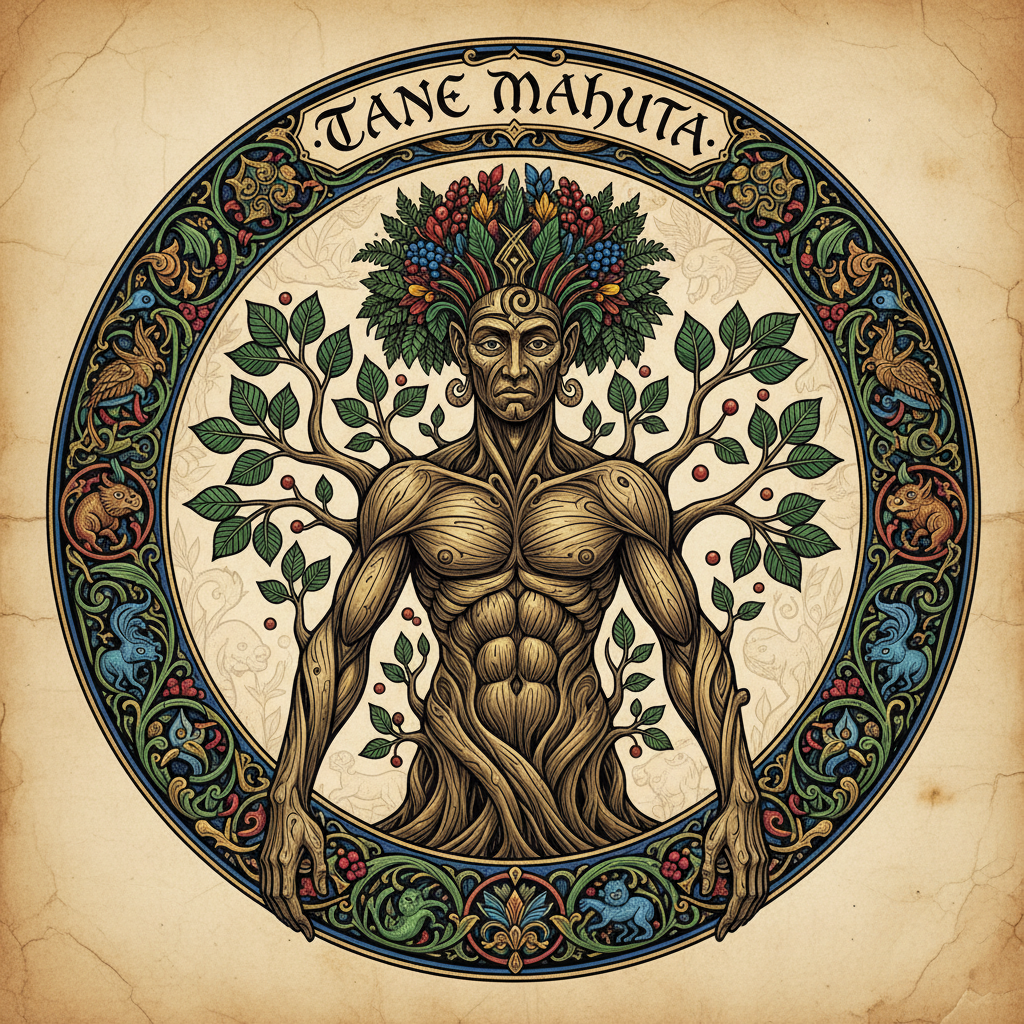
Tāne-mahuta (who defeated him in the climb to the heavens and retrieves the baskets of knowledge that Whiro could not obtain)
Best, *Maori Religion and Mythology*; Grey, *Polynesian Mythology*; Te Ara -- "Whiro"