Combat Profile
Divine Proclamation
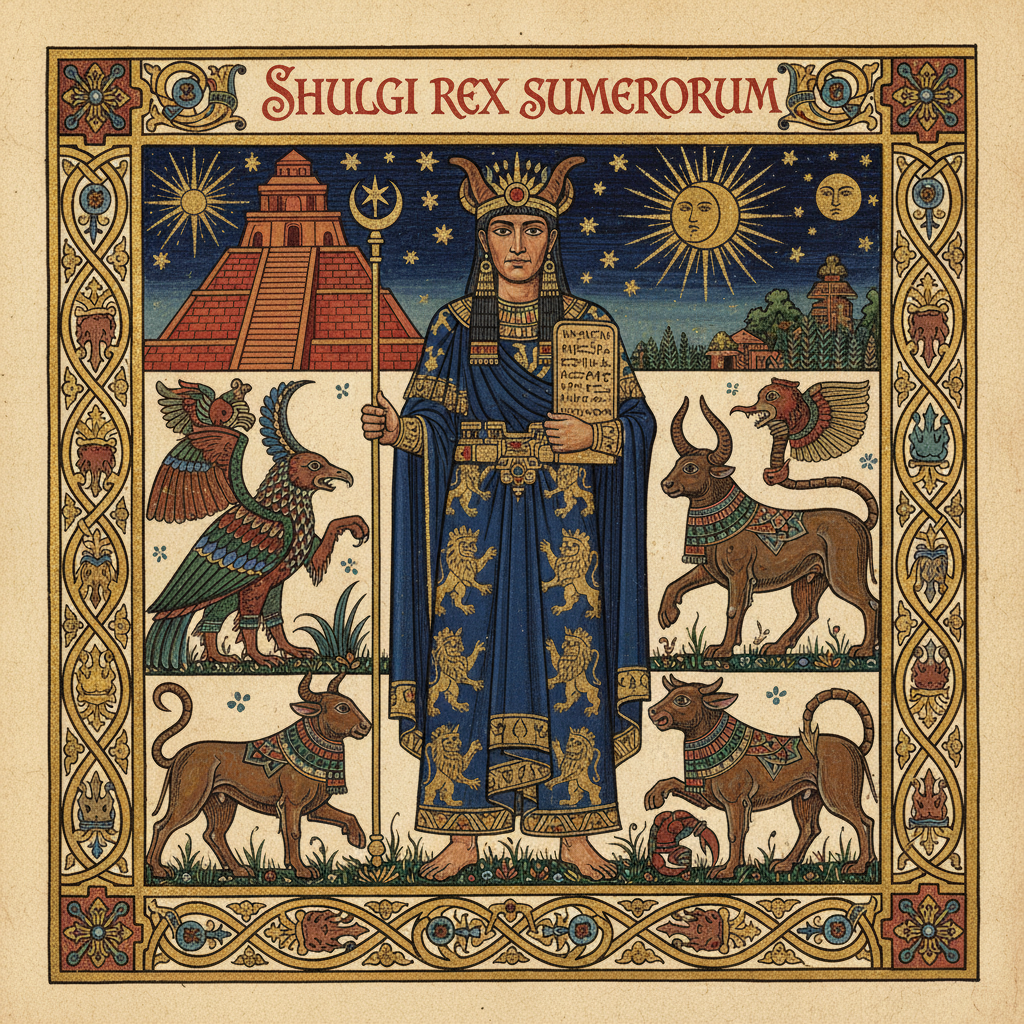
Shulgi declares himself god-king, granting himself and his dynasty absolute authority and immunity from mortal judgment for one generation.
Self-Deification
Shulgi's presence sanctifies all legal decrees and architectural projects within his realm, making them immutable divine law that cannot be challenged by lesser powers.
“I am Shulgi, king of Ur, king of the four quarters of the world. I am the athletic one among the kings. I am the lion of all the foreign lands. I am the hero of heaven and earth. I ran from Nippur to Ur, a distance of fifteen double-hours, in one day — in a hailstorm!” — Shulgi Hymn B
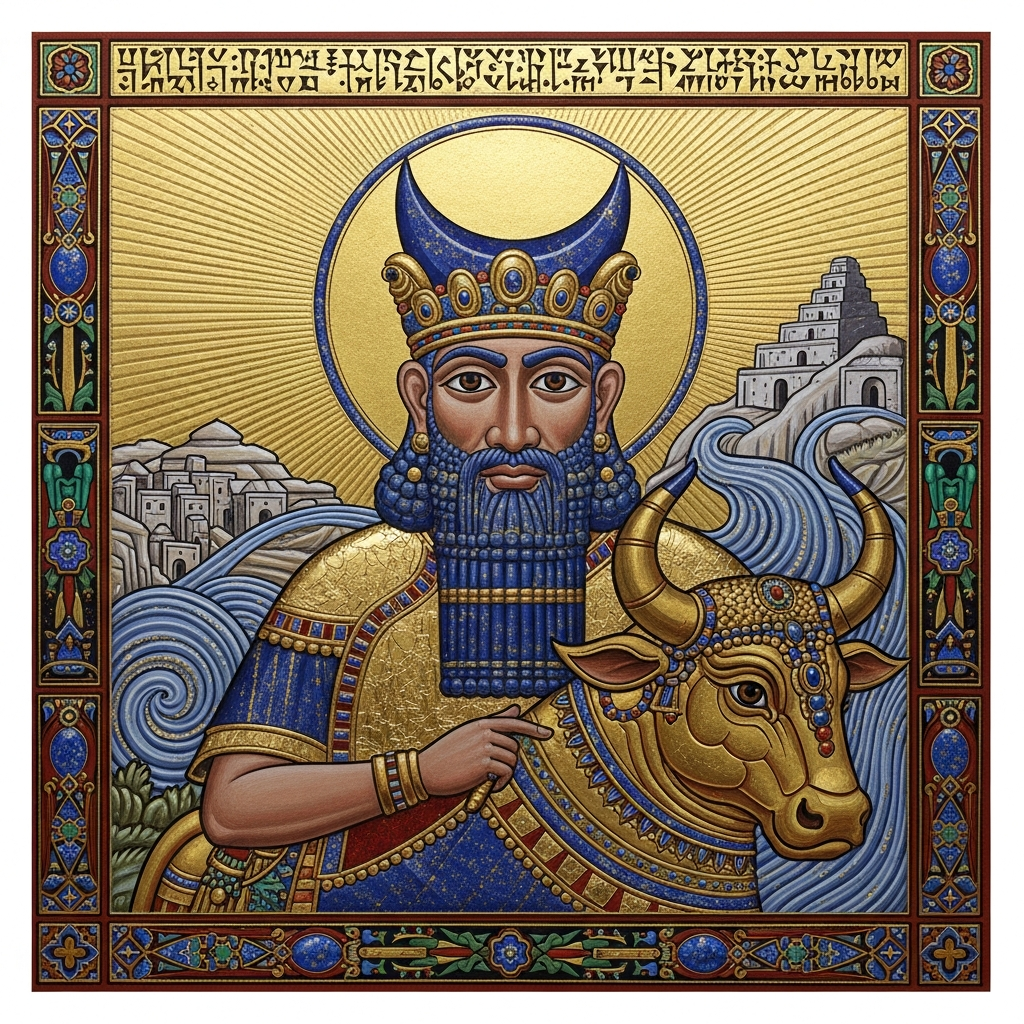
Shulgi of Ur is a historical king who declared himself divine while still alive (Ur III administrative texts) — one of the earliest and most explicit cases of a living human claiming godhood. He didn’t wait for posthumous deification: during his reign over the Third Dynasty of Ur, he established his own cult, had temples built in his name, and composed (or commissioned) hymns praising himself as a god among men (Shulgi Hymns). He claimed mastery of every domain: scholar, warrior, musician, linguist, athlete. His most famous boast — running from Nippur to Ur and back in a single day, roughly 100 miles, during a hailstorm — is either propaganda or miracle, and the distinction didn’t matter to Shulgi (Shulgi Hymn B). The biblical parallel is the concept of divine kingship that the Hebrew tradition simultaneously inherited and rejected. Egyptian pharaohs were living gods. Mesopotamian kings like Shulgi were living gods (Shulgi Hymns). The Bible’s response is emphatic: kings are NOT gods. Saul is rejected for disobedience (1 Samuel 15). David is rebuked by a prophet (2 Samuel 12). When Herod accepts divine acclamation, he is struck dead by an angel (Acts 12:21-23). Shulgi represents the ancient Near Eastern norm that the Bible was written to overthrow: the king as god on earth.
1 min read
Shulgi Hymns (ETCSL 2.4.2); Ur III administrative texts; Marc Van De Mieroop, *A History of the Ancient Near East*