Combat Profile
Primordial Unfoldment
Releases all potential existence at once, reshaping reality according to the undifferentiated knowledge contained within the egg.
Infinite Potential
Exists in all states simultaneously and cannot be harmed by temporal or dimensional means, as it transcends all categories of being.
Must crack open to create; the act of creation is the end of primordial unity
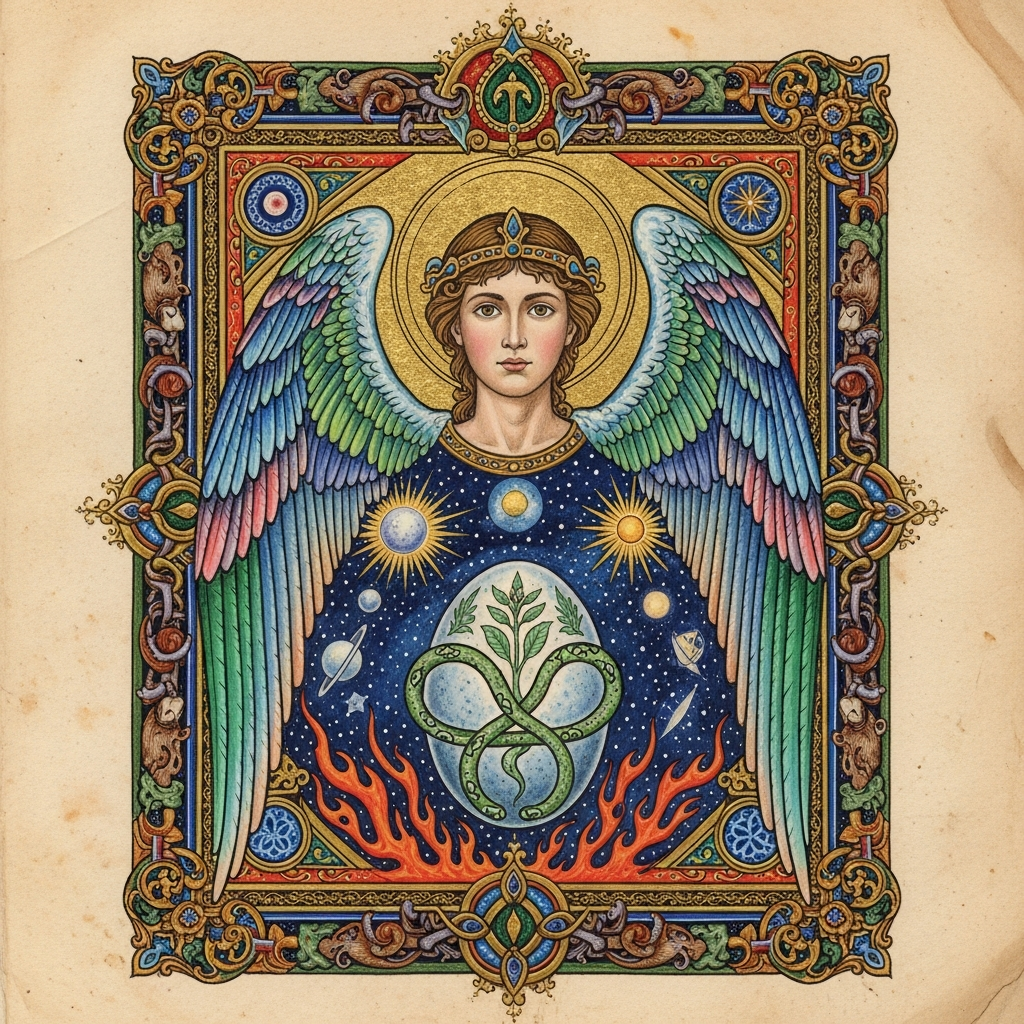
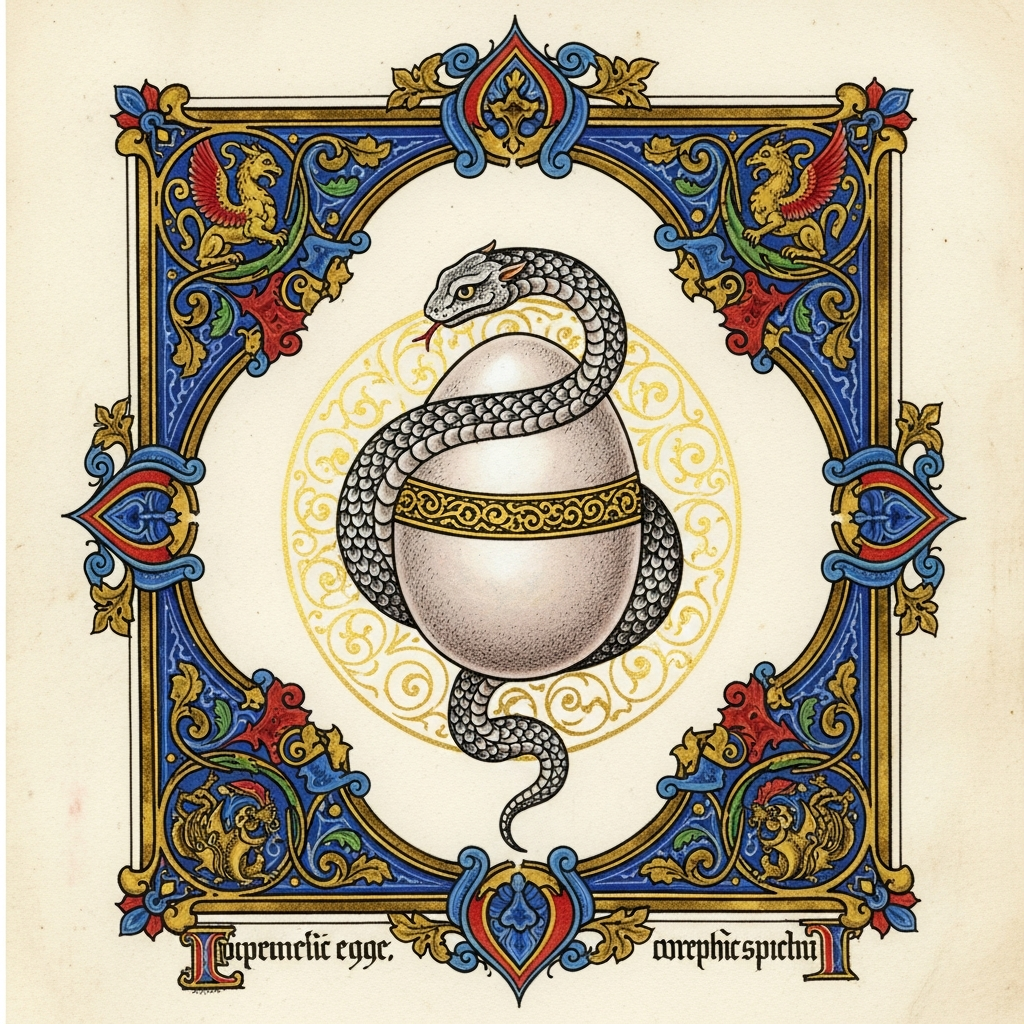
“In the beginning was the silvery egg, and from the egg burst Phanes, shining and golden-winged, the great god who had four heads.” — Orphic theogony reconstruction
In the beginning was not a god. Not a word. Not darkness or chaos or water or void. In the beginning was an egg — silver, shining, floating in the primordial darkness. Within it, all of creation existed in undifferentiated potential. When it cracked, the first light flooded out, and Phanes, the Firstborn, emerged to set the universe in motion.
The cosmic egg is one of the most widespread mythological images in human history — and the Orphic version is among the oldest recorded in the Greek world. The egg represents the perfect enclosure: everything within, nothing without, no distinction between inside and outside, no separation of subject and object, no time. The universe as it was before it knew it existed. The cracking of the egg is the original creative act — not a command spoken by a god, not a shaping of pre-existing matter, but a hatching, a birth, a self-emergence of reality from within itself.
The cosmological sophistication of this image is considerable. Unlike creation-by-divine-fiat (Genesis: God speaks and light exists), the cosmic egg is a self-generating system. Unlike creation from pre-existing chaos (Hesiod: Chaos came into being, then Gaia and Eros), the egg contains the creative principle within itself. And unlike emanationist cosmologies (Neoplatonism: the One overflows into multiplicity), the egg does not overflow — it hatches. The universe is not the product of divine thought or divine overflow. It was born.
Compare: Pangu’s egg (Chinese — the cosmic giant who hatches from an egg; his body becomes the world); Hiranyagarbha (Hindu — the “golden womb” or cosmic egg from which Brahma emerges in the Rigveda 10.121); the World Egg in Finnish mythology (cracked by a bird, becoming earth and sky); the Big Bang (the universe emerging from a singularity that contained all matter, energy, and time as potential — the Orphic egg is not a bad mythological expression of this).
2 min read
Nothing preceded it; nothing was outside it
Orphic *Rhapsodic Theogony*; Aristophanes, *Birds* 693-703; Damascius; West, *The Orphic Poems*; Graf & Johnston, *Ritual Texts for the Afterlife*